 Send
Send Share
Share
 Details

 Download
 Similars
 Diaporama
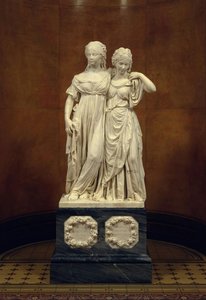
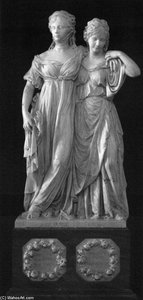
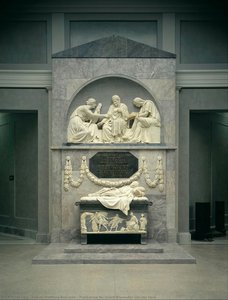
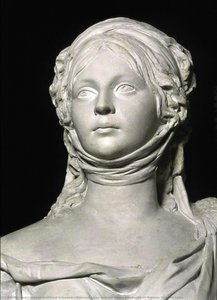
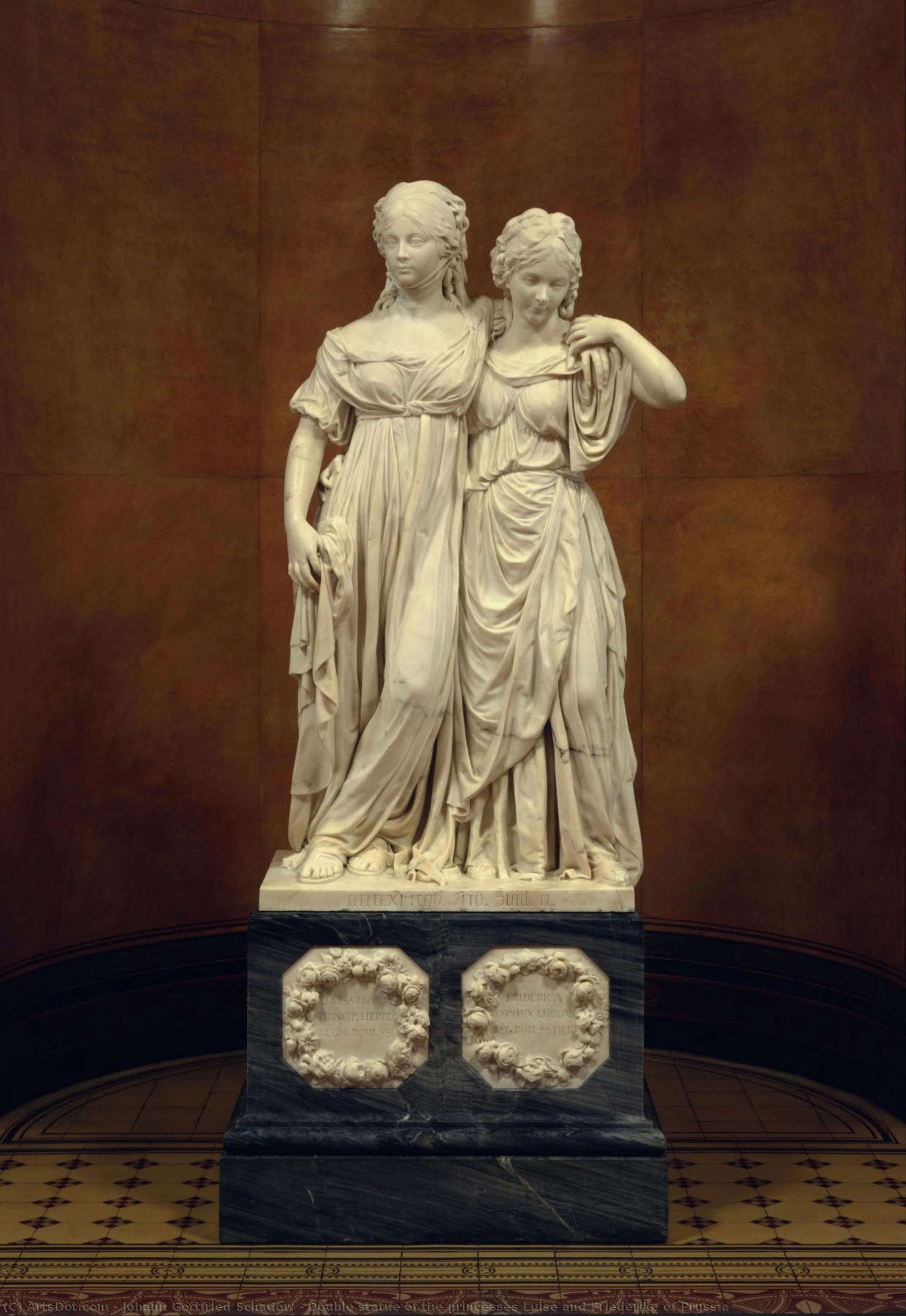
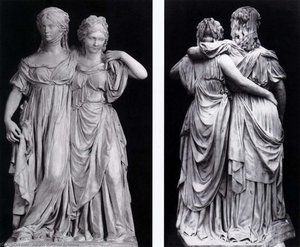
Double statue of the princesses Luise and Friederike of Prussia


 Read More
Giclée / Art Print
Museum-quality giclée or canvas print with fast production and flexible finish options. ( Buy Hand Made Painting Buy Image)




































Pick from our preset sizes that match the artwork's original proportions.

You may enter your own dimensions to fit a specific frame or space. If your selected size does not match the original image's proportions, we will either crop the artwork or extend the image with a mirrored or solid-fill edge. A digital mockup will be sent for your approval before production begins.
Please note that the on-screen preview does not reflect the actual cropping or extension. Only the mockup will accurately show the final composition.
While custom sizes are available, we recommend selecting a dimension from the predefined list to preserve the original proportions.
Worldwide Delivery () in 2 weeks instead of standard 4/5 weeks. (2 September)

Free Worldwide Express Shipping

High-Quality Linen Canvas

Full Shipping Insurance

Customs Tax Refund Guarantee

True Color Matching Guarantee

60-Day Return Policy (Defects Only)

100% Money-Back Guarantee

Bulk Discount Offer
 Glass option is only available in size under 110 CM

Double statue of the princesses Luise and Friederike of Prussia
Giclée / Art Print
Reproduction Size
-


Total Price
$ 63
A Monument to Sisterhood: The Double Statue of Luise and Friederike of Prussia
Johann Gottfried Schadow’s “Double Statue of the Princesses Luise and Friederike of Prussia,” crafted in 1797, represents a pivotal moment not just in Neoclassical sculpture but also in the representation of female subjects within monumental art. This remarkable work, depicting Crown Princess Luise and Princess Friederike, stands as one of the earliest examples of two life-size figures portrayed together as a single sculptural statement – a daring departure from the conventions of the time that prioritized male rulers and military heroes.
The sculpture’s significance lies in its deliberate choice of subjects. Luise, with her gaze fixed on the horizon, embodies stoic resolve and a quiet understanding of her future role as queen. Her posture speaks of duty and responsibility, reflecting the expectations placed upon her within the Prussian court. In contrast, Friederike leans against her sister’s side, lost in contemplative thought. Her gesture – taking Luise's hand resting on her shoulder – is imbued with a delicate tenderness and a sense of youthful affection, hinting at a more personal and perhaps even romantic sensibility. The sisters’ contrasting characters and destinies are powerfully conveyed through Schadow’s masterful handling of form and expression.
Neoclassical Style and Technical Mastery
- Schadow's work is firmly rooted in the Neoclassical style, a movement that sought to revive the ideals and forms of ancient Greece and Rome. This influence is evident in the sculpture’s idealized figures, their balanced compositions, and the smooth, polished surfaces achieved through meticulous modeling and finishing techniques.
- The artist skillfully employed marble – a material highly valued for its ability to capture detail and convey emotion – to create a sense of realism and timelessness. The drapery, rendered with remarkable precision, adds to the sculpture’s elegance and contributes to the overall impression of grace and composure.
- Schadow's technical prowess is particularly evident in his ability to capture subtle nuances of expression on the faces of the princesses. Their gestures are natural and believable, conveying a sense of genuine emotion and connection.
Historical Context and Symbolic Resonance
Created during a period of significant political and social change in Europe, the “Princesses Monument” reflects the evolving role of women within the Prussian court. While traditionally depicted as passive figures, Luise and Friederike are presented here with agency and dignity – symbols of strength, intelligence, and familial loyalty. The sculpture’s creation coincided with a burgeoning interest in classical ideals of beauty and virtue, further elevating the status of these young princesses.
The positioning of the sisters, close together yet distinct in their demeanor, speaks to the complexities of sisterhood – the bonds of affection, support, and shared destiny. This intimate portrayal was revolutionary for its time, challenging prevailing artistic conventions and offering a nuanced representation of female relationships within a public monument.
Emotional Impact and Artistic Legacy
More than just a historical artifact, Schadow’s “Double Statue of the Princesses Luise and Friederike of Prussia” continues to resonate with viewers today. The sculpture's enduring appeal lies in its ability to evoke feelings of empathy, admiration, and perhaps even nostalgia for a bygone era. It stands as a testament to Schadow’s artistic skill and his profound understanding of human emotion – a timeless celebration of sisterhood and the enduring power of classical ideals.
Related Artworks


Artist Biography
Johann Gottfried Schadow: A Life in Sculpture
- Born: Berlin, Germany (1764)
- Died: 1850
Johann Gottfried Schadow was a prominent German Prussian sculptor who left an indelible mark on the art world. Born in Berlin to a poor tailor, his early life took a remarkable turn when he became an apprentice to Antoine Tassaert, a renowned sculptor patronized by Frederick the Great. This mentorship proved pivotal, though it also led to a dramatic personal shift – Schadow eloped with Marianne Devidel, a Jewish woman, defying Tassaert's expectations and embarking on a journey that would shape his artistic development.
Early Training and Artistic Development
Following his marriage, Schadow received financial support from Tassaert to travel to Italy for three years of study. This period in Rome was crucial, significantly influencing his style and solidifying his foundation in classical sculpture. Upon returning to Berlin in 1788, he succeeded Tassaert as sculptor to the court and secretary to the Prussian Academy of Arts – a position he held for over half a century.
Major Works and Artistic Style
- Monumental Statues: Schadow produced an impressive body of work, exceeding two hundred pieces. Among his most ambitious projects were monumental statues of Frederick the Great in Stettin, Blücher in Rostock, and Luther in Wittenberg.
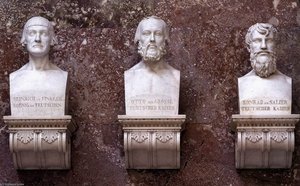
- Portraiture: He excelled in portrait sculpture, creating notable works such as "Frederick the Great Playing the Flute" and the "Crown-Princess Louise and her Sister Frederica." His skill extended to busts, with over one hundred created, including seventeen colossal heads for the Walhalla in Ratisbon.
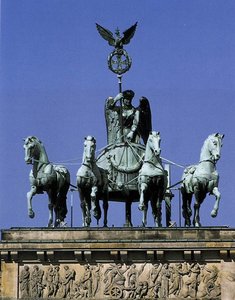
- Eclectic Style: Schadow's style was characterized by its variety, encompassing both classical influences and a unique artistic vision. He is particularly celebrated for his contributions to Neoclassicism, exemplified by the quadriga on the Brandenburg Gate and the allegorical frieze on the facade of the Royal Mint in Berlin.
Influence and Legacy
Schadow's influence extended beyond his sculptural achievements. As director of the Berlin Academy, he exerted considerable artistic leadership. He wrote extensively on topics such as the proportions of the human figure and national physiognomy, contributing to art theory and education. His interest in physiognomy is documented by a drawing he made of Harry Maitey, the first Hawaiian in Prussia.
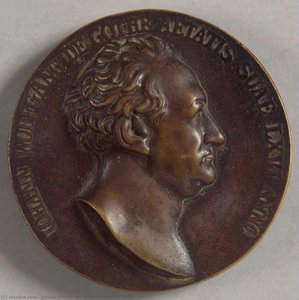
- Friendship with Goethe: Schadow developed a close friendship with Johann Wolfgang von Goethe, evidenced by Goethe's son visiting Schadow in Weimar. Schadow created twelve bronze medals of Goethe, one of which is held by the British Museum and was awarded to Dr. Daisaku Ikeda in 2009 for his contributions to peace and Goethe’s philosophy.
- Family Legacy: His sons, Rudolph and Friedrich Wilhelm, also achieved recognition as a sculptor and painter respectively, while his grandson, Admiral Felix von Bendemann, served in the German Imperial Navy.
- Display of Works: Today, Schadow's sculptures and busts can be admired at institutions such as the Friedrichswerdersche Kirche and the Alte Nationalgalerie in Berlin.
Historical Significance
While not exclusively categorized as a Christian sculptor, Johann Gottfried Schadow is recognized for his significant contributions to German Neoclassicism and portraiture. His work on the Brandenburg Gate quadriga remains an iconic symbol of Berlin, solidifying his place as one of Prussia's most important sculptors.
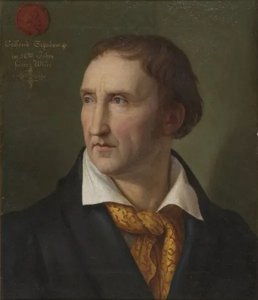
Johann Gottfried Schadow
1764 - 1850 , Germany
Quick Facts
- Artistic Movement Or Style: Neoclassicism
- Artists Or Movements Influenced By This Artist: ['Berlin School of sculpture']
- Artists Who Influenced This Artist:
- Antoine Tassaert
- Antonio Canova
- Date Of Birth: May 20, 1764
- Date Of Death: January 27, 1850
- Full Name: Johann Gottfried Schadow
- Nationality: German
- Notable Artworks:
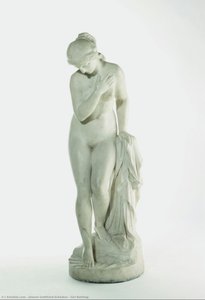
- Draped Female Figure
- Tombstone for Count Alexander
- Frederick the Great in Stettin
- Blücher in Rostock
- Luther in Wittenberg
- Princesses Louise and Frederica
- Place Of Birth: Berlin, Germany
Related Articles

Bronze Sculptures That Defined Art History | ArtsDot
Journey through art history with our Top 10 bronze sculptures! Explore masterpieces by Rodin, Michelangelo & more. Discover stories behind iconic statues and find museum-quality reproductions for your home decor at ArtsDot.com.

Bronze Age to Modern Masters: 10 Sculptures That Redefined Art | ArtsDot
Journey through art history with 10 legendary bronze sculptures – from Michelangelo's David to Rodin’s Thinker. Explore the stories, techniques & timeless beauty of these masterpieces. Find museum-quality reproductions & elevate your home decor on ArtsDot.com.

The Enduring Form: Exploring Themes & Techniques in Sculpture Across Historical Periods
Explore the rich history of sculpture from ancient masterpieces to contemporary innovations. Discover key techniques, influential artists & investment potential for discerning art collectors.
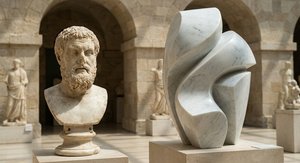
The Enduring Allure of Marble in Art History: From Classical Sculpture to Modern Abstraction
Explore the captivating history of marble sculpture from ancient Greece to modern art. Discover renowned artists like Canova & Michelangelo, carving techniques, and investment insights at ArtsDot.

The Enduring Form: Sculpture Across History, Technique & Emotional Resonance
Explore the rich history of sculpture with ArtsDot. Discover key techniques, influential artists & investment potential for discerning collectors. Expert insights into valuing and collecting timeless masterpieces.