 Preview
 Send
Send Share
Share
 Details

 Download
 Similars
 X-Ray
X-Ray Diaporama
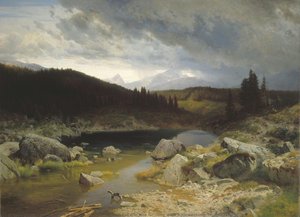
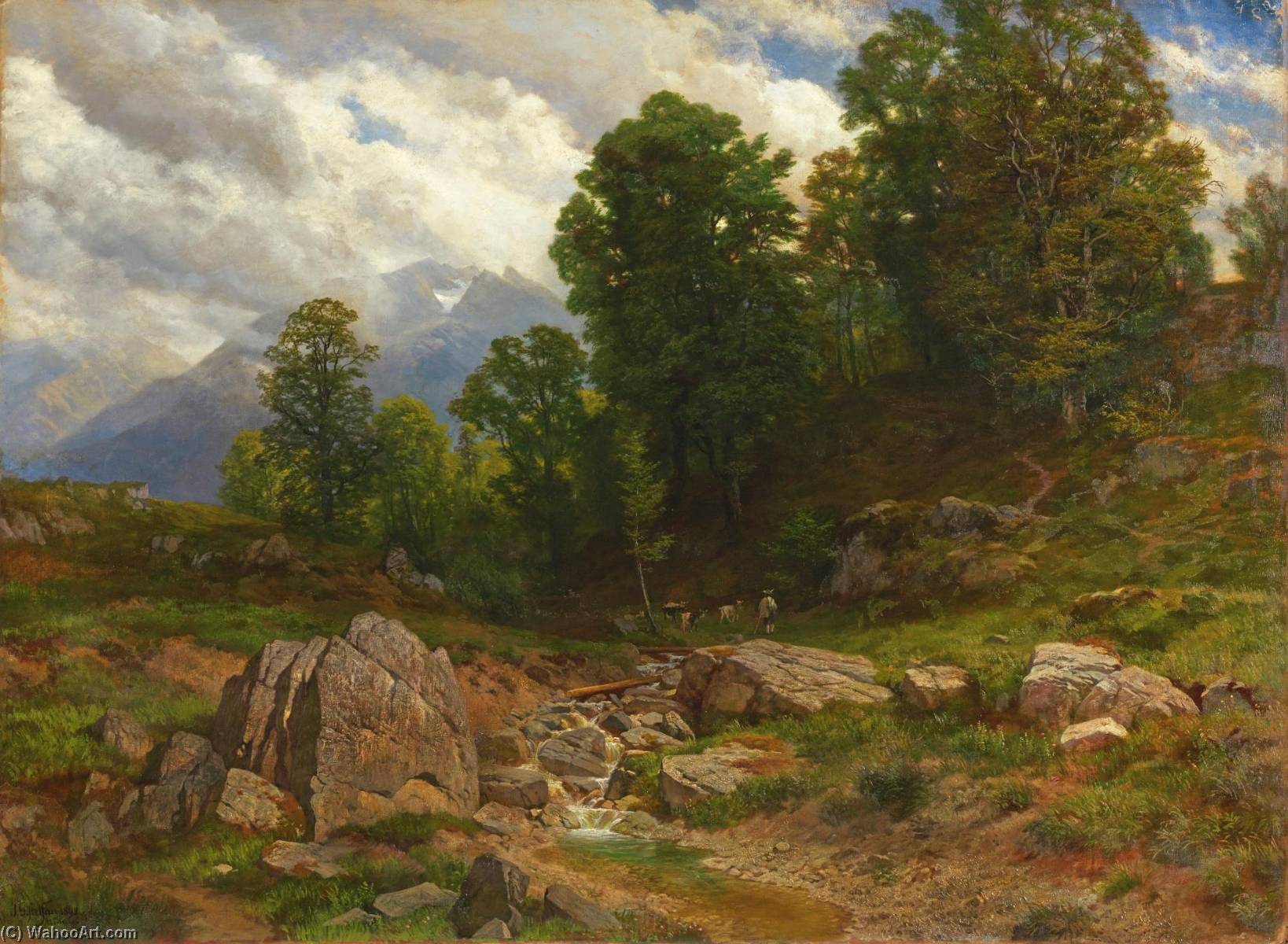
Alp mit Bach und Ziegenhirt (Berglandschaft), 1898
 Read More
Giclée / Art Print
Museum-quality giclée or canvas print with fast production and flexible finish options. ( Buy Hand Made Painting Buy Image)




































Pick from our preset sizes that match the artwork's original proportions.

You may enter your own dimensions to fit a specific frame or space. If your selected size does not match the original image's proportions, we will either crop the artwork or extend the image with a mirrored or solid-fill edge. A digital mockup will be sent for your approval before production begins.
Please note that the on-screen preview does not reflect the actual cropping or extension. Only the mockup will accurately show the final composition.
While custom sizes are available, we recommend selecting a dimension from the predefined list to preserve the original proportions.
Worldwide Delivery () in 2 weeks instead of standard 4/5 weeks. (29 August)

Free Worldwide Express Shipping

High-Quality Linen Canvas

Full Shipping Insurance

Customs Tax Refund Guarantee

True Color Matching Guarantee

60-Day Return Policy (Defects Only)

100% Money-Back Guarantee

Bulk Discount Offer
 Glass option is only available in size under 110 CM

Alp mit Bach und Ziegenhirt (Berglandschaft), 1898
Giclée / Art Print
Reproduction Size
-


Total Price
$ 63
Related Artworks










Artist Biography
The Master of the Alpine Sublime: The Life of Johann Gottfried Steffan
In the grand tapestry of nineteenth-century European art, few threads are as deeply woven into the rugged beauty of the Alps as those left by Johann Gottfried Steffan. Born on December 13, 1815, in the tranquil Swiss town of Wädenswil, Steffan emerged as one of the most significant Swiss landscapists of his era. His journey began not with a brush, but with the precise, disciplined hand of a lithographer, an apprenticeship completed in his hometown that would later grant him an unparalleled ability to render the intricate textures of stone, water, and foliage. This foundational skill in graphic arts provided the structural backbone for a career dedicated to capturing the profound majesty of the natural world.
The trajectory of Steffan’s life changed irrevocably in 1833 when he traveled to Munich, a move that would place him at the very heart of the German Romantic movement. At the Academy of Fine Arts, he studied under the legendary Peter von Cornelius, a master whose influence instilled in Steffan a sense of monumental composition and emotional depth. However, it was under the guidance of Carl Rottmann that Steffan truly found his artistic soul. Moving away from purely academic idealism, Rottmann encouraged him to embrace a more rigorous realism, pushing the artist to observe the raw, unadorned truth of the landscape. This transition marked the birth of a style that balanced the poetic spirit of Romanticism with an almost scientific devotion to topographical accuracy.
A Sanctuary for Swiss Visionaries
As his reputation grew, Steffan’s studio in Munich became far more than a place of solitary labor; it transformed into a vibrant intellectual hub, a sanctuary where the next generation of Swiss masters gathered to share ideas and inspiration. Within these walls, figures such as Rudolf Koller, Arnold Böcklin, and Johann Caspar Bosshardt found community and creative stimulation. This collaborative atmosphere fostered a unique school of thought that bridged the gap between Swiss national identity and the broader European landscape tradition. Steffan acted as a gravitational center for these artists, nurturing an environment where the serene beauty of the Swiss mountains could be translated into a universal language of art.
His creative process was deeply rooted in direct engagement with his subjects. Steffan undertook numerous expeditions through the Swiss Alps, particularly focusing on the breathtaking vistas of the Canton of Glarus and the tranquil shores of Lake Walen. These journeys were not merely for inspiration but were essential components of his technical mastery. By standing before the looming peaks and rushing streams, he could capture the fleeting atmospheric shifts—the heavy scent of pine before a storm or the electric stillness of a mountain lake under threat of thunder. His later travels to Berchtesgaden and Ramsau further expanded his repertoire, allowing him to document the diverse textures of the Alpine landscape with profound sensitivity.
Legacy of Light and Stone
The works of Johann Gottfried Steffan are characterized by a remarkable ability to evoke the sublime—that specific aesthetic quality where beauty meets a sense of overwhelming power. Whether he was depicting the crystalline clarity of a mountain stream or the dramatic tension of an approaching tempest, his paintings possess a visceral, breathing quality. His masterpieces, such as Mountain Lake in the Grisons with Approaching Thunderstorm, serve as windows into a world where nature is both a sanctuary and a formidable force. While some critics of his time noted a certain conventional smoothness in his execution, none could deny his status as an outstanding observer of the natural order.
Steffan’s historical significance lies in his role as a bridge between eras and styles. He successfully navigated the transition from the idealistic Romanticism of the early nineteenth century to the more grounded, realistic landscape traditions that would define much of the later century. His legacy is preserved not only in the museums that house his breathtaking vistas but also in the lineage of Swiss artists he mentored and inspired. When he passed away in Munich on June 16, 1905, he left behind a body of work that remains an essential record of the Alpine spirit—a testament to a life spent translating the silent grandeur of the mountains into enduring visual poetry.
Quick Facts
- Artistic Movement Or Style: Munich School
- Artists Or Movements Influenced By This Artist: ['Rudolf Koller']
- Artists Who Influenced This Artist:
- Peter Cornelius
- Carl Rottmann
- Full Name: Johann Gottfried Steffan
- Nationality: Swiss
- Notable Artworks: ['Mountain Landscapes']
- Place Of Birth: WahooArt