 Preview
 Send
Send Share
Share
 Details

 Download
 Similars
 X-Ray
X-Ray Diaporama
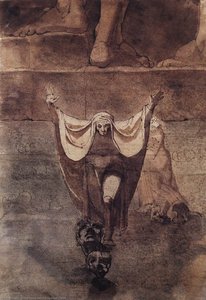
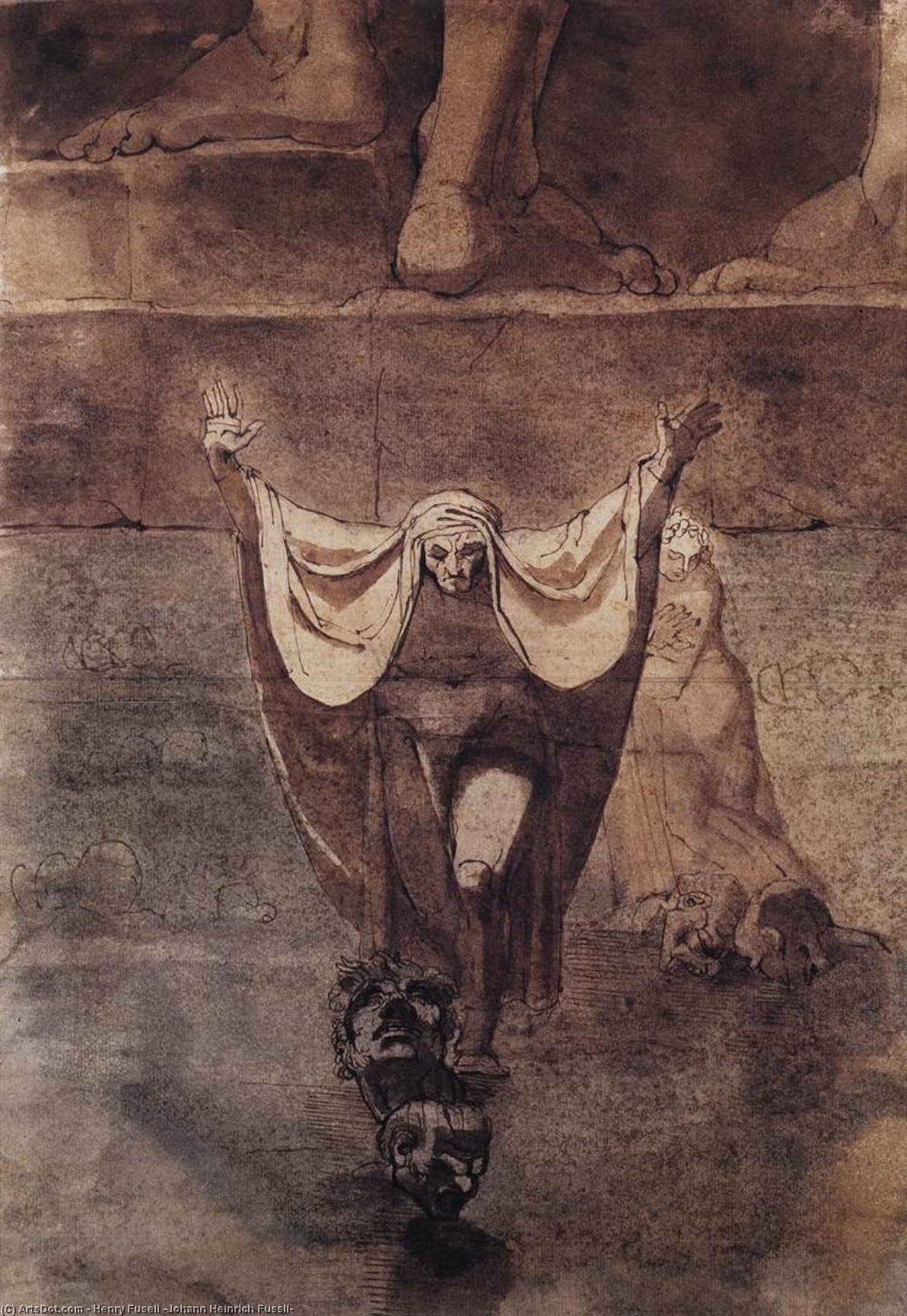
Dante and Virgil on the Ice of Kocythos
 Acrylic On Canvas
- WallArt
- Romanticism
 1774
1774 390.0 x 274.0 cm
 Kunsthaus Zürich
 Read More
Hand Made Oil Reproduction
Hand-painted oil on canvas in your size and frame, made to order by our artists. ( Buy Print Buy Image)




P118B $10

P118H $10

P118W $10

P438Z $10

P508JH $12

P508YH $12

P805H $10

P805Z $10

P919BZ $10

P919G $10

P919XJ $10

P959ZH $10

P968JZ $12

W106C $8

W218G $10

W218JH $8

W218Y $10

W307PJ $10

W316G $10

W316PJ $8

W316Y $10

W398PJ $8

W4111J $10

W500HY $15

W500JH $15

W692G $12

W849H $8

W940BG $15

W953PJ $8




Pick from our preset sizes that match the artwork's original proportions.

You may enter your own dimensions to fit a specific frame or space. If your selected size does not match the original image's proportions, we will either crop the artwork or extend the painting with additional hand-painted elements. A digital mockup will be sent for your approval before production begins.
Please note that the on-screen preview does not reflect the actual cropping or extension. Only the mockup will accurately show the final composition.
While custom sizes are available, we recommend selecting a dimension from the predefined list to preserve the original proportions.
After order, ArtsDot.com team will email client for instructions and provide a mockup preview
Worldwide Delivery () in 3/4 weeks instead of standard 5 weeks. (16 August). No compromise on quality.

Free Worldwide Express Shipping

High-Quality Linen Canvas

Full Shipping Insurance

Customs Tax Refund Guarantee

True Color Matching Guarantee

60-Day Return Policy (Defects Only)

100% Money-Back Guarantee

Bulk Discount Offer
 Glass option is only available in size under 110 CM

Dante and Virgil on the Ice of Kocythos
Reproduction Medium
Reproduction Size
-


Total Price
$ 263
Artwork Description
A Descent Into Darkness: Henry Fuseli’s “Dante and Virgil on the Ice of Kocythos”
Henry Fuseli's "Dante and Virgil on the Ice of Kocythos," painted in 1774, isn't merely a depiction of a scene from Dante Alighieri’s “Divine Comedy”; it’s a visceral plunge into the depths of human experience – a haunting meditation on mortality, judgment, and the terrifying beauty of the unknown. This arresting pen drawing, now residing within the Kunsthaus Zürich in Switzerland, transcends its literary source to become a powerfully independent work of art, radiating an unsettling energy that continues to captivate viewers centuries later.
Fuseli’s genius lies not just in his ability to capture Dante and Virgil's stoic presence on the icy expanse, but in his masterful manipulation of light, shadow, and texture. The composition is dominated by a colossal, vaguely menacing figure emerging from an abyss – a representation of Hell itself, rendered with a chilling ambiguity that invites endless interpretation. The stark contrast between the illuminated foreground and the impenetrable darkness behind creates a dramatic tension, pulling the viewer into this frozen landscape of dread. The figures are not presented as heroes embarking on a grand adventure; instead, they stand as witnesses to an overwhelming force, dwarfed by the immensity of their surroundings.
The Language of Line: Technique and Style
Executed in pen and ink with subtle washes, “Dante and Virgil” showcases Fuseli’s remarkable technical skill. The drypoint etching technique—a method involving scratching into a metal plate—is evident in the intricate lines that define every surface, from the jagged edges of the ice to the shadowed contours of the figures. These lines aren't simply delineating form; they actively contribute to the painting’s overall mood, creating a sense of roughness and instability. The texture is deliberately uneven, mimicking the cold, unforgiving nature of the ice and suggesting a world perpetually on the verge of collapse.
Fuseli’s style blends elements of Romanticism with Neoclassicism. While rooted in classical principles of composition and form—noticeable in the figures' dignified postures—the painting is infused with the emotional intensity characteristic of the Romantic movement. The dramatic lighting, the unsettling subject matter, and the overall atmosphere of foreboding all speak to this fusion. The influence of Caravaggio’s tenebrism – the use of strong contrasts between light and dark – is particularly evident, further amplifying the painting's theatrical quality.
Symbolism and Interpretation
“Dante and Virgil on the Ice of Kocythos” is rich in symbolic meaning. The ice itself represents the frozen state of the soul, trapped by sin and awaiting judgment. The skulls scattered across the landscape serve as a stark reminder of mortality and the consequences of earthly desires. Dante and Virgil, traditionally symbols of reason and guidance, are presented not as triumphant figures but as burdened travelers confronting an inescapable reality. The ambiguous figure emerging from the darkness is often interpreted as representing Hell itself – a chaotic, terrifying force that embodies the ultimate fate awaiting humanity.
Furthermore, the painting’s connection to Dante's “Divine Comedy” adds another layer of interpretation. The scene depicts the moment when Dante and Virgil first encounter the horrors of Hell, a pivotal point in their journey through the afterlife. Fuseli doesn’t simply illustrate this event; he transforms it into a profound meditation on human suffering and the nature of evil. The painting's enduring power lies in its ability to evoke a sense of unease and wonder—a recognition that even within darkness, there exists a strange and compelling beauty.
A Legacy of Unease
“Dante and Virgil on the Ice of Kocythos” exerted a significant influence on subsequent artists, particularly those associated with the Romantic movement. Its unsettling imagery and exploration of dark themes paved the way for works by artists like William Blake, who also drew inspiration from Dante’s “Divine Comedy.” Today, this painting continues to resonate with viewers, reminding us of our own mortality and the enduring mysteries that lie beyond the realm of reason. Reproductions offer a chance to experience this powerful artwork firsthand, bringing its chilling beauty into any space.
Related Artworks

Artist Biography
early life and education
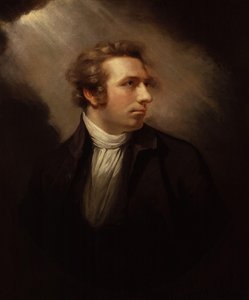
johann heinrich füssli, a swiss painter, draughtsman, and writer on art, was born on february 7, 1741, in zürich, switzerland. he was the second of 18 children to johann caspar füssli, a portrait painter. füssli received a classical education at the collegium carolinum in zürich.artistic career
füssli's artistic career began with his move to london in 1764, where he met sir joshua reynolds, who encouraged him to devote himself to painting. he then spent eight years in italy, studying antique art and the works of titian, caravaggio, and mannerists.supernatural experiences
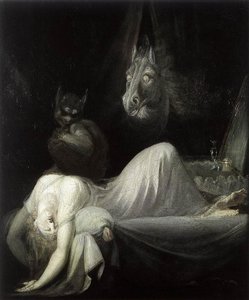
füssli's paintings often depicted supernatural experiences, such as the nightmare, which showcased his unique style. he also created a series of paintings based on john milton's works, with the intention of forming a milton gallery comparable to boydell's shakespeare gallery.notable works and associations
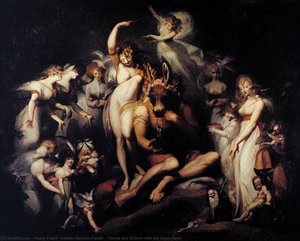
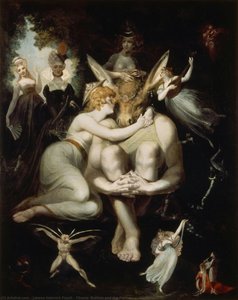
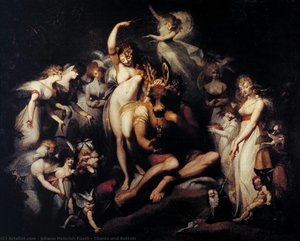
- titania, bottom and the fairies, a painting showcasing füssli's use of fairy-tale scenes from shakespeare as motifs.
- association with the royal academy, where he held the posts of professor of painting and keeper.
- influence on younger british artists, including william blake.
museums and collections
füssli's works can be found in various museums, including:- kunsthaus zürich, switzerland, which features a wide range of füssli's paintings, including the nightmare.
- albertina, vienna, austria, which houses füssli's watercolor piece, teiresias foretells the future to odysseus.
legacy
füssli's style had a considerable influence on many younger british artists, and his supernatural themes continue to fascinate art lovers. his legacy can be explored further through his numerous works, which can be found in various museums and collections. recommended reading:- titania, bottom and the fairies by johann heinrich füssli
- henry fuseli - wikipedia
johann heinrich füssli
1741 - 1825 , Switzerland
Quick Facts
- Artistic Movement Or Style: Romanticism, Neoclassicism
- Artists Or Movements Influenced By This Artist: ['William Blake']
- Artists Who Influenced This Artist:
- Titian
- Caravaggio
- Date Of Birth: Feb 7, 1741
- Date Of Death: 1825
- Full Name: Johann Heinrich Füssli
- Nationality: Swiss
- Notable Artworks:
- The Nightmare
- Titania, Bottom & Fairies
- Place Of Birth: Zurich, Switzerland
Related Articles
Dante Gabriel Rossetti's 25 Masterpieces: A Journey Through Victorian Art & Symbolism | ArtsDot
Explore 25 iconic artworks by Dante Gabriel Rossetti, a leading Pre-Raphaelite artist. Discover the stories behind masterpieces like 'Proserpine' & 'Beata Beatrix'. Find museum-quality art reproductions and elevate your home decor with ArtsDot.com.
Henri Matisse's Masterpieces: Explore 25 Iconic Paintings & Art Decor Ideas
Journey through Henri Matisse's 25 most iconic paintings! Explore Fauvism, vibrant colors & the stories behind masterpieces like 'The Dance'. Find museum-quality art reproductions and curated decor ideas to elevate your space. Discover all masterpieces on ArtsDot.com.
Romantic Realism's Finest: 10 Masterpieces for Your Home | ArtsDot
Explore 10 defining masterpieces of Romantic Realism! Discover Courbet, Millet & Daumier's powerful paintings—capturing emotion and social realities. Find museum-quality reproductions for your home at ArtsDot.com.
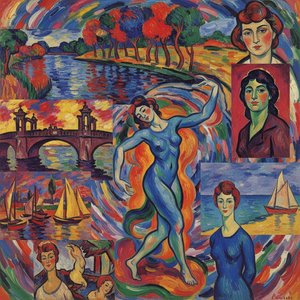
Fauvism's Boldest Visions: 10 Masterpieces That Revolutionized Modern Art | ArtsDot
Explore 10 Fauvist masterpieces by Matisse, Derain & Vlaminck that ignited Modern Art! Discover bold colors, expressionist landscapes & the history of this revolutionary movement. Find museum-quality prints at ArtsDot.com.

Henry Farny: Romantic Visions of the American West & Indigenous Life
Explore the evocative paintings of Henry Farny, renowned for his romantic realism & depictions of Native American life in the 19th-century West. Discover his legacy and key artworks at ArtsDot.