

 Preview
 Send
Send Share
Share
 Details

 Download
 Similars
 X-Ray
X-Ray Diaporama
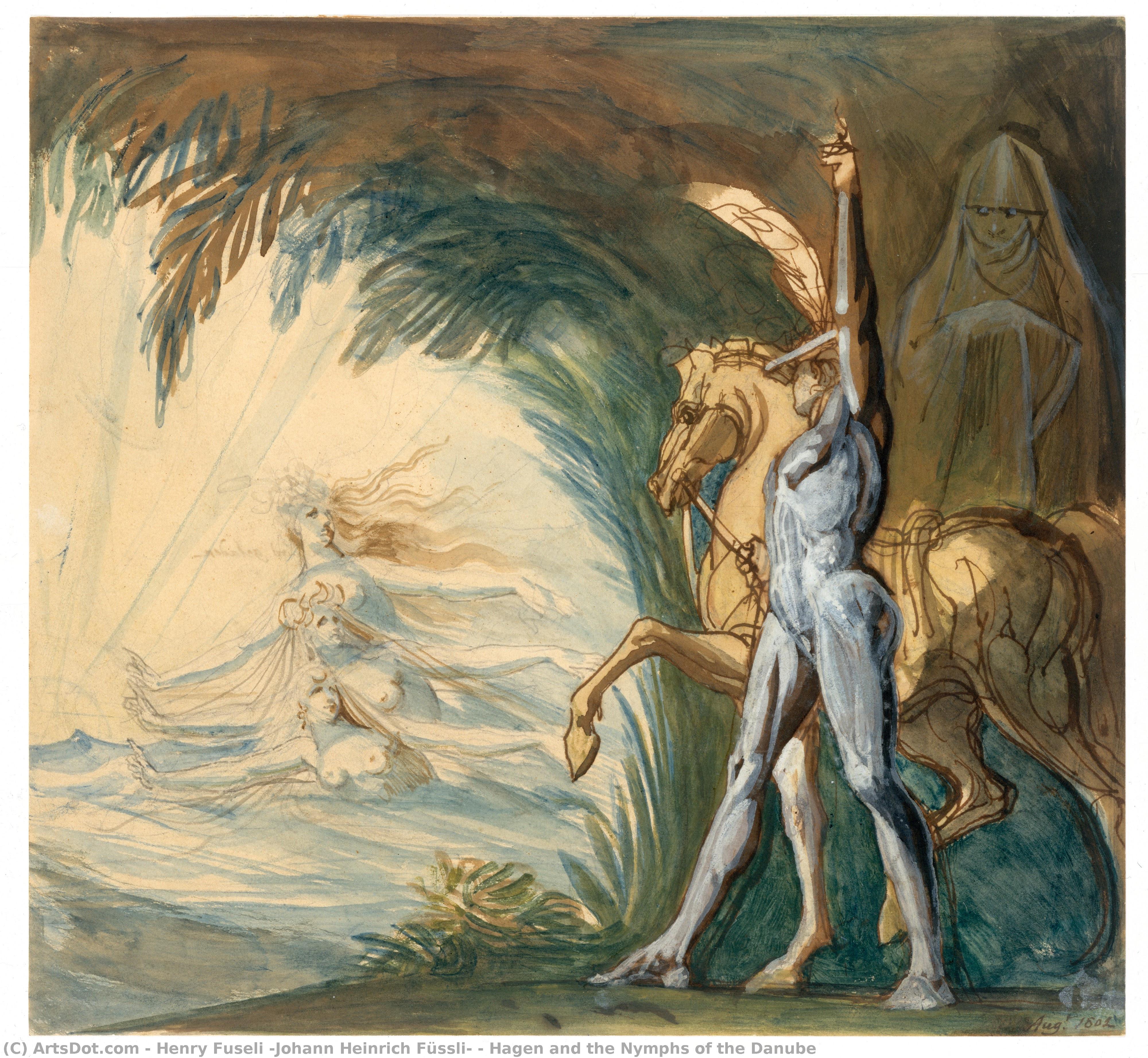
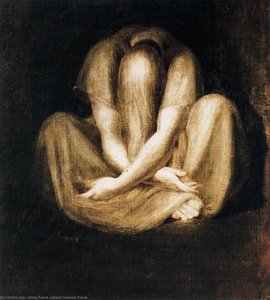
Hagen and the Nymphs of the Danube
 Acrylic On Canvas
- WallArt
- Romanticism
 1802
1802 31.0 x 34.0 cm
 Metropolitan Museum of Art
 Read More
Purchase a high-resolution, enhanced digital image, far superior to the online preview.
Each file is meticulously prepared by our in-house specialists using advanced tools and expert manual retouching. We ensure every image has exceptional clarity, precise color accuracy, and fine detail.
The final file is delivered via email within 72 hours, optimized for immediate use in professional, editorial, and print environments. This is the same quality trusted by top-tier design studios, publishers, and galleries.
Digital Image
Download a high-resolution file for personal display, printing, and creative projects. ( Buy Print Buy Hand Made Painting)
Included in Every Digital Image Order
Expert Digital Delivery, Guaranteed
When you choose ArtsDot.com, you're not just getting an image - you're receiving a professionally enhanced digital artwork, crafted with precision and backed by a satisfaction guarantee. Here's everything that comes with your order, automatically:

Fast Email Delivery
Your high-resolution digital image file will be emailed to you within 72 hours of ordering - ready for immediate use.

AI-Enhanced Digital File
Your artwork is professionally optimized using advanced AI tools and manual editing, ensuring maximum detail, clarity, and color accuracy.

Free Lifetime Re-Delivery
Accidentally deleted or lost your file? No worries - we'll resend it to you anytime, free of charge.

No Import Fees - Ever
Enjoy your artwork instantly with zero customs, duties, or delivery fees - digital downloads are always tax-free.

Color Accuracy Guarantee
We ensure your digital image reflects the original colors as closely as possible using professional tools and color management.

60-Day Satisfaction Guarantee
If you're not satisfied with your digital image, we'll revise it or refund 100% within 60 days - no questions asked.

100% Money-Back Guarantee
Not satisfied? Get a full refund within 60 days of receiving your digital file - no questions asked.

Bulk Order Discounts
Buy 3 images, save 10% - Buy 5, save 15% - Buy 10+, save 20%. Great for creative projects, galleries, and agencies.
Collectible Description
A Descent into Myth and Shadow: Henry Fuseli’s “Hagen and the Nymphs of the Danube”
Henry Fuseli's "Hagen and the Nymphs of the Danube," painted in 1802, is not merely a depiction of a classical myth; it’s a profound exploration of primal fears, erotic tension, and the unsettling beauty of the subconscious. This dramatic scene, housed within the Metropolitan Museum of Art, immediately draws the viewer into a world steeped in darkness and veiled sensuality – a realm where the boundaries between reality and nightmare blur with captivating effect.
The painting’s genesis lies firmly within the burgeoning Romantic movement, an era that rejected the Enlightenment's emphasis on reason in favor of emotion, intuition, and the sublime. Fuseli, deeply influenced by artists like Caravaggio and Titian, sought to capture not just the outward appearance of a myth but its underlying psychological resonance. The composition itself is masterfully constructed: a powerfully built Hagen, clad in dark armor and wielding a spear, dominates the foreground, his gaze fixed on the two young women who lie languidly at his feet. Their pale skin and shadowed eyes suggest vulnerability and a hint of surrender, while their flowing garments ripple with an almost unsettling grace.
Fuseli’s technique is characterized by a dramatic use of chiaroscuro – the stark contrast between light and shadow – which intensifies the painting's emotional impact. The figures are bathed in a cool, ethereal glow, emanating from an unseen source, while the surrounding landscape is plunged into deep darkness. This interplay of light and shadow creates a sense of unease and mystery, inviting the viewer to contemplate the hidden depths of the scene. The artist’s brushwork is loose and expressive, conveying movement and texture with remarkable skill. Notice particularly how he renders the water – not as a serene reflection but as a turbulent force, mirroring the emotional turmoil at play.
Symbolism and Mythological Roots
“Hagen and the Nymphs of the Danube” is drawn from a passage in Virgil’s *Aeneid*, where Hagen, a fearsome warrior, captures two nymphs. However, Fuseli transcends a simple retelling of the story; he transforms it into a potent allegory for human desire and its potential consequences. The nymphs themselves are often interpreted as representing innocence and vulnerability, while Hagen embodies raw masculine power – a force capable of both creation and destruction. The Danube River, flowing darkly through the background, symbolizes the passage from life to death, further emphasizing the painting’s themes of mortality and transgression.
Beyond the immediate narrative, the scene resonates with broader mythological motifs. The presence of the nymphs evokes ancient fertility rituals and the worship of nature deities – a connection that underscores the primal roots of human sexuality and spirituality. The spear in Hagen's hand is not merely a weapon but a symbol of control and dominance, highlighting the inherent tension between masculine aggression and feminine allure.
A Window into the Romantic Psyche
Fuseli’s work reflects the anxieties and fascinations of the Romantic era. The painting taps into a deep-seated human fear of the unknown, the irrational, and the darker aspects of our own nature. It's a scene that simultaneously attracts and repels, inviting us to confront uncomfortable truths about desire, power, and mortality. The unsettling atmosphere is further enhanced by the artist’s use of color – predominantly cool blues and greens, punctuated by flashes of crimson and gold – which evoke a sense of melancholy and foreboding.
Interestingly, Fuseli's fascination with the supernatural extended beyond painting; he was also deeply involved in theatrical productions and explored themes of dreams and nightmares. "Hagen and the Nymphs of the Danube" can be seen as a visual manifestation of these preoccupations, offering a glimpse into the artist’s own troubled psyche.
Collecting and Appreciating a Masterpiece
Reproductions of “Hagen and the Nymphs of the Danube” offer an accessible way to experience the power and beauty of this iconic work. When selecting a reproduction, consider the quality of the print – archival materials are essential for preserving the colors and details of the original painting. The dynamic composition and evocative imagery make it a striking addition to any interior space, capable of sparking conversation and inviting contemplation.
Whether you’re an art enthusiast, a collector seeking a statement piece, or simply someone drawn to the allure of myth and mystery, “Hagen and the Nymphs of the Danube” remains a timeless masterpiece – a testament to Henry Fuseli's artistic genius and his profound understanding of the human condition.
Related Artworks


Artist Biography
early life and education
johann heinrich füssli, a swiss painter, draughtsman, and writer on art, was born on february 7, 1741, in zürich, switzerland. he was the second of 18 children to johann caspar füssli, a portrait painter. füssli received a classical education at the collegium carolinum in zürich.artistic career
füssli's artistic career began with his move to london in 1764, where he met sir joshua reynolds, who encouraged him to devote himself to painting. he then spent eight years in italy, studying antique art and the works of titian, caravaggio, and mannerists.supernatural experiences
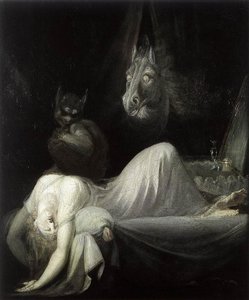
füssli's paintings often depicted supernatural experiences, such as the nightmare, which showcased his unique style. he also created a series of paintings based on john milton's works, with the intention of forming a milton gallery comparable to boydell's shakespeare gallery.notable works and associations
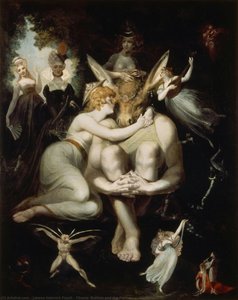
- titania, bottom and the fairies, a painting showcasing füssli's use of fairy-tale scenes from shakespeare as motifs.
- association with the royal academy, where he held the posts of professor of painting and keeper.
- influence on younger british artists, including william blake.
museums and collections
füssli's works can be found in various museums, including:- kunsthaus zürich, switzerland, which features a wide range of füssli's paintings, including the nightmare.
- albertina, vienna, austria, which houses füssli's watercolor piece, teiresias foretells the future to odysseus.
legacy
füssli's style had a considerable influence on many younger british artists, and his supernatural themes continue to fascinate art lovers. his legacy can be explored further through his numerous works, which can be found in various museums and collections. recommended reading:- titania, bottom and the fairies by johann heinrich füssli
- henry fuseli - wikipedia
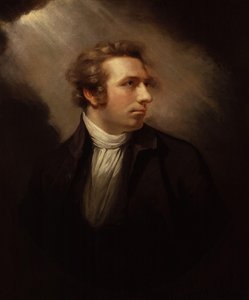
johann heinrich füssli
1741 - 1825 , Switzerland
Quick Facts
- Artistic Movement Or Style: Romanticism, Neoclassicism
- Artists Or Movements Influenced By This Artist: ['William Blake']
- Artists Who Influenced This Artist:
- Titian
- Caravaggio
- Date Of Birth: Feb 7, 1741
- Date Of Death: 1825
- Full Name: Johann Heinrich Füssli
- Nationality: Swiss
- Notable Artworks:
- The Nightmare
- Titania, Bottom & Fairies
- Place Of Birth: Zurich, Switzerland

