

 Preview
 Send
Send Share
Share
 Details

 Download
 Similars
 X-Ray
X-Ray Diaporama
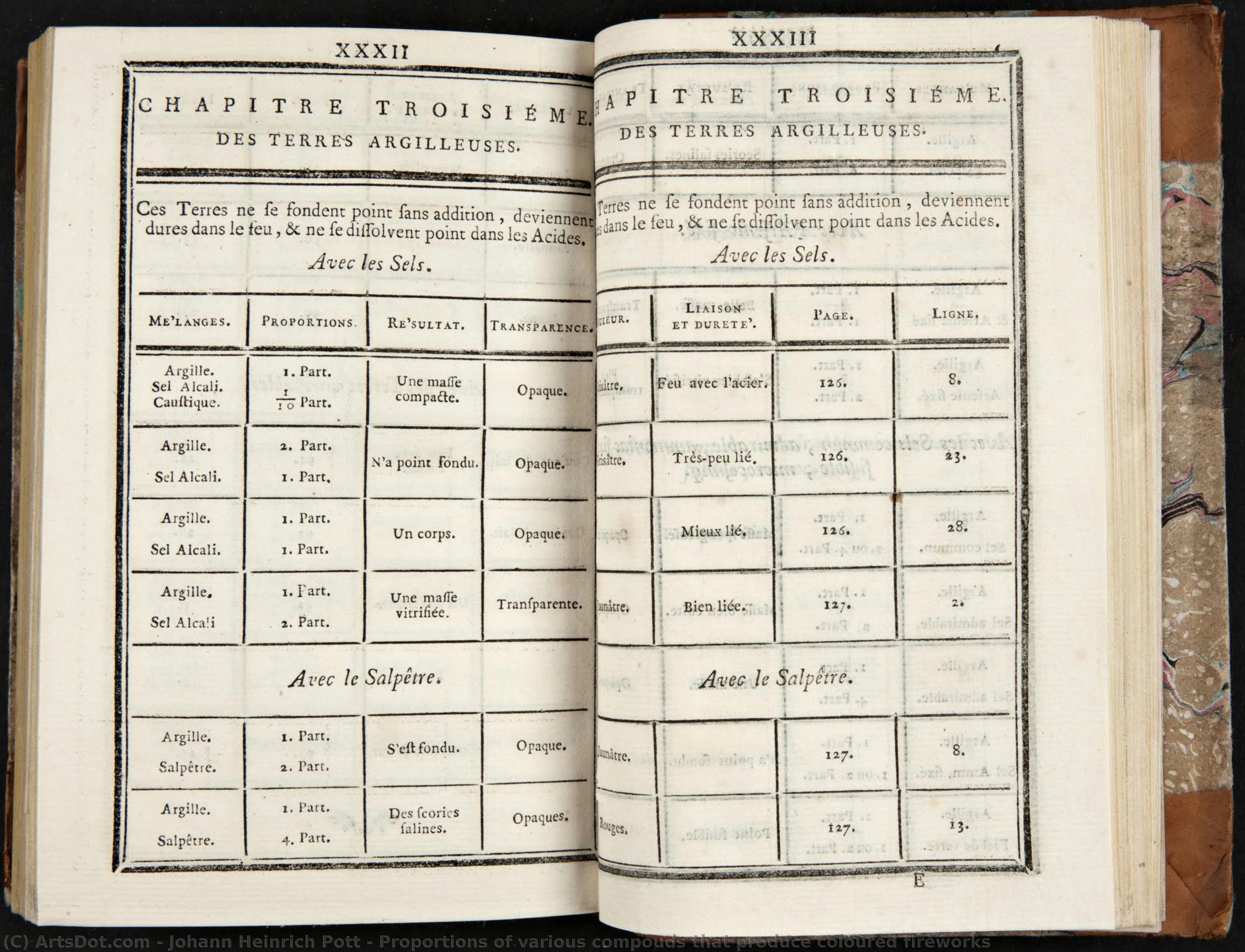
Proportions of various compouds that produce coloured fireworks


 Read More
Purchase a high-resolution, enhanced digital image, far superior to the online preview.
Each file is meticulously prepared by our in-house specialists using advanced tools and expert manual retouching. We ensure every image has exceptional clarity, precise color accuracy, and fine detail.
The final file is delivered via email within 72 hours, optimized for immediate use in professional, editorial, and print environments. This is the same quality trusted by top-tier design studios, publishers, and galleries.
Digital Image
Download a high-resolution file for personal display, printing, and creative projects. ( Buy Print Buy Hand Made Painting)
Included in Every Digital Image Order
Expert Digital Delivery, Guaranteed
When you choose ArtsDot.com, you're not just getting an image - you're receiving a professionally enhanced digital artwork, crafted with precision and backed by a satisfaction guarantee. Here's everything that comes with your order, automatically:

Fast Email Delivery
Your high-resolution digital image file will be emailed to you within 72 hours of ordering - ready for immediate use.

AI-Enhanced Digital File
Your artwork is professionally optimized using advanced AI tools and manual editing, ensuring maximum detail, clarity, and color accuracy.

Free Lifetime Re-Delivery
Accidentally deleted or lost your file? No worries - we'll resend it to you anytime, free of charge.

No Import Fees - Ever
Enjoy your artwork instantly with zero customs, duties, or delivery fees - digital downloads are always tax-free.

Color Accuracy Guarantee
We ensure your digital image reflects the original colors as closely as possible using professional tools and color management.

60-Day Satisfaction Guarantee
If you're not satisfied with your digital image, we'll revise it or refund 100% within 60 days - no questions asked.

100% Money-Back Guarantee
Not satisfied? Get a full refund within 60 days of receiving your digital file - no questions asked.

Bulk Order Discounts
Buy 3 images, save 10% - Buy 5, save 15% - Buy 10+, save 20%. Great for creative projects, galleries, and agencies.
Related Artworks









Artist Biography
Joseph Highmore: A Quiet Master of the Rococo Era
Born in London in 1692, Joseph Highmore’s life was a fascinating blend of legal aspirations and artistic passion—a testament to the enduring pull of creativity. Initially discouraged by his family from pursuing art professionally, he nonetheless found himself drawn to the academy under Godfrey Kneller, absorbing the principles of anatomy and observation that would become cornerstones of his distinctive style. His early work, influenced by Jonathan Richardson’s witty and often satirical portraits, hinted at a burgeoning talent, but it was the burgeoning Rococo movement in Europe that truly shaped his artistic trajectory.
Highmore's career gained momentum in the 1720s, establishing him as a respected portraitist within London society. He quickly demonstrated an ability to capture not just likenesses, but also the personalities and social nuances of his subjects. Crucially, he wasn’t merely replicating appearances; he was engaging with the spirit of the age, responding to the elegant curves, playful compositions, and emphasis on pleasure characteristic of Rococo art. This shift is evident in works like “Mr Oldham and Friends” (c. 1750), a remarkably informal piece that retains a directness and freshness reminiscent of Hogarth’s earlier satirical style – a clear indication of Highmore's willingness to experiment and innovate.
A Journey Through European Influence
Highmore’s artistic development was profoundly influenced by his travels throughout Europe. A visit to the Low Countries in 1732 provided him with invaluable exposure to the works of Rubens and van Dyck, masters whose compositional skills and understanding of light and shadow he deeply admired. Later, a trip to Paris in the same decade allowed him to immerse himself in the vibrant artistic scene, studying the collections of private patrons and absorbing the latest trends. These experiences weren’t simply about copying styles; they were about internalizing principles – learning how to create depth through careful layering, how to capture the subtle play of light on surfaces, and how to imbue a portrait with a sense of character and atmosphere.
His engagement with scientific thought is also noteworthy. He corresponded with Brook Taylor, the mathematician who developed a theory of perspective, demonstrating an intellectual curiosity that informed his artistic practice. This pursuit of knowledge extended beyond mere technique; it reflected a desire to understand the underlying principles governing visual perception – a key element in Highmore’s ability to create such convincing and engaging images.
Illustrations for Pamela and Beyond
Perhaps one of Highmore's most significant contributions to British art history lies in his illustrations for Samuel Richardson’s novel *Pamela*. Commissioned in 1743-4, these twelve engravings marked a pivotal moment, establishing him as a key figure in the development of narrative painting in England. Unlike the purely decorative style prevalent at the time, Highmore's illustrations were imbued with a sense of drama and psychological insight, capturing the emotional complexities of the story. They demonstrated an ability to translate literary themes into visual form, foreshadowing the rise of British artists who would later pioneer a new approach to historical and narrative painting – alongside figures like Hogarth and Hayman.
The illustrations were not simply reproductions of scenes; they were carefully constructed compositions designed to evoke specific moods and emotions. Highmore’s use of light, shadow, and characterization effectively conveyed the story's themes of virtue, temptation, and social injustice. This work cemented his reputation as a skilled narrative painter and established him as an important link between the classical traditions of portraiture and the emerging trends in British art.
A Legacy of Elegance and Observation
Retiring to Canterbury in 1762, Highmore continued to refine his artistic practice and share his knowledge through critical articles on subjects ranging from Rubens’ ceiling decorations at Whitehall Palace to the principles of color theory. He died peacefully in 1780, leaving behind a substantial body of work that exemplifies the elegance and sophistication of the Rococo era. Joseph Highmore's legacy lies not only in his beautiful portraits but also in his role as a bridge between artistic traditions – a quiet master who skillfully absorbed the influences of Europe while forging a distinctly British style.
His paintings, particularly those showcasing equestrian subjects and intimate domestic scenes, continue to be admired for their technical skill, psychological insight, and understated charm. Highmore’s work stands as a testament to the power of observation, the importance of intellectual curiosity, and the enduring appeal of a refined artistic sensibility.
johann heinrich pott
1692 - 1777 , Germany
Quick Facts
- Artistic Movement Or Style: Rococo portraiture
- Artists Or Movements Influenced By This Artist:
- Hayman
- Hogarth
- Artists Who Influenced This Artist:
- Jonathan Richardson
- Hogarth
- Date Of Birth: 13 June 1692
- Date Of Death: 3 March 1780
- Full Name: Joseph Highmore
- Nationality: English
- Notable Artworks:
- Mr Oldham and Friends
- Equestrian Portrait of King George II
- Conversation Piece
- Place Of Birth: London, England

