 Preview
 Send
Send Share
Share
 Details

 Download
 Similars
 X-Ray
X-Ray Diaporama
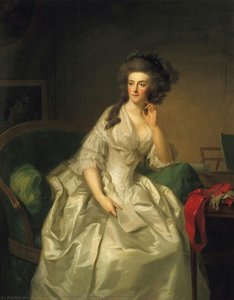
Portrait of Princess Frederika Sophia Wilhelmina (1751-1820)
 Oil On Canvas
- WallArt
- Neoclassical
 1789
1789- Early Modern
 172.0 x 135.0 cm
 Mauritshuis
 Read More
Hand Made Oil Reproduction
Hand-painted oil on canvas in your size and frame, made to order by our artists. ( Buy Print Buy Image)




P118B $10

P118H $10

P118W $10

P438Z $10

P508JH $12

P508YH $12

P805H $10

P805Z $10

P919BZ $10

P919G $10

P919XJ $10

P959ZH $10

P968JZ $12

W106C $8

W218G $10

W218JH $8

W218Y $10

W307PJ $10

W316G $10

W316PJ $8

W316Y $10

W398PJ $8

W4111J $10

W500HY $15

W500JH $15

W692G $12

W849H $8

W940BG $15

W953PJ $8




Pick from our preset sizes that match the artwork's original proportions.

You may enter your own dimensions to fit a specific frame or space. If your selected size does not match the original image's proportions, we will either crop the artwork or extend the painting with additional hand-painted elements. A digital mockup will be sent for your approval before production begins.
Please note that the on-screen preview does not reflect the actual cropping or extension. Only the mockup will accurately show the final composition.
While custom sizes are available, we recommend selecting a dimension from the predefined list to preserve the original proportions.
After order, ArtsDot.com team will email client for instructions and provide a mockup preview
Worldwide Delivery () in 3/4 weeks instead of standard 5 weeks. (16 August). No compromise on quality.

Free Worldwide Express Shipping

High-Quality Linen Canvas

Full Shipping Insurance

Customs Tax Refund Guarantee

True Color Matching Guarantee

60-Day Return Policy (Defects Only)

100% Money-Back Guarantee

Bulk Discount Offer
 Glass option is only available in size under 110 CM

Portrait of Princess Frederika Sophia Wilhelmina (1751-1820)
Reproduction Medium
Reproduction Size
-


Total Price
$ 263
Artwork Description
The Aura of Aristocratic Grace: A Study in Neoclassical Portraiture
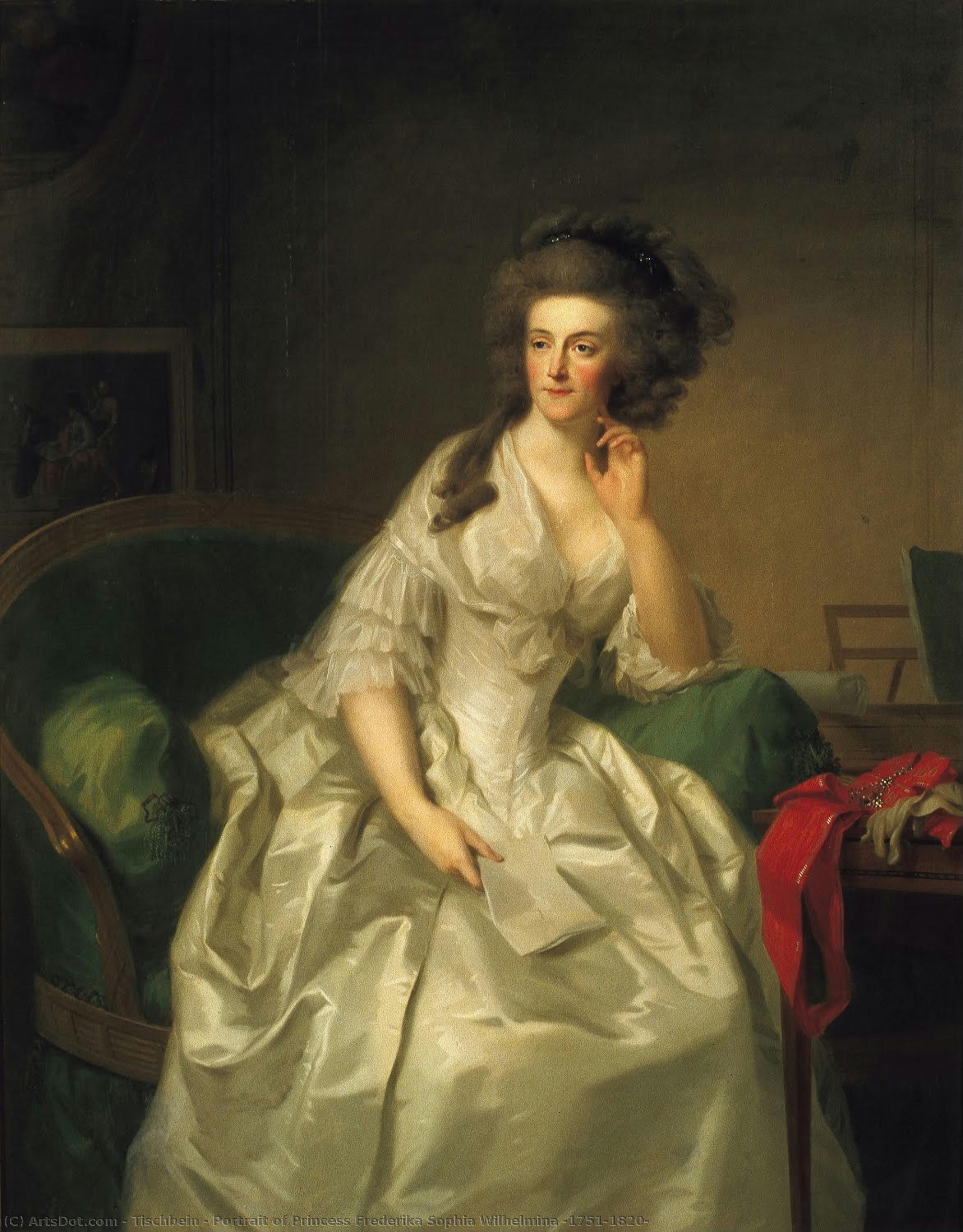
To gaze upon this portrait of Princess Frederika Sophia Wilhelmina is to step directly into the refined salons of late 18th-century Germany. Painted by Johann Heinrich Wilhelm Tischbein in 1789, the work transcends a mere likeness; it is a carefully constructed tableau of status, intellect, and exquisite femininity. The princess is captured in a moment of quiet contemplation, seated within an ornate chair that anchors her elegantly composed figure. Tischbein masterfully employs the three-quarter pose, allowing us to appreciate not only the delicate sweep of her gown—rendered in soft whites and creams—but also the subtle narrative suggested by her thoughtful gaze directed toward the left edge of the canvas. The entire composition sings with an air of restrained nobility.
Mastery of Light and Texture: A Technical Deep Dive
Technically, this piece is a testament to Tischbein's profound skill as an oil painter on canvas. One can almost feel the difference between the materials he handled. The artist achieves breathtaking verisimilitude through his handling of texture; observe how the smoothness of her skin contrasts with the crisp folds of her drapery and the plush depth suggested in the vibrant green upholstery of the chair. Tischbein utilizes a soft, diffused natural light that bathes the scene, creating a gentle chiaroscuro effect. This lighting is not harsh but rather enveloping, serving to highlight the contours of her face while allowing shadows to deepen the sense of three-dimensional space. The background, deliberately blurred through atmospheric perspective, ensures that all focus remains squarely upon the princess and her immediate surroundings.
Symbolism of Status and Introspection
The symbolism woven into this portrait speaks volumes about the sitter's world. Her attire and poised bearing are unmistakable markers of high European aristocracy—a visual declaration of refinement and breeding. Yet, it is her expression that invites the deepest engagement. It is not a vacant smile for posterity; rather, it suggests an inner life, an intelligence at work beneath the veneer of courtly elegance. The contrast between the organic flow of her gown and the rigid geometry of the chair subtly mirrors the tension between personal feeling and societal expectation—a timeless theme that resonates deeply with the modern collector.
A Timeless Aesthetic for the Modern Interior
For those seeking to infuse a space with the gravitas and beauty of historical masterworks, this reproduction offers unparalleled depth. The Neoclassical style, celebrated for its clarity of form and idealized beauty, pairs exquisitely with both opulent traditional décor and thoughtfully curated modern interiors that appreciate classical structure. Owning or displaying an artwork echoing Tischbein’s vision means bringing home more than just paint on canvas; it is acquiring a piece of documented history, imbued with the enduring grace of the Enlightenment era.
Related Artworks

Artist Biography
early life and training
johann heinrich wilhelm tischbein, known as the goethe tischbein, was a german painter from the tischbein family of artists. born on february 15, 1751, in haina, germany, tischbein's life was marked by an innate passion for art. he received his early training under the guidance of johann heinrich tischbein the elder, a prominent figure in the german art scene.artistic career and notable works
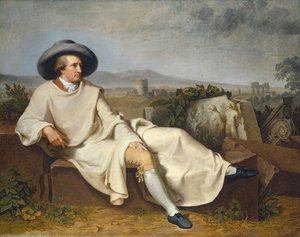
tischbein's artistic career was characterized by his mastery of portraiture, as evident in his famous work portrait of johann wolfgang von goethe in the roman campagna. this piece not only showcases tischbein's skill but also highlights his connection to the renowned german writer and statesman. other notable works include:- paris with the apple, a painting that reflects tischbein's fascination with the french art scene.
- helen and menelaus, a piece that demonstrates his ability to capture mythological themes with elegance.
- ajax and cassandra, showcasing tischbein's versatility in depicting dramatic scenes.
legacy and influence
tischbein's contributions to german art are undeniable. his work has been featured in various museums, including the schackgalerie in munich, which is dedicated to late romanticism. this museum, with its extraordinary collection of paintings, offers a unique insight into 19th-century german art.personal life and later years
tischbein passed away on june 26, 1829, in eutin, germany. his legacy continues to inspire artists and art enthusiasts alike, with his work remaining a testament to the enduring power of german art during the late romantic period. key points:- tischbein was born on february 15, 1751, in haina, germany.
- he received training under johann heinrich tischbein the elder.
- notable works include portrait of johann wolfgang von goethe in the roman campagna, paris with the apple, and ajax and cassandra.
- tischbein's work is featured in the schackgalerie in munich.
- he passed away on june 26, 1829, in eutin, germany.
- view tischbein's artworks on ArtsDot: [https://ArtsDot.com/@/johann heinrich wilhelm tischbein](https://ArtsDot.com/@/johann heinrich wilhelm tischbein)
- explore the schackgalerie in munich: /en/art/show/art-d3bffr-en/
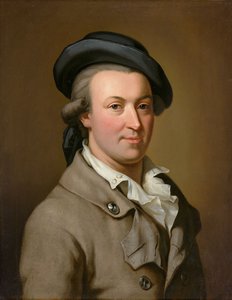
johann heinrich wilhelm tischbein
1751 - 1829 , Germany
Quick Facts
- Artistic Movement Or Style: English School; Moral & Satirical Engravings/Paintings
- Artists Or Movements Influenced By This Artist:
- Romantic Literature
- Caricature
- Artists Who Influenced This Artist:
- Nicolas Poussin
- Jan Vermeer
- Date Of Birth: November 5, 1697
- Date Of Death: October 26, 1764
- Full Name: William Hogarth
- Nationality: British
- Notable Artworks:
- Beer Street
- Gin Lane
- Marriage A-la-Mode
- Industry and Idleness
- Place Of Birth: London, England
Related Articles

Oil on Canvas: A Historical & Technical Exploration of a Timeless Artistic Medium
Explore the rich history & enduring techniques of oil painting on canvas. Discover the science behind its longevity, conservation practices, and contemporary relevance. Expert insights for art enthusiasts.

Giclée Prints: Archival Quality & Aesthetic Nuances for the Discerning Collector
Explore the world of giclée prints with ArtsDot. Learn about archival quality, aesthetic nuances & investment potential. Expert guidance for discerning art collectors seeking museum-quality reproductions and lasting value.

The Enduring Legacy of Oil on Canvas: Technique, History & Aesthetic Impact
Explore the rich history & techniques of oil painting – from Renaissance masters to Impressionism. Discover pigments, layering methods, and why this timeless medium endures. Expert insights for artists & art enthusiasts.

The Enduring Legacy of Oil on Canvas: Technique, History & Contemporary Practice
Explore the rich history & enduring techniques of oil painting on canvas. Discover the science behind its longevity, conservation practices, and contemporary relevance. Expert insights for art enthusiasts.
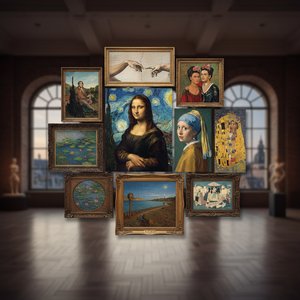
Oil on Canvas Masters: 10 Paintings That Redefined Art History |
Journey through art history with our guide to 10 legendary oil on canvas masterpieces! Explore iconic works by Van Gogh, Monet & Rembrandt. Find museum-quality reproductions and elevate your home decor at . Discover all masterpieces online.