 Preview
 Send
Send Share
Share
 Details

 Download
 Similars
 X-Ray
X-Ray Diaporama
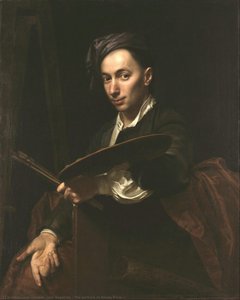
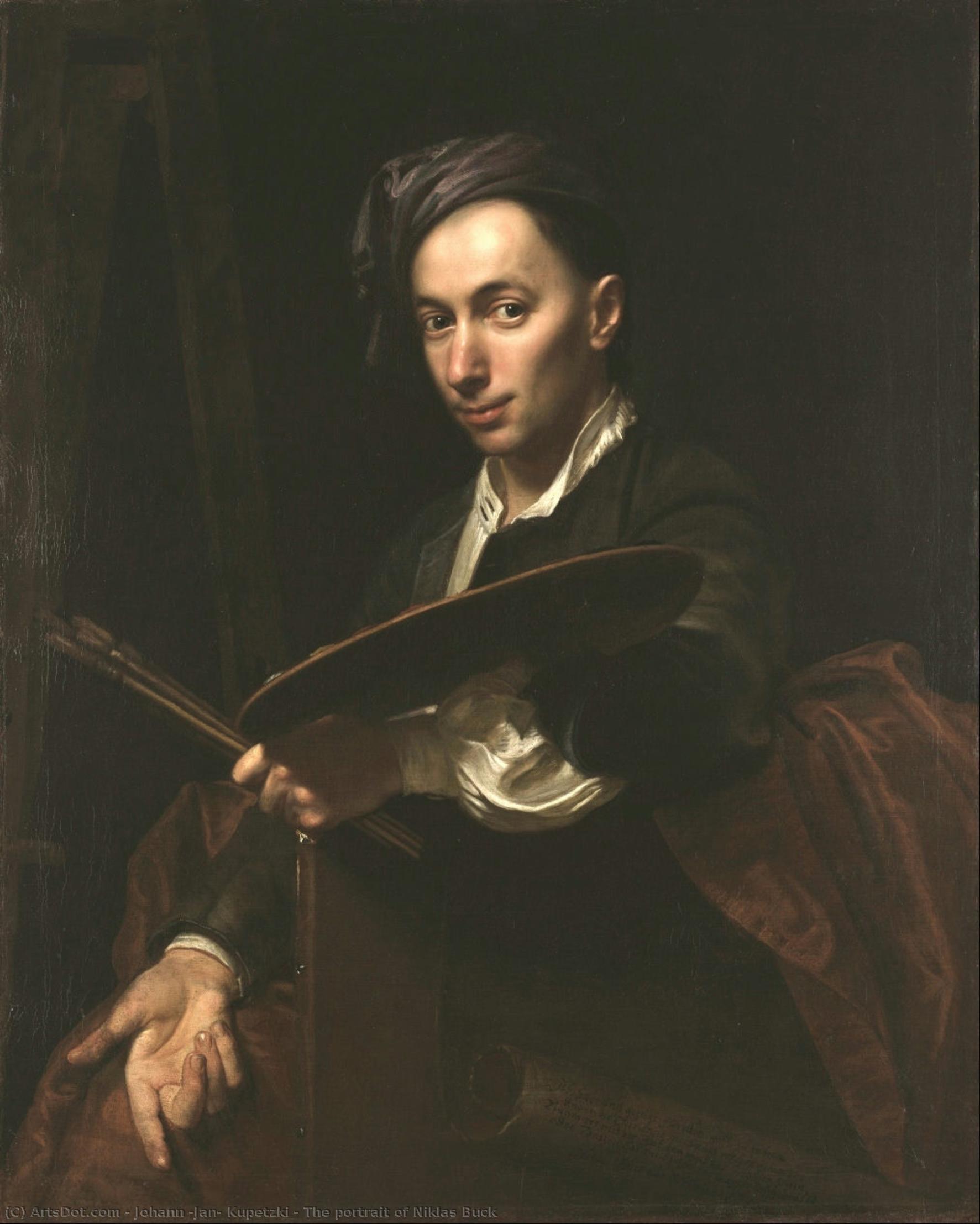
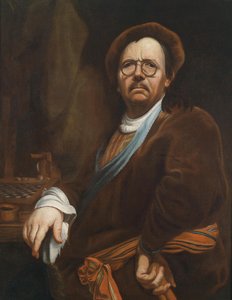
The portrait of Niklas Buck
 1718
1718 75.0 x 94.0 cm
 Read More
Hand Made Oil Reproduction
Hand-painted oil on canvas in your size and frame, made to order by our artists. ( Buy Print Buy Image)




































Pick from our preset sizes that match the artwork's original proportions.

You may enter your own dimensions to fit a specific frame or space. If your selected size does not match the original image's proportions, we will either crop the artwork or extend the painting with additional hand-painted elements. A digital mockup will be sent for your approval before production begins.
Please note that the on-screen preview does not reflect the actual cropping or extension. Only the mockup will accurately show the final composition.
While custom sizes are available, we recommend selecting a dimension from the predefined list to preserve the original proportions.
After order, ArtsDot.com team will email client for instructions and provide a mockup preview
Worldwide Delivery () in 3/4 weeks instead of standard 5 weeks. (4 September). No compromise on quality.

Free Worldwide Express Shipping

High-Quality Linen Canvas

Full Shipping Insurance

Customs Tax Refund Guarantee

True Color Matching Guarantee

60-Day Return Policy (Defects Only)

100% Money-Back Guarantee

Bulk Discount Offer
 Glass option is only available in size under 110 CM

The portrait of Niklas Buck
Reproduction Medium
Reproduction Size
-


Total Price
$ 263
Related Artworks







Artist Biography
Jacob Christoph Le Blon: The Pioneer of Color Printing
Born in Frankfurt in 1667, Jacob Christoph Le Blon’s legacy transcends his relatively short life – a mere seven decades marked by innovation and artistic ingenuity. He wasn't merely a painter; he was a revolutionary, fundamentally altering the landscape of visual reproduction through his groundbreaking invention of halftone color printing. This technique, building upon earlier mezzotint methods, laid the groundwork for the modern CMYK system that dominates print media today, making Le Blon a surprisingly pivotal figure in the history of art and technology.
Le Blon’s lineage was steeped in the world of printing. His father, Christophe Le Blon, was a respected engraver and bookseller, inheriting a tradition of craftsmanship and a keen understanding of image reproduction. This familial connection provided an invaluable foundation for Jacob's own pursuits. He received early training from Conrad Ferdinand Meyer in Zurich, though definitive documentation remains scarce – a common challenge when tracing the lives of artists during this period. However, his time in Rome under Carlo Maratta exposed him to the refined techniques of Italian painting, influencing his approach to composition and color.
His most significant contribution stemmed from his experimentation with mezzotint engraving. Rather than relying on a single plate for each color, Le Blon devised a system utilizing three or even four copper plates – one dedicated to yellow, another to red, and a third to blue. By carefully controlling the density of ink applied to these plates, he could create a vast range of hues and shades within a single print. This was a radical departure from existing methods, which typically produced monochrome images. His meticulous process involved creating intricate patterns of dots – halftones – on each plate, with varying densities corresponding to different colors in the original painting. The resulting prints possessed an unprecedented level of realism and chromatic depth, effectively mimicking the nuances of oil paint.
Le Blon’s system wasn't merely a technical feat; it was also commercially driven. He established “The Picture Office” in London, capitalizing on the growing demand for accurate reproductions of portraits and paintings. He secured royal patents from King George I in 1719, recognizing the potential of his invention. However, despite his ingenuity and initial success, the venture ultimately failed due to a combination of factors – including high production costs, competition, and perhaps a lack of understanding of the market’s appetite for such detailed reproductions. Nevertheless, Le Blon's work laid the foundation for future advancements in color printing.
The Influence of Alonso Cano: A Shared Artistic World
While separated by decades and artistic specializations, Jacob Christoph Le Blon’s career intersected with that of Alonso Cano (1601-1667), a renowned Spanish painter, sculptor, architect, and draughtsman. Cano, often hailed as the “Spanish Michelangelo,” was celebrated for his diverse talents and his ability to seamlessly blend various artistic disciplines. His work reflects a deep engagement with both classical ideals and contemporary Baroque aesthetics.
Cano’s career unfolded across Seville, Madrid, Granada, Valencia, and Málaga, shaped by personal circumstances and royal patronage. He served as painter to the Count-Duke Olivares, Philip IV's chief advisor, and his architectural contributions are particularly noteworthy, notably the façade of the Granada Cathedral, a bold and innovative example of Baroque design. His artistic style is characterized by a serene quality, often imbued with a sense of melancholy and introspection – qualities that resonate even in his more dynamic works.
Interestingly, Le Blon’s work demonstrates a similar sensitivity to light and shadow, reflecting the influence of artists like Zurbarán, whom he likely studied. Both artists shared a fascination with capturing the essence of their subjects through meticulous observation and skillful rendering. While Cano primarily worked in oil paint, Le Blon's mezzotint technique offered a unique means of achieving similar effects – particularly in terms of tonal gradation and atmospheric perspective.
Jonathan Richardson: A Contemporary Innovator
Around the same time as Le Blon was developing his color printing system, Jonathan Richardson (1667-1745) was making significant contributions to the English art world. Richardson, often referred to as “the Elder” to distinguish him from his son, was a portrait painter and influential theorist of art. His work is characterized by its elegant realism and subtle psychological insights.
Richardson’s most enduring legacy lies in his *Essay on the Theory of Painting*, published in 1715. This seminal text provided a comprehensive framework for understanding artistic principles, drawing heavily on the ideas of Italian Renaissance masters like Leonardo da Vinci and Michelangelo. Richardson's essay championed the importance of observation, composition, and color theory – concepts that profoundly influenced subsequent generations of English artists, most notably Joshua Reynolds.
The connection between Richardson and Le Blon is significant. Richardson’s *Essay* explicitly acknowledged Le Blon’s pioneering work in color printing, recognizing his contribution to the advancement of visual reproduction. Both artists were engaged with questions of representation and technique, albeit within different artistic contexts. Richardson's theoretical explorations complemented Le Blon’s practical innovations, contributing to a broader dialogue about the nature of art and its methods of creation.
Gabriël Metsu: A Master of Subtle Detail
The work of Gabriël Metsu (1629-1667), a Dutch painter active in Amsterdam, offers a compelling contrast to Le Blon’s technical innovation. Metsu was renowned for his intimate and psychologically astute portraits, still lifes, and genre scenes – all characterized by an exquisite attention to detail and a remarkable sense of atmosphere.
Metsu's paintings are often small in scale, creating a sense of intimacy and immediacy. His compositions are carefully balanced, with subtle gestures and expressions conveying a wealth of emotion. He was particularly adept at capturing the fleeting moments of domestic life – scenes of family interaction, quiet contemplation, and everyday routines.
While Metsu’s style differed significantly from Le Blon's, both artists shared a commitment to realism and a deep understanding of human psychology. Metsu’s meticulous observation and subtle rendering of light and shadow demonstrate a mastery of technique – qualities that would have undoubtedly influenced Le Blon’s approach to mezzotint engraving. Though their paths diverged, they represent two distinct yet equally significant voices within the artistic landscape of 17th-century Europe.
johann (jan) kupetzki
1667 - 1740 , Germany
Quick Facts
- Artistic Movement Or Style: Halftone printing
- Artists Or Movements Influenced By This Artist: ['CMYK color model']
- Artists Who Influenced This Artist:
- Conrad Ferdinand Meyer
- Carlo Maratta
- Date Of Birth: May 2, 1667
- Date Of Death: May 16, 1741
- Full Name: Jacob Christoph Le Blon
- Nationality: German
- Notable Artworks:
- Siege of Armentières
- Siege of Dixmude
- Place Of Birth: Frankfurt, Germany