 Preview
 Send
Send Share
Share
 Details

 Download
 Similars
 X-Ray
X-Ray Diaporama
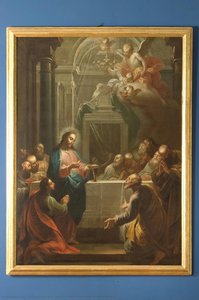
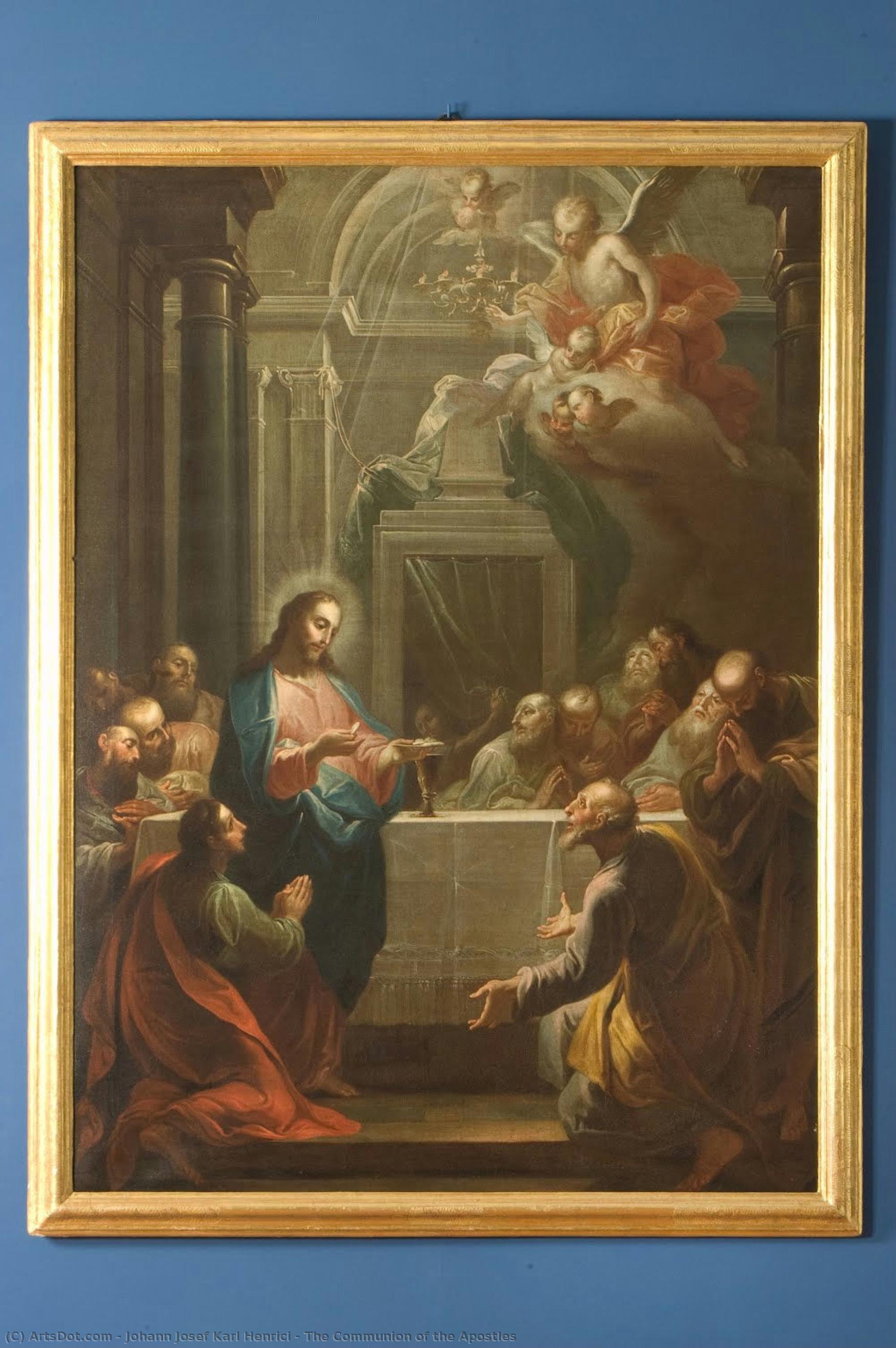
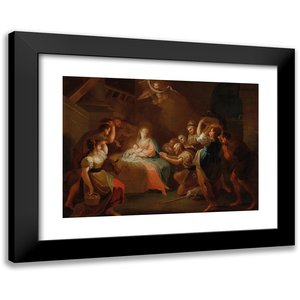
The Communion of the Apostles


 Read More
Hand Made Oil Reproduction
Hand-painted oil on canvas in your size and frame, made to order by our artists. ( Buy Print Buy Image)




































Pick from our preset sizes that match the artwork's original proportions.

You may enter your own dimensions to fit a specific frame or space. If your selected size does not match the original image's proportions, we will either crop the artwork or extend the painting with additional hand-painted elements. A digital mockup will be sent for your approval before production begins.
Please note that the on-screen preview does not reflect the actual cropping or extension. Only the mockup will accurately show the final composition.
While custom sizes are available, we recommend selecting a dimension from the predefined list to preserve the original proportions.
After order, ArtsDot.com team will email client for instructions and provide a mockup preview
Worldwide Delivery () in 3/4 weeks instead of standard 5 weeks. (3 September). No compromise on quality.

Free Worldwide Express Shipping

High-Quality Linen Canvas

Full Shipping Insurance

Customs Tax Refund Guarantee

True Color Matching Guarantee

60-Day Return Policy (Defects Only)

100% Money-Back Guarantee

Bulk Discount Offer
 Glass option is only available in size under 110 CM

The Communion of the Apostles
Reproduction Medium
Reproduction Size
-


Total Price
$ 263
Related Artworks








Artist Biography
Jean Baptiste Vanmour: A Painter of the Sublime in Constantinople
Jean Baptiste Vanmour, born in Valenciennes, France, in 1671 and tragically dying in Constantinople (Istanbul) in 1737, remains a captivating figure within the history of European art. While often overshadowed by his contemporaries, Vanmour’s unique style—a blend of French academic precision with the dramatic lighting and atmospheric perspective favored by Baroque masters—produced a body of work that continues to resonate with its evocative power. His life was one of constant movement, marked by service to various courts and a deep fascination with the exotic landscapes and cultures of Eastern Europe and the Ottoman Empire, ultimately shaping an artistic vision unlike any other.
Vanmour’s early career began in France, where he received a solid grounding in traditional academic painting. However, his ambition led him eastward, first to service under the Margrave of Baden-Durlach, where he meticulously documented the opulent gardens and collections of Karlsburg Castle. This period honed his skills in botanical illustration, a discipline he would later master with remarkable detail. His work during this time reveals an early fascination with light and shadow, foreshadowing the dramatic effects that would characterize his later paintings. It’s believed that Copley's visit to Italy profoundly influenced Vanmour's approach to capturing atmospheric depth and the interplay of light on surfaces – a technique he skillfully integrated into his own style.
- Early Influences: The Baroque masters, particularly Rembrandt and Claude Lorrain, served as key influences.
- Botanical Precision: His meticulous botanical illustrations demonstrated an extraordinary eye for detail and color.
- Eastern Exoticism: His time in Constantinople provided a wealth of inspiration, fueling his depictions of the city’s grand architecture, bustling markets, and diverse population.
The Painter of Istanbul: A City Transformed
Vanmour's most celebrated work emerged during his years in Constantinople – then the heart of the Ottoman Empire. He wasn’t merely a recorder of scenes; he was an interpreter, transforming the city into a stage for dramatic narratives and sublime landscapes. Unlike many Western artists who viewed the East through a lens of exoticism and romanticized notions, Vanmour presented a more nuanced and often melancholic portrayal. His paintings capture not just the splendor of the Topkapi Palace or the vibrant energy of the Grand Bazaar, but also the sense of a civilization on the cusp of change – a city grappling with internal tensions and external pressures.
His depictions are characterized by an almost theatrical use of light, often employing chiaroscuro to highlight key figures and architectural details. He masterfully rendered the textures of fabrics, the gleam of gold, and the intricate patterns of Ottoman carpets, creating a rich sensory experience for the viewer. The scale of his canvases—often monumental in size—further enhances the dramatic effect, immersing the audience within the heart of the city.
- Key Subjects: Vanmour frequently depicted scenes of courtly life, religious ceremonies, and urban landscapes.
- Dramatic Lighting: His use of chiaroscuro created a sense of drama and depth.
- Architectural Detail: He meticulously rendered the intricate details of Ottoman architecture.
Technique and Style: A Synthesis of Tradition
Vanmour’s artistic style represents a fascinating synthesis of academic tradition and Baroque influences. While he adhered to the formal conventions of French painting—precise drawing, balanced compositions, and careful attention to detail—he infused his work with a distinctly dramatic sensibility. He was deeply influenced by the works of Claude Lorrain, particularly in his use of atmospheric perspective and the depiction of light filtering through foliage. However, unlike Lorrain’s idealized landscapes, Vanmour’s scenes often possess a heightened sense of drama and emotional intensity.
His technique involved layering thin glazes of oil paint to achieve luminous colors and subtle gradations of tone. He was particularly adept at capturing the textures of fabrics and surfaces, creating a remarkable level of realism. Furthermore, Vanmour’s meticulous observation of his subjects—whether it was a richly adorned palace or a bustling marketplace—is evident in every brushstroke.
- Oil Glazes: He employed thin glazes to create luminous colors and subtle tonal variations.
- Detailed Observation: His paintings are characterized by meticulous observation of his subjects.
- Baroque Influence: He incorporated dramatic lighting and atmospheric perspective, reminiscent of Baroque masters.
Legacy and Historical Significance
Despite a relatively modest recognition during his lifetime, Jean Baptiste Vanmour’s work has gained increasing appreciation in recent decades. His paintings offer a unique window into the world of 18th-century Constantinople—a city at the crossroads of Europe and Asia, brimming with cultural exchange and artistic innovation. His ability to capture both the grandeur and the melancholy of this pivotal era solidifies his place as a significant figure in European art history.
Today, Vanmour’s paintings are housed in museums and private collections around the world, testament to their enduring beauty and historical value. His legacy lies not only in his technical skill but also in his ability to transform a foreign landscape into a compelling narrative—a story of ambition, exploration, and the ever-shifting dynamics of power.
johann josef karl henrici
1737 - 1823 , Austria
Quick Facts
- Artistic Movement Or Style: Painter
- Artists Who Influenced This Artist: ['None],\n "Artists or movements influenced by this artist": [Hackert, Jacob Philipp']
- Date Of Birth: January 9, 1671
- Date Of Death: January 22, 1737
- Full Name: Jean Baptiste Vanmour
- Nationality: French
- Notable Artworks: ['Various landscapes and portraits']
- Place Of Birth: Valenciennes, France