 Preview
 Send
Send Share
Share
 Details

 Download
 Similars
 X-Ray
X-Ray Diaporama
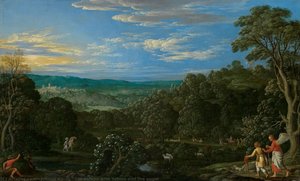
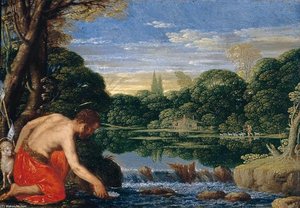
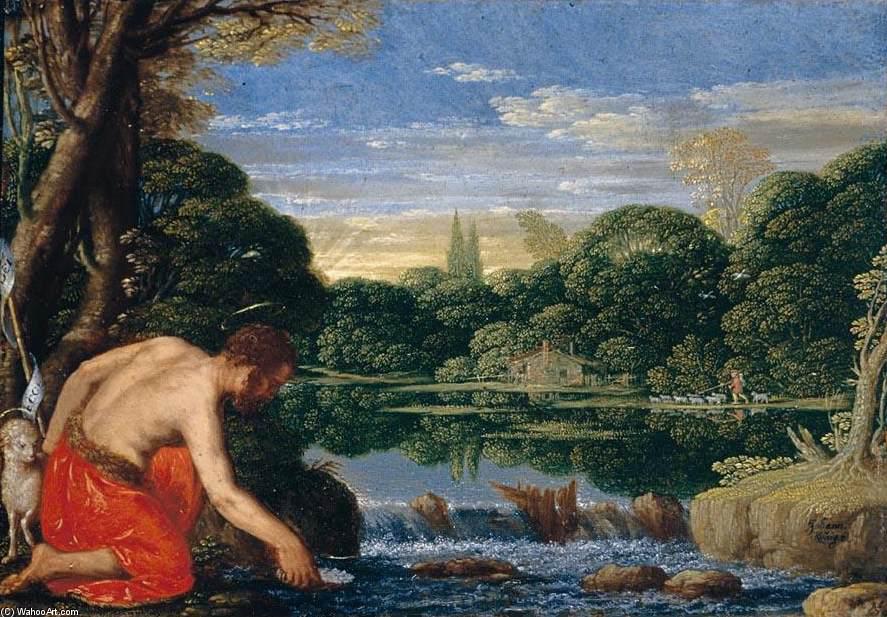
Wooded River Landscape with St John the Baptist
 1610
1610 9.0 x 12.0 cm
 Read More
Hand Made Oil Reproduction
Hand-painted oil on canvas in your size and frame, made to order by our artists. ( Buy Print Buy Image)




































Pick from our preset sizes that match the artwork's original proportions.

You may enter your own dimensions to fit a specific frame or space. If your selected size does not match the original image's proportions, we will either crop the artwork or extend the painting with additional hand-painted elements. A digital mockup will be sent for your approval before production begins.
Please note that the on-screen preview does not reflect the actual cropping or extension. Only the mockup will accurately show the final composition.
While custom sizes are available, we recommend selecting a dimension from the predefined list to preserve the original proportions.
After order, ArtsDot.com team will email client for instructions and provide a mockup preview
Worldwide Delivery () in 3/4 weeks instead of standard 5 weeks. (24 August). No compromise on quality.

Free Worldwide Express Shipping

High-Quality Linen Canvas

Full Shipping Insurance

Customs Tax Refund Guarantee

True Color Matching Guarantee

60-Day Return Policy (Defects Only)

100% Money-Back Guarantee

Bulk Discount Offer
 Glass option is only available in size under 110 CM

Wooded River Landscape with St John the Baptist
Reproduction Medium
Reproduction Size
-


Total Price
$ 263
Related Artworks
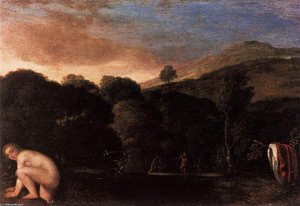
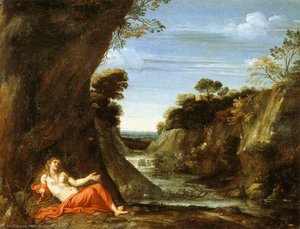
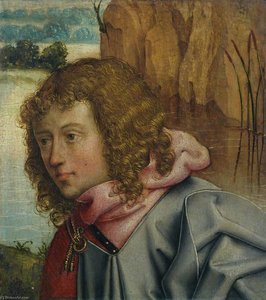
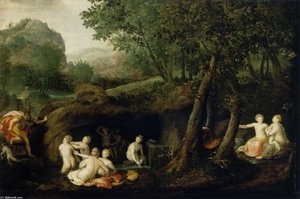
Artist Biography
The Luminous Miniature: The Life and Legacy of Johann König
In the twilight of the Renaissance and the dawn of the Baroque, a period defined by dramatic shifts in light and shadow, the German painter Johann König carved out a niche of extraordinary intimacy. Born in Nuremberg around 1586, König emerged from a world where the meticulous precision of goldsmithing met the burgeoning expressive freedom of the seventeenth century. As the son of the goldsmith Arnold König, his early exposure to fine craftsmanship likely laid the foundation for his later mastery of the small-scale medium. His artistic journey was not merely one of technical skill but a profound engagement with the great masters of his era, creating works that functioned as windows into both the divine and the natural world.
König’s development was deeply shaped by his travels through the artistic heartlands of Europe. Between 1610 and 1614, his presence in Venice and Rome allowed him to breathe the same air as the masters who were redefining European aesthetics. It was in Rome that he encountered the hauntingly beautiful works of Adam Elsheimer, a connection that would become the cornerstone of his stylistic identity. The influence of Elsheimer, along with the subtle nuances of Paul Bril and the early works of Carlo Saraceni, infused König’s compositions with a sense of atmospheric depth and narrative tension. This period of wandering was transformative, as he absorbed the Italian penchant for dramatic lighting and classical composition, which he would later translate into his uniquely German sensibility.
Mastery on Copper: Technique and Vision
What truly distinguishes König within the pantheon of German Baroque artists is his specialized command over painted copper panels. This choice of support required an unparalleled level of discipline; the smooth, non-absorbent surface of copper demands a precise application of pigment to prevent blurring and to achieve the jewel-like luminosity that characterizes his best work. His technique allowed for a microscopic level of detail, enabling him to render the delicate textures of foliage, the shimmering surface of water, and the subtle expressions of biblical figures with breathtaking clarity.
His repertoire was a sophisticated blend of the sacred and the secular, often merging landscape art with profound religious narratives. In works such as Landscape with Tobias and the Angel or his various depictions of St. John the Baptist, König utilized the landscape not merely as a backdrop, but as an active participant in the spiritual drama. Through his use of light—often filtering through dense canopies or reflecting off quiet rivers—he created a sense of sacred atmosphere that invited the viewer into a state of quiet contemplation. His ability to scale grand theological themes down to the size of a cabinet painting allowed for a personal, almost devotional experience between the art and the observer.
A Legacy of Detail and Devotion
Though history occasionally overlooks those who worked in miniature compared to the titans of large-scale fresco or canvas, König’s significance remains undeniable. He served as a vital bridge between the meticulous traditions of the late sixteenth century and the more emotive, expansive Baroque style. His professional life in Augsburg, where he achieved guild membership and contributed to the decoration of the Augsburg Town Hall, demonstrates his integration into the highest levels of civic and artistic society.
The enduring value of Johann König’s oeuvre lies in its ability to evoke wonder through the small and the subtle. His works remind us that greatness is not measured by the breadth of a canvas, but by the depth of the vision contained within its borders. Today, his paintings stand as precious relics of a time when art was a meticulous pursuit of capturing the infinite within the infinitesimal, leaving behind a legacy of light, landscape, and lasting spiritual resonance.

johann könig
1586 - 1642 , Germany
Quick Facts
- Artistic Movement Or Style: Baroque art
- Artists Or Movements Influenced By This Artist: ['Johann Samuel König']
- Artists Who Influenced This Artist:
- Adam Elsheimer
- Italian masters
- Date Of Birth: Nuremberg, Germany (1586)
- Date Of Death: 1642
- Full Name: Johann König
- Nationality: German
- Notable Artworks:
- Landscape with Tobias and the angel
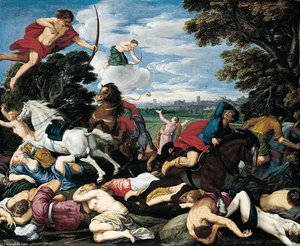
- The Death of Niobe's Children
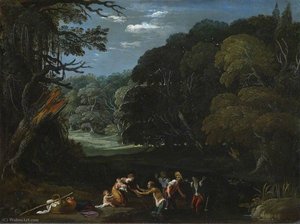
- Latona Changing the Lycian Peasants into Frogs
- Place Of Birth: Nuremberg