

 Preview
 Send
Send Share
Share
 Details

 Download
 Similars
 X-Ray
X-Ray Diaporama
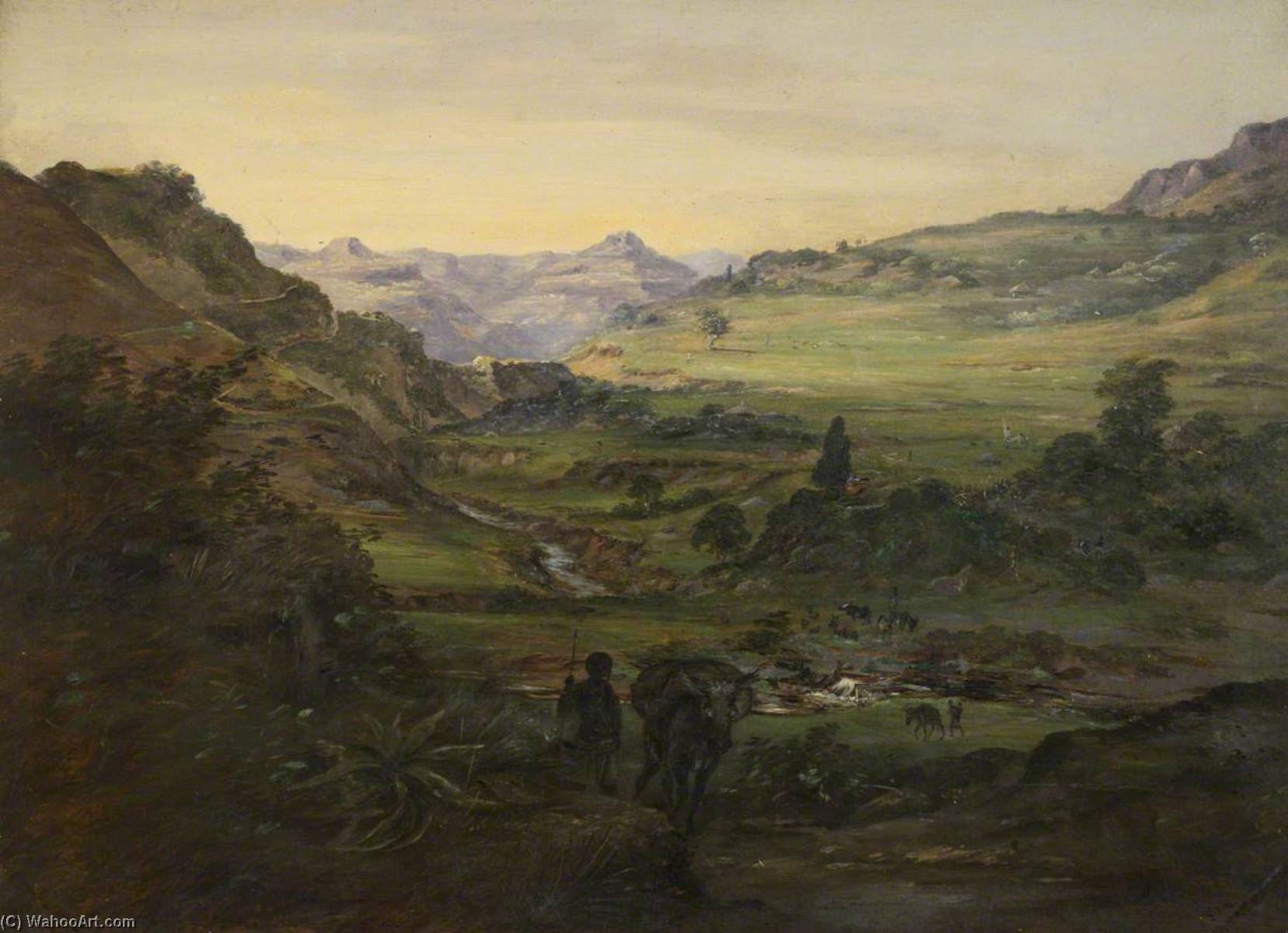
Valley of the Chaka
 1843
1843 29.0 x 39.0 cm
 British Library
 Read More
Purchase a high-resolution, enhanced digital image, far superior to the online preview.
Each file is meticulously prepared by our in-house specialists using advanced tools and expert manual retouching. We ensure every image has exceptional clarity, precise color accuracy, and fine detail.
The final file is delivered via email within 72 hours, optimized for immediate use in professional, editorial, and print environments. This is the same quality trusted by top-tier design studios, publishers, and galleries.
Digital Image
Download a high-resolution file for personal display, printing, and creative projects. ( Buy Print Buy Hand Made Painting)
Included in Every Digital Image Order
Expert Digital Delivery, Guaranteed
When you choose ArtsDot.com, you're not just getting an image - you're receiving a professionally enhanced digital artwork, crafted with precision and backed by a satisfaction guarantee. Here's everything that comes with your order, automatically:

Fast Email Delivery
Your high-resolution digital image file will be emailed to you within 72 hours of ordering - ready for immediate use.

AI-Enhanced Digital File
Your artwork is professionally optimized using advanced AI tools and manual editing, ensuring maximum detail, clarity, and color accuracy.

Free Lifetime Re-Delivery
Accidentally deleted or lost your file? No worries - we'll resend it to you anytime, free of charge.

No Import Fees - Ever
Enjoy your artwork instantly with zero customs, duties, or delivery fees - digital downloads are always tax-free.

Color Accuracy Guarantee
We ensure your digital image reflects the original colors as closely as possible using professional tools and color management.

60-Day Satisfaction Guarantee
If you're not satisfied with your digital image, we'll revise it or refund 100% within 60 days - no questions asked.

100% Money-Back Guarantee
Not satisfied? Get a full refund within 60 days of receiving your digital file - no questions asked.

Bulk Order Discounts
Buy 3 images, save 10% - Buy 5, save 15% - Buy 10+, save 20%. Great for creative projects, galleries, and agencies.
Collectible Description
Composition and Details
The scene is populated with 13 people, each engaged in various activities such as riding horses or walking near the animals. A total of 7 horses are scattered throughout the valley, adding to the picturesque nature of the scene. The combination of the natural beauty and human interaction creates an idyllic environment that invites the viewer to step into the serene world of Valley of the Chaka. Key Features of the painting include:- The use of oil as the primary medium, which allows for rich and vibrant colors
- The depiction of everyday life in a peaceful setting, showcasing the artist's ability to capture the beauty in mundane scenes
- The attention to detail in the rendering of the landscape and the people within it
Artist and Style
Johann Martin Bernatz was a skilled artist known for his landscapes and ability to capture the essence of natural beauty. His style is reminiscent of other notable artists, such as William Henry Pyne, who also specialized in picturesque settings. For those interested in exploring more of Johann Martin Bernatz's work or learning about similar artists and styles, visit Johann Martin Bernatz: Valley of the Chaka on ArtsDot.com. This platform offers a wide range of handmade oil painting reproductions, including works by Johann Martin Bernatz, such as Hilly Landscape at Ankobar and Hilly Landscape South View of Ankobar.The Valley of the Chaka is not only a beautiful piece of art but also a window into the past, showcasing the skill and attention to detail of Johann Martin Bernatz. As part of the collection at the British Library, it stands as a testament to the enduring power of art to capture and convey the beauty of the world around us.
Related Artworks










Artist Biography
The Visionary Chronicler of Lost Horizons
Johann Martin Bernatz stands as a singular, luminous figure in the tapestry of nineteenth-century German art, a painter whose brush served as both an artistic instrument and a scientific eye. Born on March 22, 1802, in the historic town of Speyer, Bernatz’s journey from the Rhine to the far reaches of East Africa represents one of the most remarkable odysseys in the history of landscape painting. While many of his contemporaries remained tethered to the studios of Europe, captivated by the grand mythological narratives or the brooding romanticism of the German forests, Bernatz sought a different kind of truth. His life was defined by a restless curiosity and an unparalleled ability to translate the vibrant, often overwhelming realities of distant lands into the delicate language of oil and watercolor.
His artistic foundation was laid in the prestigious academies of Europe, receiving rigorous training in Vienna, Austria. This classical education provided him with the technical mastery required to capture light, texture, and depth, yet it was his later travels that would truly define his aesthetic soul. In 1836, a pivotal moment arrived when he joined an expedition to Egypt and the Holy Land. This voyage was not merely a sightseeing tour but a profound immersion into the ancient landscapes of the Near East. The sketches and drawings he produced during this period were later published as exquisite lithographs, introducing European audiences to the sun-drenched vistas and architectural wonders of the region through a lens that favored accuracy over mere fantasy.
A Pioneer of the East African Landscape
The true zenith of Bernatz’s career, however, lies in his pioneering documentation of East Africa. In 1842, accompanying a British embassy to Ethiopia, Bernatz encountered landscapes and cultures that were, to the European eye, almost entirely uncharted. His work during this era transcends simple Orientalism; where others might have relied on stereotypical or fanciful embellishment, Bernatz practiced a form of visual ethnography. He possessed a rare talent for capturing the tangible essence of the region—the bustling maritime trade in Zanzibar’s harbors, the verdant coastal plains, and the dramatic, rugged topography of the Ethiopian highlands.
His paintings from this period, such as the evocative Afforbina, near Ankobar, demonstrate a masterful command of atmosphere. Through the use of warm, golden hues and soft, nuanced brushstrokes, he could evoke the tranquil stillness of a valley at sunset or the intense heat of the midday sun. His compositions often integrated human elements—huntsmen, travelers, or local inhabitants—not as mere ornaments, but as vital components of the landscape that provided scale and narrative weight. This meticulous attention to detail allowed him to document the flora, fauna, and even the specific maritime activities of the era with a precision that remains invaluable to historians today.
Legacy and Artistic Significance
Though his name may not resonate with the same immediate fame as giants like Friedrich Liebermann, the historical significance of Johann Martin Bernatz cannot be overstated. He was a bridge between the Romantic tradition and the burgeoning era of scientific exploration. His oeuvre serves as a vital visual archive of a world in transition, capturing the beauty of East African landscapes before the profound shifts of late nineteenth-century colonialism altered them forever.
The enduring power of his work lies in its authenticity. Bernatz did not merely paint what he imagined; he painted what he witnessed. His legacy is found in:
- Documentary Precision: Providing an unparalleled visual record of the landscapes, maritime life, and cultural intersections of 19th-century East Africa and the Near East.
- Stylistic Synthesis: Successfully blending the technical rigor of Viennese academic training with the spontaneous, observational spirit of a field explorer.
- Expansion of the Orientalist Genre: Moving the genre away from purely exoticized fantasy toward a more grounded, realistic portrayal of foreign territories.
As we look upon his canvases today, we see more than just beautiful landscapes; we see the eyes of an explorer who dared to venture into the unknown, bringing back fragments of distant worlds to be preserved forever in the amber of fine art.
johann martin bernatz
1802 - 1878
Quick Facts
- Artistic Movement Or Style: Orientalist Art
- Artists Or Movements Influenced By This Artist: ['Romanticism']
- Artists Who Influenced This Artist: ['Caspar David Friedrich']
- Date Of Birth: 1802
- Date Of Death: 1878
- Full Name: Johann Martin Bernatz
- Nationality: German
- Notable Artworks:
- The Slave Trade
- Port Sudan
- Place Of Birth: Germany

