 Preview
 Send
Send Share
Share
 Details

 Download
 Similars
 X-Ray
X-Ray Diaporama
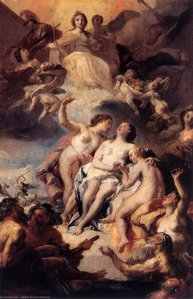
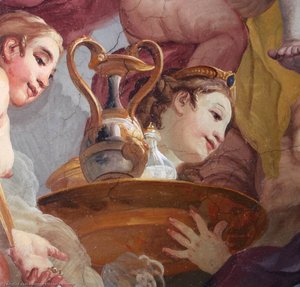
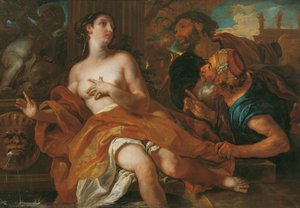
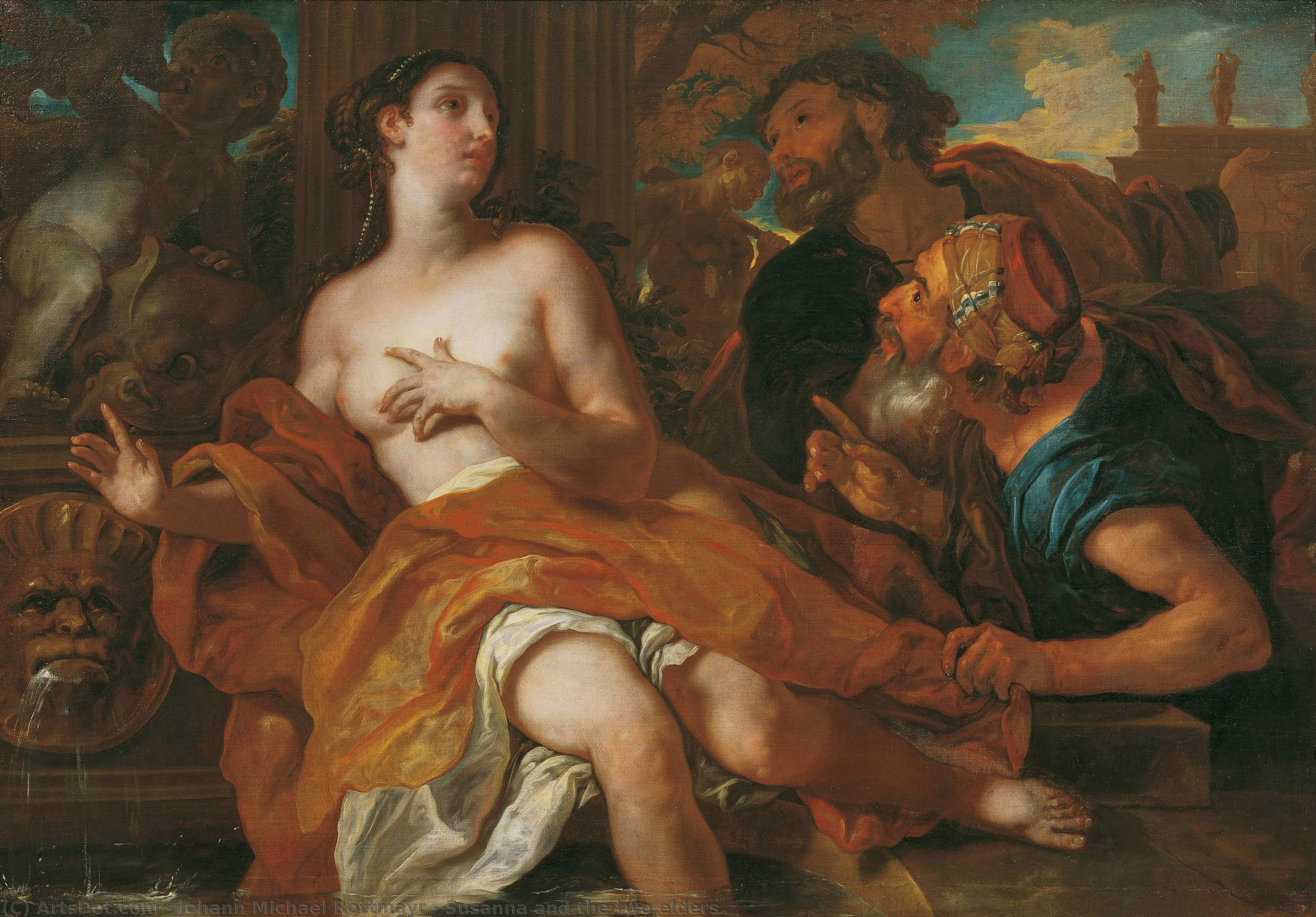
Susanna and the two elders

 Read More
Hand Made Oil Reproduction
Hand-painted oil on canvas in your size and frame, made to order by our artists. ( Buy Print Buy Image)




































Pick from our preset sizes that match the artwork's original proportions.

You may enter your own dimensions to fit a specific frame or space. If your selected size does not match the original image's proportions, we will either crop the artwork or extend the painting with additional hand-painted elements. A digital mockup will be sent for your approval before production begins.
Please note that the on-screen preview does not reflect the actual cropping or extension. Only the mockup will accurately show the final composition.
While custom sizes are available, we recommend selecting a dimension from the predefined list to preserve the original proportions.
After order, ArtsDot.com team will email client for instructions and provide a mockup preview
Worldwide Delivery () in 3/4 weeks instead of standard 5 weeks. (17 August). No compromise on quality.

Free Worldwide Express Shipping

High-Quality Linen Canvas

Full Shipping Insurance

Customs Tax Refund Guarantee

True Color Matching Guarantee

60-Day Return Policy (Defects Only)

100% Money-Back Guarantee

Bulk Discount Offer
 Glass option is only available in size under 110 CM

Susanna and the two elders
Reproduction Medium
Reproduction Size
-


Total Price
$ 263
Related Artworks
Artist Biography
A Legacy of Light: The Life and Art of Johann Michael Rottmayr
Johann Michael Rottmayr, born in the charming Bavarian town of Lauf an der Pegnitz around 1654 (sources vary between 1654 and 1656), stands as a pivotal figure in the transition from the High Baroque to the Rococo styles in Central Europe. He wasn’t merely a painter; he was a conduit, skillfully channeling the vibrant energy of Italian Renaissance masters through the lens of burgeoning Austrian artistic sensibilities. Rottmayr's journey began within a family already touched by artistry, providing fertile ground for his innate talents to blossom. His formal training commenced under Johann Carl Loth in Venice – a formative experience that would indelibly shape his aesthetic vision. Loth’s tutelage wasn’t simply about technique; it was an immersion into the world of Titian, Veronese, and Tintoretto, instilling within Rottmayr a deep appreciation for coloristic richness, dramatic composition, and the masterful use of light and shadow. This Venetian influence would remain a cornerstone of his style throughout his career. He wasn’t alone in absorbing Italian influences; Hans Adam Weissenkircher, a contemporary from Lauf, also played a crucial role in bringing these artistic currents northwards, fostering a shared aesthetic dialogue that enriched the region's art scene.From Salzburg to Vienna: A Rising Star
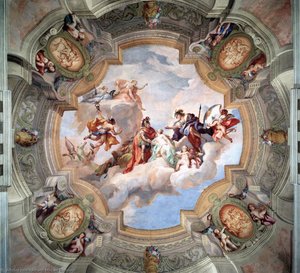
Rottmayr’s talent quickly garnered recognition, and in 1689 he secured a prestigious position as the general painter to the Prince-Bishop of Salzburg. This appointment wasn’t just a job; it was an endorsement, providing him with consistent commissions and establishing his reputation within influential circles. He flourished under this patronage, creating both secular and religious works that showcased his growing mastery. His collaboration with Johann Bernhard Fischer von Erlach, a leading architect of the time, proved particularly fruitful. Together they embarked on ambitious projects, seamlessly integrating architecture and painting to create immersive and awe-inspiring spaces. This partnership is beautifully exemplified in the allegorical frescoes at Schloss Frain an der Thaya (now Vranov nad Dyjí in the Czech Republic), where Rottmayr’s skill in illusionistic ceiling painting truly shines. The compositions are not merely decorative; they actively engage with the architectural structure, creating a harmonious and dynamic whole. This period marked a significant step in his artistic development, as he began to synthesize Italian influences with a distinctly Austrian sensibility. His move to Vienna around 1699 further propelled his career, bringing him into contact with a wider network of patrons and artists.Masterpieces of Illusion: The Melk Abbey Dome and Beyond
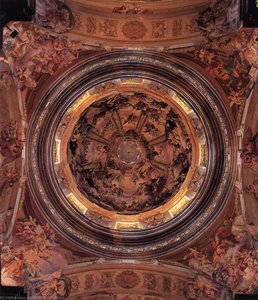
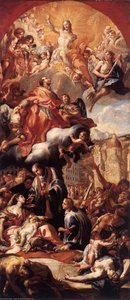
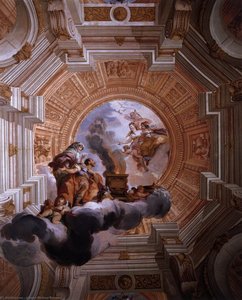
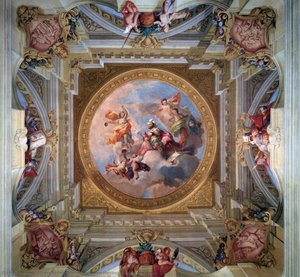
While Rottmayr produced numerous significant works throughout his career, he is perhaps best remembered for the breathtaking fresco adorning the central dome of Melk Abbey in Austria. Completed with remarkable skill, this masterpiece depicts a glorious vision of heaven – a swirling vortex of figures, light, and color that seems to dissolve the very boundaries between earth and sky. The sheer scale of the work, combined with Rottmayr’s masterful command of perspective and illusionistic techniques, creates an overwhelming sense of awe and spiritual transcendence. It is a testament to his ability to transform architectural space into a realm of divine beauty. Beyond Melk Abbey, Rottmayr left his mark on numerous other churches and palaces across Austria and Germany. His frescoes for the Karlskirche in Vienna, including the *Intercession of Charles Borromeo supported by the Virgin Mary*, are equally impressive, demonstrating his continued exploration of dramatic composition and vibrant color palettes. Even a work held in a private collection, simply titled “Vulcan,” speaks to his versatility and technical prowess. The enduring cultural significance of his Melk Abbey dome was further cemented in 2007 when it was chosen as the central motif for a high-value Austrian commemorative coin – a fitting tribute to an artist whose work continues to inspire wonder centuries later.A Bridge Between Eras: Rottmayr’s Artistic Legacy
Johann Michael Rottmayr's significance extends beyond his individual masterpieces; he played a crucial role in bridging the gap between the Italian Renaissance traditions and the evolving Baroque style in Central Europe. He wasn’t simply imitating Italian art; he was adapting it, infusing it with a distinctly Austrian character. His work embodies a dynamic interplay of light and shadow, vibrant color, and dramatic composition – hallmarks of the Baroque aesthetic. However, his paintings also reveal a growing sensitivity to form and detail, foreshadowing the elegance and refinement of the Rococo period.- Frescoes & Ceiling Paintings: Rottmayr excelled in large-scale fresco paintings, particularly those designed for ceilings, creating dynamic compositions and a sense of soaring space.
- Religious Subjects: A significant portion of his oeuvre is dedicated to religious themes, reflecting the patronage of the Church during that era. He frequently depicted scenes from the Bible and the lives of saints.
- Dramatic Composition: His paintings are characterized by dramatic lighting, vibrant colors, and a sense of movement, creating emotionally engaging experiences for viewers.
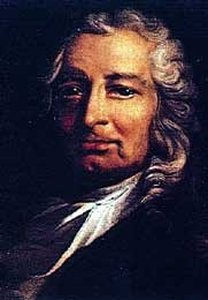
Johann Michael Rottmayr
1654 - 1730 , Germany
Quick Facts
- Artistic Movement Or Style: Baroque
- Artists Or Movements Influenced By This Artist: ['Austrian Baroque painters']
- Artists Who Influenced This Artist: ['Johann Carl Loth']
- Date Of Birth: Dec 11, 1654
- Date Of Death: Oct 25, 1730
- Full Name: Johann Michael Rottmayr
- Nationality: Austrian
- Notable Artworks:
- Melk Abbey Dome
- Intercession of Charles Borromeo
- Vulcan
- Apotheosis St.Charles
- Place Of Birth: Lauf, Germany