

 Preview
 Send
Send Share
Share
 Details

 Download
 Similars
 X-Ray
X-Ray Diaporama
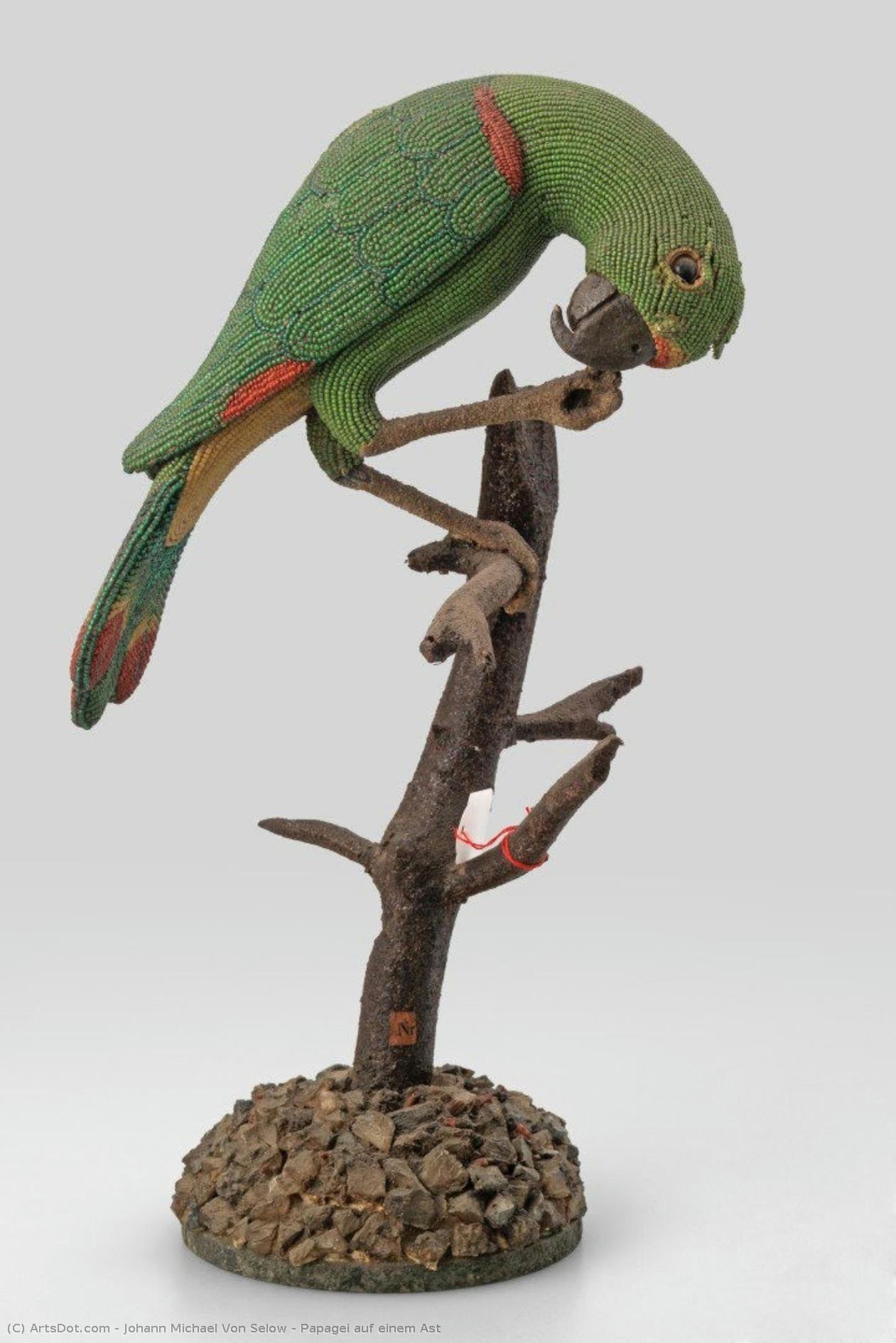
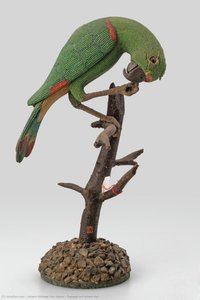
Papagei auf einem Ast
 5.0 x 24.0 cm
 Read More
Hand Made Oil Reproduction
Hand-painted oil on canvas in your size and frame, made to order by our artists. ( Buy Print Buy Image)




































Pick from our preset sizes that match the artwork's original proportions.

You may enter your own dimensions to fit a specific frame or space. If your selected size does not match the original image's proportions, we will either crop the artwork or extend the painting with additional hand-painted elements. A digital mockup will be sent for your approval before production begins.
Please note that the on-screen preview does not reflect the actual cropping or extension. Only the mockup will accurately show the final composition.
While custom sizes are available, we recommend selecting a dimension from the predefined list to preserve the original proportions.
After order, ArtsDot.com team will email client for instructions and provide a mockup preview
Worldwide Delivery () in 3/4 weeks instead of standard 5 weeks. (22 August). No compromise on quality.

Free Worldwide Express Shipping

High-Quality Linen Canvas

Full Shipping Insurance

Customs Tax Refund Guarantee

True Color Matching Guarantee

60-Day Return Policy (Defects Only)

100% Money-Back Guarantee

Bulk Discount Offer
 Glass option is only available in size under 110 CM

Papagei auf einem Ast
Reproduction Medium
Reproduction Size
-


Total Price
$ 263
Artwork Description
Related Artworks






Artist Biography
The Luminous Legacy of Johann Michael von Selow
In the heart of the mid-18th century, within the vibrant artistic landscape of Braunschweig, Germany, a unique form of brilliance emerged that would captivate the European nobility. Johann Michael von Selow, an artist whose name carries the weight of meticulous craftsmanship, mastered a medium that bridged the gap between sculpture and mosaic. While much of his personal history remains veiled by the passage of time, his contribution to the Baroque era is etched in the shimmering surfaces of his most famous creations. Active primarily between 1755 and 1767, Selow did not merely sculpt; he orchestrated light through the painstaking arrangement of thousands of tiny glass beads, creating objects that felt less like static ornaments and more like living jewels.
The foundations of Selow’s extraordinary talent were laid in the workshops of his youth. Though precise records of his earliest years are scarce, it is known that he underwent rigorous training under Johann Georg Wolffram, a celebrated sculptor of the era. From Wolffram, Selow inherited a profound command over classical form and the structural integrity required for traditional stone and wood carving. However, the true genius of Selow lay in his ability to pivot away from these heavy, terrestrial materials toward something far more ethereal. By marrying the structural discipline of classical sculpture with the delicate, shimmering precision of glass beadwork, he developed a signature style that was entirely his own.
A Masterpiece of Light and Texture
The zenith of Selow’s career is perhaps best embodied in his Muschel- und Korallenmanufaktur—a specialized workshop dedicated to the production of shell and coral works. It was within this atelier that he achieved his most breathtaking feat: the creation of the Papagei auf einem Ast (Parrot on a Branch). This exquisite sculpture serves as a testament to his unparalleled technical innovation. Rather than relying on paint or pigment, Selow utilized the technique of pearl mosaic, meticulously placing countless glass beads onto intricate molds to replicate the vibrant, iridescent plumage of an exotic bird. The result was a Kunstkammerobjekt—a true cabinet of curiosities piece—that possessed a depth and luminosity that traditional painting could never hope to achieve.
This mastery of texture and light did not exist in a vacuum; it was fueled by the prestigious patronage of Carl I, Duke of Brunswick and Lüneburg. The Duke’s support allowed Selow to push the boundaries of decorative art, transforming his workshop into a center of excellence that attracted attention across the continent. His work became an essential component of the era's most esteemed collections, including the public museum and natural history cabinet established in Braunschweig in 1754. Through this patronage, Selow’s beadwork became more than mere decoration; it became a symbol of the era's fascination with the exotic, the scientific, and the sublime.
Historical Significance and Artistic Endurance
Though the period of his most intense activity was relatively brief, the impact of Johann Michael von Selow’s artistry remains profound. He represented a pivotal moment in the transition from the heavy grandeur of the Baroque to the more delicate, ornamental sensibilities of the Rococo. His ability to manipulate light through the medium of glass beads offered a new way for collectors to experience the beauty of nature through an artificial, yet hyper-realistic, lens.
Today, we remember Selow not just as a craftsman, but as a pioneer of texture. His legacy is defined by several key artistic milestones:
- Innovation in Medium: The elevation of glass beadwork from simple ornamentation to a sophisticated sculptural technique.
- Technical Precision: The seamless integration of classical sculptural forms with the intricate demands of mosaic artistry.
- Cultural Impact: The creation of iconic objects like the Papagei auf einem Ast, which continue to represent the height of 18th-century German decorative excellence.
In the quiet halls of museums, where his works occasionally catch the light, one can still sense the obsessive dedication and the luminous spirit of a master who turned tiny fragments of glass into eternal wonders.
johann michael von selow
1721 - 1767 , Germany
Quick Facts
- Artistic Movement Or Style: Baroque sculpture
- Date Of Birth: 1721
- Full Name: Johann Michael von Selow
- Nationality: German
- Notable Artworks: ['Papagei auf einem Ast']
- Place Of Birth: Brunswick, Germany

