 Preview
 Send
Send Share
Share
 Details

 Download
 Similars
 X-Ray
X-Ray Diaporama
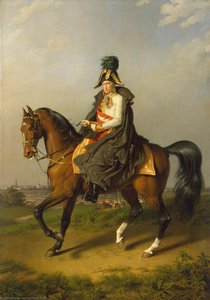
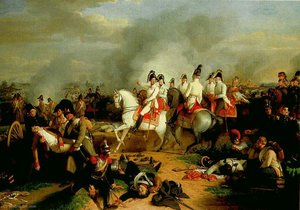
Equestrian Portrait of Franz I
 Oil On Canvas
- WallArt
- Neoclassicism
 1832
1832 361.0 x 258.0 cm
 Hermitage Museum
 Read More
Hand Made Oil Reproduction
Hand-painted oil on canvas in your size and frame, made to order by our artists. ( Buy Print Buy Image)




P118B $10

P118H $10

P118W $10

P438Z $10

P508JH $12

P508YH $12

P805H $10

P805Z $10

P919BZ $10

P919G $10

P919XJ $10

P959ZH $10

P968JZ $12

W106C $8

W218G $10

W218JH $8

W218Y $10

W307PJ $10

W316G $10

W316PJ $8

W316Y $10

W398PJ $8

W4111J $10

W500HY $15

W500JH $15

W692G $12

W849H $8

W940BG $15

W953PJ $8




Pick from our preset sizes that match the artwork's original proportions.

You may enter your own dimensions to fit a specific frame or space. If your selected size does not match the original image's proportions, we will either crop the artwork or extend the painting with additional hand-painted elements. A digital mockup will be sent for your approval before production begins.
Please note that the on-screen preview does not reflect the actual cropping or extension. Only the mockup will accurately show the final composition.
While custom sizes are available, we recommend selecting a dimension from the predefined list to preserve the original proportions.
After order, ArtsDot.com team will email client for instructions and provide a mockup preview
Worldwide Delivery () in 3/4 weeks instead of standard 5 weeks. (3 September). No compromise on quality.

Free Worldwide Express Shipping

High-Quality Linen Canvas

Full Shipping Insurance

Customs Tax Refund Guarantee

True Color Matching Guarantee

60-Day Return Policy (Defects Only)

100% Money-Back Guarantee

Bulk Discount Offer
 Glass option is only available in size under 110 CM

Equestrian Portrait of Franz I
Reproduction Medium
Reproduction Size
-


Total Price
$ 263
The Majesty of the Horse: Johann Peter Krafft’s ‘Equestrian Portrait of Franz I’
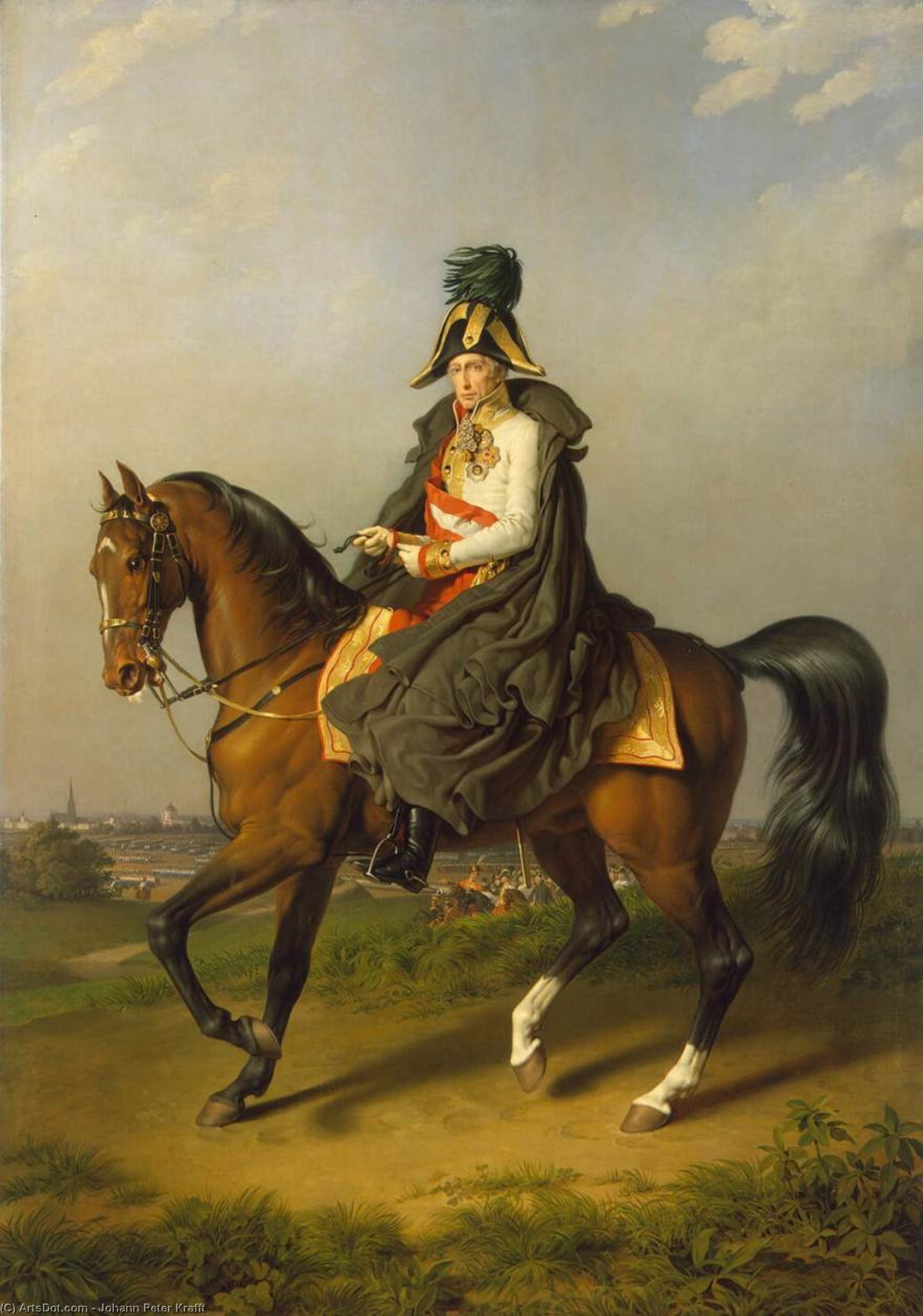
Johann Peter Krafft's “Equestrian Portrait of Franz I,” painted in 1832, is more than simply a depiction of a royal figure on horseback; it’s a carefully constructed tableau of power, lineage, and the idealized image of Habsburg authority. The painting immediately commands attention with its scale – measuring an impressive 361 x 258 cm – inviting the viewer to step into the scene and witness this pivotal moment in Austrian history. Krafft, a master of portraiture deeply influenced by Neoclassical ideals, skillfully employs light and shadow to sculpt Franz I’s form, imbuing him with a sense of dignified strength and regal bearing.
The subject himself, Franz I, Holy Roman Emperor, is presented as the embodiment of imperial grandeur. Dressed in the elaborate military attire characteristic of his era – a richly embroidered coat, a feathered hat, and a gleaming sword – he exudes an aura of command. The horse beneath him, a magnificent brown steed, mirrors this power, its posture alert and poised, reflecting Franz I’s own unwavering resolve. Krafft's meticulous attention to detail extends beyond the figures themselves; the intricate patterns on the clothing, the texture of the horse’s coat, and the subtle nuances of light on metal all contribute to a remarkably realistic and immersive experience.
A Window into 19th-Century Habsburg Vienna
To fully appreciate “Equestrian Portrait of Franz I,” it's crucial to understand its historical context. Painted in 1832, the work reflects the height of the Habsburg Empire’s power and influence – a period marked by territorial expansion, political maneuvering, and a fervent embrace of classical ideals. Krafft was deeply embedded within this artistic and cultural milieu, working closely with established masters like Ingres and drawing inspiration from the traditions of portraiture that had flourished in Vienna for centuries. The cityscape visible in the background—a hazy blend of buildings suggesting Vienna—provides a subtle yet significant connection to the imperial capital, anchoring the scene firmly within its geographical and political landscape.
The painting’s creation coincided with a renewed interest in historical portraiture, driven by the Romantic movement's emphasis on national identity and heroic narratives. Krafft skillfully blends these trends, crafting an image that simultaneously celebrates Franz I’s imperial status and evokes a sense of timeless majesty. The composition itself—a carefully balanced arrangement of figures and elements—underscores this ambition, creating a visual statement that speaks to the enduring legacy of the Habsburg dynasty.
Symbolism and Artistic Technique
Krafft's masterful use of technique elevates “Equestrian Portrait of Franz I” beyond a mere likeness. He employs a sophisticated understanding of chiaroscuro – the dramatic contrast between light and shadow – to create a sense of depth and volume, emphasizing the musculature of Franz I’s body and the powerful presence of his steed. The subtle gradations of color, achieved through meticulous layering of paint, contribute to the painting's overall richness and luminosity. The feathered hat, a prominent feature of the portrait, is not merely decorative; it symbolizes imperial authority and connection to ancient traditions.
Furthermore, the horse itself carries significant symbolic weight. In equestrian art, the horse represents power, nobility, and military prowess – qualities inextricably linked to the image of the emperor. Krafft’s depiction of the animal is remarkably lifelike, capturing its strength, grace, and alertness with impressive detail. The careful positioning of the horse—its head held high, its gaze fixed forward—reinforces Franz I's commanding presence and his role as a protector of the empire.
A Legacy Enduring Through Reproduction
Today, “Equestrian Portrait of Franz I” stands as a testament to Krafft’s artistic skill and a captivating window into a pivotal moment in European history. Reproductions of this magnificent work offer art enthusiasts and collectors alike the opportunity to experience its grandeur and beauty firsthand. Whether displayed in a grand hall or a more intimate setting, this portrait continues to inspire awe and admiration for its masterful composition, rich symbolism, and enduring legacy.
Related Artworks


Artist Biography
The Legacy of Johann Peter Krafft: A Master of Narrative and Grandeur
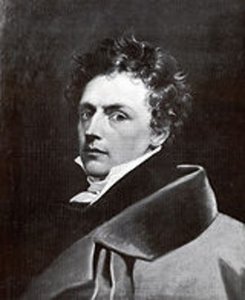
Born in Hanau, Germany, in 1780, Johann Peter Krafft emerged as a pivotal figure in the landscape of nineteenth-century European art. While his roots were German, his artistic soul found its most profound expression within the Austrian tradition, where he became a leading light of the Biedermeier period. His life’s work serves as a bridge between the disciplined precision of Neoclassicism and the burgeoning emotional intensity of Romanticism. Krafft was not merely a chronicler of faces or landscapes; he was a storyteller who utilized the canvas to weave complex historical narratives, imbuing his subjects with a sense of dignity, drama, and enduring significance.
The foundation of Krafft’s mastery lay in his rigorous training and the profound influence of the era's great masters. Drawing inspiration from the structured clarity of Jacques-Louis David and the nuanced approach of Gérard, he developed a technique characterized by meticulous draftsmanship and a sophisticated command of composition. This academic discipline allowed him to navigate diverse genres with ease, ranging from intimate portraits to sweeping historical epics. His ability to balance the formal requirements of classical art with the expressive potential of genre painting enabled him to capture both the quiet dignity of individual subjects and the chaotic energy of historical turning points.
A Tapestry of History and Emotion
Krafft’s oeuvre is perhaps most celebrated for its ability to breathe life into the past. He possessed a unique talent for capturing the pulse of history, often focusing on themes of nobility, military prowess, and legendary romance. His works are far more than mere illustrations; they are atmospheric explorations of human struggle and triumph. Through his use of earthy tones, dynamic compositions, and rich textures, he invited viewers to step into the very heart of the scenes he depicted.
Several key works exemplify the breadth of his creative vision:
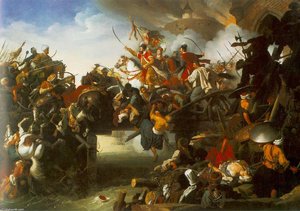
- The Attack of Zrinyi (1825): A breathtaking display of dramatic tension, this oil painting utilizes a dynamic composition to capture a pivotal moment in Hungarian history, showcasing Krafft's ability to render movement and historical gravity.
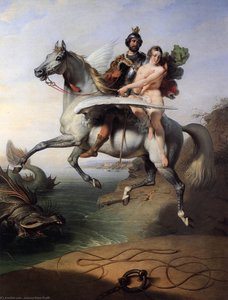
- Ruggiero and Angelica (1842): In this masterpiece of German Romanticism, Krafft explores the depths of passion and myth, presenting a tender yet powerful scene that highlights his skill in portraying human emotion and classical beauty.
- Equestrian Portrait of Franz I: This work stands as a testament to his ability to convey power and nobility, using a classical style to celebrate military strength and the grandeur of the imperial era.
Historical Significance and Artistic Endurance
The significance of Johann Peter Krafft extends beyond the aesthetic beauty of his paintings. He played a crucial role in shaping the visual identity of the Biedermeier era, an age that valued domesticity, clarity, and a certain refined realism. By blending these localized sensibilities with the grander traditions of European history painting, he created a style that was both accessible and profoundly impactful. His work helped to define the cultural zeitgeist of Central Europe, providing a visual language for the historical consciousness of his time.
Today, Krafft’s legacy continues to resonate through the enduring power of his imagery. His ability to manipulate light, line, and narrative to evoke a sense of timelessness ensures that his paintings remain much more than relics of the nineteenth century. They are living windows into an era of transition, reminding us of the profound connection between art, history, and the eternal human experience.
johann peter krafft
1780 - 1856 , Germany
Quick Facts
- Artistic Movement Or Style: Neoclassical, Painter
- Artists Or Movements Influenced By This Artist:
- Henri Matisse
- Pablo Picasso
- Artists Who Influenced This Artist:
- Nicolas Poussin
- Jacques-Louis David
- Date Of Birth: 29 August 1780
- Date Of Death: 14 January 1867
- Full Name: Jean-Auguste-Dominique Ingres
- Nationality: French
- Notable Artworks:
- Napoleon I on His Imperial Throne
- Grande Odalisque
- Oedipus and the Sphinx
- Place Of Birth: Montauban, France
Related Articles
The Noble Steed: A Historical & Artistic Exploration of Equestrian Art Across Cultures
Explore the captivating history of equestrian art with ArtsDot. Discover masterpieces from Velázquez to Van Dyck & learn about collecting these timeless works. Expert insights for discerning connoisseurs.
The Equine Muse: A Historical & Artistic Exploration of Horses in Painting
Explore the captivating history of horses in painting! Discover Renaissance masterpieces, Baroque grandeur & expert insights for collecting equestrian art. Learn about symbolism, techniques & lasting value with ArtsDot.
Peter Graham Li: Capturing Light & Narrative in Contemporary Oil Painting
Discover the captivating oil paintings of Peter Graham Li – a contemporary artist celebrated for his masterful use of light, color, and impasto technique. Explore investment potential & curated selections at ArtsDot.

Dutch Masters: 10 Golden Age Paintings That Still Inspire |
Journey into the Dutch Golden Age! Explore 10 iconic paintings by Rembrandt, Vermeer & Hals. Discover the stories behind these Baroque masterpieces and find museum-quality art reproductions to elevate your home decor on .
Franz von Stuck: Symbolism, Decadence & the Pursuit of Ideal Beauty
Explore the captivating world of Franz von Stuck, a leading Symbolist painter. Discover his mythological masterpieces, decadent themes, & investment potential. Expert analysis for discerning collectors.