

 Preview
 Send
Send Share
Share
 Details

 Download
 Similars
 X-Ray
X-Ray Diaporama
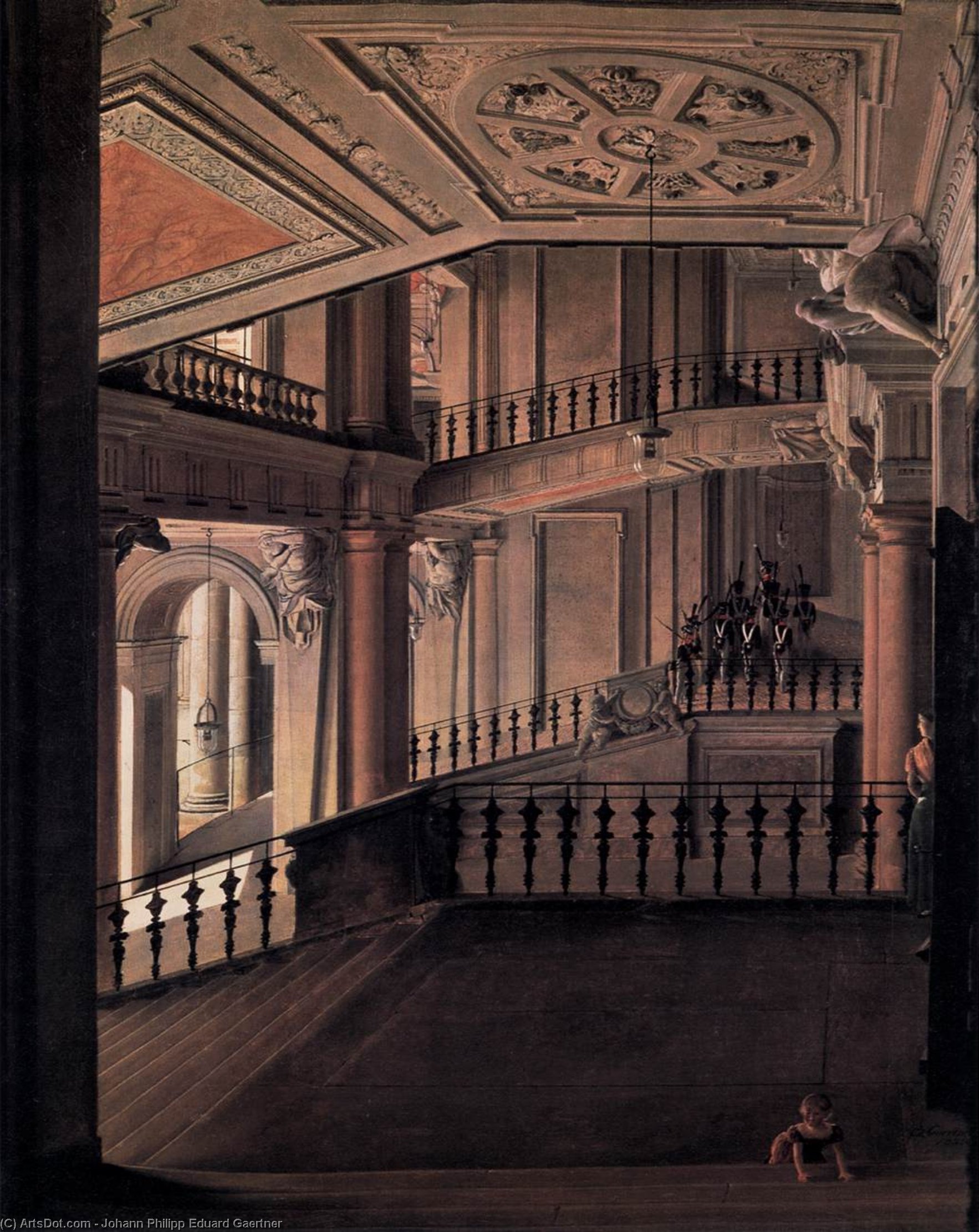
Staircase in the Berlin Palace
 Oil On Canvas
- WallArt
- Biedermeier
 1828
1828- 19th Century
 48.0 x 59.0 cm
 Schloss Charlottenburg
 Read More
Purchase a high-resolution, enhanced digital image, far superior to the online preview.
Each file is meticulously prepared by our in-house specialists using advanced tools and expert manual retouching. We ensure every image has exceptional clarity, precise color accuracy, and fine detail.
The final file is delivered via email within 72 hours, optimized for immediate use in professional, editorial, and print environments. This is the same quality trusted by top-tier design studios, publishers, and galleries.
Digital Image
Download a high-resolution file for personal display, printing, and creative projects. ( Buy Print Buy Hand Made Painting)
Included in Every Digital Image Order
Expert Digital Delivery, Guaranteed
When you choose ArtsDot.com, you're not just getting an image - you're receiving a professionally enhanced digital artwork, crafted with precision and backed by a satisfaction guarantee. Here's everything that comes with your order, automatically:

Fast Email Delivery
Your high-resolution digital image file will be emailed to you within 72 hours of ordering - ready for immediate use.

AI-Enhanced Digital File
Your artwork is professionally optimized using advanced AI tools and manual editing, ensuring maximum detail, clarity, and color accuracy.

Free Lifetime Re-Delivery
Accidentally deleted or lost your file? No worries - we'll resend it to you anytime, free of charge.

No Import Fees - Ever
Enjoy your artwork instantly with zero customs, duties, or delivery fees - digital downloads are always tax-free.

Color Accuracy Guarantee
We ensure your digital image reflects the original colors as closely as possible using professional tools and color management.

60-Day Satisfaction Guarantee
If you're not satisfied with your digital image, we'll revise it or refund 100% within 60 days - no questions asked.

100% Money-Back Guarantee
Not satisfied? Get a full refund within 60 days of receiving your digital file - no questions asked.

Bulk Order Discounts
Buy 3 images, save 10% - Buy 5, save 15% - Buy 10+, save 20%. Great for creative projects, galleries, and agencies.
Collectible Description
A Grand Ascent Through Prussian Splendor
To gaze upon this depiction of the staircase in the Berlin Palace is to step directly into the heart of 19th-century Prussian grandeur. It is more than merely a rendering of marble steps; it is a captured moment of civic life and architectural ambition from 1828. The composition immediately draws the eye upward, following the elegant sweep of the staircase—a monumental artery within the palace structure. The meticulous detail evident in the painting speaks to an era obsessed with permanence and visible status. One can almost hear the echo of carriage wheels and hushed conversations bouncing off the polished stone, imagining the weight of history carried by every riser.
Mastery in Marble and Shadow
The technical brilliance displayed here lies in Gaertner's ability to render hard, reflective materials—the cool gleam of the marble contrasting sharply with the deep, velvety black of the railings. The artist has achieved a remarkable sense of depth, making the staircase feel vast and three-dimensional within the confines of the canvas. Notice the ornate detailing; the statues and decorative elements are not mere filler but integral narrative components, suggesting patronage, classical ideals, and the enduring taste for elaborate ornamentation characteristic of royal residences of that time. The interplay between light catching the polished stone and the deep shadows pooling beneath the balustrades gives the piece a dramatic, almost theatrical quality.
Echoes of an Era: Context and Character
Painted in 1828 by Johann Philipp Eduard Gaertner, this work situates itself perfectly within the period bridging Biedermeier intimacy with burgeoning industrial display. While Gaertner is celebrated for his detailed documentation of Berlin’s urban fabric, this palace scene elevates that documentary impulse into high art. The presence of figures—one poised near the bottom left, another ascending toward the upper right—lends a human scale to the immense architecture. They are witnesses to the grandeur, suggesting passage, arrival, and departure; they embody the social choreography that once defined life within such palatial settings.
Symbolism of Ascent and Connection
Symbolically, a grand staircase has always represented ascent—a journey toward higher status, knowledge, or enlightenment. In this context, the climb itself becomes a metaphor for societal aspiration. The symmetry and formality suggest order, while the visible figures hint at the personal journeys undertaken within that ordered world. For the modern collector or designer, this piece offers more than just decoration; it offers an atmosphere—a sense of stately passage and enduring cultural weight. Reproducing this work allows one to infuse a space with the sophisticated gravitas of early 19th-century European aristocracy.
Related Artworks

Artist Biography
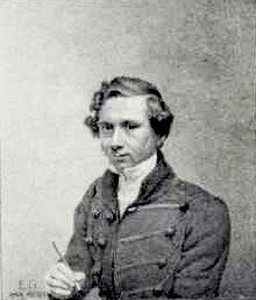
A Chronicler of Prussian Grandeur: The Life and Art of Johann Philipp Eduard Gaertner
Johann Philipp Eduard Gaertner, born in Berlin in 1801, occupies a unique niche in the annals of 19th-century German painting. He wasn’t driven by grand historical narratives or romanticized landscapes, but rather by an almost architectural precision and affection for his urban surroundings—specifically, the evolving cityscape of Prussia. His name might not resonate with the same immediate recognition as some of his contemporaries, yet Gaertner's detailed depictions of Berlin and its surrounding areas offer invaluable visual documentation of a pivotal era, bridging the gap between Biedermeier sensibilities and the burgeoning modern world. His journey began modestly enough; after an early relocation to Kassel with his mother in 1806 where he received initial drawing instruction, Gaertner returned to Berlin in 1813 and embarked on a six-year apprenticeship at the Royal Porcelain Factory. While this provided foundational skills, he found its constraints stifling, supplementing it with formal studies at the Academy of Arts. This early experience instilled within him a meticulous attention to detail that would become a hallmark of his mature style.From Decorative Painter to Vedutist: A Parisian Awakening
Gaertner’s path took a decisive turn in 1821 when he secured a position as a decorative painter within the studios of Carl Wilhelm Gropius, the royal court theater painter. This role allowed him to hone his skills and observe the interplay of light and shadow—essential elements for any aspiring architectural painter. A pivotal moment arrived with the sale of a portrait of King Friedrich Wilhelm III to the royal family, providing the financial means for a transformative study trip to Paris. This sojourn proved crucial in shaping Gaertner’s artistic vision. Immersed in the Parisian art scene, he was captivated by the magnificent vistas of medieval buildings and inspired by the *vedute* tradition—detailed cityscapes that celebrated architectural grandeur. He absorbed techniques for manipulating light and atmosphere, learning to capture not just the physical structures but also their emotional resonance. Upon his return to Berlin in 1828, Gaertner dedicated himself primarily to painting these evocative urban scenes, establishing himself as a freelance artist and beginning a family—eventually fathering twelve children.Documenting a Changing Berlin: Patronage and Panoramic Visions
The following decade witnessed Gaertner diligently documenting the Biedermeier-style buildings of Berlin, catering to royal patrons with depictions of castles in Bellevue, Charlottenburg, and Glienicke. In 1833, his recognition was formalized with admission to the Academy as a “Perspective Painter.” However, it was the commission for a six-panel panorama of Berlin in 1834 that cemented his reputation. Painted from the roof of the Friedrichswerder Church—a location offering unparalleled panoramic views—this ambitious project garnered significant acclaim. Both King Friedrich Wilhelm III and his daughter, Tsarina Alexandra Feodorovna, acquired versions, demonstrating the prestige and demand for Gaertner’s work. This period represents the zenith of his career, fueled by royal patronage and a growing appreciation for his ability to capture the essence of Prussian architecture. It is believed that he utilized a camera obscura to aid in sketching the layouts of his paintings, a testament to his commitment to accuracy and detail.Shifting Fortunes and Enduring Legacy
The death of King Friedrich Wilhelm III in 1840 marked a turning point. His successor, Friedrich Wilhelm IV, favored Italianate landscapes over Gaertner’s architectural depictions, leading to financial difficulties for the artist. Gaertner adapted by connecting with a group dedicated to preserving and restoring monuments, undertaking extensive travels throughout Prussia to create watercolor sketches—both scenic views for sale and an illustrated inventory of historical sites. While this provided some income from middle-class customers, it couldn’t replace the lost royal patronage. His artistic focus gradually shifted towards more romantic scenes featuring steep cliffs, gypsies, ruins, and oak trees, though these later works are generally considered less successful than his earlier architectural paintings. As photography emerged as a rival medium in the latter half of the 19th century, Gaertner sought respite from Berlin’s bustling atmosphere, settling in Flecken Zechlin near Rheinsberg in 1870, where he died in 1877. His work largely faded into obscurity until its rediscovery at the “Deutschen Jahrhundert-Ausstellung” of 1906, followed by major exhibitions in 1968, 1977, and 2001—events that have contributed to a renewed appreciation for his detailed depictions of Prussian architecture and urban landscapes. Gaertner’s legacy lies not just in the beauty of his paintings but also in their historical significance as invaluable records of a transforming era, offering a glimpse into the heart of 19th-century Prussia through the eyes of a dedicated and meticulous artist.Influences and Techniques
- Medieval Architecture: Gaertner’s fascination with medieval buildings, particularly those encountered during his time in Paris, profoundly influenced his artistic direction.
- Parisian Vedute Painting: The tradition of detailed cityscapes, exemplified by French *vedutisti*, provided a crucial framework for his approach to architectural representation.
- Camera Obscura: It is believed Gaertner utilized this device to aid in accurately sketching the layouts and perspectives of his paintings.
- Meticulous Detail: His training at the Royal Porcelain Factory instilled a commitment to precision and accuracy that permeated his work.
Johann Philipp Eduard Gaertner
1801 - 1877 , Germany
Quick Facts
- Artistic Movement Or Style: Biedermeier, Vedute
- Artists Who Influenced This Artist:
- Medieval architecture
- Parisian vedute painting
- Date Of Birth: 1801
- Date Of Death: 1877
- Full Name: Johann Philipp Eduard Gaertner
- Nationality: German
- Notable Artworks:
- The Neue Wache in Berlin
- Klosterstrasse
- Belvedere on Havel landscape
- Place Of Birth: Berlin, Germany

