 Preview
 Send
Send Share
Share
 Details

 Download
 Similars
 X-Ray
X-Ray Diaporama
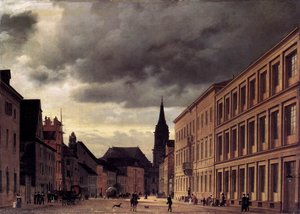
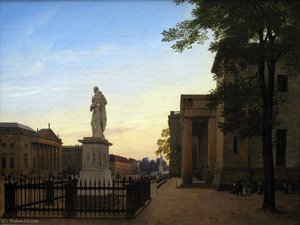
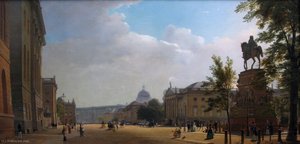
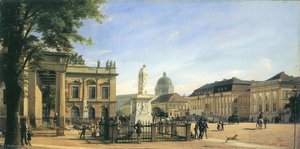
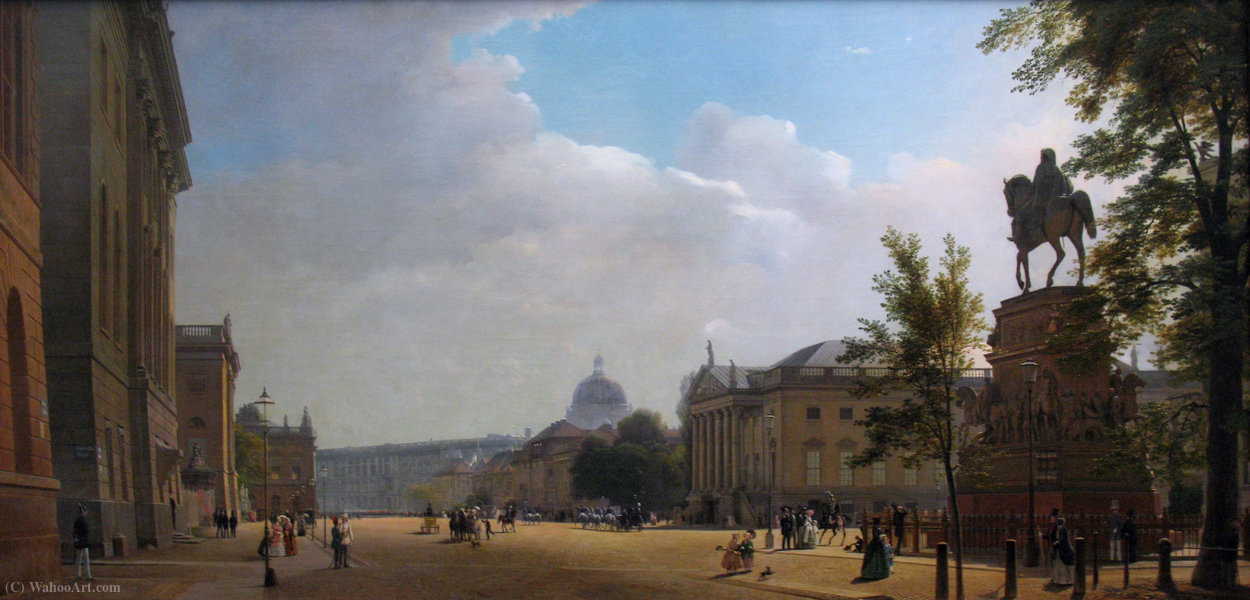
Unter den Linden
 Read More
Hand Made Oil Reproduction
Hand-painted oil on canvas in your size and frame, made to order by our artists. ( Buy Print Buy Image)




































Pick from our preset sizes that match the artwork's original proportions.

You may enter your own dimensions to fit a specific frame or space. If your selected size does not match the original image's proportions, we will either crop the artwork or extend the painting with additional hand-painted elements. A digital mockup will be sent for your approval before production begins.
Please note that the on-screen preview does not reflect the actual cropping or extension. Only the mockup will accurately show the final composition.
While custom sizes are available, we recommend selecting a dimension from the predefined list to preserve the original proportions.
After order, ArtsDot.com team will email client for instructions and provide a mockup preview
Worldwide Delivery () in 3/4 weeks instead of standard 5 weeks. (17 August). No compromise on quality.

Free Worldwide Express Shipping

High-Quality Linen Canvas

Full Shipping Insurance

Customs Tax Refund Guarantee

True Color Matching Guarantee

60-Day Return Policy (Defects Only)

100% Money-Back Guarantee

Bulk Discount Offer
 Glass option is only available in size under 110 CM

Unter den Linden
Reproduction Medium
Reproduction Size
-


Total Price
$ 263
Related Artworks
Artist Biography
A Chronicler of Prussian Grandeur: The Life and Art of Johann Philipp Eduard Gaertner
Johann Philipp Eduard Gaertner, born in Berlin in 1801, occupies a unique niche in the annals of 19th-century German painting. He wasn’t driven by grand historical narratives or romanticized landscapes, but rather by an almost architectural precision and affection for his urban surroundings—specifically, the evolving cityscape of Prussia. His name might not resonate with the same immediate recognition as some of his contemporaries, yet Gaertner's detailed depictions of Berlin and its surrounding areas offer invaluable visual documentation of a pivotal era, bridging the gap between Biedermeier sensibilities and the burgeoning modern world. His journey began modestly enough; after an early relocation to Kassel with his mother in 1806 where he received initial drawing instruction, Gaertner returned to Berlin in 1813 and embarked on a six-year apprenticeship at the Royal Porcelain Factory. While this provided foundational skills, he found its constraints stifling, supplementing it with formal studies at the Academy of Arts. This early experience instilled within him a meticulous attention to detail that would become a hallmark of his mature style.From Decorative Painter to Vedutist: A Parisian Awakening
Gaertner’s path took a decisive turn in 1821 when he secured a position as a decorative painter within the studios of Carl Wilhelm Gropius, the royal court theater painter. This role allowed him to hone his skills and observe the interplay of light and shadow—essential elements for any aspiring architectural painter. A pivotal moment arrived with the sale of a portrait of King Friedrich Wilhelm III to the royal family, providing the financial means for a transformative study trip to Paris. This sojourn proved crucial in shaping Gaertner’s artistic vision. Immersed in the Parisian art scene, he was captivated by the magnificent vistas of medieval buildings and inspired by the *vedute* tradition—detailed cityscapes that celebrated architectural grandeur. He absorbed techniques for manipulating light and atmosphere, learning to capture not just the physical structures but also their emotional resonance. Upon his return to Berlin in 1828, Gaertner dedicated himself primarily to painting these evocative urban scenes, establishing himself as a freelance artist and beginning a family—eventually fathering twelve children.Documenting a Changing Berlin: Patronage and Panoramic Visions
The following decade witnessed Gaertner diligently documenting the Biedermeier-style buildings of Berlin, catering to royal patrons with depictions of castles in Bellevue, Charlottenburg, and Glienicke. In 1833, his recognition was formalized with admission to the Academy as a “Perspective Painter.” However, it was the commission for a six-panel panorama of Berlin in 1834 that cemented his reputation. Painted from the roof of the Friedrichswerder Church—a location offering unparalleled panoramic views—this ambitious project garnered significant acclaim. Both King Friedrich Wilhelm III and his daughter, Tsarina Alexandra Feodorovna, acquired versions, demonstrating the prestige and demand for Gaertner’s work. This period represents the zenith of his career, fueled by royal patronage and a growing appreciation for his ability to capture the essence of Prussian architecture. It is believed that he utilized a camera obscura to aid in sketching the layouts of his paintings, a testament to his commitment to accuracy and detail.Shifting Fortunes and Enduring Legacy
The death of King Friedrich Wilhelm III in 1840 marked a turning point. His successor, Friedrich Wilhelm IV, favored Italianate landscapes over Gaertner’s architectural depictions, leading to financial difficulties for the artist. Gaertner adapted by connecting with a group dedicated to preserving and restoring monuments, undertaking extensive travels throughout Prussia to create watercolor sketches—both scenic views for sale and an illustrated inventory of historical sites. While this provided some income from middle-class customers, it couldn’t replace the lost royal patronage. His artistic focus gradually shifted towards more romantic scenes featuring steep cliffs, gypsies, ruins, and oak trees, though these later works are generally considered less successful than his earlier architectural paintings. As photography emerged as a rival medium in the latter half of the 19th century, Gaertner sought respite from Berlin’s bustling atmosphere, settling in Flecken Zechlin near Rheinsberg in 1870, where he died in 1877. His work largely faded into obscurity until its rediscovery at the “Deutschen Jahrhundert-Ausstellung” of 1906, followed by major exhibitions in 1968, 1977, and 2001—events that have contributed to a renewed appreciation for his detailed depictions of Prussian architecture and urban landscapes. Gaertner’s legacy lies not just in the beauty of his paintings but also in their historical significance as invaluable records of a transforming era, offering a glimpse into the heart of 19th-century Prussia through the eyes of a dedicated and meticulous artist.Influences and Techniques
- Medieval Architecture: Gaertner’s fascination with medieval buildings, particularly those encountered during his time in Paris, profoundly influenced his artistic direction.
- Parisian Vedute Painting: The tradition of detailed cityscapes, exemplified by French *vedutisti*, provided a crucial framework for his approach to architectural representation.
- Camera Obscura: It is believed Gaertner utilized this device to aid in accurately sketching the layouts and perspectives of his paintings.
- Meticulous Detail: His training at the Royal Porcelain Factory instilled a commitment to precision and accuracy that permeated his work.
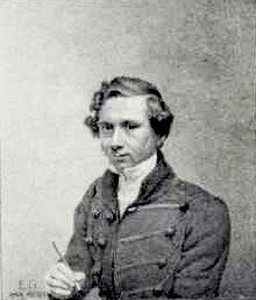
Johann Philipp Eduard Gaertner
1801 - 1877 , Germany
Quick Facts
- Artistic Movement Or Style: Biedermeier, Vedute
- Artists Who Influenced This Artist:
- Medieval architecture
- Parisian vedute painting
- Date Of Birth: 1801
- Date Of Death: 1877
- Full Name: Johann Philipp Eduard Gaertner
- Nationality: German
- Notable Artworks:
- The Neue Wache in Berlin
- Klosterstrasse
- Belvedere on Havel landscape
- Place Of Birth: Berlin, Germany