 Preview
 Send
Send Share
Share
 Details

 Download
 Similars
 X-Ray
X-Ray Diaporama
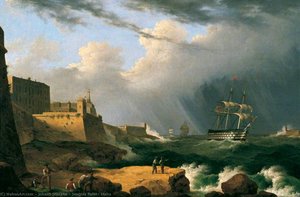
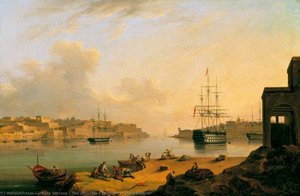
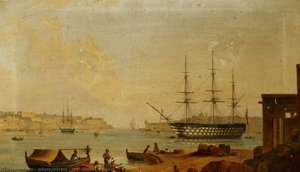
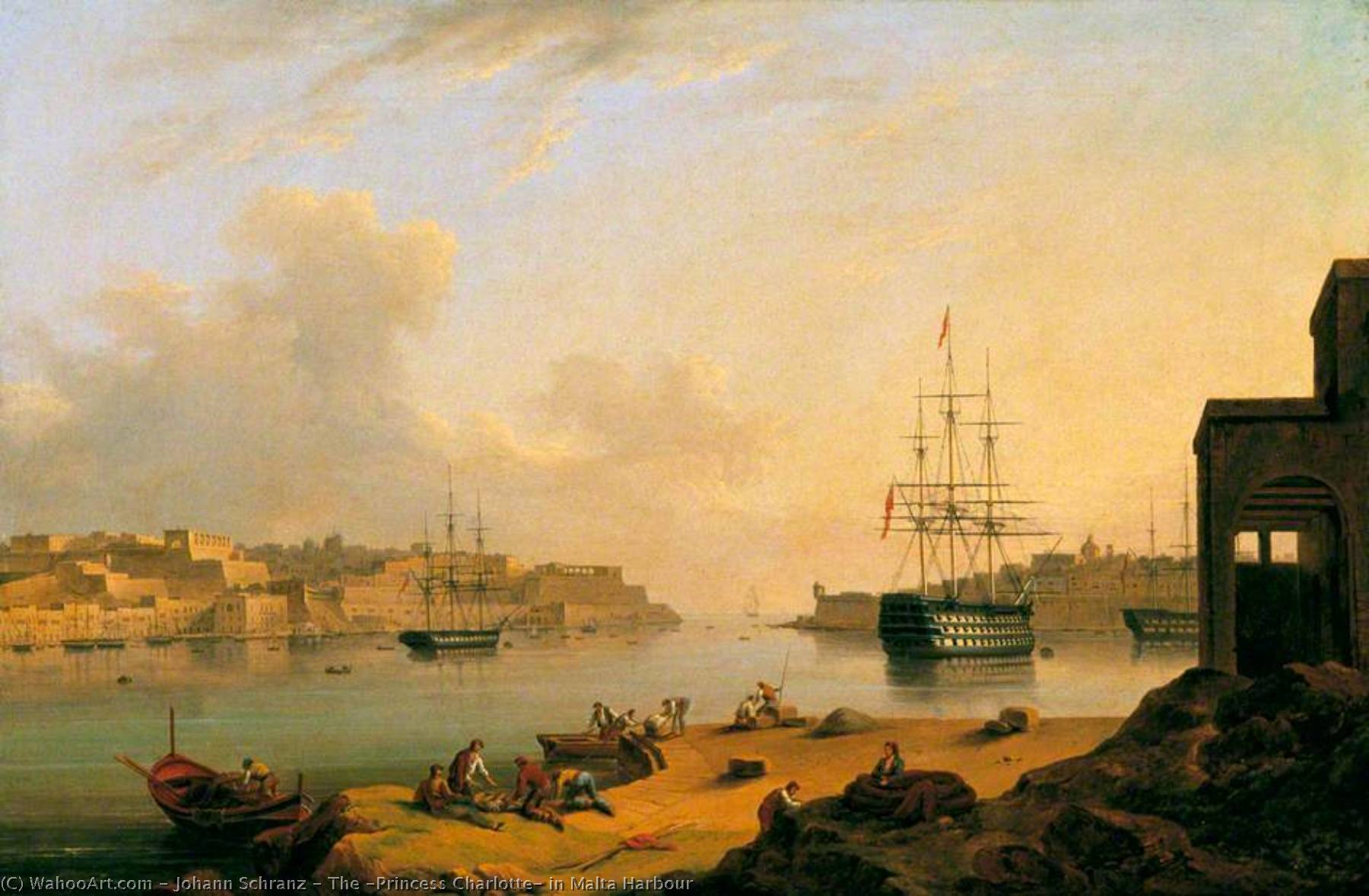
The 'Princess Charlotte' in Malta Harbour
 1828
1828 44.0 x 66.0 cm
 Government Art Collection
 Read More
Giclée / Art Print
Museum-quality giclée or canvas print with fast production and flexible finish options. ( Buy Hand Made Painting Buy Image)




































Pick from our preset sizes that match the artwork's original proportions.

You may enter your own dimensions to fit a specific frame or space. If your selected size does not match the original image's proportions, we will either crop the artwork or extend the image with a mirrored or solid-fill edge. A digital mockup will be sent for your approval before production begins.
Please note that the on-screen preview does not reflect the actual cropping or extension. Only the mockup will accurately show the final composition.
While custom sizes are available, we recommend selecting a dimension from the predefined list to preserve the original proportions.
Worldwide Delivery () in 2 weeks instead of standard 4/5 weeks. (25 August)

Free Worldwide Express Shipping

High-Quality Linen Canvas

Full Shipping Insurance

Customs Tax Refund Guarantee

True Color Matching Guarantee

60-Day Return Policy (Defects Only)

100% Money-Back Guarantee

Bulk Discount Offer
 Glass option is only available in size under 110 CM

The 'Princess Charlotte' in Malta Harbour
Giclée / Art Print
Reproduction Size
-


Total Price
$ 63
Related Artworks








Artist Biography
The Painter of Maltese Light: The Life and Legacy of Johann Schranz
In the golden age of Romanticism, few artists captured the Mediterranean soul as tenderly as Johann Schranz. A German painter whose eyes were forever enchanted by the azure horizons of the Maltese archipelago, Schranz possessed a rare ability to translate the shimmering heat and salt-sprayed air into enduring oil on canvas. Born in 1794 in Regensburg, Bavaria, his artistic sensibilities were forged under the disciplined tutelage of Johann Georg Schäffer. From his mentor, Schranz inherited a profound respect for architectural precision and the delicate nuances of watercolor, yet he would eventually transcend these foundations to master the grand, atmospheric scale of landscape painting.
While his roots lay in the heart of Germany, Schranz’s heart belonged to the Mediterranean. His travels through Europe led him to many wonders, but it was Malta that became his primary muse. He did not merely observe the island; he lived within its light. His work serves as a luminous window into the 19th century, documenting the rugged fortifications, the bustling harbors, and the serene coastal vistas of a time when the Mediterranean was a theater of maritime history. Through his brush, the limestone bastions of Valletta and the tranquil reaches of Marsaxlokk harbor were imbued with a sense of eternal peace and romantic grandeur.
Technique and the Romantic Vision
The brilliance of Schranz’s oeuvre lies in his masterful command of plein air techniques. He was an artist who sought truth directly from nature, working outdoors to capture the fleeting transitions of light and shadow that define a coastal day. His method involved a meticulous layering of oil paints, building textures that allowed the viewer to feel the undulating contours of Maltese cliffs and the rhythmic movement of the sea. By skillfully blending colors to achieve luminous tonal gradations, he achieved a sense of depth and atmospheric perspective that made his landscapes breathe.
Schranz’s compositions often balanced the monumental with the intimate. He had a particular talent for integrating human elements—small figures engaged in daily life or horses traversing a landscape—to provide scale and a narrative heartbeat to his vast vistas. This approach allowed him to fulfill the core mission of Romanticism: to evoke an emotional response to the sublime beauty of the natural world. His canvases are not merely topographical records; they are meditations on tranquility, strength, and the enduring relationship between man and the sea.
Enduring Artistry and Historical Significance
The historical significance of Johann Schranz is preserved in the prestigious collections that house his masterpieces today. His ability to capture the specific character of Malta has made him an essential figure for art historians studying the Romantic era and the evolution of landscape painting. Some of his most notable contributions include:
- Casa Argotti, Malta: A breathtaking panoramic view of the villa overlooking Marsaxlokk harbor, celebrated for its mastery of light and composition.
- Grand Harbour and Fort Sant' Angelo, Valletta: A powerful depiction of Malta’s iconic fortifications that showcases his architectural precision.
- The 'Princess Charlotte' in Malta Harbour: An evocative maritime scene that captures the intersection of naval history and coastal beauty.
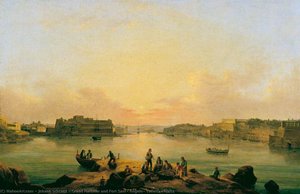
- Senglea Point, Malta: A serene study of the Maltese coastline that exemplifies his ability to evoke contemplative stillness.
As we look back upon the life of this German master, we see an artist who bridged cultures through his passion for landscape. Though he passed away in 1882, Schranz’s legacy remains vibrant. His paintings continue to serve as a luminous bridge to the past, inviting every generation to rediscover the sun-drenched splendor of the Maltese islands through the eyes of a true painter of light.
johann schranz
1794 - 1882
Quick Facts
- Artistic Movement Or Style: Romanticism
- Artists Or Movements Influenced By This Artist: ['Romantic Painting']
- Artists Who Influenced This Artist: ['Caspar David Friedrich']
- Date Of Death: 1882
- Full Name: Johann Schranz
- Nationality: German
- Notable Artworks:
- Casa Argotti, Malta
- Grand Harbour and Fort Sant' Angelo
- Place Of Birth: Regensburg, Bavaria