 Preview
 Send
Send Share
Share
 Details

 Download
 Similars
 X-Ray
X-Ray Diaporama
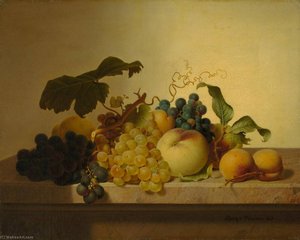
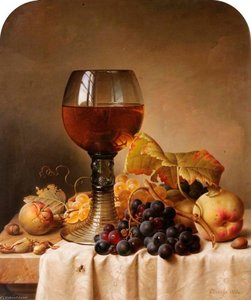
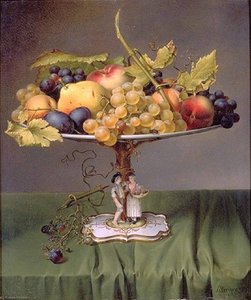
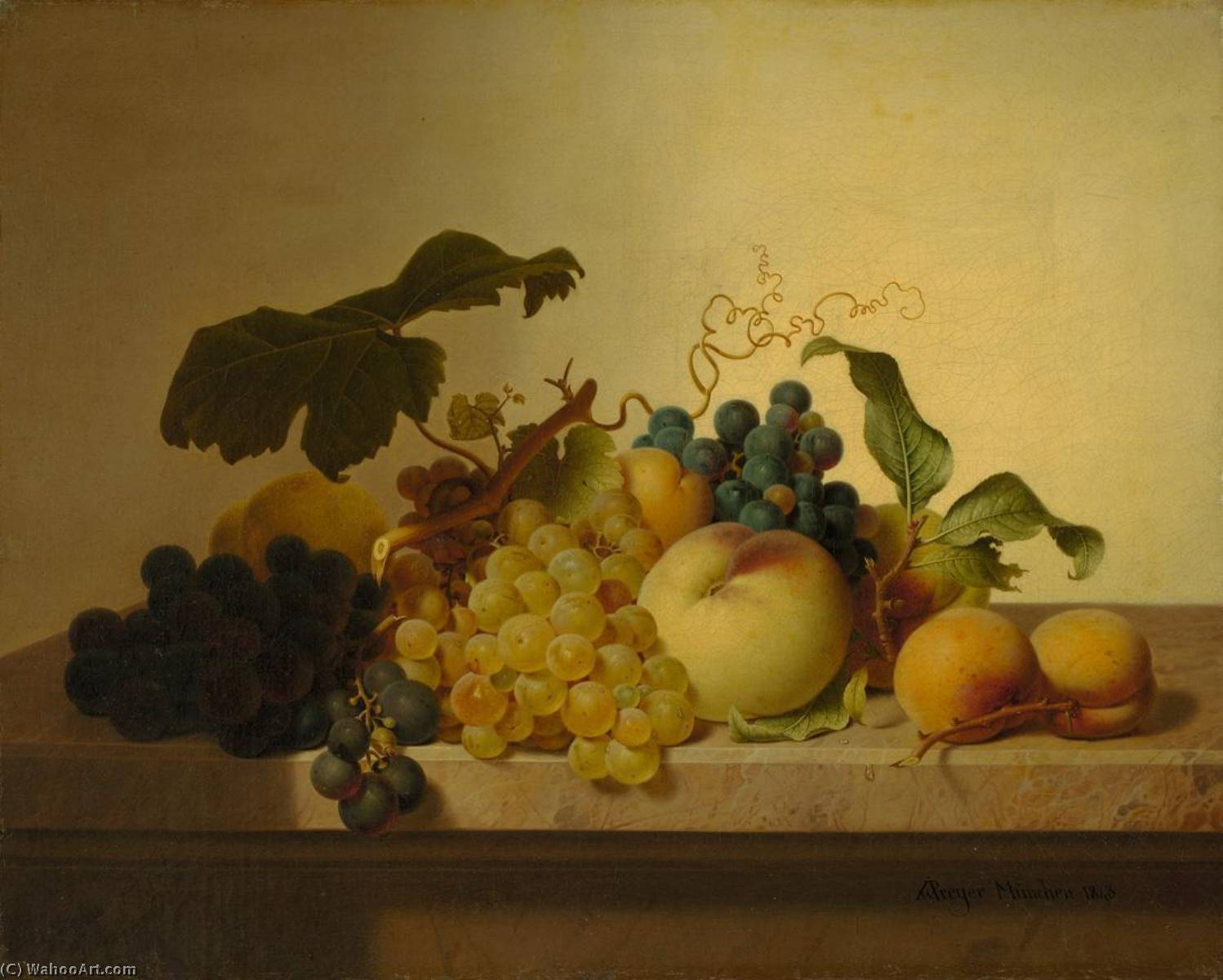
Fruit on a Marble Table

 Read More
Hand Made Oil Reproduction
Hand-painted oil on canvas in your size and frame, made to order by our artists. ( Buy Print Buy Image)




































Pick from our preset sizes that match the artwork's original proportions.

You may enter your own dimensions to fit a specific frame or space. If your selected size does not match the original image's proportions, we will either crop the artwork or extend the painting with additional hand-painted elements. A digital mockup will be sent for your approval before production begins.
Please note that the on-screen preview does not reflect the actual cropping or extension. Only the mockup will accurately show the final composition.
While custom sizes are available, we recommend selecting a dimension from the predefined list to preserve the original proportions.
After order, ArtsDot.com team will email client for instructions and provide a mockup preview
Worldwide Delivery () in 3/4 weeks instead of standard 5 weeks. (17 August). No compromise on quality.

Free Worldwide Express Shipping

High-Quality Linen Canvas

Full Shipping Insurance

Customs Tax Refund Guarantee

True Color Matching Guarantee

60-Day Return Policy (Defects Only)

100% Money-Back Guarantee

Bulk Discount Offer
 Glass option is only available in size under 110 CM

Fruit on a Marble Table
Reproduction Medium
Reproduction Size
-


Total Price
$ 263
Related Artworks
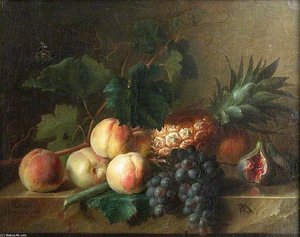
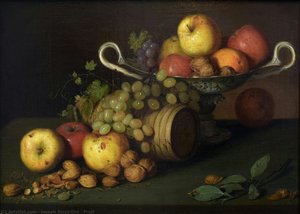
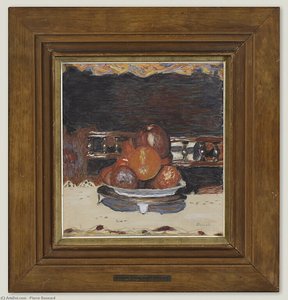
Artist Biography
Johann Wilhelm Preyer: Life and Legacy
Early Life and Education
- Born in Düsseldorf, Germany, in 1803, Johann Wilhelm Preyer emerged from a family with artistic inclinations. His father was a merchant, and his brother, Gustav, also pursued a career as a painter.
- Growing up in the old town of Eschweiler, Preyer displayed an early aptitude for art. A playful anecdote recounts how he and his brother, both small in stature, would occasionally disguise themselves as children to play pranks.
- Formal training began at the Düsseldorf Art Academy in 1822, where he studied under Peter von Cornelius. He later became a master student of Wilhelm von Schadow, solidifying his foundation in classical artistic principles.
Artistic Development and Influences
- Preyer’s education extended beyond Düsseldorf; he embarked on extensive travels throughout Europe between 1835 and 1843. These journeys took him to the Netherlands, Munich, Northern Italy, and Switzerland, exposing him to diverse artistic styles and traditions.
- Influences from Dutch still life masters are evident in his meticulous attention to detail and realistic depiction of textures. The Düsseldorf School’s emphasis on precise observation also shaped his approach.
- Upon returning to Düsseldorf in 1844, Preyer dedicated himself primarily to still life painting, establishing a reputation for exceptional skill within the genre.
Major Works and Artistic Style
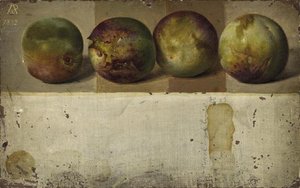
- Specialization: Preyer became renowned for his exquisitely detailed paintings of flowers and fruit. His works are characterized by their vibrant colors, realistic textures, and careful compositions.
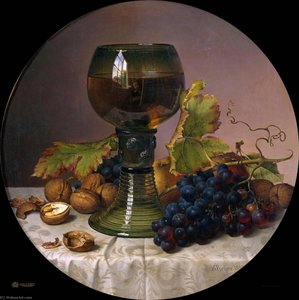
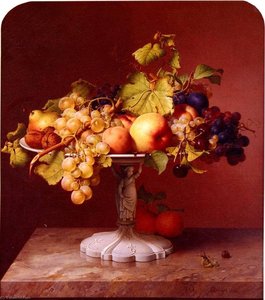
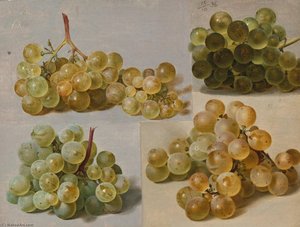
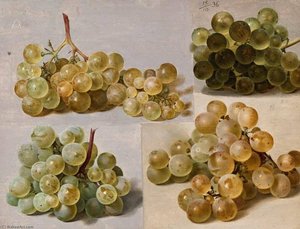
- Notable examples include “Fruit and a Goblet,” “Fruit Still Life with Sculpted Ceramic Bowl,” and numerous depictions of grapes and floral arrangements.
- His style is often associated with the Biedermeier period, reflecting a focus on domesticity, simplicity, and meticulous craftsmanship.
Achievements and Recognition
- Preyer quickly gained recognition as one of the leading still life painters of his time. His works were highly sought after by collectors, with a significant portion eventually finding their way into American collections.
- Founding Member: He was among the founding members of the Association of Düsseldorf Artists in 1844, demonstrating his commitment to fostering artistic community and collaboration.
- Preyer also took on private students, including Helen Searle, an American still life painter who further disseminated his techniques and influence.
Personal Life and Legacy
- Around 1844, Preyer married Emilie Lachenwitz, the sister of painter Siegmund Lachenwitz. They had two children, Emilie and Paul, both of whom also became painters, continuing the family’s artistic legacy.
- Historical Significance: Johann Wilhelm Preyer is considered one of the earliest masters of the Düsseldorf School of Painting and a pivotal figure in 19th-century German still life art.
- In recognition of his contributions, a road in Eschweiler, where he grew up, was renamed Preyerstrasse in 1974.
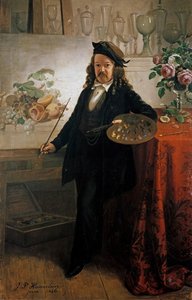
Johann Wilhelm Preyer
1803 - 1889 , Germany
Quick Facts
- Birth Date: 1803
- Birth Place: Düsseldorf, Germany
- Death Date: 1889
- Influenced By:
- Peter von Cornelius
- Wilhelm von Schadow
- Movement: Düsseldorf School of Painting
- Name: Johann Wilhelm Preyer
- Nationality: German
- Notable Works:
- Fruit and a Goblet
- Fruit Still life
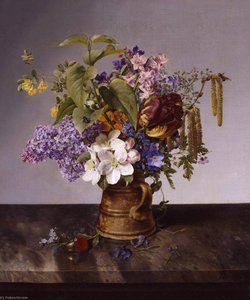
- Flowers in a Jug