 Preview
 Send
Send Share
Share
 Details

 Download
 Similars
 X-Ray
X-Ray Diaporama
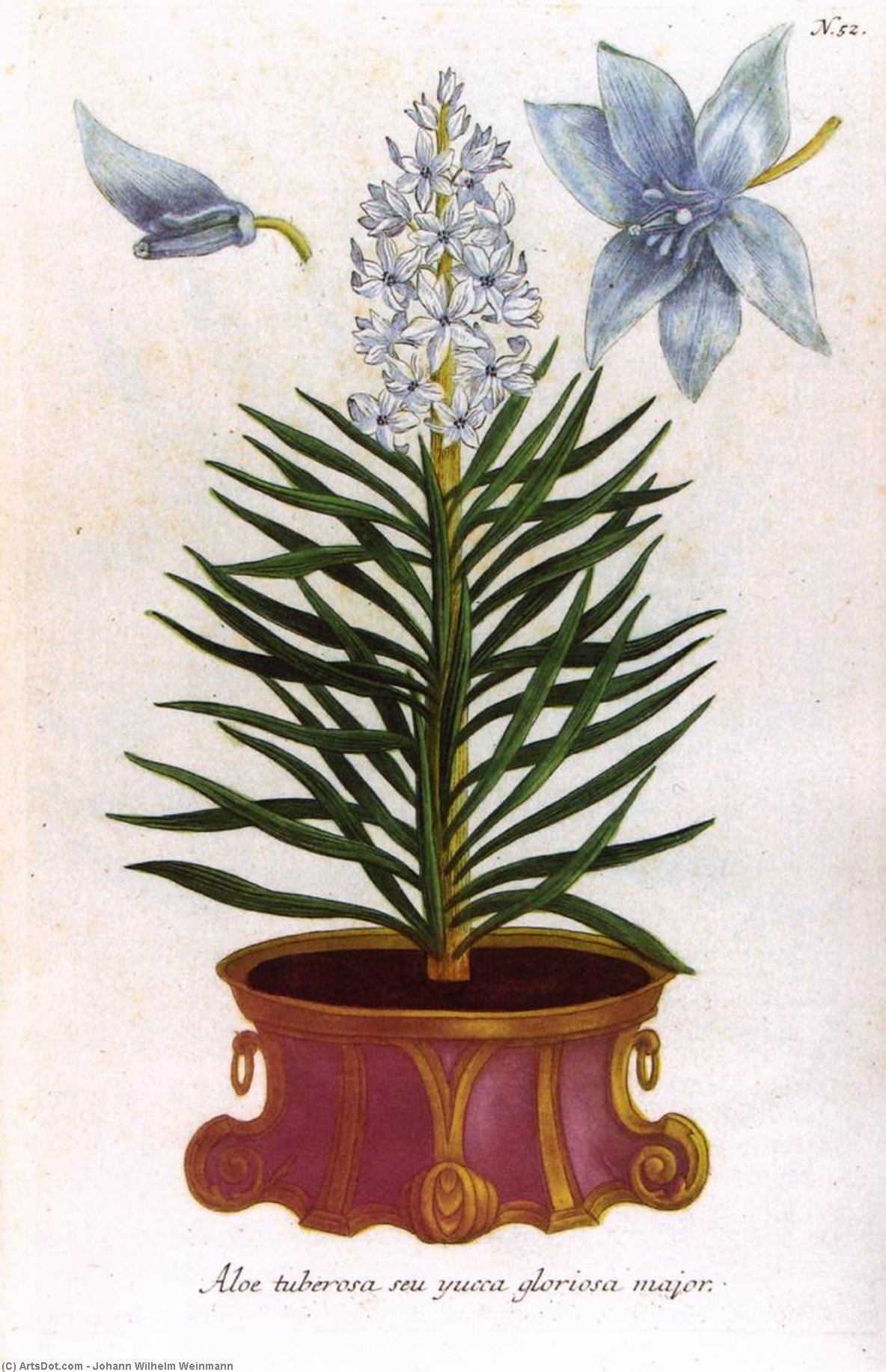
Illustration from Phytanthoza iconographia

 Read More
Giclée / Art Print
Museum-quality giclée or canvas print with fast production and flexible finish options. ( Buy Hand Made Painting Buy Image)




































Pick from our preset sizes that match the artwork's original proportions.

You may enter your own dimensions to fit a specific frame or space. If your selected size does not match the original image's proportions, we will either crop the artwork or extend the image with a mirrored or solid-fill edge. A digital mockup will be sent for your approval before production begins.
Please note that the on-screen preview does not reflect the actual cropping or extension. Only the mockup will accurately show the final composition.
While custom sizes are available, we recommend selecting a dimension from the predefined list to preserve the original proportions.
Worldwide Delivery () in 2 weeks instead of standard 4/5 weeks. (23 August)

Free Worldwide Express Shipping

High-Quality Linen Canvas

Full Shipping Insurance

Customs Tax Refund Guarantee

True Color Matching Guarantee

60-Day Return Policy (Defects Only)

100% Money-Back Guarantee

Bulk Discount Offer
 Glass option is only available in size under 110 CM

Illustration from Phytanthoza iconographia
Giclée / Art Print
Reproduction Size
-


Total Price
$ 63
Related Artworks






Artist Biography
Johann Wilhelm Weinmann (1683 – 1741): The Botanical Pioneer
Johann Wilhelm Weinmann stands as a singular figure in the annals of eighteenth-century botany, recognized primarily for his monumental achievement—the *Phytanthoza iconographia*, an ambitious florilegium that redefined botanical illustration and cemented his legacy as one of Germany’s foremost plant scientists. Born in Gardelegen, Prussia (modern Poland), Weinmann's early life remains shrouded in relative obscurity, though he established himself as an apothecary in Rosensburg by 1710, marking the commencement of a career dedicated to both medicine and meticulous botanical observation.- Early Career & Patronage: Weinmann’s formative years were spent honing his skills under the tutelage of experienced apothecaries, fostering a deep understanding of medicinal plants and their therapeutic applications. His subsequent relocation to Regensburg in 1712 coincided with a fortunate marriage to Isabella Catharina Fürst, daughter of a wealthy wine merchant—a union that provided him with considerable financial stability and enabled him to acquire his own apothecary shop.
- The Pursuit of Botanical Excellence: Weinmann’s passion for botany blossomed after his marriage, propelling him into active engagement with the burgeoning scientific community. He served as Hospital Apothecary from 1713 onwards, navigating legal disputes stemming from his professional responsibilities and demonstrating unwavering dedication to upholding ethical standards within his craft.
- The Creation of Phytanthoza Iconographia: Weinmann’s magnum opus—the *Phytanthoza iconographia*—emerged between 1737 and 1745, representing a culmination of years spent cultivating a vast collection of plants and meticulously documenting their characteristics. This ambitious project enlisted the collaboration of Georg Dionysius Ehret, a young engraver whose innovative mezzotint technique revolutionized botanical illustration, achieving unprecedented levels of detail and tonal nuance.
Georg Dionysius Ehret: A Collaborative Partnership
The partnership between Weinmann and Ehret proved pivotal to the success of *Phytanthoza Iconographia*. Ehret’s mastery of mezzotint engraving—a technique pioneered by Robert Robinson—allowed for a level of tonal gradation previously unattainable in botanical prints, imbuing each illustration with remarkable realism. Weinmann recognized Ehret's talent early on and generously supported his artistic endeavors, providing him with lodging and sustenance as he undertook the daunting task of producing over 1,000 engravings within a single year. Despite initial disagreements regarding payment terms—Ehret famously abandoned Weinmann’s employment after receiving only a fraction of the agreed remuneration—the collaboration cemented Ehret's reputation as one of the era’s most celebrated floral illustrators and established him as Weinmann’s indispensable artistic companion.Influence & Legacy
Weinmann’s contribution to botanical science extended beyond mere illustration; he conducted extensive research into medicinal plants, publishing influential treatises that disseminated knowledge about herbal remedies and bolstering the burgeoning field of pharmacognosy. His meticulous observations—recorded in publications such as *Catalogus Alphabetico ordine exhibens Pharmaca* and “Observationes und Anmerkungen” in the “Breslauer Sammlungen”—established him as a pioneer in systematizing plant taxonomy and furthering understanding of their pharmacological properties. The enduring impact of Weinmann’s work is evident in the continued veneration of *Phytanthoza Iconographia*—recognized today as one of the most significant botanical illustrations of the eighteenth century—and his indelible mark on the history of German botany.Beyond Phytanthoza: Contributions to Regensburg & Scientific Discourse
Weinmann’s influence transcended artistic collaboration; he actively participated in civic life, serving as a Town Councillor and City Assessor—positions that afforded him considerable sway within Regensburg's administrative sphere. His astute business acumen enabled him to revitalize a failing apothecary shop, transforming it into a prosperous enterprise and demonstrating his commitment to both professional success and community wellbeing. Weinmann’s engagement with scientific discourse extended beyond botanical research; he championed the advancement of knowledge through meticulous experimentation and scholarly publication—solidifying his position as a transformative figure in shaping the intellectual landscape of his time.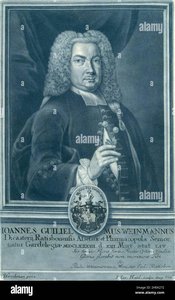
johann wilhelm weinmann
1683 - 1741 , Germany
Quick Facts
- Artistic Movement Or Style: Baroque Botanical Art
- Artists Or Movements Influenced By This Artist: ['Robert Robinson']
- Artists Who Influenced This Artist: ['Georg Dionysius Ehret']
- Date Of Birth: March 13, 1683
- Full Name: Johann Wilhelm Weinmann
- Nationality: German
- Notable Artworks: ['Phytanthoza iconographia']
- Place Of Birth: Gardelegen, Germany