 Preview
 Send
Send Share
Share
 Details

 Download
 Similars
 X-Ray
X-Ray Diaporama
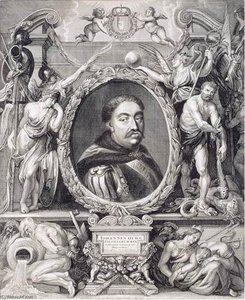
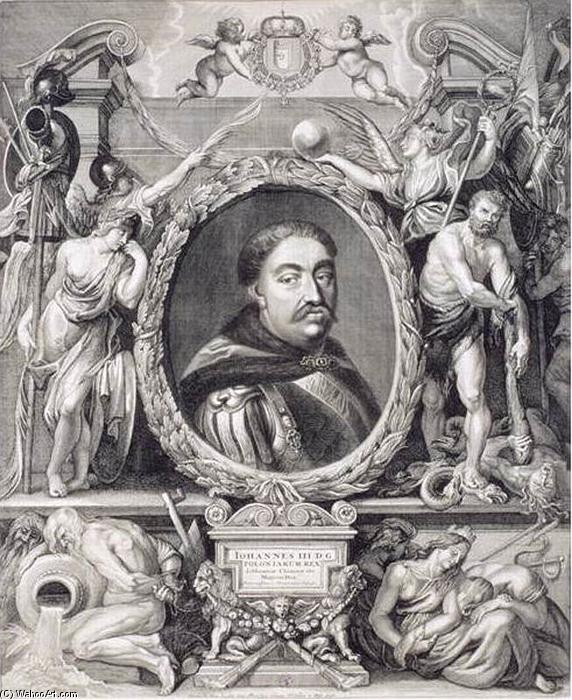
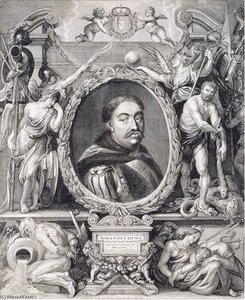
Jan Sobieski III , King of Poland


 Read More
Giclée / Art Print
Museum-quality giclée or canvas print with fast production and flexible finish options. ( Buy Hand Made Painting Buy Image)




































Pick from our preset sizes that match the artwork's original proportions.

You may enter your own dimensions to fit a specific frame or space. If your selected size does not match the original image's proportions, we will either crop the artwork or extend the image with a mirrored or solid-fill edge. A digital mockup will be sent for your approval before production begins.
Please note that the on-screen preview does not reflect the actual cropping or extension. Only the mockup will accurately show the final composition.
While custom sizes are available, we recommend selecting a dimension from the predefined list to preserve the original proportions.
Worldwide Delivery () in 2 weeks instead of standard 4/5 weeks. (25 August)

Free Worldwide Express Shipping

High-Quality Linen Canvas

Full Shipping Insurance

Customs Tax Refund Guarantee

True Color Matching Guarantee

60-Day Return Policy (Defects Only)

100% Money-Back Guarantee

Bulk Discount Offer
 Glass option is only available in size under 110 CM

Jan Sobieski III , King of Poland
Giclée / Art Print
Reproduction Size
-


Total Price
$ 63
Related Artworks

Artist Biography
The Cartographer of Light and Line: The Legacy of Johannes de Ram
In the vibrant, intellectually charged atmosphere of the Dutch Golden Age, few artists bridged the gap between scientific precision and artistic elegance as gracefully as Johannes de Ram. Born in Amsterdam around 1648, De Ram emerged during an era when the boundaries between art, geography, and exploration were fluid and deeply interconnected. While history often reserves its most luminous spotlights for masters like Rembrandt or Vermeer, De Ram carved out a unique niche that demanded a different kind of vision—one that required not just the soul of a painter, but the exacting eye of a surveyor. His life and work stand as a testament to a period when the act of mapping the world was as much an aesthetic pursuit as it was a scientific necessity.
The foundations of De Ram’s mastery were laid in the rigorous traditions of Dutch training. Though the specific details of his earliest years remain shrouded in the mists of time, traces of his artistic lineage suggest a profound connection to the era's great masters. He is noted for his association with Hendrick van Balen, a painter celebrated for his allegorical depth and landscape mastery. This early exposure to the interplay of light and composition undoubtedly shaped De Ram’s later ability to infuse even the most technical works with a sense of grandeur. Furthermore, records suggest he may have been a pupil of Romeyn de Hooghe, a connection that would have further refined his skills in printmaking and the intricate details required for high-level cartography.
A Vision of Delft and the Art of Precision
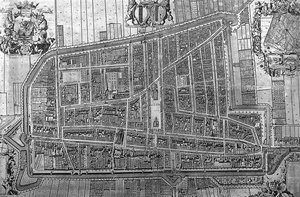
De Ram’s most enduring contribution to the visual record of the Netherlands lies in his breathtaking cartographic achievements. He possessed a rare talent for transforming topographical data into works of profound beauty. His Map of Delft remains a pinnacle of this achievement, commissioned by Willem Piso II, the Director-General of the Dutch East India Company (VOC). This was not merely a functional tool for navigation or urban planning; it was a masterpiece of detail that captured the very essence of the city. Through meticulous line work and an innovative approach to capturing architectural features, De Ram provided a window into the structural soul of Delft, elevating the map from a mere document to a piece of fine art.
This dedication to accuracy extended far beyond the borders of Dutch cities. His ability to synthesize vast amounts of geographical information allowed him to produce works that were both informative and visually captivating for the elite collectors of his time. His work reflected the humanist ideals of the 17th century, where the desire to document and understand the physical world was driven by a deep-seated curiosity about the expanding horizons of human knowledge.
Portraiture and the Nobility of the Dutch Golden Age
Beyond the measured lines of his maps, De Ram demonstrated a remarkable sensitivity as a portraitist. He possessed the ability to capture the psychological depth and social stature of his subjects, making him a preferred artist for the influential figures of Dutch society. His portraits were more than mere likenesses; they were carefully constructed narratives of status, power, and character. One of the most striking examples of his skill is preserved in the British Museum, featuring an engraving of Jan Sobieski III, King of Poland. In such works, De Ram utilized the nuances of light and shadow to convey the dignity and weight of royalty, proving that his artistic range was as vast as the territories he mapped.
The significance of De Ram’s career lies in this duality of purpose. He was an artist who could navigate both the rigid requirements of scientific documentation and the emotive demands of portraiture. His life, though relatively brief—ending in Amsterdam in 1693—left behind a legacy that celebrates the intersection of art and intellect. Through his maps and portraits, he helped define the visual identity of an age characterized by discovery, documenting both the physical landscapes of Europe and the faces of those who shaped its history.
johannes de ram
1648 - 1693 , Netherlands
Quick Facts
- Artistic Movement Or Style: Golden Age
- Date Of Birth: Amsterdam, Netherlands (1648)
- Full Name: Johannes de Ram
- Nationality: Dutch
- Notable Artworks:
- Map of Delft
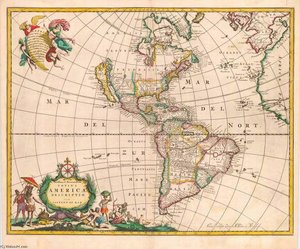
- Novissima et Accuratissima Totius Americae Descriptio
- Place Of Birth: Amsterdam