 Preview
 Send
Send Share
Share
 Details

 Download
 Similars
 X-Ray
X-Ray Diaporama
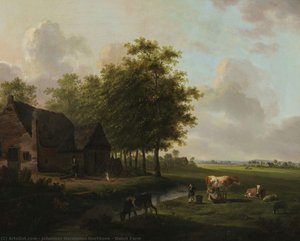
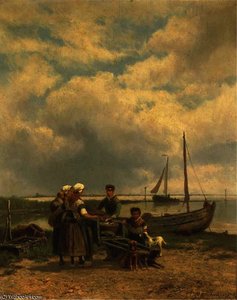
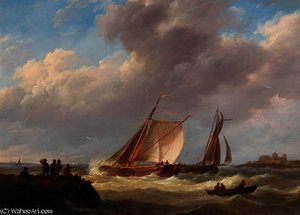
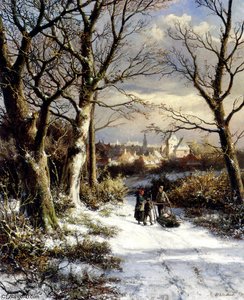
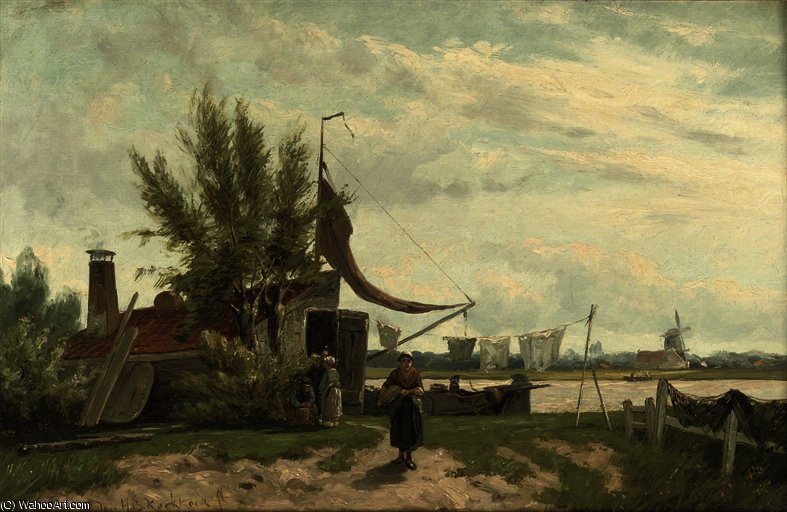
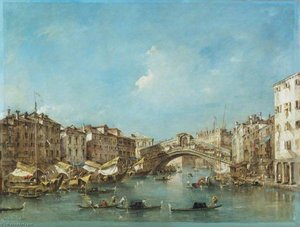
By the canal
 Read More
Hand Made Oil Reproduction
Hand-painted oil on canvas in your size and frame, made to order by our artists. ( Buy Print Buy Image)




































Pick from our preset sizes that match the artwork's original proportions.

You may enter your own dimensions to fit a specific frame or space. If your selected size does not match the original image's proportions, we will either crop the artwork or extend the painting with additional hand-painted elements. A digital mockup will be sent for your approval before production begins.
Please note that the on-screen preview does not reflect the actual cropping or extension. Only the mockup will accurately show the final composition.
While custom sizes are available, we recommend selecting a dimension from the predefined list to preserve the original proportions.
After order, ArtsDot.com team will email client for instructions and provide a mockup preview
Worldwide Delivery () in 3/4 weeks instead of standard 5 weeks. (17 August). No compromise on quality.

Free Worldwide Express Shipping

High-Quality Linen Canvas

Full Shipping Insurance

Customs Tax Refund Guarantee

True Color Matching Guarantee

60-Day Return Policy (Defects Only)

100% Money-Back Guarantee

Bulk Discount Offer
 Glass option is only available in size under 110 CM

By the canal
Reproduction Medium
Reproduction Size
-


Total Price
$ 263
Related Artworks
Artist Biography
A Legacy Rooted in Dutch Soil: The Life and Art of Johannes Hermanus Koekkoek
Johannes Hermanus Koekkoek, born in the small Dutch village of Vierslag in 1778, emerged as a pivotal figure in the transition of Dutch painting from the dramatic flourishes of Romanticism towards a more grounded realism. He wasn’t simply an artist; he was the progenitor of a remarkable artistic dynasty, a family whose name became synonymous with landscape and maritime artistry throughout the 19th century. From his earliest days, Koekkoek was immersed in a creative atmosphere – his father, Hermanus Koekkoek, himself a painter, laid the foundation for a lineage that would include his brothers Willem and nephew Barend Cornelis, each contributing to the rich tapestry of Dutch artistic heritage. This familial influence wasn’t merely circumstantial; it fostered an environment of constant learning, critique, and shared passion that profoundly shaped young Johannes's development. Initially trained by his father and later honing his skills at the Drawing Academy in Middelburg, Koekkoek began his career steeped in the Romantic tradition, crafting idealized landscapes filled with dramatic skies and evocative scenes.From Romantic Visions to Realistic Depictions
Koekkoek’s artistic journey wasn't one of static adherence but rather a dynamic evolution. While initially embracing the Romantic aesthetic championed by his father, around 1864 – though scholarly sources offer slight variations on this timeline – he began to subtly shift his approach. This wasn’t an abrupt departure, but a gradual refinement influenced significantly by the burgeoning Hague School. This group of Dutch artists prioritized direct observation and the honest depiction of everyday life, rejecting the often-exaggerated emotionalism of Romanticism in favor of capturing the nuances of light, atmosphere, and the unvarnished realities of their surroundings. The Hague School’s emphasis on *plein air* painting – working outdoors to directly capture natural effects – resonated deeply with Koekkoek, prompting him to adopt a more meticulous and detailed approach. He began to focus less on grand narratives and more on the subtle beauty of Dutch rural life, the power of the sea, and the quiet dignity of those who lived and worked within these landscapes. This transition is evident in his evolving subject matter, moving from purely idealized scenes towards depictions that felt palpably real, imbued with a sense of authenticity.A Diverse Oeuvre: Seascapes, Landscapes, and Daily Life
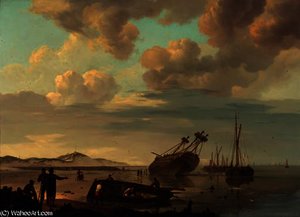
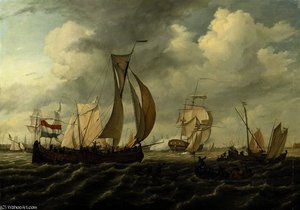
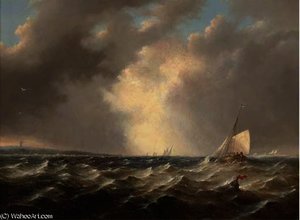
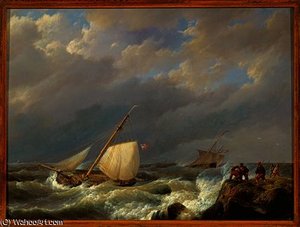
The breadth of Koekkoek’s artistic output reflects both his technical skill and his evolving interests. He became particularly renowned for his captivating seascapes – turbulent scenes of ships battling stormy weather, serene coastal views, and the raw power of the ocean itself. These weren't merely depictions of maritime activity; they were explorations of humanity’s relationship with nature, showcasing both its beauty and its unforgiving force. Alongside these dramatic marine paintings, Koekkoek also produced a wealth of Dutch rural landscapes, featuring farms nestled amongst rolling fields, quaint villages bathed in golden light, and expansive skies that seemed to stretch endlessly towards the horizon. He possessed an exceptional ability to capture the unique character of the Dutch countryside, imbuing his scenes with a sense of tranquility and timelessness. But Koekkoek’s artistry wasn't limited to landscapes; he also turned his attention to scenes of daily life, depicting farmers at work in their fields, people traveling along country roads, and the everyday activities that defined 19th-century Netherlands. Works like “Vessels on a Lee Shore in a Gale of Wind” (1844) exemplify his mastery of dramatic composition and atmospheric perspective, while pieces such as "On the Beach" showcase his ability to capture the subtle nuances of coastal life.Technique, Legacy, and Historical Significance
Koekkoek’s artistic style is characterized by a remarkable attention to detail, particularly in his rendering of natural elements and everyday objects. He possessed an exceptional eye for light and shadow, skillfully employing these tools to create depth, atmosphere, and a sense of realism within his compositions. His commitment to portraying scenes as they appeared in reality – especially during his later period – set him apart from many of his contemporaries. This dedication to authenticity, combined with his technical prowess, cemented his place as an important figure in the transition from Romanticism to Realism in Dutch painting. While perhaps not as widely celebrated as some of the more prominent members of the Hague School, Johannes Hermanus Koekkoek played a crucial role in shaping the artistic landscape of 19th-century Netherlands. His work provides invaluable insights into Dutch life and culture during this period, offering a glimpse into the everyday realities of a nation undergoing significant social and economic change. Moreover, his influence extended far beyond his own lifetime, inspiring generations of Dutch artists who continued to explore themes of realism, naturalism, and the enduring beauty of their homeland. The Koekkoek name itself became synonymous with artistic excellence, ensuring that his legacy would continue to flourish through the work of his sons, grandsons, and great-grandsons – a testament to the power of family, tradition, and unwavering dedication to the art of painting.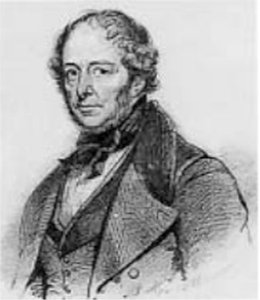
Johannes Hermanus Koekkoek
1778 - 1851 , Netherlands
Quick Facts
- Artistic Movement Or Style: Romanticism, Realism
- Artists Or Movements Influenced By This Artist: ['Later Dutch artists']
- Artists Who Influenced This Artist: ['The Hague School']
- Date Of Birth: 1778
- Date Of Death: 1851
- Full Name: Johannes Hermanus Koekkoek
- Nationality: Dutch
- Notable Artworks:
- Vessels on a Lee Shore
- On the Beach
- Shipping in estuary
- Dutch Farm
- Place Of Birth: Vierslag, Netherlands