 Preview
 Send
Send Share
Share
 Details

 Download
 Similars
 X-Ray
X-Ray Diaporama
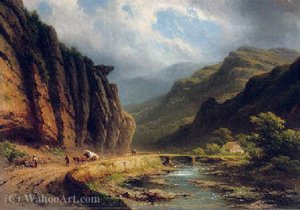
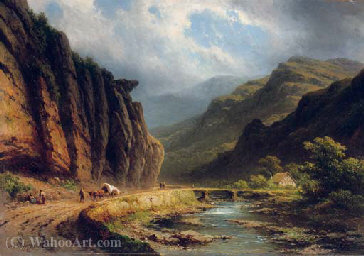
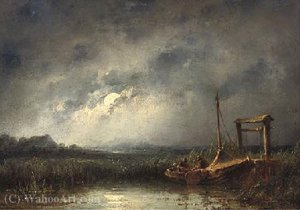
Travellers on a mountain track
 Read More
Giclée / Art Print
Museum-quality giclée or canvas print with fast production and flexible finish options. ( Buy Hand Made Painting Buy Image)




































Pick from our preset sizes that match the artwork's original proportions.

You may enter your own dimensions to fit a specific frame or space. If your selected size does not match the original image's proportions, we will either crop the artwork or extend the image with a mirrored or solid-fill edge. A digital mockup will be sent for your approval before production begins.
Please note that the on-screen preview does not reflect the actual cropping or extension. Only the mockup will accurately show the final composition.
While custom sizes are available, we recommend selecting a dimension from the predefined list to preserve the original proportions.
Worldwide Delivery () in 2 weeks instead of standard 4/5 weeks. (25 August)

Free Worldwide Express Shipping

High-Quality Linen Canvas

Full Shipping Insurance

Customs Tax Refund Guarantee

True Color Matching Guarantee

60-Day Return Policy (Defects Only)

100% Money-Back Guarantee

Bulk Discount Offer
 Glass option is only available in size under 110 CM

Travellers on a mountain track
Giclée / Art Print
Reproduction Size
-


Total Price
$ 63
Related Artworks
Artist Biography
Johannes Hilverdink (1813-1902): A Pioneer of Romantic Landscape Painting
Johannes Hilverdink (1813-1902) stands as a significant figure in Dutch art history, particularly recognized for his contributions to the Romantic landscape movement and his association with the Goethe Museum’s collection. Born in Groningen on January 18, 1813, he descended from a family steeped in artistic tradition – his father was an actor, and his aunt Geertruida Jacoba Hilverdink, another celebrated performer – fostering an environment that nurtured his creative inclinations. From a young age, Hilverdink pursued formal artistic training at the Amsterdam Academy, honing his skills under luminaries like Jan Willem Pieneman and Jean Augustin Daiwaille, both directors of the Royal Academy of Visual Arts during his formative years. This exposure to influential mentors undoubtedly shaped his artistic vision. Hilverdink’s artistic journey commenced in 1828, aligning him squarely with the burgeoning Romantic aesthetic. Unlike preceding artistic styles, Romanticism prioritized emotion and imagination over strict realism, seeking inspiration from nature's grandeur and reflecting profound psychological states. Hilverdink embraced this ethos wholeheartedly, producing breathtaking landscapes that captured the sublime beauty of coastal vistas, mountainous terrains, and serene seascapes—scenes imbued with a palpable sense of awe and wonder. His canvases weren’t merely depictions of scenery; they were expressions of inner experience, mirroring the Romantic preoccupation with spirituality and the individual's relationship to the natural world. Throughout his prolific career spanning several decades, Hilverdink traveled extensively across Europe – Belgium, Germany, England, France, and Greenland – immersing himself in diverse environments and translating these impressions onto canvas. These journeys fueled his artistic creativity and broadened his understanding of visual language. He skillfully employed watercolor techniques, complemented by lithography prints, to convey atmospheric nuances and textural subtleties that would have been unattainable with more conventional mediums. His meticulous attention to detail—particularly evident in depictions of church interiors and cityscapes—demonstrated a commitment to capturing the essence of both architectural grandeur and urban life. Hilverdink’s artistic legacy extends beyond his individual artworks; he played an instrumental role in establishing the Goethe Museum in Dortmund, Germany. Founded in 1902, this museum houses a remarkable collection of Romantic paintings, largely thanks to Hilverdink's generous donation—a testament to his belief in preserving and disseminating artistic heritage for future generations. The Goethe Museum’s holdings serve as a cornerstone of German Romantic art scholarship, providing invaluable insights into the stylistic innovations and philosophical currents of the era. Furthermore, Hilverdink’s influence resonated within his family circle. His sons, Johannes Jacobus Antonius and Eduard Alexander Hilverdink, followed in his footsteps as painters, inheriting his artistic sensibilities and continuing to explore the expressive possibilities of landscape painting. This familial dedication to art ensured that Hilverdink's artistic legacy endured beyond his lifetime, cementing his place as a pivotal figure in Dutch Romanticism and a champion of cultural preservation.- Notable Works: Consider including 2-3 prominent paintings by Hilverdink (e.g., “The Coast of Scheveningen,” “Mount Sint Maarten”).
- Technique: Discuss Hilverdink’s favored watercolor technique and how it contributed to the Romantic aesthetic.
- Influence: Explore his connection with Jean Auguste Daiwaille and Jan Willem Pieneman, highlighting their mentorship and impact on Hilverdink's artistic development.
johannes hilverdink
1813 - 1902
Quick Facts
- Artistic Movement Or Style: Romantic School
- Artists Or Movements Influenced By This Artist: ['Romantic School']
- Artists Who Influenced This Artist:
- Jan Willem Pieneman
- Jean Augustin Daiwaille
- Date Of Birth: 1813
- Date Of Death: 1902
- Full Name: Johannes Hilverdink
- Nationality: Dutch
- Notable Artworks:
- Coastal Views
- Mountain Landscapes
- Navies
- Place Of Birth: Groningen, Netherlands