

 Preview
 Send
Send Share
Share
 Details

 Download
 Similars
 X-Ray
X-Ray Diaporama
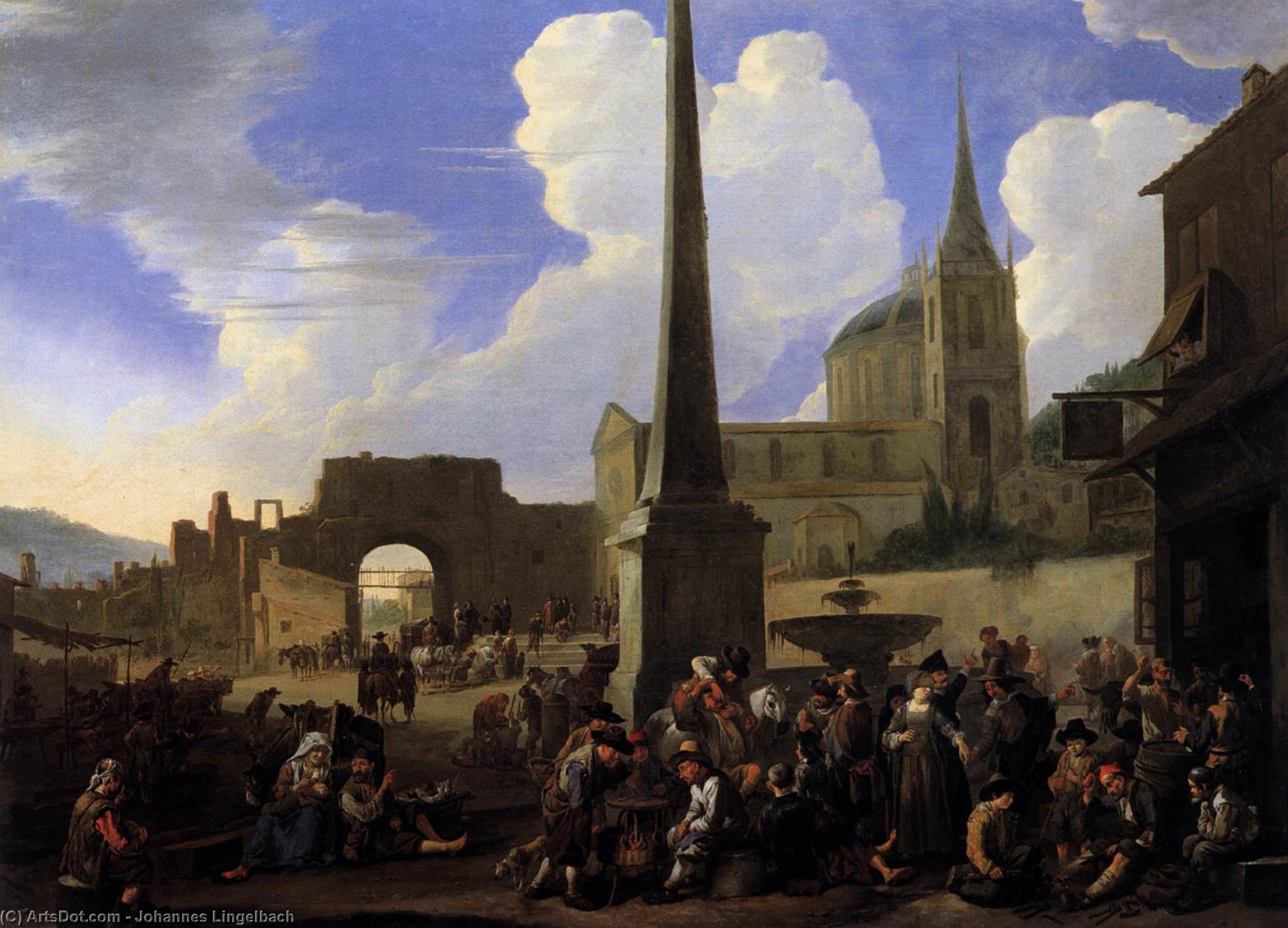
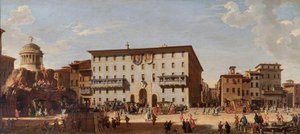
Crowd in the Piazza del Popolo in Rome
 Oil On Canvas
- WallArt
- Baroque
 1664
1664- Early Modern
 87.0 x 118.0 cm
 Academy of Fine Arts Vienna
 Read More
Purchase a high-resolution, enhanced digital image, far superior to the online preview.
Each file is meticulously prepared by our in-house specialists using advanced tools and expert manual retouching. We ensure every image has exceptional clarity, precise color accuracy, and fine detail.
The final file is delivered via email within 72 hours, optimized for immediate use in professional, editorial, and print environments. This is the same quality trusted by top-tier design studios, publishers, and galleries.
Digital Image
Download a high-resolution file for personal display, printing, and creative projects. ( Buy Print Buy Hand Made Painting)
Included in Every Digital Image Order
Expert Digital Delivery, Guaranteed
When you choose ArtsDot.com, you're not just getting an image - you're receiving a professionally enhanced digital artwork, crafted with precision and backed by a satisfaction guarantee. Here's everything that comes with your order, automatically:

Fast Email Delivery
Your high-resolution digital image file will be emailed to you within 72 hours of ordering - ready for immediate use.

AI-Enhanced Digital File
Your artwork is professionally optimized using advanced AI tools and manual editing, ensuring maximum detail, clarity, and color accuracy.

Free Lifetime Re-Delivery
Accidentally deleted or lost your file? No worries - we'll resend it to you anytime, free of charge.

No Import Fees - Ever
Enjoy your artwork instantly with zero customs, duties, or delivery fees - digital downloads are always tax-free.

Color Accuracy Guarantee
We ensure your digital image reflects the original colors as closely as possible using professional tools and color management.

60-Day Satisfaction Guarantee
If you're not satisfied with your digital image, we'll revise it or refund 100% within 60 days - no questions asked.

100% Money-Back Guarantee
Not satisfied? Get a full refund within 60 days of receiving your digital file - no questions asked.

Bulk Order Discounts
Buy 3 images, save 10% - Buy 5, save 15% - Buy 10+, save 20%. Great for creative projects, galleries, and agencies.
Collectible Description
A Symphony of Roman Life
In the heart of the seventeenth century, the vibrant pulse of Rome found its most exquisite expression through the brush of Johannes Lingelbach. His masterpiece, Crowd in the Piazza del Popolo in Rome, serves as a breathtaking window into a bygone era, capturing the kinetic energy of one of the city's most iconic landmarks. As the eye wanders across the expansive canvas, it is immediately swept into a whirlwind of movement and social complexity. This is not merely a depiction of a location, but a meticulously choreographed ballet of humanity. From the figures kneeling in quiet contemplation to the lively clusters of citizens engaged in spirited dialogue, Lingelly captures the very essence of urban vitality. The presence of horses, scattered strategically throughout the composition, adds a layer of rhythmic depth, suggesting the constant flow of commerce and travel that defined the Roman experience.
The technique employed by Lingelbach reveals the profound influence of the Bambocciate movement, a style characterized by its devotion to the unvarnished, everyday scenes of street life. Through masterful use of oil on canvas, the artist achieves a remarkable sense of atmospheric perspective. The light does not simply illuminate the scene; it breathes life into it, casting soft shadows that define the architectural grandeur of the piazza while highlighting the subtle textures of clothing and the muscular grace of the horses. Each brushstroke contributes to a larger tapestry of realism, where the interplay of light and shadow—reminiscent of the Caravaggesque tradition—creates a sense of three-dimensional space that pulls the viewer directly into the Roman sun.
Historical Resonance and Aesthetic Grandeur
To behold this painting is to witness the intersection of Northern European precision and Italian passion. Lingelbach, a traveler whose life spanned from Frankfurt to Amsterdam and through the sacred streets of Rome, brings a unique dual perspective to his work. He possesses the meticulous eye of a Dutch master, capable of rendering intricate details with clarity, yet he imbues his subjects with the warmth and theatricality found in the Italian Baroque. This synthesis makes the Crowd in the Piazza del Popolo more than just a genre painting; it is a historical document that celebrates the enduring spirit of human interaction and the timeless allure of the Roman landscape.
For the discerning collector or interior designer, this artwork offers an unparalleled opportunity to introduce a sense of narrative depth and classical elegance into a space. The scale of the piece, measuring 87 x 118 cm, allows it to serve as a commanding focal point in a sophisticated gallery or a grand living room. Its rich palette and complex composition provide a conversational centerpiece that evokes feelings of nostalgia, wanderlust, and cultural appreciation. Whether placed in a contemporary setting to provide a striking historical contrast or within a traditional study to complement classical decor, this reproduction stands as a testament to the enduring power of fine art to transport us across centuries and borders.
Related Artworks

Artist Biography
Johannes Lingelbach: A Roman Echo in Dutch Genre Painting
Johannes Lingelbach (1622–1674) stands as a captivating figure within the vibrant tapestry of 17th-century Dutch art, specifically as one of the second generation associated with the Bambocciate movement. Born in Frankfurt, Germany, his life unfolded across multiple European centers – initially marked by family relocation to Amsterdam and later punctuated by extended periods in France, Italy (Rome primarily), and ultimately returning to settle in the Netherlands. Lingelbach’s artistic journey is a fascinating blend of influences, reflecting a deep engagement with both Northern European traditions and the burgeoning realism of Italian painting, particularly that of Caravaggio. He wasn't merely a painter; he was an observer, meticulously capturing scenes of daily life, architectural details, and the subtle nuances of human interaction within bustling urban environments.Early Life and Influences: From Frankfurt to Amsterdam
Lingelbach’s early years were shaped by his father, David Lingelbach, a German technician who established a labyrinthine entertainment complex in Amsterdam during the late 1630s. This unusual environment—a marvel of mechanical ingenuity filled with biblical and mythological displays—likely fostered within young Johannes an appreciation for intricate design, theatrical presentation, and perhaps even a nascent interest in depicting figures within dynamic settings. The family’s subsequent moves to France and Italy proved pivotal, exposing him to the artistic currents of the Continent. His time in Rome was particularly formative, immersing him in the vibrant atmosphere of the city's art scene and introducing him directly to the style of *Bamboccianti*, a group of genre painters specializing in scenes of urban life, often featuring impoverished artists, musicians, and scholars. The influence of Pieter van Laer, known as “Il Bamboccio,” was particularly strong, evident in Lingelbach’s penchant for capturing moments of everyday activity with remarkable realism and a keen eye for detail.Style and Technique: Bridging Northern and Southern Traditions
Lingelbach's artistic style is characterized by a sophisticated synthesis of Northern European and Italian influences. He inherited from the Bamboccianti a commitment to depicting scenes of urban life with an emphasis on realism, capturing the textures of clothing, the expressions of faces, and the details of architectural settings. However, unlike some of his contemporaries, Lingelbach infused his work with a distinctly Italianate sensibility, particularly in his use of *chiaroscuro* – the dramatic interplay of light and shadow—a technique heavily indebted to Caravaggio. His compositions are often dynamic and crowded, teeming with figures engaged in various activities: gambling, conversing, or simply observing the world around them. He demonstrated a remarkable ability to render architectural elements with precision, drawing inspiration from the detailed cityscapes painted by Viviano Codazzi, another prominent *Vedutisti* (architectural view painter). Lingelbach’s work is not merely a record of scenes; it's an immersive experience for the viewer, transporting them into the heart of bustling Roman streets and piazzas.Notable Works and Historical Significance
Lingelbach’s oeuvre comprises a diverse range of subjects, including street scenes, market squares, interiors, and portraits. Several key works stand out as testaments to his skill and artistic vision. The “Roman Street Scene with Card Players” (National Gallery), for instance, exemplifies his mastery of *chiaroscuro* and his ability to capture the energy and drama of a public gathering. His depiction of "Figures before a Locanda with a View of the Piazza del Popolo" (Royal Collection) showcases his meticulous attention to architectural detail and his understanding of spatial relationships. It’s important to note that some works initially attributed to Pieter van Laer have since been rightfully identified as Lingelbach's, highlighting the painter’s significant contribution to the Bamboccianti style. Lingelbach’s influence extended beyond his own paintings; he was frequently commissioned to paint figures and animals within the landscapes of other artists, including Meindert Hobbema and Jan van der Heyden, demonstrating a broader role in shaping the visual landscape of the era.Legacy and Lasting Impact
Johannes Lingelbach’s legacy is one of quiet but substantial influence. While he may not be as widely celebrated as some of his contemporaries, his work offers a unique window into 17th-century Dutch society and culture. His ability to seamlessly blend Northern European realism with Italianate drama cemented his place within the Bamboccianti movement, contributing significantly to its evolution. Lingelbach’s meticulous observation, skillful technique, and evocative depictions of urban life continue to resonate with viewers today, reminding us of the enduring power of genre painting to capture the essence of human experience. His paintings are not simply representations of scenes; they are vibrant snapshots of a bygone era, offering a glimpse into the lives and times of those who inhabited them.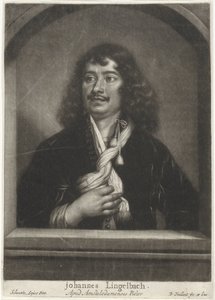
Johannes Lingelbach
1622 - 1674 , Germany
Quick Facts
- Artistic Movement Or Style: Bamboccianti
- Artists Or Movements Influenced By This Artist:
- Pieter van Laer
- Viviano Codazzi
- Artists Who Influenced This Artist:
- Philips Wouwermans
- Caravaggio
- Date Of Birth: 1622 Frankfurt, Germany
- Date Of Death: 1674 Amsterdam
- Full Name: Johannes Lingelbach
- Nationality: Dutch
- Notable Artworks:
- Roman Street Scene
- Figures before a Locanda
- Army Camp
- Place Of Birth: Frankfurt, Germany

