

 Preview
 Send
Send Share
Share
 Details

 Download
 Similars
 X-Ray
X-Ray Diaporama
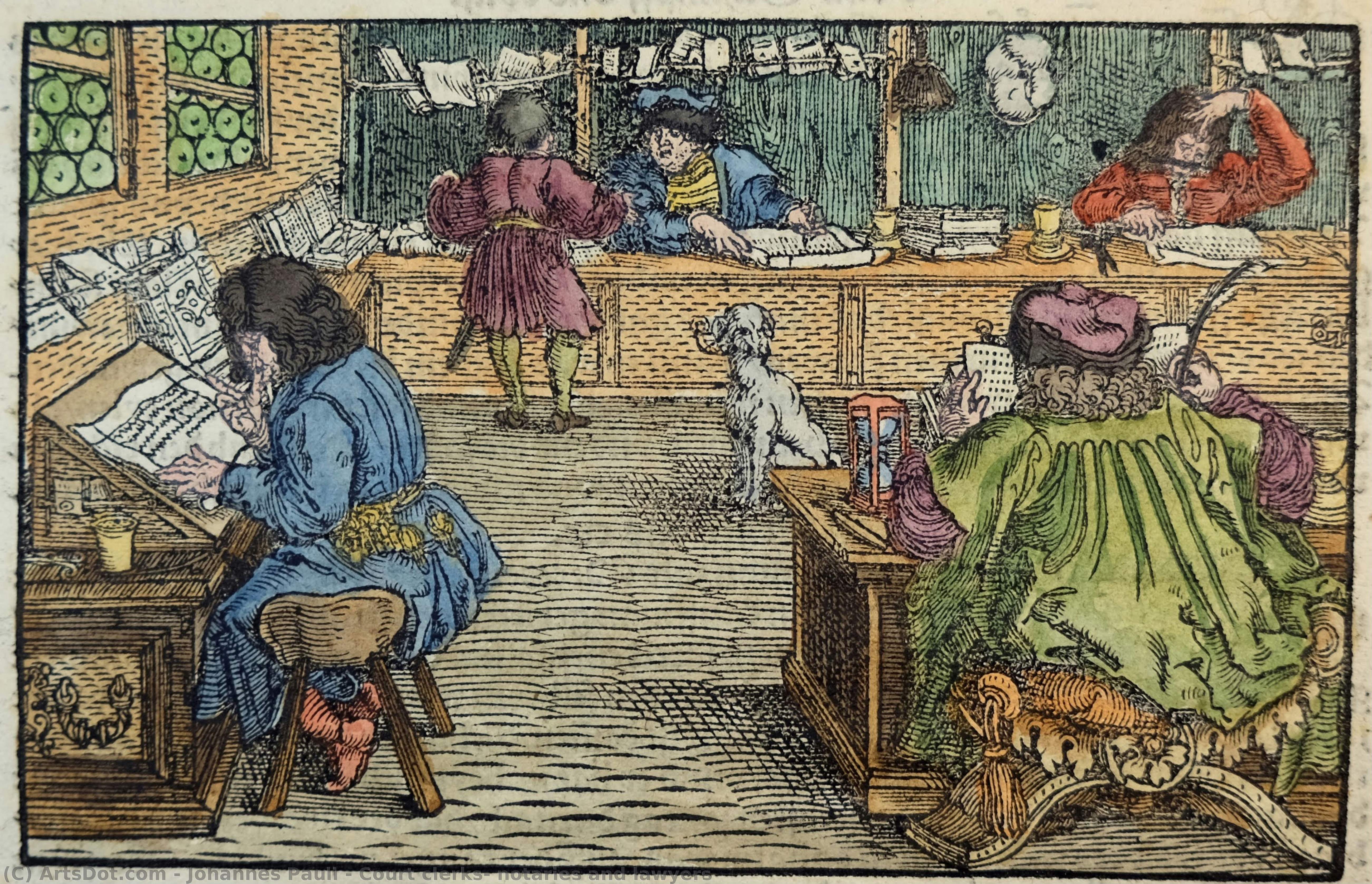
Court clerks, notaries and lawyers

 Read More
Purchase a high-resolution, enhanced digital image, far superior to the online preview.
Each file is meticulously prepared by our in-house specialists using advanced tools and expert manual retouching. We ensure every image has exceptional clarity, precise color accuracy, and fine detail.
The final file is delivered via email within 72 hours, optimized for immediate use in professional, editorial, and print environments. This is the same quality trusted by top-tier design studios, publishers, and galleries.
Digital Image
Download a high-resolution file for personal display, printing, and creative projects. ( Buy Print Buy Hand Made Painting)
Included in Every Digital Image Order
Expert Digital Delivery, Guaranteed
When you choose ArtsDot.com, you're not just getting an image - you're receiving a professionally enhanced digital artwork, crafted with precision and backed by a satisfaction guarantee. Here's everything that comes with your order, automatically:

Fast Email Delivery
Your high-resolution digital image file will be emailed to you within 72 hours of ordering - ready for immediate use.

AI-Enhanced Digital File
Your artwork is professionally optimized using advanced AI tools and manual editing, ensuring maximum detail, clarity, and color accuracy.

Free Lifetime Re-Delivery
Accidentally deleted or lost your file? No worries - we'll resend it to you anytime, free of charge.

No Import Fees - Ever
Enjoy your artwork instantly with zero customs, duties, or delivery fees - digital downloads are always tax-free.

Color Accuracy Guarantee
We ensure your digital image reflects the original colors as closely as possible using professional tools and color management.

60-Day Satisfaction Guarantee
If you're not satisfied with your digital image, we'll revise it or refund 100% within 60 days - no questions asked.

100% Money-Back Guarantee
Not satisfied? Get a full refund within 60 days of receiving your digital file - no questions asked.

Bulk Order Discounts
Buy 3 images, save 10% - Buy 5, save 15% - Buy 10+, save 20%. Great for creative projects, galleries, and agencies.
Related Artworks









Artist Biography
A Voice from the Medieval Hearth: The Life and Legacy of Johannes Pauli
Johannes Pauli, born around 1455 in the small Franconian village of Pfettisheim, Germany, remains a fascinating yet somewhat enigmatic figure in the landscape of late medieval German literature. His life, pieced together from fragmented records and scholarly conjecture, reveals a man deeply embedded in the religious and social currents of his time—a Franciscan writer who sought to blend instruction with amusement, seriousness with jest. While details surrounding his early years are scarce, we know he pursued theological studies in Strasbourg before embracing the Franciscan order, becoming known as a charismatic preacher traveling through various church institutions and cities throughout southern Germany. This itinerant life undoubtedly exposed him to a diverse tapestry of stories, observations, and the everyday realities of common people—a wealth of material that would later form the core of his most enduring work.The Creation of ‘Schimpf und Ernst’: A Mirror to Society
Pauli’s lasting fame rests upon his collection of tales, ‘Schimpf und Ernst’ (roughly translated as “Reproof and Earnestness”), published in 1515. This wasn't a work born from scholarly isolation but rather a vibrant compilation of 693 jests, moral anecdotes, and farces drawn from ancient sources, medieval traditions, and the rich oral culture surrounding him. It’s a remarkably accessible text, written in plain language that resonated with a broad audience—from the literate elite to those who relied on public readings for entertainment and edification. The collection isn't simply a series of humorous stories; it functions as a keen social commentary, offering pointed satire on the foibles of human nature, the corruption within institutions, and the complexities of daily life. Pauli’s genius lay in his ability to cloak moral lessons within engaging narratives, making them palatable—and memorable—for his contemporaries. He didn't aim for high-brow philosophical discourse but instead sought to gently nudge readers towards self-reflection through laughter and relatable characters.Influences and Literary Context
Pauli did not operate in a vacuum. His work clearly demonstrates the influence of figures like Geiler von Kaisersberg, a Dominican preacher renowned for his own vivid sermons and moralizing tales. Geiler’s emphasis on using contemporary examples to illustrate theological points likely inspired Pauli's approach to storytelling. Furthermore, the broader tradition of medieval exempla—short illustrative stories used in sermons to reinforce ethical teachings—provided a structural foundation for ‘Schimpf und Ernst’. However, Pauli distinguished himself through his unique voice and his willingness to embrace humor as a primary pedagogical tool. He wasn’t merely retelling existing tales; he was actively shaping them, adapting them to his own purposes, and infusing them with a distinctly Franconian sensibility. The work also foreshadows elements of the Renaissance *fabliau*, though rooted in a more explicitly religious framework.Impact and Historical Significance
The immediate success of ‘Schimpf und Ernst’ is evidenced by its numerous printings and widespread circulation throughout the 16th century. It became a foundational text for German popular literature, influencing generations of writers and storytellers. Perhaps most notably, Pauli's work served as a significant source of inspiration for Elizabethan playwrights and authors in England. The “Hundred Merry Tales”, a collection of English stories published in the late 16th century, drew heavily from ‘Schimpf und Ernst’, demonstrating the enduring appeal—and transcultural reach—of Pauli’s narratives. Beyond its literary influence, Pauli's work offers invaluable insights into the social and cultural landscape of early modern Germany. It provides a window into the concerns, anxieties, and aspirations of ordinary people during a period of significant religious and political upheaval. His ability to capture the nuances of everyday life—the petty squabbles, the moral dilemmas, the simple joys—makes him a uniquely compelling voice from the medieval past. Pauli’s legacy isn't simply as a writer of humorous tales but as a chronicler of his time, a social commentator who used laughter as a means of prompting reflection and fostering a sense of shared humanity.
johannes pauli
1455 - 1530 , Germany
Quick Facts
- Artistic Movement Or Style: Medieval Literature
- Artists Or Movements Influenced By This Artist:
- Elizabethan Tales
- Hans Sachs
- Artists Who Influenced This Artist: ['Geiler of Kaisersberg']
- Date Of Birth: c. 1455
- Date Of Death: after 1530
- Full Name: Johannes Pauli
- Nationality: German
- Notable Artworks: ['Schimpf und Ernst']
- Place Of Birth: Pfettenheim, Germany

