

 Preview
 Send
Send Share
Share
 Details

 Download
 Similars
 X-Ray
X-Ray Diaporama
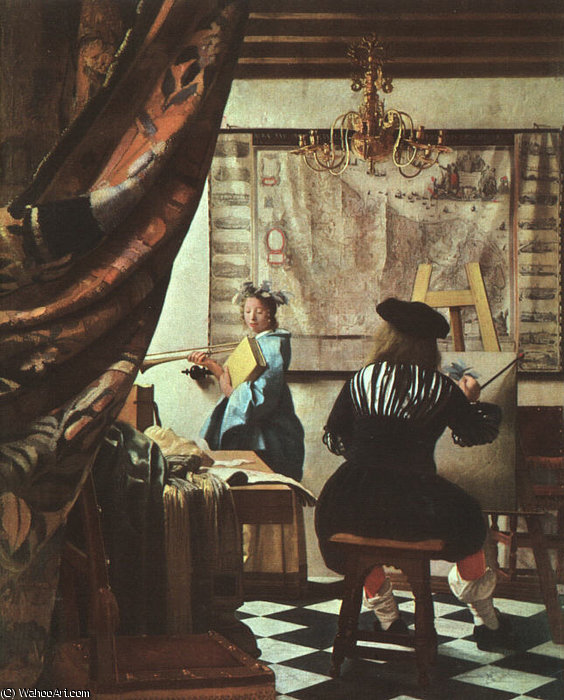
The artist's studio

 Read More
Purchase a high-resolution, enhanced digital image, far superior to the online preview.
Each file is meticulously prepared by our in-house specialists using advanced tools and expert manual retouching. We ensure every image has exceptional clarity, precise color accuracy, and fine detail.
The final file is delivered via email within 72 hours, optimized for immediate use in professional, editorial, and print environments. This is the same quality trusted by top-tier design studios, publishers, and galleries.
Digital Image
Download a high-resolution file for personal display, printing, and creative projects. ( Buy Print Buy Hand Made Painting)
Included in Every Digital Image Order
Expert Digital Delivery, Guaranteed
When you choose ArtsDot.com, you're not just getting an image - you're receiving a professionally enhanced digital artwork, crafted with precision and backed by a satisfaction guarantee. Here's everything that comes with your order, automatically:

Fast Email Delivery
Your high-resolution digital image file will be emailed to you within 72 hours of ordering - ready for immediate use.

AI-Enhanced Digital File
Your artwork is professionally optimized using advanced AI tools and manual editing, ensuring maximum detail, clarity, and color accuracy.

Free Lifetime Re-Delivery
Accidentally deleted or lost your file? No worries - we'll resend it to you anytime, free of charge.

No Import Fees - Ever
Enjoy your artwork instantly with zero customs, duties, or delivery fees - digital downloads are always tax-free.

Color Accuracy Guarantee
We ensure your digital image reflects the original colors as closely as possible using professional tools and color management.

60-Day Satisfaction Guarantee
If you're not satisfied with your digital image, we'll revise it or refund 100% within 60 days - no questions asked.

100% Money-Back Guarantee
Not satisfied? Get a full refund within 60 days of receiving your digital file - no questions asked.

Bulk Order Discounts
Buy 3 images, save 10% - Buy 5, save 15% - Buy 10+, save 20%. Great for creative projects, galleries, and agencies.
Collectible Description
The Artist’s Studio: A Window into Vermeer's World
Johannes Vermeer’s “The Artist’s Studio” isn’t merely a depiction of a room; it’s a carefully constructed tableau, a poignant meditation on creativity, domesticity, and the quiet rhythms of 17th-century Delft. Painted around 1658, this intimate scene offers an unparalleled glimpse into the life of a master artist – a world both familiar and subtly enigmatic. The painting immediately draws us in with its soft light, emanating from an unseen window to the right, bathing the room in a warm, diffused glow that seems to animate every object within. It’s a masterful demonstration of Vermeer's signature technique: his ability to capture not just appearances but also the very essence of light and atmosphere.
At the heart of the composition sits a woman, presumably Vermeer’s wife, Maria Thins, absorbed in her reading. Her posture is relaxed, almost languid, suggesting a moment of respite from her duties as a mother and homemaker. Beside her, a young boy – often identified as their son, Jan – leans against a chair, his gaze fixed on the woman. The presence of these two figures anchors the scene, imbuing it with a sense of familial warmth and domestic tranquility. A man stands nearby, likely Vermeer himself, diligently working at an easel, capturing the essence of a landscape before him. The inclusion of two cats – one curled up near Maria and another perched on a stool – adds a touch of playful charm to this otherwise serious scene.
A Reflection of Delft Life
“The Artist’s Studio” is deeply rooted in the everyday realities of Delft life during Vermeer's time. The room itself, with its simple furnishings—a dining table, chairs, an easel, and a book – speaks to the modest circumstances of the artist’s household. It wasn’t a grand studio filled with exotic materials; rather, it was a functional space adapted for artistic creation. This realism, combined with Vermeer's meticulous attention to detail, distinguishes his work from the more idealized depictions favored by some of his contemporaries. The inclusion of domestic objects—a book, a chair, a cat—ground the scene in the tangible world, reminding us that even the most profound art is born from the simplest of experiences.
The painting’s historical context is crucial to understanding its significance. Vermeer was not a wealthy man; he supplemented his income by dealing in paintings and acting as an art dealer. His studio was therefore a hybrid space—a place of work, commerce, and domestic life. “The Artist’s Studio” captures this duality perfectly, offering a rare insight into the working environment of a Dutch master during the Golden Age.
Symbolism and Artistic Technique
Beyond its realistic portrayal of daily life, "The Artist's Studio" is rich in symbolic meaning. The book represents knowledge, learning, and perhaps even the intellectual pursuits that informed Vermeer’s artistic vision. The easel, of course, symbolizes his profession—the act of creation itself. The light streaming through the window isn’t merely a source of illumination; it’s a key element of Vermeer's technique, used to create a sense of depth and atmosphere. He employed *sfumato*, a subtle blurring of edges, to soften forms and create an ethereal quality, particularly noticeable in the shadows.
Vermeer’s masterful use of color is equally noteworthy. The palette is restrained—primarily consisting of muted browns, blues, and yellows—but these colors are applied with remarkable precision and sensitivity. He used thin layers of paint to build up textures and create a sense of luminosity, capturing the subtle nuances of light and shadow with breathtaking accuracy. The painting’s composition is carefully balanced, drawing our eye from one element to another, creating a harmonious and visually engaging experience.
Bringing Vermeer's Vision Home
ArtsDot offers meticulously crafted hand-painted reproductions of “The Artist’s Studio,” allowing you to bring this iconic masterpiece into your own home. Our skilled artists replicate Vermeer’s delicate brushwork, atmospheric lighting, and nuanced color palette with exceptional fidelity. Whether you are an art enthusiast, a collector, or simply seeking to add a touch of timeless elegance to your interior space, our reproduction captures the essence of Vermeer's genius. Experience the quiet intimacy and profound beauty of “The Artist’s Studio” – a window into the world of one of history’s greatest artists.
Related Artworks

Artist Biography
A Life Bathed in Northern Light: The World of Johannes Vermeer
Johannes Vermeer, a name synonymous with the quiet intimacy of 17th-century Dutch life, remains an enigma despite centuries of scholarship. Born in Delft in October 1632, his existence unfolded against the backdrop of the Dutch Golden Age—a period of unprecedented prosperity, artistic innovation, and burgeoning civic pride. His father, Reijnier Janszoon, was a silk weaver and art dealer, a combination that subtly shaped young Johannes’s path. Exposure to both the tactile world of craftsmanship and the discerning eye of the art market instilled in him an understanding of materials, composition, and the delicate dance between creation and commerce. This early immersion wasn't merely observational; it provided a foundation upon which Vermeer would build his own unique artistic vision. He wasn’t born into privilege, but rather into a world where artistry was interwoven with everyday practicality, a sensibility that would profoundly influence his choice of subject matter. In 1653, he married Catharina Bolnes, a Catholic woman, and their union brought both personal fulfillment and a subtle layer of complexity to his life in largely Protestant Delft.The Master of Domesticity: Vermeer’s Artistic Development
Vermeer's artistic journey began with historical and mythological scenes, but he quickly gravitated towards the genre paintings that would define his legacy. He wasn’t interested in grand narratives or heroic feats; instead, he found beauty and significance in the commonplace—a woman reading a letter by an open window, a milkmaid pouring her wares, a lacemaker meticulously at work. These weren't simply depictions of daily life; they were carefully constructed studies of light, color, and human presence. His technique was painstaking, characterized by a deliberate slowness and an almost scientific approach to optics. He didn’t sketch extensively or produce numerous versions of the same composition. Each painting was a considered undertaking, built up layer upon layer with thin glazes of paint that created a luminous quality unlike anything seen before. This meticulous process resulted in a relatively small oeuvre—only around 34 paintings are universally attributed to him today—but each one is a testament to his unwavering dedication and artistic mastery. He wasn’t merely *representing* reality; he was capturing the very essence of light as it interacted with surfaces, creating an atmosphere of serene stillness and quiet contemplation.Light, Perspective, and the Illusion of Reality
What truly sets Vermeer apart is his unparalleled handling of light. He didn't simply illuminate his scenes; he *defined* them with light. It wasn’t a harsh or dramatic illumination, but rather a soft, diffused glow that seemed to emanate from within the paintings themselves. This effect was achieved through a combination of careful observation and technical skill—a deep understanding of how light reflects off different surfaces, and an ability to translate those observations onto canvas with remarkable accuracy. He employed a technique known as *camera obscura*, a device that projected an image onto a surface, which likely aided in his precise rendering of perspective and detail. However, Vermeer wasn’t simply copying what he saw; he was interpreting it through his own artistic sensibility, imbuing each scene with a sense of emotional resonance and psychological depth. His interiors aren't just spaces; they are worlds unto themselves, filled with subtle nuances and hidden meanings. The placement of objects, the angle of light, the expression on a subject’s face—all contribute to a carefully orchestrated composition that invites viewers to linger and contemplate.A Legacy Rediscovered: Vermeer’s Enduring Influence
Despite his talent, Vermeer experienced only modest recognition during his lifetime. He struggled financially, burdened by family debts and the economic downturn of the 1670s. His death in December 1675 left his wife and children in precarious circumstances. For nearly two centuries, his work remained largely forgotten, overshadowed by more prolific and celebrated artists. It wasn’t until the 19th century that Vermeer was “rediscovered” by art historians like Gustav Friedrich Waagen and Théophile Thoré-Bürger, who championed his genius and brought his paintings to the attention of a wider audience. This rediscovery sparked a surge in interest, and Vermeer's reputation has continued to grow ever since. Today, he is revered as one of the greatest painters of the Dutch Golden Age—a master of light, color, and composition whose works continue to captivate and inspire. His influence can be seen in the paintings of countless artists who have followed in his footsteps, drawn to his ability to capture the beauty and dignity of everyday life.- Notable Works: *The Milkmaid*, *View of Delft*, *Girl with a Pearl Earring*, *The Art of Painting*, *The Love Letter*.
- Themes explored in his work include domesticity, light and shadow, perspective, and the quiet beauty of everyday life.

Johannes Vermeer
1632 - 1675 , Netherlands
Quick Facts
- Artistic Movement Or Style: Dutch Golden Age painting
- Artists Or Movements Influenced By This Artist: Generations of artists
- Artists Who Influenced This Artist:
- Pieter de Hooch
- Gerard ter Borch
- Date Of Birth: October 1632
- Date Of Death: December 1675
- Full Name: Johannes Vermeer
- Nationality: Dutch
- Notable Artworks:
- The Love Letter
- View of Delft
- The Lacemaker
- Girl with a Pearl Earring
- Place Of Birth: Delft, Netherlands

