

 Preview
 Send
Send Share
Share
 Details

 Download
 Similars
 X-Ray
X-Ray Diaporama
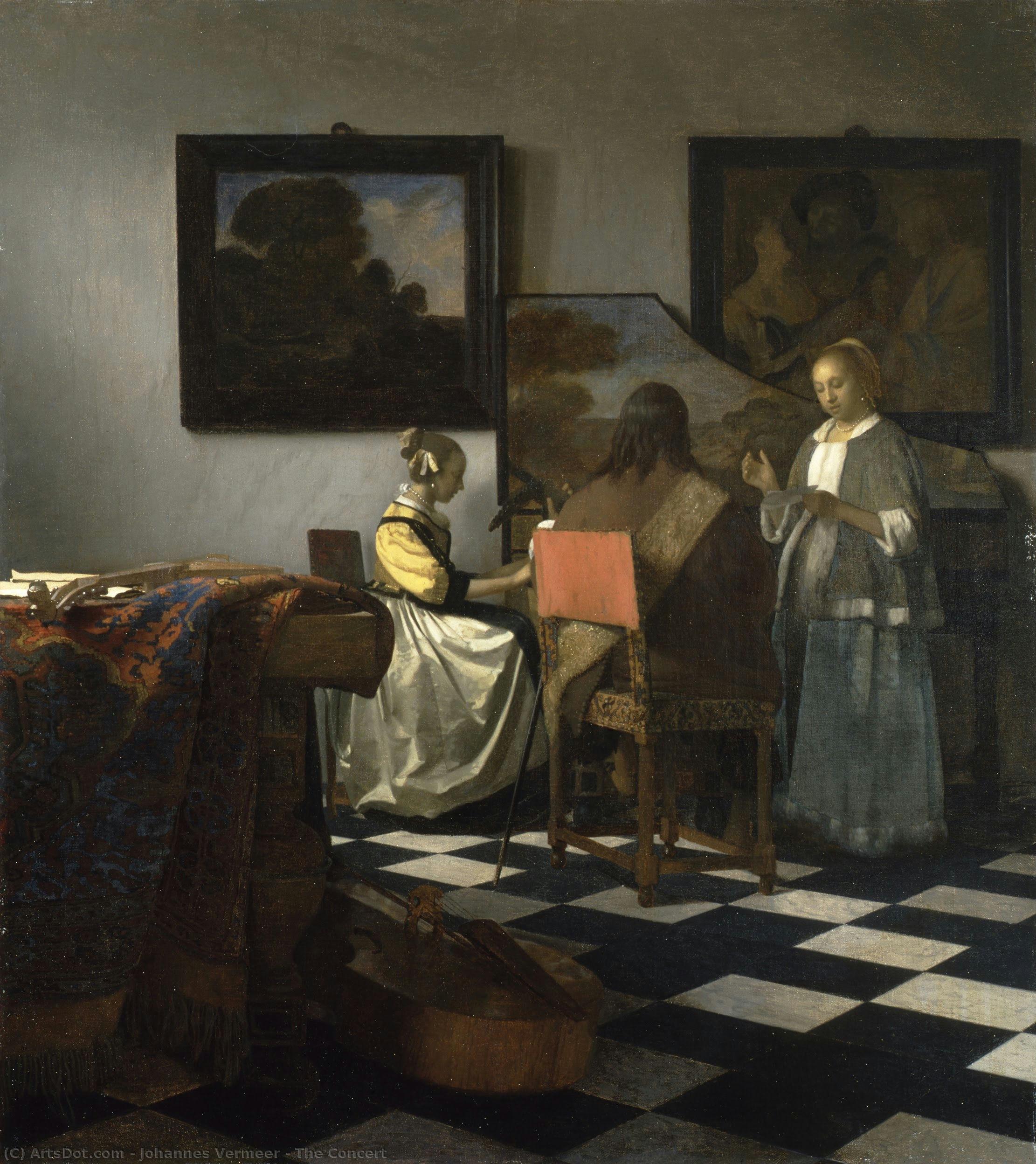
The Concert
 Acrylic On Canvas
- WallArt
- Dutch Golden Age Painting
 1665
1665 64.0 x 72.0 cm
 Isabella Stewart Gardner Museum
 Read More
Purchase a high-resolution, enhanced digital image, far superior to the online preview.
Each file is meticulously prepared by our in-house specialists using advanced tools and expert manual retouching. We ensure every image has exceptional clarity, precise color accuracy, and fine detail.
The final file is delivered via email within 72 hours, optimized for immediate use in professional, editorial, and print environments. This is the same quality trusted by top-tier design studios, publishers, and galleries.
Digital Image
Download a high-resolution file for personal display, printing, and creative projects. ( Buy Print Buy Hand Made Painting)
Included in Every Digital Image Order
Expert Digital Delivery, Guaranteed
When you choose ArtsDot.com, you're not just getting an image - you're receiving a professionally enhanced digital artwork, crafted with precision and backed by a satisfaction guarantee. Here's everything that comes with your order, automatically:

Fast Email Delivery
Your high-resolution digital image file will be emailed to you within 72 hours of ordering - ready for immediate use.

AI-Enhanced Digital File
Your artwork is professionally optimized using advanced AI tools and manual editing, ensuring maximum detail, clarity, and color accuracy.

Free Lifetime Re-Delivery
Accidentally deleted or lost your file? No worries - we'll resend it to you anytime, free of charge.

No Import Fees - Ever
Enjoy your artwork instantly with zero customs, duties, or delivery fees - digital downloads are always tax-free.

Color Accuracy Guarantee
We ensure your digital image reflects the original colors as closely as possible using professional tools and color management.

60-Day Satisfaction Guarantee
If you're not satisfied with your digital image, we'll revise it or refund 100% within 60 days - no questions asked.

100% Money-Back Guarantee
Not satisfied? Get a full refund within 60 days of receiving your digital file - no questions asked.

Bulk Order Discounts
Buy 3 images, save 10% - Buy 5, save 15% - Buy 10+, save 20%. Great for creative projects, galleries, and agencies.
Collectible Description
Johannes Vermeer’s “The Concert”: A Window into Delft’s Golden Age
Johannes Vermeer, a name synonymous with the quiet intimacy of 17th-century Dutch life, remains an enigma despite centuries of scholarly investigation. Born in Delft in October 1632, his existence unfolded against the backdrop of the Dutch Golden Age—a period of unprecedented prosperity, artistic innovation, and burgeoning civic pride. His father, Reijnier Janszoon, was a silk weaver and art dealer, a combination that subtly shaped young Johannes’s path. Exposure to both the tactile world of craftsmanship and the discerning eye of the art market instilled in him an understanding of materials, composition, and the delicate dance between creation and commerce. This early immersion wasn't merely observational; it provided a foundation upon which Vermeer would build his own unique artistic vision. He wasn’t born into privilege, but rather into a world where artistry was interwoven with everyday practicality, a sensibility that would profoundly influence his oeuvre.A Portrait of Domestic Harmony
“The Concert,” painted circa 1664-65, transcends mere representation; it captures a fleeting moment of serene contemplation within the confines of a Delft bourgeois home. The scene depicts three women engaged in musical performance—a young woman seated at a harpsichord, accompanied by a lute player and a singer—creating an atmosphere of refined leisure and intellectual engagement. Vermeer’s masterful use of light is paramount to conveying this mood. A single window illuminates the room with diffused luminescence, casting soft shadows that sculpt the figures and imbue the space with warmth. This technique, characteristic of Vermeer's style, elevates the commonplace into something extraordinary, mirroring the artist’s ability to distill emotion from seemingly simple subjects.Technique and Materials: Vermeer’s Revolutionary Approach
Vermeer employed a painstaking layering process—known as *glazuur*—that involved applying thin glazes of color over multiple layers of primer and bole. This technique, perfected by Vermeer, allowed him to achieve unparalleled luminosity and depth of tone, surpassing the conventions of his contemporaries. The subtle gradations of color create an illusionistic effect that renders the textures of fabrics – particularly the harpsichord lid’s landscape – remarkably realistic. Furthermore, Vermeer's meticulous attention to detail extends beyond mere visual accuracy; he meticulously rendered every brushstroke, capturing the nuances of light and shadow with astonishing precision. This dedication to craft speaks volumes about Vermeer’s artistic philosophy—a belief that beauty resides in observation and a commitment to conveying emotion through subtle gestures and tonal variations.Symbolism Within Simplicity
Beyond its aesthetic brilliance, “The Concert” is laden with symbolic significance. The harpsichord, representing intellect and musical sophistication, sits at the center of the composition, symbolizing harmony and balance. The lute player’s attire—a shoulder belt adorned with a sword—suggests status and authority, reflecting the social hierarchy prevalent in Delft during Vermeer's time. The inclusion of books on the wall serves as a reminder of education and erudition – values highly esteemed within the Dutch Golden Age. Moreover, the muted palette—dominated by browns, creams, and pale blues—contributes to the painting’s contemplative mood, mirroring the stillness of the domestic setting and inviting viewers to contemplate the beauty of everyday life.A Lost Masterpiece: The Theft and Enduring Legacy
“The Concert” vanished from the Isabella Stewart Gardner Museum in Boston on March 18, 1990, during a daring heist that shocked the art world. Its disappearance has fueled speculation about its whereabouts and cemented its status as one of the most valuable artworks ever stolen. Despite extensive efforts to recover it, “The Concert” remains elusive, prompting ongoing investigations and captivating the imaginations of scholars and collectors alike. Nevertheless, Vermeer’s masterpiece continues to inspire awe and admiration for its exquisite beauty and profound psychological insight—a testament to his enduring legacy as a pioneer of Dutch Baroque painting and one of the greatest artists of all time.Related Artworks


Artist Biography
A Life Bathed in Northern Light: The World of Johannes Vermeer
Johannes Vermeer, a name synonymous with the quiet intimacy of 17th-century Dutch life, remains an enigma despite centuries of scholarship. Born in Delft in October 1632, his existence unfolded against the backdrop of the Dutch Golden Age—a period of unprecedented prosperity, artistic innovation, and burgeoning civic pride. His father, Reijnier Janszoon, was a silk weaver and art dealer, a combination that subtly shaped young Johannes’s path. Exposure to both the tactile world of craftsmanship and the discerning eye of the art market instilled in him an understanding of materials, composition, and the delicate dance between creation and commerce. This early immersion wasn't merely observational; it provided a foundation upon which Vermeer would build his own unique artistic vision. He wasn’t born into privilege, but rather into a world where artistry was interwoven with everyday practicality, a sensibility that would profoundly influence his choice of subject matter. In 1653, he married Catharina Bolnes, a Catholic woman, and their union brought both personal fulfillment and a subtle layer of complexity to his life in largely Protestant Delft.The Master of Domesticity: Vermeer’s Artistic Development
Vermeer's artistic journey began with historical and mythological scenes, but he quickly gravitated towards the genre paintings that would define his legacy. He wasn’t interested in grand narratives or heroic feats; instead, he found beauty and significance in the commonplace—a woman reading a letter by an open window, a milkmaid pouring her wares, a lacemaker meticulously at work. These weren't simply depictions of daily life; they were carefully constructed studies of light, color, and human presence. His technique was painstaking, characterized by a deliberate slowness and an almost scientific approach to optics. He didn’t sketch extensively or produce numerous versions of the same composition. Each painting was a considered undertaking, built up layer upon layer with thin glazes of paint that created a luminous quality unlike anything seen before. This meticulous process resulted in a relatively small oeuvre—only around 34 paintings are universally attributed to him today—but each one is a testament to his unwavering dedication and artistic mastery. He wasn’t merely *representing* reality; he was capturing the very essence of light as it interacted with surfaces, creating an atmosphere of serene stillness and quiet contemplation.Light, Perspective, and the Illusion of Reality
What truly sets Vermeer apart is his unparalleled handling of light. He didn't simply illuminate his scenes; he *defined* them with light. It wasn’t a harsh or dramatic illumination, but rather a soft, diffused glow that seemed to emanate from within the paintings themselves. This effect was achieved through a combination of careful observation and technical skill—a deep understanding of how light reflects off different surfaces, and an ability to translate those observations onto canvas with remarkable accuracy. He employed a technique known as *camera obscura*, a device that projected an image onto a surface, which likely aided in his precise rendering of perspective and detail. However, Vermeer wasn’t simply copying what he saw; he was interpreting it through his own artistic sensibility, imbuing each scene with a sense of emotional resonance and psychological depth. His interiors aren't just spaces; they are worlds unto themselves, filled with subtle nuances and hidden meanings. The placement of objects, the angle of light, the expression on a subject’s face—all contribute to a carefully orchestrated composition that invites viewers to linger and contemplate.A Legacy Rediscovered: Vermeer’s Enduring Influence
Despite his talent, Vermeer experienced only modest recognition during his lifetime. He struggled financially, burdened by family debts and the economic downturn of the 1670s. His death in December 1675 left his wife and children in precarious circumstances. For nearly two centuries, his work remained largely forgotten, overshadowed by more prolific and celebrated artists. It wasn’t until the 19th century that Vermeer was “rediscovered” by art historians like Gustav Friedrich Waagen and Théophile Thoré-Bürger, who championed his genius and brought his paintings to the attention of a wider audience. This rediscovery sparked a surge in interest, and Vermeer's reputation has continued to grow ever since. Today, he is revered as one of the greatest painters of the Dutch Golden Age—a master of light, color, and composition whose works continue to captivate and inspire. His influence can be seen in the paintings of countless artists who have followed in his footsteps, drawn to his ability to capture the beauty and dignity of everyday life.- Notable Works: *The Milkmaid*, *View of Delft*, *Girl with a Pearl Earring*, *The Art of Painting*, *The Love Letter*.
- Themes explored in his work include domesticity, light and shadow, perspective, and the quiet beauty of everyday life.

Johannes Vermeer
1632 - 1675 , Netherlands
Quick Facts
- Artistic Movement Or Style: Dutch Golden Age painting
- Artists Or Movements Influenced By This Artist: Generations of artists
- Artists Who Influenced This Artist:
- Pieter de Hooch
- Gerard ter Borch
- Date Of Birth: October 1632
- Date Of Death: December 1675
- Full Name: Johannes Vermeer
- Nationality: Dutch
- Notable Artworks:
- The Love Letter
- View of Delft
- The Lacemaker
- Girl with a Pearl Earring
- Place Of Birth: Delft, Netherlands

