 Preview
 Send
Send Share
Share
 Details

 Download
 Similars
 X-Ray
X-Ray Diaporama
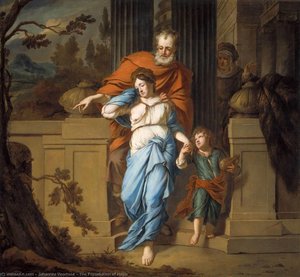
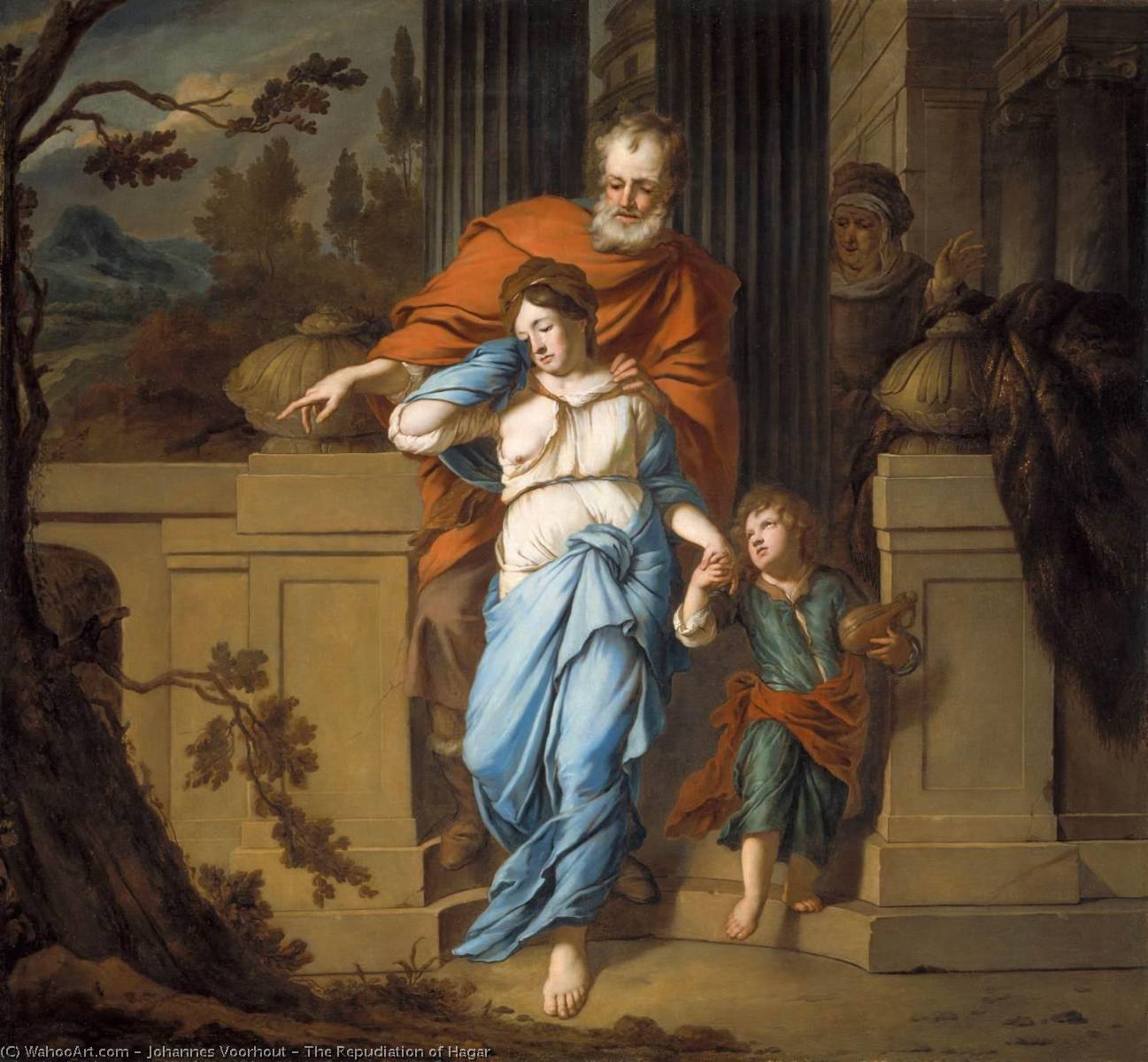
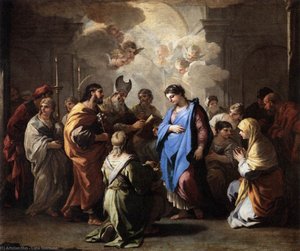
The Repudiation of Hagar
 1700
1700 157.0 x 165.0 cm
 Read More
Giclée / Art Print
Museum-quality giclée or canvas print with fast production and flexible finish options. ( Buy Hand Made Painting Buy Image)




































Pick from our preset sizes that match the artwork's original proportions.

You may enter your own dimensions to fit a specific frame or space. If your selected size does not match the original image's proportions, we will either crop the artwork or extend the image with a mirrored or solid-fill edge. A digital mockup will be sent for your approval before production begins.
Please note that the on-screen preview does not reflect the actual cropping or extension. Only the mockup will accurately show the final composition.
While custom sizes are available, we recommend selecting a dimension from the predefined list to preserve the original proportions.
Worldwide Delivery () in 2 weeks instead of standard 4/5 weeks. (22 August)

Free Worldwide Express Shipping

High-Quality Linen Canvas

Full Shipping Insurance

Customs Tax Refund Guarantee

True Color Matching Guarantee

60-Day Return Policy (Defects Only)

100% Money-Back Guarantee

Bulk Discount Offer
 Glass option is only available in size under 110 CM

The Repudiation of Hagar
Giclée / Art Print
Reproduction Size
-


Total Price
$ 63
Related Artworks








Artist Biography
The Master of Allegory: The Life and Legacy of Johannes Voorhout
In the luminous era of the Dutch Golden Age, a period defined by mercantile prosperity and an unprecedented flourishing of the arts, few artists captured the intersection of historical gravity and symbolic elegance as gracefully as Johannes Voorhout. Born in 1647 to a family of skilled craftsmen—his father, Cornelis, was a respected Amsterdam clockmaker—Voorhout’s journey was one of transition from the technical precision of horology to the expressive depths of the canvas. While his lineage was rooted in the meticulous mechanics of time, Johannes sought to capture the eternal through the medium of paint. His early training under Constantijn Verhout in Gouda provided him with a vital foundation in contemporary history scenes, a genre that would become the cornerstone of his illustrious career.
The trajectory of Voorhout’s life was as dynamic as the political landscape of the seventeenth-century Netherlands. After honing his craft in Amsterdam under the guidance of Jan van Noordt, he experienced the profound disruptions caused by the French invasions of 1672. This period of upheaval forced a temporary exile to Friedrichstadt, yet even in displacement, Voorhout’s ambition remained undiminished. His subsequent move to Hamburg, encouraged by the esteemed Juriaan Ovens, marked a significant chapter of professional expansion and international exposure. It was during these years that he refined his ability to weave complex narratives into single, striking compositions, blending the intimacy of portraiture with the grandiosity of historical allegory.
Symbolism and the Art of Narrative
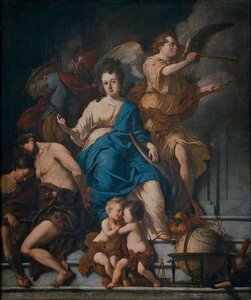
What truly distinguishes the work of Johannes Voorhout is his profound command over allegory. He did not merely paint scenes; he constructed visual metaphors that spoke to the triumphs, tragedies, and moral complexities of his age. His mastery is perhaps most evident in works such as the Allegory of the Treaty of Ryswick (1698). In this breathtaking composition, Voorhout utilizes personification to communicate the delicate balance of power and the longing for stability. Through the figure of Peace blowing her trumpet and the contrasting presence of a fleeing soldier representing War, he transformed a political milestone into a timeless meditation on human conflict and reconciliation.
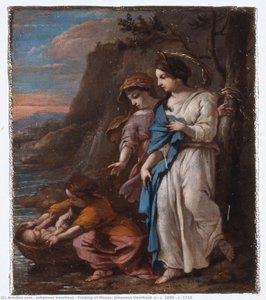
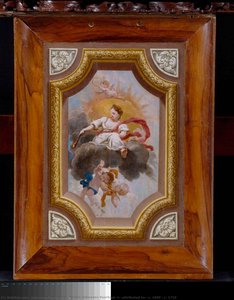
Beyond the grand scale of historical treaties, Voorhout possessed a remarkable versatility that allowed him to excel in much more intimate settings. His ability to infuse even small-scale works with profound meaning is seen in his contributions to decorative arts, such as the exquisite paintings found within the intricate world of dollhouse miniatures. Whether depicting the celestial beauty of Aurora or the biblical gravity of the Finding of Moses, his brushwork remained imbued with a sense of wonder and meticulous detail. This duality—the ability to command both the monumental and the miniature—is a testament to his technical dexterity and his deep understanding of how light and shadow can evoke emotion.
A Lasting Impression on the Dutch Tradition
The historical significance of Johannes Voorhout lies in his role as a bridge between the rigorous realism of early Dutch masters and the more theatrical, emotive qualities of the Baroque period. His prestigious commissions, most notably the monumental portrait of William III on horseback for Dirk Clant, solidified his standing among the elite patrons of Europe. This work, intended for a grand castle near Groningen, serves as a pinnacle of his ability to merge royal iconography with masterful equestrian portraiture.
As we reflect on the vast tapestry of the Dutch Golden Age, Voorhout remains a vital thread. His life was a testament to resilience and adaptability, moving through the shadows of war and the light of prosperity to leave behind a legacy of profound beauty. His works continue to invite viewers into a world where every figure, every gesture, and every shadow carries a deeper meaning, reminding us that art is not merely a reflection of reality, but an elevated interpretation of the human soul.
Johannes Voorhout
1647 - 1723
Quick Facts
- Artistic Movement Or Style: Golden Age
- Artists Or Movements Influenced By This Artist: ['Jan van Noordt']
- Artists Who Influenced This Artist: ['Constantijn Verhout']
- Date Of Death: 1723
- Full Name: Johannes Voorhout
- Nationality: Dutch
- Notable Artworks:
- Allegory of Treaty of Ryswick
- Finding of Moses
- Aurora
- Place Of Birth: Amsterdam, Netherlands