 Preview
 Send
Send Share
Share
 Details

 Download
 Similars
 X-Ray
X-Ray Diaporama
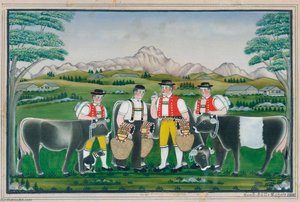
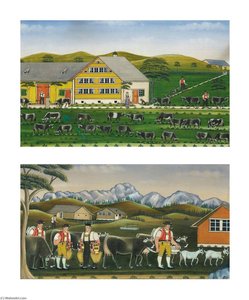
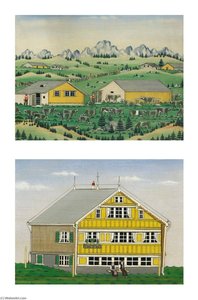
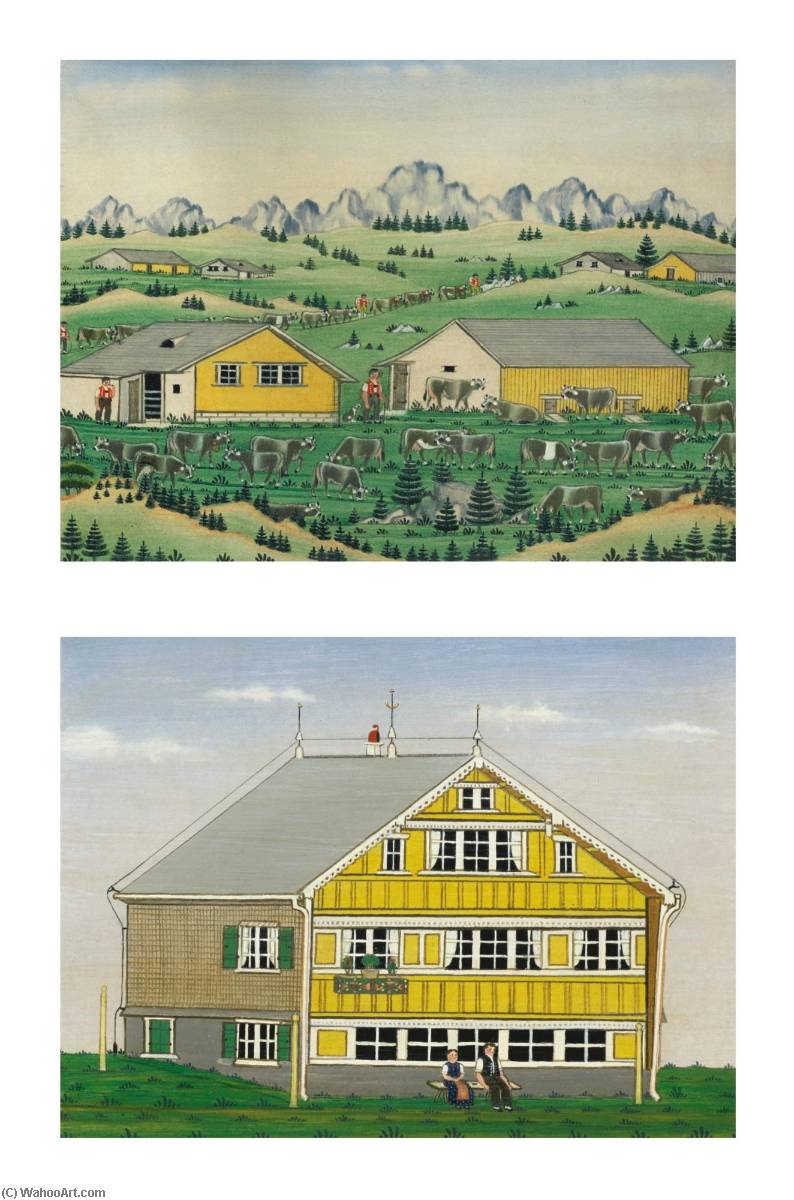
Auf der Alp, 1892 Gelbes Bauernhaus
 Read More
Giclée / Art Print
Museum-quality giclée or canvas print with fast production and flexible finish options. ( Buy Hand Made Painting Buy Image)




































Pick from our preset sizes that match the artwork's original proportions.

You may enter your own dimensions to fit a specific frame or space. If your selected size does not match the original image's proportions, we will either crop the artwork or extend the image with a mirrored or solid-fill edge. A digital mockup will be sent for your approval before production begins.
Please note that the on-screen preview does not reflect the actual cropping or extension. Only the mockup will accurately show the final composition.
While custom sizes are available, we recommend selecting a dimension from the predefined list to preserve the original proportions.
Worldwide Delivery () in 2 weeks instead of standard 4/5 weeks. (1 September)

Free Worldwide Express Shipping

High-Quality Linen Canvas

Full Shipping Insurance

Customs Tax Refund Guarantee

True Color Matching Guarantee

60-Day Return Policy (Defects Only)

100% Money-Back Guarantee

Bulk Discount Offer
 Glass option is only available in size under 110 CM

Auf der Alp, 1892 Gelbes Bauernhaus
Giclée / Art Print
Reproduction Size
-


Total Price
$ 63
Related Artworks









Artist Biography
The Quiet Resonance of Rural Life: Introducing Johannes Zülle
Johannes Zülle, a name perhaps less celebrated than some of his contemporaries, nevertheless occupies a significant and deeply affecting space within the landscape tradition of early 20th-century German art. His paintings are not grand statements or revolutionary departures; rather, they are quiet meditations on the beauty and enduring spirit of the countryside, imbued with a gentle lyricism that speaks to the heart. Born in an unspecified location – biographical details surrounding Zülle remain somewhat elusive, adding to the mystique surrounding his work – he dedicated his life to capturing the essence of rural Germany, a world rapidly changing under the pressures of industrialization and modernization. While precise dates for his birth and death are not widely available, it is understood that he was actively painting during the first half of the 20th century, leaving behind a body of work characterized by its sensitivity to light, atmosphere, and the rhythms of nature.Early Influences and Artistic Development
Zülle’s artistic journey appears rooted in the traditions of Impressionism, though he never fully embraced the movement's more radical aspects. Instead, he distilled its principles – the emphasis on capturing fleeting moments of light and color, the broken brushwork, and the focus on direct observation – into a uniquely personal style. It’s likely that his early training involved exposure to the works of German Impressionists like Max Liebermann and Lovis Corinth, artists who similarly sought to depict contemporary life with honesty and immediacy. However, Zülle's palette is often softer, more muted than theirs, favoring earth tones and subtle gradations of color that evoke a sense of tranquility and nostalgia.- A Focus on Pastoral Scenes: His early works frequently depicted scenes of village life – farmers tending their fields, children playing in meadows, livestock grazing peacefully. These paintings are not merely representations of rural existence; they are imbued with a deep affection for the land and its inhabitants.
- The Importance of Light and Atmosphere: Zülle was particularly adept at capturing the changing qualities of light throughout the day and across the seasons. His skies are often luminous, his fields bathed in golden sunlight or shrouded in atmospheric haze.
- A Rejection of Urban Subject Matter: Unlike many of his contemporaries who were drawn to the dynamism of city life, Zülle remained steadfastly committed to depicting the countryside, viewing it as a source of spiritual renewal and artistic inspiration.
Themes and Symbolism in Zülle’s Work
The recurring motifs in Zülle's paintings – windmills, thatched-roof cottages, winding country roads, blossoming orchards – are not simply picturesque elements; they carry symbolic weight. The windmill, for example, often represents the enduring power of nature and the cyclical rhythms of life. Cottages evoke a sense of home, community, and tradition. Winding roads suggest journeys, both physical and spiritual, while blossoming orchards symbolize hope, renewal, and the abundance of the natural world. His work is deeply connected to the concept of Heimat, the German term for homeland or native place. However, Zülle’s depiction of Heimat is not sentimental or idealized; it acknowledges the hardships and challenges of rural life while celebrating its inherent beauty and dignity. There's a sense of melancholy in many of his paintings, a recognition that this way of life is fragile and threatened by the forces of modernity. This subtle undercurrent of sadness adds depth and complexity to his work, elevating it beyond mere landscape painting.Major Achievements and Historical Significance
While Zülle may not have achieved widespread fame during his lifetime, his paintings are increasingly recognized for their artistic merit and historical significance. His works offer a valuable glimpse into the rural Germany of the early 20th century, capturing a way of life that was rapidly disappearing. He stands as a testament to the power of observation, the beauty of simplicity, and the enduring appeal of the natural world. His legacy lies in his ability to evoke a sense of place, to transport viewers to a bygone era and invite them to contemplate the relationship between humanity and nature. Although documentation is sparse, collectors and art historians continue to unearth examples of his work, revealing a consistent vision and a remarkable talent for capturing the quiet resonance of rural life. His paintings serve as poignant reminders of a world lost, yet forever preserved on canvas – a testament to the enduring power of art to capture the essence of time and place.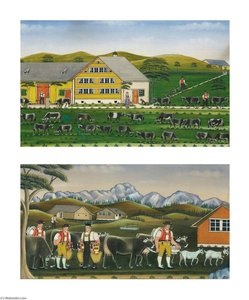
Quick Facts
- Artistic Movement Or Style: Impressionist style
- Date Of Death: Living
- Full Name: Johannes Zülle