

 Preview
 Send
Send Share
Share
 Details

 Download
 Similars
 X-Ray
X-Ray Diaporama
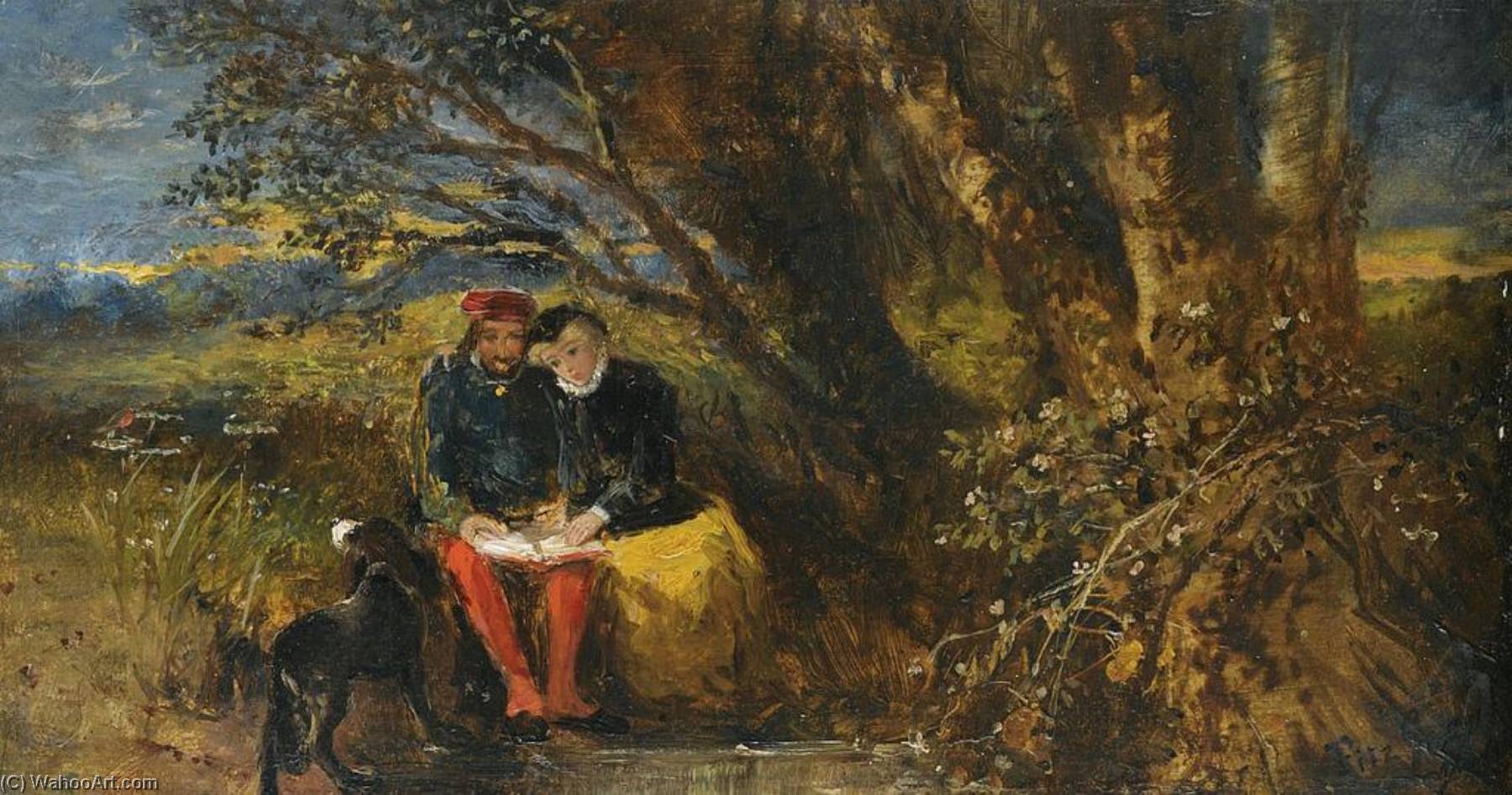
Faust and Marguerite
 Read More
Purchase a high-resolution, enhanced digital image, far superior to the online preview.
Each file is meticulously prepared by our in-house specialists using advanced tools and expert manual retouching. We ensure every image has exceptional clarity, precise color accuracy, and fine detail.
The final file is delivered via email within 72 hours, optimized for immediate use in professional, editorial, and print environments. This is the same quality trusted by top-tier design studios, publishers, and galleries.
Digital Image
Download a high-resolution file for personal display, printing, and creative projects. ( Buy Print Buy Hand Made Painting)
Included in Every Digital Image Order
Expert Digital Delivery, Guaranteed
When you choose ArtsDot.com, you're not just getting an image - you're receiving a professionally enhanced digital artwork, crafted with precision and backed by a satisfaction guarantee. Here's everything that comes with your order, automatically:

Fast Email Delivery
Your high-resolution digital image file will be emailed to you within 72 hours of ordering - ready for immediate use.

AI-Enhanced Digital File
Your artwork is professionally optimized using advanced AI tools and manual editing, ensuring maximum detail, clarity, and color accuracy.

Free Lifetime Re-Delivery
Accidentally deleted or lost your file? No worries - we'll resend it to you anytime, free of charge.

No Import Fees - Ever
Enjoy your artwork instantly with zero customs, duties, or delivery fees - digital downloads are always tax-free.

Color Accuracy Guarantee
We ensure your digital image reflects the original colors as closely as possible using professional tools and color management.

60-Day Satisfaction Guarantee
If you're not satisfied with your digital image, we'll revise it or refund 100% within 60 days - no questions asked.

100% Money-Back Guarantee
Not satisfied? Get a full refund within 60 days of receiving your digital file - no questions asked.

Bulk Order Discounts
Buy 3 images, save 10% - Buy 5, save 15% - Buy 10+, save 20%. Great for creative projects, galleries, and agencies.
Related Artworks








Artist Biography
John Anster Christian Fitzgerald: Weaver of Victorian Nightmares
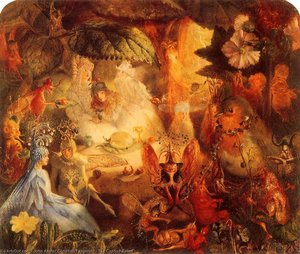
The Victorian era, a period often romanticized for its grandeur and progress, harbored a darker undercurrent – anxieties about morality, industrialization’s impact, and the burgeoning awareness of human psychology. Within this complex landscape emerged John Anster Christian Fitzgerald (1819-1906), an artist who didn't merely depict beauty but plunged headfirst into the unsettling realm of fairy tales, nightmares, and the hidden currents of Victorian society. Nicknamed “Fairy Fitzgerald” by his contemporaries, he carved a unique niche for himself as a painter of exquisitely detailed, often disturbing, fairy scenes—a genre that continues to fascinate and intrigue art historians today.
Fitzgerald’s early life remains somewhat shrouded in mystery, contributing to the enduring allure surrounding his work. Born in Lambeth, Surrey, in 1819 – a date subject to some debate – he was the son of William Thomas Fitzgerald, a minor poet with an interest in theatrical performance. This lineage likely fostered Fitzgerald's own penchant for mimicry and observation, skills that would prove invaluable in his artistic development. Unlike many artists of his time who received formal training, Fitzgerald appears to have been largely self-taught, honing his craft through relentless practice and a keen eye for detail. His career began with an exhibition at the Royal Academy of Arts in 1845, followed by appearances at prestigious institutions like the British Institution, the Society of British Artists, and the Royal Watercolour Society. However, it was his late-career work – particularly his series of Christmas fairies for *The Illustrated London News* – that cemented his reputation and established his distinctive style.
A World Forged in Shadow and Color
Fitzgerald’s paintings are immediately recognizable by their arresting color palettes—bold reds, deep blues, and vibrant purples dominate many of his works, creating a sense of heightened drama and emotional intensity. His subjects rarely adhere to conventional fairy tales; instead, he conjures fantastical landscapes populated by grotesque figures, demonic entities, and unsettling juxtapositions. Ghouls lurk in shadowed corners, demons dance amidst swirling mists, and the line between beauty and horror is frequently blurred. This isn’t simply a whimsical depiction of fairies; it's an exploration of the darker aspects of human nature—the anxieties, fears, and hidden desires that simmer beneath the surface of Victorian society.
Critics have noted parallels between Fitzgerald’s work and the surrealist visions of artists like Hieronymus Bosch and Pieter Brueghel the Elder. His paintings possess a dreamlike quality, filled with symbolic imagery and unsettling details that invite interpretation. The recurring motif of the “Cock Robin,” depicted in various states of distress or peril – sometimes battling monstrous creatures – has become particularly iconic within his oeuvre. These images aren’t merely decorative; they seem to carry deeper meanings related to Victorian anxieties about mortality, innocence lost, and the precariousness of existence.
The Influence of London's Underbelly
A crucial element in understanding Fitzgerald’s artistic vision lies in the context of Victorian London. The city was a cauldron of social unrest, poverty, and burgeoning industrialization. Alongside the glittering façade of progress, a dark undercurrent flowed – fueled by opium dens, clandestine gambling houses, and a growing awareness of psychological distress. Fitzgerald himself frequented the Savage Club, a notorious haunt for artists, actors, and intellectuals—a place where unconventional ideas and experiences were freely exchanged. It’s believed that his exposure to this milieu profoundly influenced his work, informing his fascination with themes of drug use, madness, and the hidden realities lurking beneath the surface of polite society.
Several titles offer tantalizing clues about Fitzgerald's artistic preoccupations. Works like “The Pipe Dream” and “The Captive Dreamer” suggest a direct engagement with the Victorian drug scene—a world of laudanum (opium tincture) and chloral, offering temporary escape from the harsh realities of life. His paintings aren’t simply fantastical; they are infused with a sense of melancholy and disillusionment, reflecting the anxieties of an era grappling with rapid social change and psychological uncertainty.
Legacy and Recognition
Despite his talent and distinctive style, Fitzgerald remained largely obscure during his lifetime. His titles were often enigmatic, leading to confusion among art dealers and collectors who frequently renamed his works. However, in the late 20th century, a renewed interest in Victorian art—particularly its darker and more unconventional aspects—brought Fitzgerald’s work back into the spotlight. Today, his paintings are highly sought after by collectors and museums alike, commanding impressive prices on the secondary market. The discovery of forgeries in recent years has further heightened awareness of his unique artistic legacy.
John Anster Christian Fitzgerald stands as a compelling figure—a Victorian artist who dared to explore the unsettling corners of the human psyche and translate them into hauntingly beautiful paintings. His work serves as a potent reminder that even within periods of apparent progress, darkness and mystery can thrive, waiting to be unearthed by those willing to look beneath the surface.
john anster christian fitzgerald
1819 - 1906
Quick Facts
- Artistic Movement Or Style: Victorian fairy art
- Artists Or Movements Influenced By This Artist: ['Reactionary art']
- Artists Who Influenced This Artist:
- Bosch
- Brueghel
- Date Of Birth: 1819
- Date Of Death: 1906
- Full Name: John Anster Christian Fitzgerald
- Nationality: British
- Notable Artworks:
- The Pipe Dream
- Captive Dreamer
- Cock Robin paintings
- Place Of Birth: Lambeth, Surrey, England

