

 Preview
 Send
Send Share
Share
 Details

 Download
 Similars
 X-Ray
X-Ray Diaporama
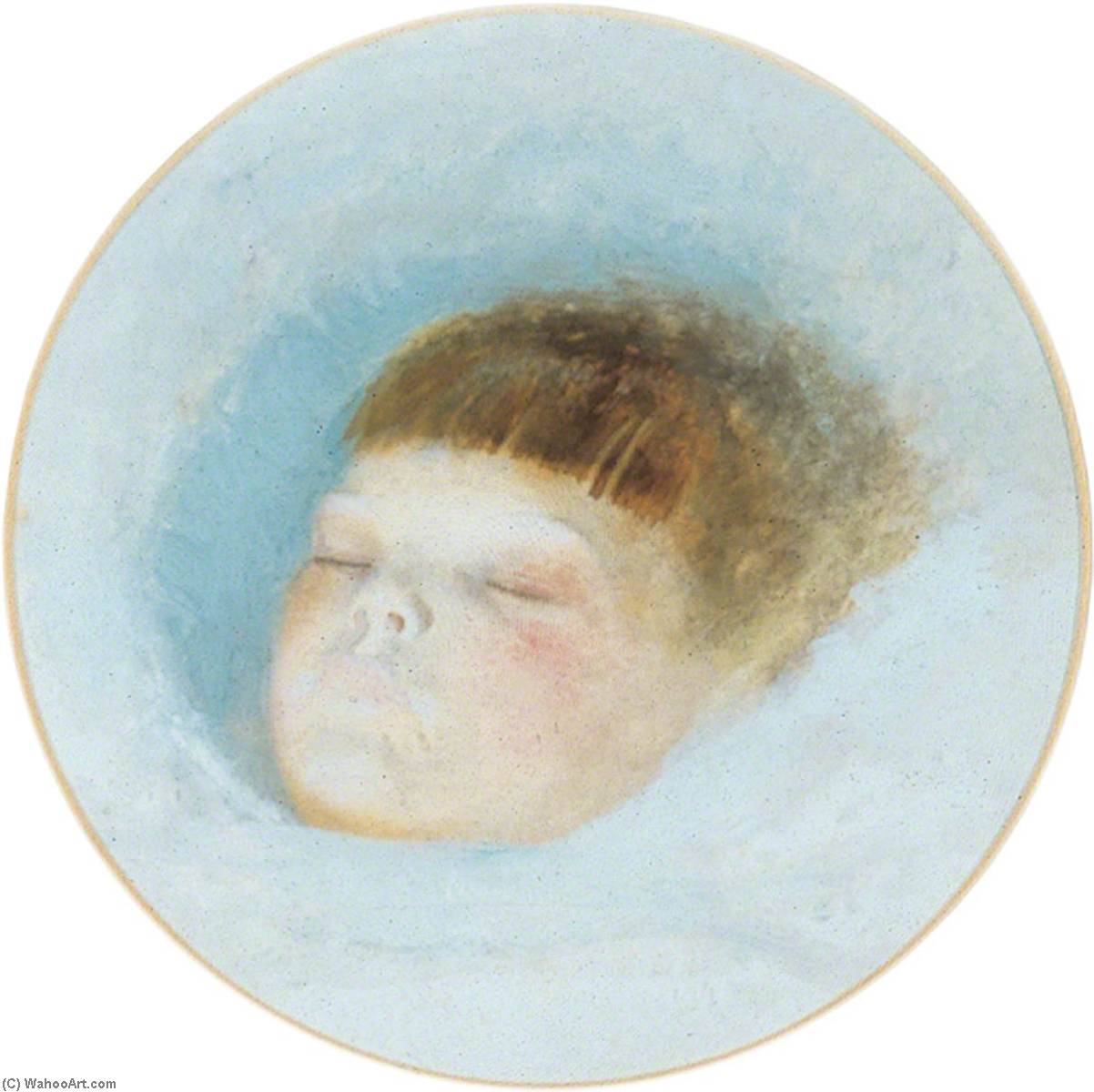
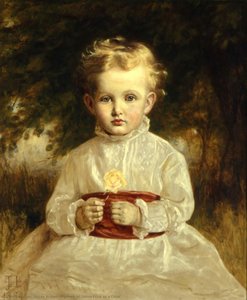
The Head of Gertrude Grimshaw
 Acrylic On Canvas
- WallArt
- Victorian Romanticism
 1874
1874 18.0 x 18.0 cm
 Leeds Art Gallery
 Read More
Purchase a high-resolution, enhanced digital image, far superior to the online preview.
Each file is meticulously prepared by our in-house specialists using advanced tools and expert manual retouching. We ensure every image has exceptional clarity, precise color accuracy, and fine detail.
The final file is delivered via email within 72 hours, optimized for immediate use in professional, editorial, and print environments. This is the same quality trusted by top-tier design studios, publishers, and galleries.
Digital Image
Download a high-resolution file for personal display, printing, and creative projects. ( Buy Print Buy Hand Made Painting)
Included in Every Digital Image Order
Expert Digital Delivery, Guaranteed
When you choose ArtsDot.com, you're not just getting an image - you're receiving a professionally enhanced digital artwork, crafted with precision and backed by a satisfaction guarantee. Here's everything that comes with your order, automatically:

Fast Email Delivery
Your high-resolution digital image file will be emailed to you within 72 hours of ordering - ready for immediate use.

AI-Enhanced Digital File
Your artwork is professionally optimized using advanced AI tools and manual editing, ensuring maximum detail, clarity, and color accuracy.

Free Lifetime Re-Delivery
Accidentally deleted or lost your file? No worries - we'll resend it to you anytime, free of charge.

No Import Fees - Ever
Enjoy your artwork instantly with zero customs, duties, or delivery fees - digital downloads are always tax-free.

Color Accuracy Guarantee
We ensure your digital image reflects the original colors as closely as possible using professional tools and color management.

60-Day Satisfaction Guarantee
If you're not satisfied with your digital image, we'll revise it or refund 100% within 60 days - no questions asked.

100% Money-Back Guarantee
Not satisfied? Get a full refund within 60 days of receiving your digital file - no questions asked.

Bulk Order Discounts
Buy 3 images, save 10% - Buy 5, save 15% - Buy 10+, save 20%. Great for creative projects, galleries, and agencies.
Collectible Description
The Enigmatic Slumber: John Atkinson Grimshaw’s “The Head of Gertrude Grimshaw”
John Atkinson Grimshaw's "The Head of Gertrude Grimshaw," painted in 1874, is not merely a portrait; it’s a carefully constructed tableau of Victorian domesticity imbued with an unsettling undercurrent. The painting depicts a young girl, identified as Gertrude Grimshaw, reclining in bed, her expression serene yet subtly melancholic. The room itself—a study in muted blues and browns—suggests both comfort and confinement, creating an immediate sense of intimacy that is quickly complicated by the presence of two figures lurking in the background.
Grimshaw’s masterful use of light and shadow, a hallmark of his style, dominates the composition. The soft glow emanating from an unseen window washes over Gertrude's face, highlighting her delicate features while simultaneously obscuring details, lending her an almost ethereal quality. The darker tones in the background—the indistinct forms of the other individuals—create a visual tension, drawing the viewer’s eye back to the central subject and fueling speculation about their relationship to Gertrude. The artist expertly employs atmospheric perspective, blurring the distance and contributing to the painting's overall sense of quietude and mystery.
A Window into Victorian Life
To fully appreciate “The Head of Gertrude Grimshaw,” it’s crucial to understand the social context in which it was created. The mid-19th century witnessed significant shifts in British society, marked by rapid industrialization, urbanization, and evolving family dynamics. Victorian portraiture often served as a means of documenting social status and familial lineage, but Grimshaw's work transcends simple representation. He wasn’t simply recording a likeness; he was attempting to capture the *feeling* of a moment, the unspoken emotions that simmer beneath the surface of everyday life.
The inclusion of the two figures in the background is particularly intriguing. They are rendered smaller and less distinct than Gertrude, suggesting a position of authority or perhaps simply a sense of detachment. Some art historians speculate they might represent Gertrude’s parents, observing her slumber, while others interpret them as symbols of societal expectations—the watchful eyes of Victorian morality. The ambiguity deliberately invites the viewer to project their own interpretations onto the scene.
Technique and Artistic Influence
Grimshaw's technique is characterized by a meticulous attention to detail combined with an expressive use of color and brushwork. He was deeply influenced by the Pre-Raphaelite Brotherhood, known for their emphasis on naturalism, vibrant colors, and symbolic imagery. Notice the subtle variations in tone within Gertrude’s skin—the delicate blush of her cheeks, the slight sheen on her forehead—demonstrating Grimshaw's remarkable ability to render texture and form with astonishing accuracy. His use of loose brushstrokes creates a sense of movement and atmosphere, particularly evident in the depiction of light filtering through the window.
Furthermore, Grimshaw’s background as a railway clerk profoundly shaped his artistic vision. He spent countless hours observing the changing landscapes and bustling activity along the railways, honing his skills in capturing fleeting moments of light and shadow. This experience undoubtedly informed his ability to create such powerfully evocative atmospheric scenes – a skill he brought to bear on this intimate portrait.
Symbolism and Emotional Resonance
Beyond its technical merits, “The Head of Gertrude Grimshaw” resonates with profound emotional depth. The girl’s serene expression is deceptive; there's an underlying sense of vulnerability and perhaps even sadness in her eyes. The painting speaks to themes of childhood innocence, familial relationships, and the complexities of Victorian society. It’s a poignant reminder that appearances can be deceiving and that beneath the veneer of respectability often lie hidden emotions.
Reproductions of this captivating artwork offer a unique opportunity to bring Grimshaw's atmospheric realism into your home or office. The rich colors, intricate details, and evocative mood will undoubtedly serve as a conversation starter and a source of quiet contemplation – a testament to the enduring power of Victorian art.
Related Artworks
Artist Biography
A Master of Moonlight: The Life and Art of John Atkinson Grimshaw
John Atkinson Grimshaw, born in Leeds in 1836, occupies a unique and evocative space within the pantheon of Victorian artists. He wasn’t merely a painter of landscapes; he was a chronicler of atmosphere, a poet of light and shadow, and a keen observer of the burgeoning industrial world around him. His journey from railway clerk to celebrated artist is a testament to his unwavering dedication and artistic vision—a story often recounted as an inspiring example of pursuing passion against societal expectations. Initially met with familial disapproval when he abandoned a stable career at age twenty-four to dedicate himself to painting, Grimshaw persevered, fueled by an innate talent that would ultimately define his legacy. His early exhibitions showcased modest still lifes – birds, fruit, blossoms – presented under the patronage of the Leeds Philosophical and Literary Society in 1862, but it was his later exploration of nocturnal scenes that truly set him apart, establishing a style instantly recognizable and deeply affecting.Influences and Artistic Development
Grimshaw’s artistic foundations were firmly rooted in the aesthetic currents of his time, yet he synthesized these influences into something distinctly his own. The Pre-Raphaelite movement exerted a significant impact, evident in his meticulous attention to detail, realism, and vibrant color palettes. He shared their commitment to capturing the beauty of the natural world with unwavering accuracy, but Grimshaw wasn’t simply an imitator. He forged his own path by embracing innovative techniques, most notably his open use of tools like the camera obscura or lenses to project scenes onto canvas. This practice, considered controversial by some contemporaries who questioned its artistic merit, allowed him to achieve remarkable precision in perspective and detail, creating images that possessed an almost photographic quality. James McNeill Whistler himself acknowledged Grimshaw’s mastery of nocturnal effects, famously conceding that he had believed himself the “inventor of nocturnes” until encountering Grimshaw's moonlit paintings. Beyond Pre-Raphaelite ideals, influences from artists like James Tissot and the broader Aesthetic Movement can be seen in his interior scenes, showcasing richly decorated rooms and a focus on capturing mood and emotion through light and shadow. He wasn’t afraid to experiment, blending traditional techniques with modern tools to achieve his desired effects—a boldness that set him apart from many of his peers.Major Achievements and Notable Works
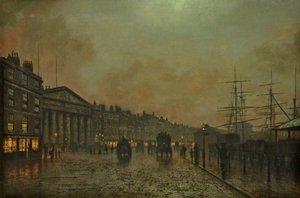
The 1870s marked a period of significant success for Grimshaw. He established homes in both Leeds and Scarborough, the latter becoming a frequent subject of his art. It was during this time that he developed his signature style – atmospheric urban scenes rendered under twilight or the warm glow of gaslight. Liverpool from Wapping (1875) exemplifies this period, showcasing the industrial energy of the port city with a blend of realism and impressionistic brushwork. The painting captures not just the physical structures of the docks but also the bustling activity and the sense of constant motion that characterized Victorian Liverpool. Endymion on Mount Latmus (1879), inspired by Keats’ poem, demonstrates his ability to translate literary themes into visually stunning dreamscapes—a testament to his intellectual curiosity and artistic versatility. Dulce Domum (1885) is a particularly compelling example of his interior scenes, inviting the viewer into a world of quiet intimacy and refined elegance. On Hampstead Hill, another celebrated work, perfectly captures the transition from twilight to night, showcasing Grimshaw’s exceptional skill in manipulating light and shadow. His paintings were regularly exhibited at the Royal Academy between 1874 and 1885, solidifying his reputation within the established art world. These works weren't simply representations of places; they were emotional landscapes, imbued with a sense of mystery and quiet contemplation.Legacy and Historical Significance
Despite a period of relative obscurity following his death in 1893, John Atkinson Grimshaw’s work experienced a significant revival during the latter half of the twentieth century. A retrospective exhibition, “Atkinson Grimshaw – Painter of Moonlight,” held at the Mercer Art Gallery in Harrogate and the Guildhall Art Gallery in London in 2011, brought renewed attention to his captivating landscapes. Grimshaw’s enduring legacy lies in his ability to evoke a powerful sense of atmosphere and mood through his masterful use of light and detail. He wasn't merely documenting scenes; he was capturing emotions – the quiet solitude of a moonlit street, the bustling energy of a port city, the cozy warmth of a domestic interior. His work offers a unique window into Victorian life, revealing both its grandeur and its underlying sense of alienation. He remains an important figure in Victorian art history, celebrated for his distinctive style and his ability to transform ordinary scenes into extraordinary works of art. The influence of his atmospheric techniques can be seen in later artists who sought to capture the mood and emotion of a scene rather than simply its physical appearance. His willingness to embrace new technologies, like the camera obscura, also paved the way for future artistic experimentation. Grimshaw’s paintings continue to resonate with audiences today, reminding us of the beauty that can be found in the everyday and the power of art to transport us to another time and place.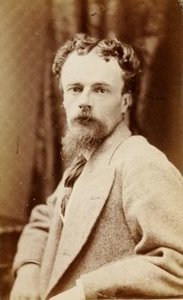
John Atkinson Grimshaw
1836 - 1893 , United Kingdom
Quick Facts
- Artistic Movement Or Style: Victorian, Pre-Raphaelite
- Artists Or Movements Influenced By This Artist: ['Aesthetic Movement']
- Artists Who Influenced This Artist:
- Pre-Raphaelites
- James Tissot
- Whistler
- Date Of Birth: September 6, 1836
- Date Of Death: October 13, 1893
- Full Name: John Atkinson Grimshaw
- Nationality: British
- Notable Artworks:
- Liverpool from Wapping
- Endymion on Mount Latmus
- Dulce Domum
- On Hampstead Hill
- Place Of Birth: Leeds, United Kingdom

