 Preview
 Send
Send Share
Share
 Details

 Download
 Similars
 X-Ray
X-Ray Diaporama
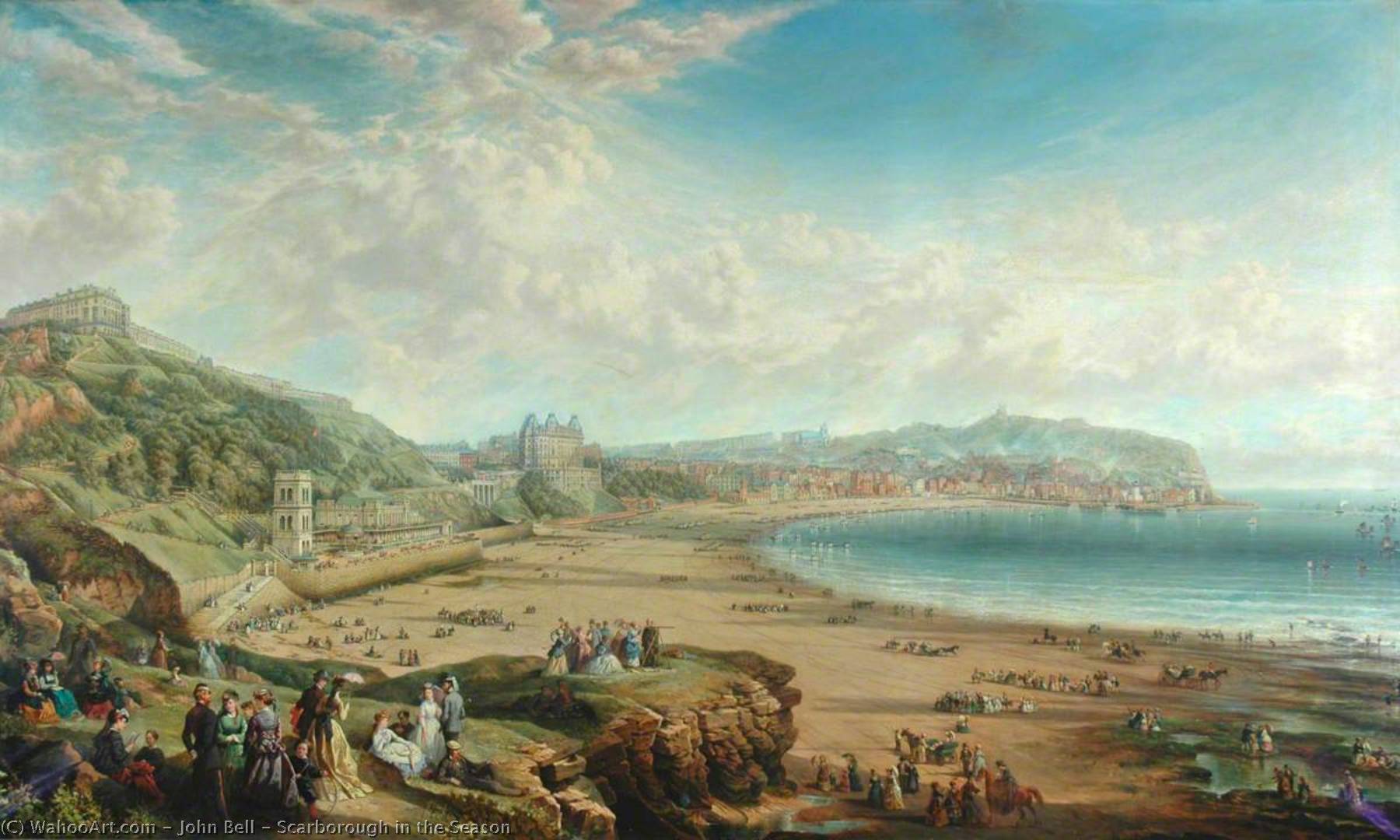
Scarborough in the Season
 1869
1869 134.0 x 223.0 cm
 Scarborough Town Hall
 Read More
Giclée / Art Print
Museum-quality giclée or canvas print with fast production and flexible finish options. ( Buy Hand Made Painting Buy Image)




































Pick from our preset sizes that match the artwork's original proportions.

You may enter your own dimensions to fit a specific frame or space. If your selected size does not match the original image's proportions, we will either crop the artwork or extend the image with a mirrored or solid-fill edge. A digital mockup will be sent for your approval before production begins.
Please note that the on-screen preview does not reflect the actual cropping or extension. Only the mockup will accurately show the final composition.
While custom sizes are available, we recommend selecting a dimension from the predefined list to preserve the original proportions.
Worldwide Delivery () in 2 weeks instead of standard 4/5 weeks. (21 August)

Free Worldwide Express Shipping

High-Quality Linen Canvas

Full Shipping Insurance

Customs Tax Refund Guarantee

True Color Matching Guarantee

60-Day Return Policy (Defects Only)

100% Money-Back Guarantee

Bulk Discount Offer
 Glass option is only available in size under 110 CM

Scarborough in the Season
Giclée / Art Print
Reproduction Size
-


Total Price
$ 63
Related Artworks









Artist Biography
John Bell: Weaver of Landscapes and Echoes of the Past
The work of John Bell (1745-1831) stands as a remarkable testament to the power of observation, meticulous detail, and a deep connection to the rhythms of rural life in Britain. More than simply a landscape painter, Bell was an astute recorder of his era, capturing not just the visual beauty of the countryside but also its social fabric, its industry, and the subtle shifts of the seasons. His engravings, particularly his celebrated harvest scenes and publisher’s plates – often commissioned for books and maps – offer a uniquely intimate glimpse into 18th-century England, revealing a world both familiar and subtly transformed.
Born in Dunblane, Scotland, Bell's early life was shaped by the burgeoning printmaking industry of the region. He apprenticed himself to William Wilson, a skilled engraver, learning the fundamentals of the craft – the precise control required for creating intricate lines and tonal variations. This foundational training proved crucial as he developed his own distinctive style, characterized by an almost photographic realism combined with a remarkable sensitivity to light and atmosphere. Unlike many artists of his time who relied on idealized representations, Bell sought to depict scenes as they truly appeared, often favoring slightly overcast conditions that softened the harshness of direct sunlight.
Bell’s artistic trajectory was inextricably linked to the rise of publishing. He quickly established himself as a highly sought-after engraver for leading publishers like Thomas Baskett and William Strahan. These commissions provided him with unprecedented access to diverse subjects – from bustling cityscapes and grand estates to intimate portraits of ordinary people and, most famously, his celebrated harvest scenes. It was through these plates that Bell’s talent truly blossomed, showcasing his ability to capture the energy and detail of a working landscape. His depictions of threshing fields, haymaking, and cart journeys are not merely picturesque; they offer a detailed account of agricultural practices, social hierarchies, and the daily lives of rural communities.
The Harvest as Chronicle
Bell’s harvest scenes represent perhaps his most enduring legacy. These aren't romanticized depictions of abundance but rather honest portrayals of arduous labor – the sweat-soaked faces of workers, the creaking wagons laden with grain, and the golden fields stretching towards the horizon. He meticulously rendered every element, from the texture of the wheat stalks to the worn clothing of the laborers. These plates weren’t simply illustrations; they were visual narratives, documenting a crucial period in the agricultural cycle and offering a poignant reflection on the human cost of production. The sheer scale and detail of these works demonstrate Bell's commitment to accuracy and his profound respect for the subjects he depicted.
Interestingly, Bell’s work was deeply influenced by the prevailing aesthetic sensibilities of the time – particularly the Neoclassical movement. The emphasis on order, clarity, and rational observation is evident in his compositions, which are carefully balanced and meticulously rendered. However, unlike the rigid formality often associated with Neoclassicism, Bell's landscapes possess a remarkable warmth and immediacy, reflecting his deep connection to the natural world.
Beyond the Plate: Portraits and Social Observation
While his harvest scenes secured his fame, Bell’s oeuvre extended beyond agricultural depictions. He produced a significant body of portraiture, often commissioned by wealthy patrons and prominent figures in Scottish society. These portraits are notable for their psychological depth and subtle nuances of expression. Unlike the stiff formality of many aristocratic portraits, Bell's subjects appear remarkably approachable, revealing glimpses of their personalities and inner lives.
Furthermore, Bell’s work offers valuable insights into the social dynamics of his time. His plates depicting market scenes, fairs, and festivals provide a vivid portrayal of everyday life in rural communities – the exchange of goods, the celebration of traditions, and the interactions between different social classes. He wasn't simply recording events; he was documenting a culture, capturing the spirit of a bygone era.
A Lasting Legacy
John Bell’s contribution to British art is profound. His meticulous engravings provide an invaluable record of 18th-century England – a detailed and nuanced portrait of its landscapes, its people, and its social fabric. His work continues to resonate today, offering a rare glimpse into the lives of those who shaped the nation's history. The enduring popularity of his harvest scenes testifies to their timeless appeal, reminding us of the beauty and dignity of honest labor and the importance of preserving our connection to the natural world. His legacy is not just as an artist but as a keen observer and faithful recorder of a vanishing era.
john bell
1937 - 2013
Quick Facts
- Artistic Movement Or Style: Landscape painting
- Artists Or Movements Influenced By This Artist:
- Belle Époque portraiture
- Impressionism
- Artists Who Influenced This Artist:
- Giovanni Boldini
- John Singer Sargent
- Date Of Birth: October 4, 1937
- Date Of Death: October 1, 1990
- Full Name: John Bell Jr.
- Nationality: American
- Notable Artworks:
- Arkansas landscapes
- Lake Catherine cabin
- Place Of Birth: Fort Smith, Arkansas