 Preview
 Send
Send Share
Share
 Details

 Download
 Similars
 X-Ray
X-Ray Diaporama
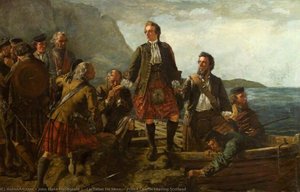
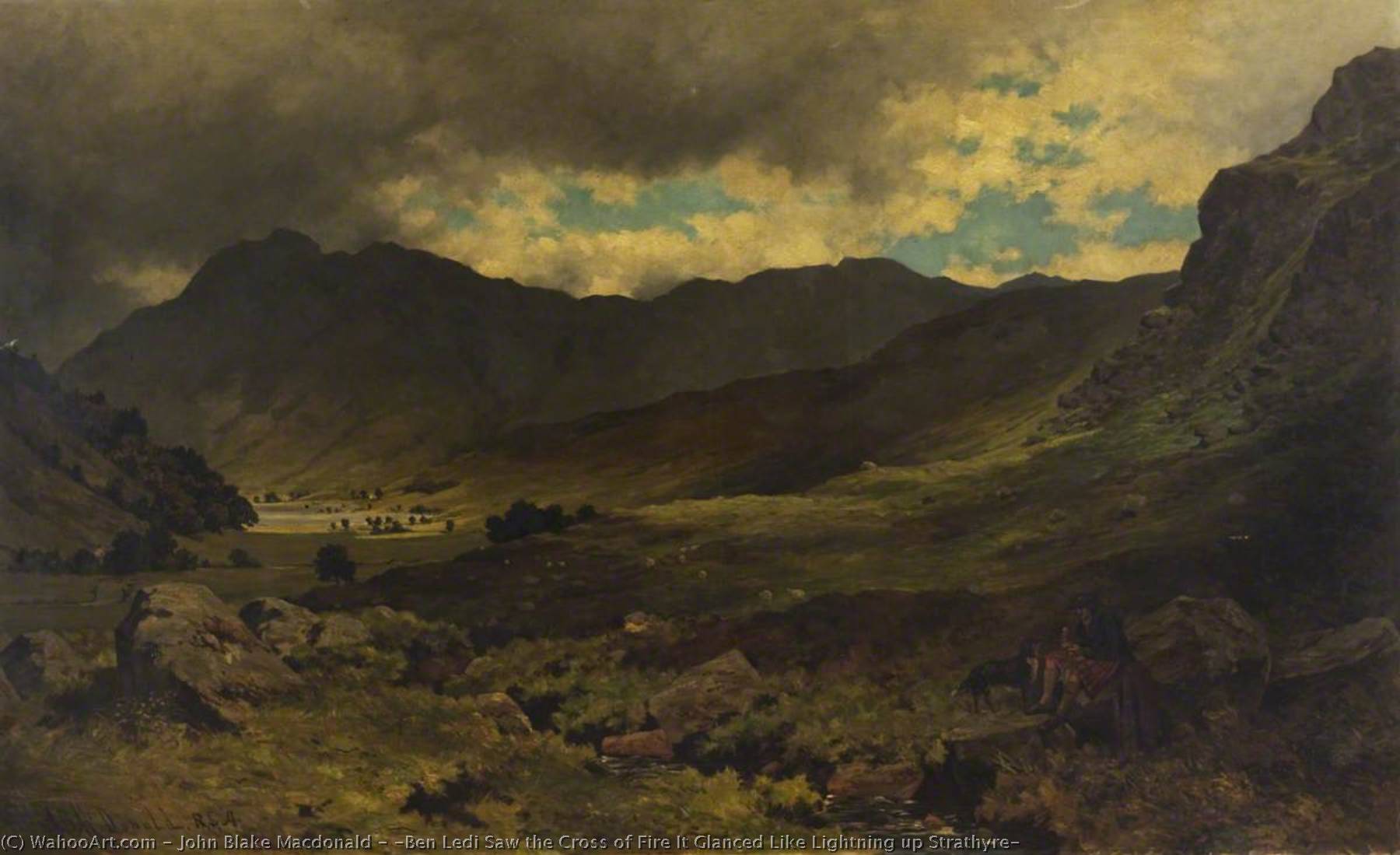
'Ben Ledi Saw the Cross of Fire It Glanced Like Lightning up Strathyre'
 122.0 x 198.0 cm
 Read More
Hand Made Oil Reproduction
Hand-painted oil on canvas in your size and frame, made to order by our artists. ( Buy Print Buy Image)




































Pick from our preset sizes that match the artwork's original proportions.

You may enter your own dimensions to fit a specific frame or space. If your selected size does not match the original image's proportions, we will either crop the artwork or extend the painting with additional hand-painted elements. A digital mockup will be sent for your approval before production begins.
Please note that the on-screen preview does not reflect the actual cropping or extension. Only the mockup will accurately show the final composition.
While custom sizes are available, we recommend selecting a dimension from the predefined list to preserve the original proportions.
After order, ArtsDot.com team will email client for instructions and provide a mockup preview
Worldwide Delivery () in 3/4 weeks instead of standard 5 weeks. (23 August). No compromise on quality.

Free Worldwide Express Shipping

High-Quality Linen Canvas

Full Shipping Insurance

Customs Tax Refund Guarantee

True Color Matching Guarantee

60-Day Return Policy (Defects Only)

100% Money-Back Guarantee

Bulk Discount Offer
 Glass option is only available in size under 110 CM

'Ben Ledi Saw the Cross of Fire It Glanced Like Lightning up Strathyre'
Reproduction Medium
Reproduction Size
-


Total Price
$ 263
Related Artworks








Artist Biography
The Soul of the Highlands: The Artistry of John Blake MacDonald
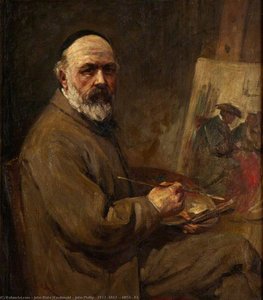
In the sweeping vistas of the Scottish Highlands, where mist clings to rugged peaks and history whispers through ancient glens, lies the true essence of John Blake MacDonald. Born in Edinburgh in 1829, MacDonald emerged as a pivotal figure in nineteenth-century Scottish art, a painter whose brush captured not merely the topography of his homeland, but its very soul. His artistic journey was shaped by the profound Victorian fascination with folklore and the picturesque ideal, a period when the romanticized past held a powerful grip on the collective imagination. Through his work, the legends of the Jacobite era were breathed into life, transforming historical memory into enduring visual poetry.
MacDonald’s formal training provided him with the technical rigor necessary to execute such ambitious visions. After receiving an education at Eton College, he pursued advanced studies at the Glasgow School of Art, where he honed his mastery of drawing and composition. This academic foundation allowed him to bridge the gap between meticulous realism and the emotive power of the Romantic tradition. Influenced by the atmospheric brilliance of masters like Turner and Constable, MacDonald learned to prioritize emotional resonance over strict topographical accuracy, seeking instead to capture the ephemeral quality of light as it dances across the Isle of Skye and the dramatic shadows of the northern mountains.
Narrative Grandeur and Historical Resonance
While his landscapes are celebrated for their breathtaking beauty, MacDonald’s true distinction lies in his ability to weave historical narrative into the fabric of the natural world. He was a master of genre painting, specializing in scenes that reconstructed the pivotal, often tragic, moments of the Stuart dynasty’s struggle for sovereignty. His canvases serve as windows into the Jacobite heart, portraying the tension, heroism, and sorrow of a lost cause. In works such as “The Piper” and “The Gathering of the Clans,” he captures the communal spirit and the looming shadows of conflict that defined the era.
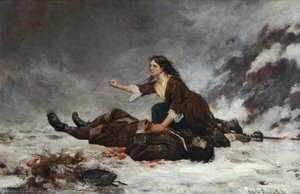
Perhaps his most poignant achievement is found in his depictions of historical tragedy, where the landscape itself becomes a participant in the human drama. In his masterpiece, “Glencoe, 1692,” MacDonald presents a haunting tableau of loss. The painting depicts a woman standing amidst fallen soldiers in the snow, her gestures conveying a profound sense of grief and spiritual searching. Here, the rugged terrain is not merely a backdrop but a silent witness to the carnage of war. This ability to imbue historical events with deep human empathy is what elevates his work from mere illustration to high art.
Technique, Symbolism, and Lasting Legacy
The technical brilliance of MacDonald’s oeuvre is found in his sophisticated use of light and texture. He was a skilled practitioner of glazing techniques, meticulously layering translucent washes of color over underlying pigments to achieve a luminous, ethereal glow. This method allowed him to convey the heavy moisture of the Scottish air and the subtle shifts in atmospheric depth. His brushwork, while precise, possessed a textural richness that captured the ruggedness of the heather-clad hills and the cold, stark reality of winter landscapes.
Beyond the visual, MacDonald’s work is steeped in symbolism, reflecting the rich tapestry of Scottish mythology and cultural heritage. Every element within his compositions—from the placement of a clan banner to the specific light hitting a mountain pass—serves to reinforce themes of identity, loss, and romantic longing. As a member of the Royal Scottish Academy, his contributions helped solidify the importance of historical genre painting within the Scottish canon. Today, the legacy of John Blake MacDonald lives on through his ability to evoke the enduring spirit of the Highlands, ensuring that the legends of the past remain vibrantly alive in the modern consciousness.
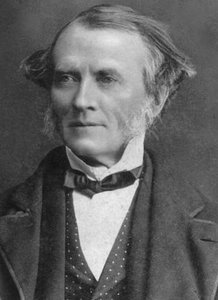
john blake macdonald
1829 - 1901
Quick Facts
- Artistic Movement Or Style: Romantic Landscape
- Artists Who Influenced This Artist:
- William Wordsworth
- Samuel Palmer
- Date Of Birth: 1829
- Date Of Death: 1901
- Full Name: John Blake MacDonald
- Nationality: Scottish
- Notable Artworks:
- The Piper
- Glen Coe
- The Highland Gathering
- Place Of Birth: Glasgow, Scotland