 Preview
 Send
Send Share
Share
 Details

 Download
 Similars
 X-Ray
X-Ray Diaporama
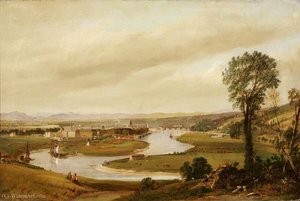
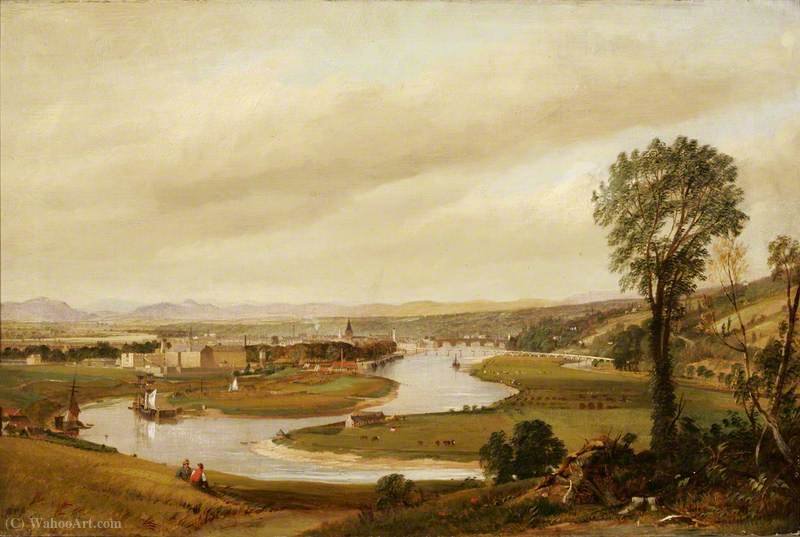
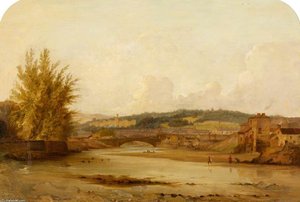
Perth and the Winding of the Tay
 Read More
Giclée / Art Print
Museum-quality giclée or canvas print with fast production and flexible finish options. ( Buy Hand Made Painting Buy Image)




































Pick from our preset sizes that match the artwork's original proportions.

You may enter your own dimensions to fit a specific frame or space. If your selected size does not match the original image's proportions, we will either crop the artwork or extend the image with a mirrored or solid-fill edge. A digital mockup will be sent for your approval before production begins.
Please note that the on-screen preview does not reflect the actual cropping or extension. Only the mockup will accurately show the final composition.
While custom sizes are available, we recommend selecting a dimension from the predefined list to preserve the original proportions.
Worldwide Delivery () in 2 weeks instead of standard 4/5 weeks. (28 August)

Free Worldwide Express Shipping

High-Quality Linen Canvas

Full Shipping Insurance

Customs Tax Refund Guarantee

True Color Matching Guarantee

60-Day Return Policy (Defects Only)

100% Money-Back Guarantee

Bulk Discount Offer
 Glass option is only available in size under 110 CM

Perth and the Winding of the Tay
Giclée / Art Print
Reproduction Size
-


Total Price
$ 63
Related Artworks



Artist Biography
The Brief, Luminous Life of John Cairns
In the annals of Victorian Scottish art, few figures possess a story as poignant and visually arresting as John Cairns. Born in Dundee in 1845, Cairns emerged during a transformative era for the landscape movement, a time when the rugged, untamed spirit of the Highlands began to find its most profound expression on canvas. His life, though tragically truncated by tuberculosis at the tender age of twenty-five, was marked by an intense, concentrated period of creative output that left an indelible mark on the Scottish school of painting. To look upon a Cairns landscape is to witness a soul attempting to capture the infinite within a fleeting moment, mirroring the artist's own brief encounter with mortality.
Cairns’s artistic journey was deeply rooted in the heritage of his birthplace. Descended from a lineage of creators—his father being a respected portrait painter—he was immersed in the language of light and form from his earliest years. This familial foundation provided him with more than just technical exposure; it instilled a profound respect for the dignity of the subject, whether human or natural. His early training under William Sharp Felix Palmer, the preeminent landscape artist of Dundee, proved foundational. From Palmer, Cairns inherited a meticulous devotion to tonal precision and an acute sensitivity to the atmospheric shifts that define the Scottish climate, learning to see the weather not merely as a backdrop, but as a living, breathing protagonist in his compositions.
Mastery of Tone and Atmospheric Emotion
What distinguishes the work of John Cairns from the broader landscape traditions of the mid-19th century is his deliberate rejection of superficiality. While many of his contemporaries were beginning to experiment with the rapid, flickering brushstrokes of Impressionism to capture fleeting light, Cairns pursued a more profound, meditative path. He sought the sublime—that Romantic ideal where nature evokes a sense of awe and even a touch of melancholy. His technique was centered on the masterful manipulation of tonal color palettes, using subtle gradations of hue and shade to build depth and mood.
His canvases are studies in the interplay between shadow and soft illumination. By prioritizing the weight of atmosphere over the sharpness of detail, he was able to evoke the damp mist of the River Tay or the heavy, brooding clouds hanging over the Isle of Skye. This approach allowed him to communicate emotion through texture and light; a landscape by Cairns does not merely show a place, it transmits a feeling of solitude, permanence, and the quiet majesty of the natural world. His ability to render the dampness of earth and the translucency of air remains a hallmark of his short but brilliant career.
Legacy and Historical Significance
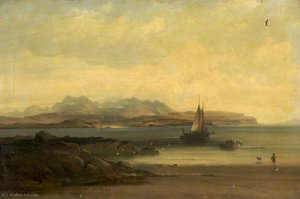
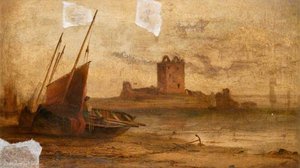
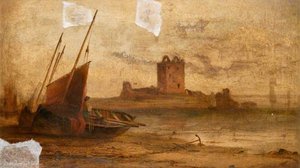
Though his physical presence was lost far too soon, the historical significance of John Cairns continues to be recognized by collectors and art historians alike. He stands as a vital link in the evolution of Scottish landscape painting, bridging the gap between traditional topographical accuracy and the more emotive, atmospheric styles that would follow. His works, such as 'Broughty Castle' and 'The Coolin Mountains, Isle of Skye', serve as enduring windows into the Victorian perception of the Scottish wilderness.
The legacy of Cairns is characterized by several key contributions to the art world:
- A Pioneer of Tonalism: His focus on subtle tonal shifts helped refine a specific Scottish aesthetic that favored mood over mere documentation.
- Influence on the Dundee School: As one of Dundee's most significant native talents, he elevated the regional importance of the city within the broader British art scene.
- Romantic Realism: He successfully blended the meticulous observation of nature with the emotional depth of the Romantic movement, creating works that are both grounded and ethereal.
Today, the works of John Cairns are cherished not only for their technical excellence but for the haunting beauty they possess—a beauty that seems to carry the weight of a life lived with intense passion and ended in quiet tragedy. He remains a singular voice, reminding us that true artistic impact is measured not by the length of a career, but by the depth of the vision left behind.
john cairns
1845 - 1870
Quick Facts
- Artistic Movement Or Style: Romanticism
- Artists Or Movements Influenced By This Artist: ['Hudson River School']
- Artists Who Influenced This Artist:
- William Turner
- George Caleb Bingham
- Date Of Birth: 1845
- Full Name: John Cairns
- Nationality: Scottish
- Notable Artworks:
- Broughty Castle
- The Coolin Mountains
- Place Of Birth: Dundee, Scotland