 Preview
 Send
Send Share
Share
 Details

 Download
 Similars
 X-Ray
X-Ray Diaporama
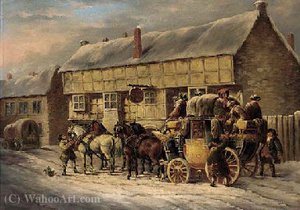
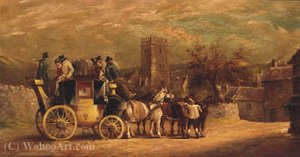
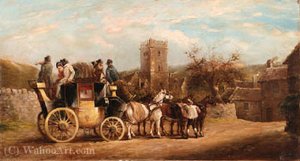
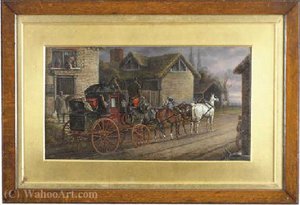
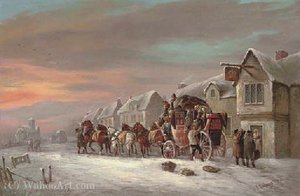
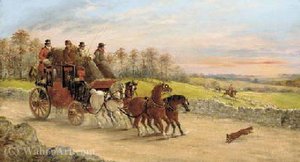
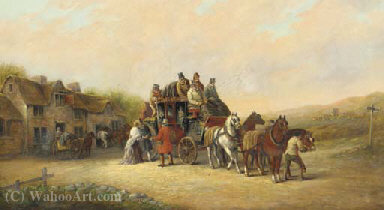
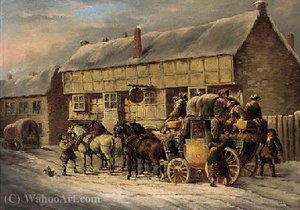
The chester coach outside the george inn
 Read More
Hand Made Oil Reproduction
Hand-painted oil on canvas in your size and frame, made to order by our artists. ( Buy Print Buy Image)




































Pick from our preset sizes that match the artwork's original proportions.

You may enter your own dimensions to fit a specific frame or space. If your selected size does not match the original image's proportions, we will either crop the artwork or extend the painting with additional hand-painted elements. A digital mockup will be sent for your approval before production begins.
Please note that the on-screen preview does not reflect the actual cropping or extension. Only the mockup will accurately show the final composition.
While custom sizes are available, we recommend selecting a dimension from the predefined list to preserve the original proportions.
After order, ArtsDot.com team will email client for instructions and provide a mockup preview
Worldwide Delivery () in 3/4 weeks instead of standard 5 weeks. (25 August). No compromise on quality.

Free Worldwide Express Shipping

High-Quality Linen Canvas

Full Shipping Insurance

Customs Tax Refund Guarantee

True Color Matching Guarantee

60-Day Return Policy (Defects Only)

100% Money-Back Guarantee

Bulk Discount Offer
 Glass option is only available in size under 110 CM

The chester coach outside the george inn
Reproduction Medium
Reproduction Size
-


Total Price
$ 263
Related Artworks



Artist Biography
The Chronicler of a Vanishing Era
John Charles Maggs (1819–1896) stands as a singular figure in Victorian art history, celebrated primarily for his meticulously rendered coaching scenes—a genre that captured the spirit of Britain’s burgeoning railway age and cemented his reputation as one of and the era's foremost illustrators. Born into an artistic lineage in Bath, Somerset, Maggs was the son of James Maggs, a skilled furniture japanner. This heritage of meticulous craftsmanship and decorative precision profoundly shaped the artist's own sensibilities, instilling in him a lifelong devotion to detail and a keen eye for the textures of historical life. While his roots were firmly planted in the traditions of the English West Country, his artistic vision was far from provincial.
Maggs’ journey as an artist was marked by a pursuit of classical excellence and a fascination with the dramatic. During the mid-1840s, he sought instruction in Italy, a formative period that allowed him to absorb the grandeur of classical art principles. This exposure to Mediterranean light and Renaissance composition breathed life into his burgeoning interest in Romantic landscapes and narrative storytelling. Upon returning to Bath, he established himself not only as a painter but as a dedicated teacher, fostering a studio environment where he nurtured the next generation of talent. His daughter, Eliza Maggs, became an integral part of this legacy, serving as his assistant within the renowned Bath Art Studio.
A Master of the Picturesque and the Pastoral
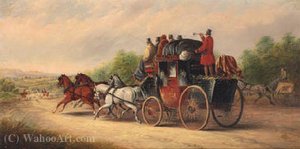
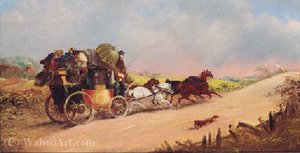
The true brilliance of Maggs lies in his ability to transform the mundane into the monumental. While many of his contemporaries sought fame through grand historical canvases or idealized portraits, Maggs turned his gaze toward the rhythmic pulse of everyday English life. He became the preeminent painter of coaching scenes, capturing the movement, tension, and atmosphere of travelers navigating the roads of 18th-century England. His work often focused on the iconic mail coaches, the bustling energy of metropolitan inns, and the lively events that defined the era.
His technical mastery was particularly evident in his use of chiaroscuro—the dramatic interplay of light and shadow. By manipulating these elements, he heightened the realism of his compositions, making the dampness of a winter’s day or the warm glow of an inn's hearth feel tangibly present to the viewer. His repertoire was vast and varied, encompassing:
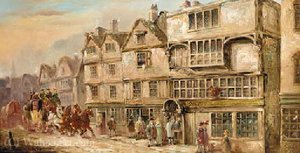
- The Coaching Inn Series: A monumental collection of approximately 80 metropolitan inns, where he explored the picturesque and historical architecture of England.
- Narrative Dramas: Captivating scenes such as Robbing the Mails and The News of Waterloo, which utilized his talent for storytelling.
- Local Landscapes and Life: Vivid recreations of the Newmarket Races and the bustling Market Place at Bath.
Legacy of a Romantic Visionary
Maggs’ work enjoyed immense popularity during a period of profound social change. As the iron rails of the railway began to reshape the British landscape, there was a deep, collective nostalgia for the "romantic past" that Maggs so expertly reconstructed. He did not merely paint scenes; he preserved a way of life. His ability to bridge the gap between the era of Hogarth and the late Victorian age allowed him to act as a visual historian, documenting a world of stagecoaches and inns that was rapidly fading into memory.
Today, the significance of John Charles Maggs resides in his role as a poet of the everyday. Through his dedication to the historical and the picturesque, he provided a sanctuary of stillness for a society caught in the whirlwind of industrialization. His paintings remain timeless windows into the heart of England, offering a sense of continuity and a profound connection to the vanished rhythms of the coaching age.
john charles maggs
1819 - 1896
Quick Facts
- Artistic Movement Or Style: Romantic Painting
- Artists Or Movements Influenced By This Artist: ['Romanticism']
- Artists Who Influenced This Artist:
- Gustave Dore
- William Holman Hunt
- Date Of Death: 1896
- Full Name: John Charles Maggs
- Nationality: British
- Notable Artworks:
- Travelling on a winter’s day
- The london to york stage coaches
- Outside the george inn, bath
- Place Of Birth: Bath, England