 Preview
 Send
Send Share
Share
 Details

 Download
 Similars
 X-Ray
X-Ray Diaporama
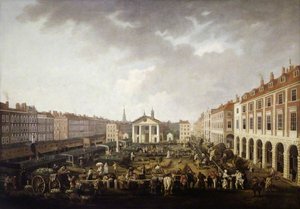
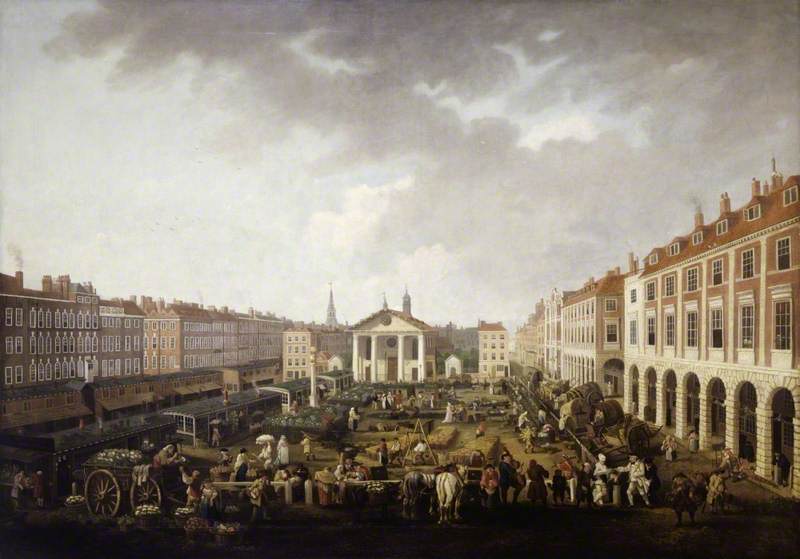
Covent Garden Piazza and Market, London
 1780
1780 134.0 x 190.0 cm
 Read More
Hand Made Oil Reproduction
Hand-painted oil on canvas in your size and frame, made to order by our artists. ( Buy Print Buy Image)




































Pick from our preset sizes that match the artwork's original proportions.

You may enter your own dimensions to fit a specific frame or space. If your selected size does not match the original image's proportions, we will either crop the artwork or extend the painting with additional hand-painted elements. A digital mockup will be sent for your approval before production begins.
Please note that the on-screen preview does not reflect the actual cropping or extension. Only the mockup will accurately show the final composition.
While custom sizes are available, we recommend selecting a dimension from the predefined list to preserve the original proportions.
After order, ArtsDot.com team will email client for instructions and provide a mockup preview
Worldwide Delivery () in 3/4 weeks instead of standard 5 weeks. (27 August). No compromise on quality.

Free Worldwide Express Shipping

High-Quality Linen Canvas

Full Shipping Insurance

Customs Tax Refund Guarantee

True Color Matching Guarantee

60-Day Return Policy (Defects Only)

100% Money-Back Guarantee

Bulk Discount Offer
 Glass option is only available in size under 110 CM

Covent Garden Piazza and Market, London
Reproduction Medium
Reproduction Size
-


Total Price
$ 263
Related Artworks






Artist Biography
A Satirical Mirror of Eighteenth Century London
John Collet, an artist whose name remains etched in the vibrant, often chaotic tapestry of eighteenth-century British art, served as a vivid chronicler of the London streets during the reign of George II. Born around 1725 into a family of modest distinction—the son of a gentleman holding public office—Collet’s early life was steeped in the burgeoning artistic atmosphere of his native city. His formal education began under the watchful eye of the esteemed painter George Lambert at the St Martin’s Lane Art School, a prestigious crucible of creativity that provided him with the technical foundation necessary to navigate the competitive London art market. While his earliest forays into exhibition, such as his 1761 debut at the Free Society of Artists, showcased a talent for landscapes, it was his transition toward genre painting and caricature that would ultimately define his legacy.
The essence of Collet’s work lies in its profound engagement with the social zeitgeist of his era. He did not merely paint scenes; he captured the very pulse of a society caught between tradition and the decadent excesses of a growing urban metropolis. Heavily influenced by the legendary William Hogarth, Collet sought to master the art of comedy in art. However, where Hogarth often utilized his canvases as didactic tools for moral instruction, Collet frequently leaned toward the spectacle of caricature and the amusement of the masses. His compositions were often populated by characters navigating the absurdities of low life, debauchery, and social weakness, offering a window into the manners and vices of the late eighteenth century through a lens that was at once meticulously executed and delightfully irreverent.
The Art of Narrative and Visual Spectacle
Collet’s technical prowess allowed him to translate complex, often boisterous narratives into compelling visual stories. His ability to command detail ensured that even his most humorous or grotesque subjects possessed a certain gravity and realism. This skill made him a favorite among the era's most influential publishers, as his imaginative ideas were perfectly suited for the burgeoning print market. Through collaborations with master engravers such as Carrington Bowles, Smith & Sayer, and Boydell, Collet’s visions reached a vast audience, transcending the confines of single paintings to become widely circulated engravings that fueled the public's appetite for visual satire.
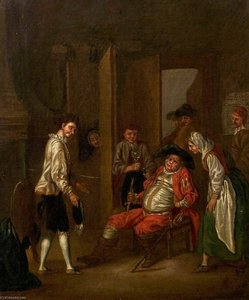
One of his most celebrated achievements involved his artistic response to the theatrical triumphs of his time. Specifically, his depictions of scenes from Richard Brinsley Sheridan’s comedy The Duenna left a lasting mark on art history. His rendering of the boisterous drinking scene in Act III, Scene 5, was so evocative that it earned a place in Thomas Wright’s seminal study, History of Caricature and Grotesque in Art. This intersection of stage and canvas highlights Collet's role as an artist who breathed life into the popular culture of his day, turning the theatrical drama of the London stage into permanent, much-discussed visual artifacts.
Legacy and Historical Significance
Though some contemporary critics occasionally dismissed his work as mere plagiarism of Hogarth or as appealing too heavily to a vulgar taste, such assessments often overlook the sheer vitality Collet brought to the genre. When he moved beyond imitation to embrace true originality, his talent for capturing the human condition—in all its awkwardness and eccentricity—was undeniable. He possessed a unique ability to document the social landscape of London, providing historians with an invaluable visual record of the era's customs, fashions, and follies.
Collet’s life came to a close in 1780 in Chelsea, leaving behind a body of work that continues to intrigue scholars of British satire. His significance resides not only in his technical skill but in his role as a cultural observer who helped shape the visual language of English humor. To look upon a Collet print is to witness the lively, often unvarnished spirit of an age, making him a vital figure in the evolution of much of the satirical tradition that followed.
john collet
1720 - 1780
Quick Facts
- Artistic Movement Or Style: Satirical Art; Hogarth Style
- Artists Or Movements Influenced By This Artist: ['Hogarth']
- Artists Who Influenced This Artist: ['Lambert']
- Date Of Birth: c. 1725
- Date Of Death: 1780
- Full Name: John Collet
- Nationality: English
- Notable Artworks:
- The Asylum for the Deaf
- Promenaders in St. James's Park
- May Morning
- The Recruiting Sargeant
- Place Of Birth: London, England