 Preview
 Send
Send Share
Share
 Details

 Download
 Similars
 X-Ray
X-Ray Diaporama
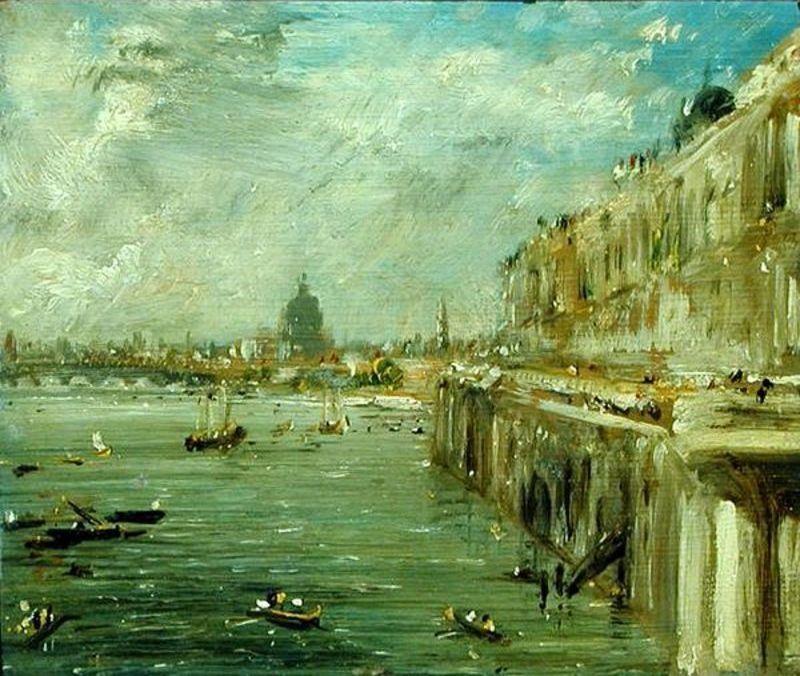
Somerset House Terrace and the Thames A View from the North End of Waterloo Bridge with St. Paul's Cathedral in the distance


 Read More
Hand Made Oil Reproduction
Hand-painted oil on canvas in your size and frame, made to order by our artists. ( Buy Print Buy Image)




P118B $10

P118H $10

P118W $10

P438Z $10

P508JH $12

P508YH $12

P805H $10

P805Z $10

P919BZ $10

P919G $10

P919XJ $10

P959ZH $10

P968JZ $12

W106C $8

W218G $10

W218JH $8

W218Y $10

W307PJ $10

W316G $10

W316PJ $8

W316Y $10

W398PJ $8

W4111J $10

W500HY $15

W500JH $15

W692G $12

W849H $8

W940BG $15

W953PJ $8




Pick from our preset sizes that match the artwork's original proportions.

You may enter your own dimensions to fit a specific frame or space. If your selected size does not match the original image's proportions, we will either crop the artwork or extend the painting with additional hand-painted elements. A digital mockup will be sent for your approval before production begins.
Please note that the on-screen preview does not reflect the actual cropping or extension. Only the mockup will accurately show the final composition.
While custom sizes are available, we recommend selecting a dimension from the predefined list to preserve the original proportions.
After order, ArtsDot.com team will email client for instructions and provide a mockup preview
Worldwide Delivery () in 3/4 weeks instead of standard 5 weeks. (16 August). No compromise on quality.

Free Worldwide Express Shipping

High-Quality Linen Canvas

Full Shipping Insurance

Customs Tax Refund Guarantee

True Color Matching Guarantee

60-Day Return Policy (Defects Only)

100% Money-Back Guarantee

Bulk Discount Offer
 Glass option is only available in size under 110 CM

Somerset House Terrace and the Thames A View from the North End of Waterloo Bridge with St. Paul's Cathedral in the distance
Reproduction Medium
Reproduction Size
-


Total Price
$ 263
Artwork Description
A Panoramic Vision of Urban Life
John Constable’s “Somerset House Terrace and the Thames, A View from the North End of Waterloo Bridge with St. Paul’s Cathedral in the distance” isn't merely a depiction of London; it’s a carefully constructed meditation on light, space, and the evolving relationship between humanity and its environment. Painted in 1816, this canvas captures a pivotal moment – the burgeoning energy of early Victorian London juxtaposed with the enduring grandeur of St. Paul’s Cathedral. Constable masterfully employs a high horizon line, drawing the eye upwards into a vast, luminous sky, an element that immediately establishes a sense of openness and tranquility amidst the bustling scene below. The river itself isn't simply a backdrop; it’s a dynamic force, reflecting the light and subtly shaping the composition.
The painting’s strength lies in Constable’s distinctive approach to capturing atmosphere. He eschews the precise detail favored by earlier landscape painters, opting instead for loose, expressive brushstrokes that convey movement and fleeting effects of light. Notice how he uses a broken technique – applying paint in short, separate strokes – to create an illusion of shimmering water and hazy distance. This isn’t a photographic representation; it's a deeply felt impression, imbued with Constable’s personal response to the scene.
Historical Context: London on the Brink
To understand “Somerset House Terrace,” one must consider the context of 1816 London. The city was undergoing rapid transformation – industrialization was reshaping its landscape, and a new sense of civic pride was emerging alongside social unrest. Waterloo Bridge, still relatively new at this time, symbolized this progress, connecting Westminster with South Bank. Somerset House, a grand architectural statement commissioned by William III, stood as a testament to the power of the monarchy, while St. Paul’s Cathedral, completed just decades earlier, represented the enduring legacy of faith and tradition. Constable's painting, therefore, isn't simply a picturesque view; it’s a reflection on these competing forces – the old and the new, the natural and the man-made.
The inclusion of the Thames is particularly significant. Throughout English history, the river has been both a lifeline and a barrier, connecting London to its hinterland while also shaping its identity. Constable’s depiction celebrates the river's beauty and vitality, capturing the activity of boats navigating its waters – a scene that would have been increasingly familiar to Londoners as the city grew.
Artistic Style: Romantic Impressionism
Constable’s style is often described as “Romantic Impressionism.” He shared with the Romantic painters an interest in capturing subjective experience and evoking emotion, but he moved beyond the idealized landscapes of his predecessors to embrace a more direct and observational approach. His use of color is particularly noteworthy – vibrant blues and greens dominate the sky and water, contrasted by the warm ochres and browns of the buildings. These colors aren’t mixed on the palette; they are applied directly from the tube, creating a sense of immediacy and freshness.
The architectural details of Somerset House and St. Paul's Cathedral are rendered with remarkable skill, yet Constable doesn’t prioritize accuracy over atmosphere. He captures the essence of these iconic structures – their scale, their form, and their relationship to the surrounding landscape – while simultaneously dissolving them into a hazy, atmospheric perspective. This technique creates a sense of depth and distance, drawing the viewer's eye into the heart of the scene.
Symbolism and Emotional Impact
Beyond its technical brilliance, “Somerset House Terrace” is rich in symbolism. The vastness of the sky suggests freedom and possibility, while the bustling river represents the energy and dynamism of London life. St. Paul’s Cathedral, a symbol of faith and stability, anchors the composition and provides a sense of continuity across time. Constable's choice to depict this scene from a slightly elevated vantage point – mirroring the perspective of someone standing on Waterloo Bridge – invites the viewer to share in his experience, fostering a feeling of quiet contemplation amidst the urban bustle.
Today, this painting continues to resonate with viewers because it captures something essential about the human condition: our desire for beauty and tranquility in an increasingly complex world. ArtsDot offers meticulously crafted hand-painted reproductions that allow you to bring this iconic masterpiece into your home or office, experiencing Constable’s vision firsthand.
Related Artworks
Artist Biography
A Life Rooted in the English Landscape
John Constable, born in 1776 in the idyllic Suffolk village of East Bergholt, wasn’t merely a painter of landscapes; he was a poet of the land, translating its subtle moods and enduring beauty onto canvas with an unprecedented emotional depth. His father, a prosperous corn merchant who owned both Dedham Vale and mills along the River Stour, provided not only financial security but also the very subject matter that would define Constable’s artistic life. This early immersion in the rural world – the slow rhythm of agricultural life, the ever-changing light on fields and water, the intimate details of nature – became indelibly etched into his sensibility. While initially destined to follow his father into business, a burgeoning passion for art, nurtured by local patrons like George Beaumont who introduced him to the works of Claude Lorrain, ultimately steered him toward a different path. Constable’s artistic journey wasn't immediate; it was a gradual unfolding, shaped by careful observation and a persistent desire to capture not just *what* he saw, but *how* it felt to be present within the landscape.Breaking with Convention: A New Vision of Nature
Constable’s artistic development was marked by a deliberate rejection of prevailing academic conventions. Dissatisfied with the idealized and often theatrical landscapes favored by the Royal Academy, he sought instead a truthful representation of nature, imbued with personal feeling. He wasn't interested in grand historical narratives or mythological scenes; his focus remained steadfastly on the familiar countryside surrounding him. This commitment to depicting ordinary subjects – hay wains, farm buildings, village life – was initially met with resistance from critics who deemed his work too commonplace and lacking in ambition. However, Constable persevered, driven by a conviction that beauty resided in the everyday. He pioneered a technique of *plein air* painting, venturing outdoors to directly observe and capture the fleeting effects of light and weather. This direct engagement with nature allowed him to infuse his canvases with an immediacy and vitality previously unseen in British landscape art. His brushwork became increasingly loose and expressive, employing impasto – thick layers of paint – to create texture and convey a sense of movement and atmosphere. He wasn’t simply recording what he saw; he was translating his emotional response to the land into visual form.Iconic Works and Lasting Influence
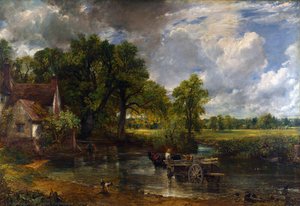
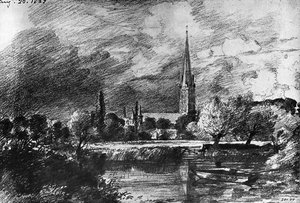
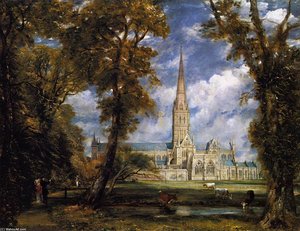
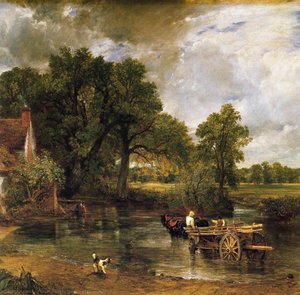
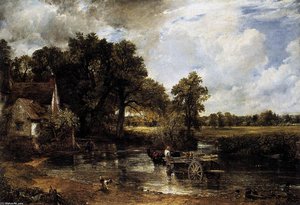
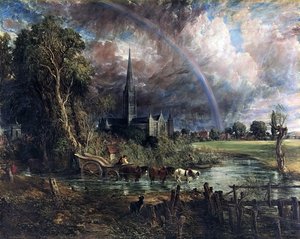
Constable's most celebrated works stand as testaments to his unique vision. The Hay Wain (1821), perhaps his most recognizable painting, depicts a quintessential rural scene on the River Stour, capturing the tranquility and harmony of agricultural life. Hadleigh Castle (1829) showcases his dramatic use of light and atmospheric effects, transforming a crumbling ruin into a powerful symbol of time’s passage. The series of paintings depicting Salisbury Cathedral from the Meadows (1831) demonstrates his ability to evoke different moods and times of day, revealing the cathedral as an integral part of the natural landscape. Netley Abbey (1824), with its evocative depiction of architectural grandeur amidst encroaching nature, exemplifies his skill in blending human creation with the wild beauty of the countryside. Despite facing initial struggles for recognition in England, Constable achieved considerable acclaim in France, where his innovative techniques and emotional depth resonated deeply with artists seeking a more naturalistic approach to landscape painting. He profoundly influenced the Barbizon School, a group of French painters who shared his commitment to *plein air* painting and direct observation of nature.A Legacy of Emotional Resonance
John Constable’s historical significance lies not only in his artistic innovations but also in his profound impact on the development of landscape painting. He challenged academic conventions, elevated the status of ordinary subjects, and paved the way for a more personal and emotionally expressive approach to art. His emphasis on direct observation, atmospheric effects, and truthful representation of nature anticipated many of the concerns of later Impressionist painters. He demonstrated that landscape could be a vehicle for profound emotional expression, capable of evoking feelings of nostalgia, tranquility, and awe. Though he faced financial hardship throughout much of his career, and died relatively young in 1837, his legacy endures. Today, Constable is celebrated as one of Britain’s greatest artists, whose paintings continue to captivate audiences with their beauty, sincerity, and enduring power. His work serves as a poignant reminder of the profound connection between humanity and the natural world, and the transformative potential of art to capture its essence.Personal Life & Final Years
Constable’s personal life was marked by both joy and sorrow. He married Maria Bicknell in 1816, and they had seven children, though sadly several did not survive infancy. His marriage provided him with emotional support but also financial strain. Elected a Royal Academician in 1829, he continued to face criticism from some quarters, particularly regarding his unconventional techniques. His later years were shadowed by Maria’s declining health and eventual death in 1828, an event that deeply affected him. Despite these hardships, Constable remained dedicated to his art, continuing to paint until his own passing on March 31, 1837. He left behind a rich artistic legacy—a testament to his unwavering commitment to capturing the beauty and emotional resonance of the English countryside. His paintings remain powerful evocations of a bygone era, inviting viewers to experience the landscape through his uniquely sensitive eyes.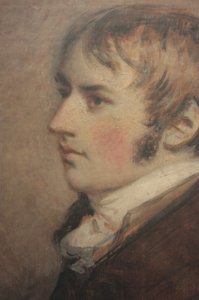
John Constable
1776 - 1837 , United Kingdom
Quick Facts
- Artistic Movement Or Style: Romanticism
- Artists Or Movements Influenced By This Artist: ['Barbizon School']
- Artists Who Influenced This Artist:
- Claude Lorrain
- Jacob Ruisdael
- Date Of Birth: June 11, 1776
- Date Of Death: March 31, 1837
- Full Name: John Constable
- Nationality: British
- Notable Artworks:
- The Hay Wain
- Hadleigh Castle
- Salisbury Cathedral
- Netley Abbey
- Place Of Birth: East Bergholt, UK
Related Articles

John Constable's Masterpieces: Explore 25 Iconic Landscapes for Your Home
Journey through John Constable's 25 most celebrated landscapes. Explore Romanticism, Dedham Vale & his masterful use of light in iconic paintings like 'Hay Wain'. Find museum-quality art reproductions and elevate your home decor on ArtsDot.com.

John Singer Sargent's 25 Masterpieces: Portraits & Beyond | ArtsDot
Explore 25 iconic John Singer Sargent paintings – from dazzling portraits to Impressionist landscapes. Discover the stories behind Madame X, El Jaleo & more! Find museum-quality art reproductions and elevate your home decor with ArtsDot.com.
John Constable: Nature, Light & the Romantic Vision of Rural England
Explore the life & art of John Constable, the Romantic painter who revolutionized landscape with emotive scenes of rural England. Discover his techniques, legacy, and key works – perfect for collectors & enthusiasts.
National Gallery London's Masterpieces: 25 Iconic Paintings for Your Home Decor
Journey through the National Gallery London's 25 most iconic paintings! Explore Van Gogh, Monet, Rembrandt & more. Discover art history, techniques & find museum-quality reproductions for your home decor on ArtsDot.com.

Romantic Landscapes: 10 Masterpieces for Your Home | ArtsDot
Journey through 10 Romantic landscape masterpieces by Friedrich, Turner & Cole. Explore emotional art, sublime nature scenes & iconic 19th-century paintings. Find museum-quality reproductions for your home at ArtsDot.com – discover the full collection online!