 Preview
 Send
Send Share
Share
 Details

 Download
 Similars
 X-Ray
X-Ray Diaporama
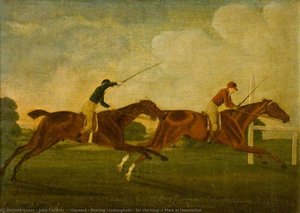
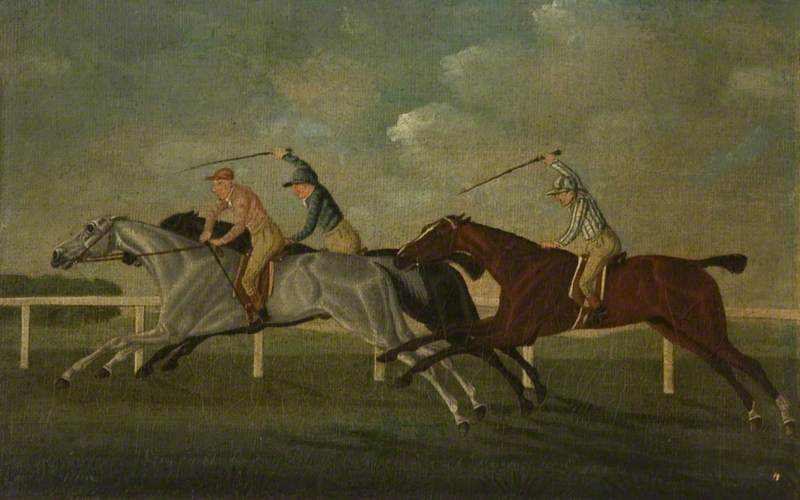
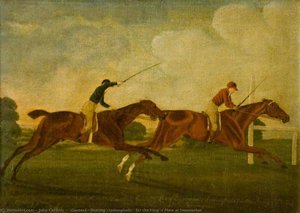
'Gimcrack' Beating Two Other Horses at Epsom
 16.0 x 25.0 cm
 The National Trust For Scotland
 Read More
Giclée / Art Print
Museum-quality giclée or canvas print with fast production and flexible finish options. ( Buy Hand Made Painting Buy Image)




































Pick from our preset sizes that match the artwork's original proportions.

You may enter your own dimensions to fit a specific frame or space. If your selected size does not match the original image's proportions, we will either crop the artwork or extend the image with a mirrored or solid-fill edge. A digital mockup will be sent for your approval before production begins.
Please note that the on-screen preview does not reflect the actual cropping or extension. Only the mockup will accurately show the final composition.
While custom sizes are available, we recommend selecting a dimension from the predefined list to preserve the original proportions.
Worldwide Delivery () in 2 weeks instead of standard 4/5 weeks. (21 August)

Free Worldwide Express Shipping

High-Quality Linen Canvas

Full Shipping Insurance

Customs Tax Refund Guarantee

True Color Matching Guarantee

60-Day Return Policy (Defects Only)

100% Money-Back Guarantee

Bulk Discount Offer
 Glass option is only available in size under 110 CM

'Gimcrack' Beating Two Other Horses at Epsom
Giclée / Art Print
Reproduction Size
-


Total Price
$ 63
Related Artworks









Artist Biography
John Cordrey: Capturing the Rhythm of a Changing Britain
John Cordrey (c. 1765 – 1825) stands as a remarkably prescient chronicler of early 19th-century British life, best known for his meticulously detailed depictions of stagecoaches and equestrian scenes. More than mere illustrations, his works offer a vibrant snapshot of a nation undergoing rapid transformation—the rise of the railway challenging the dominance of the horse-drawn carriage, the expansion of commerce reshaping rural landscapes, and the evolving social dynamics reflected in the attire and activities of his subjects. His art wasn’t simply about recording events; it was about capturing a specific moment in time, imbued with a keen observational eye and a subtle understanding of the era's spirit.
Born around 1765, Cordrey’s early life remains somewhat shrouded in mystery, though he is believed to have been raised in rural England. Details regarding his formal artistic training are scarce, suggesting that he honed his skills through observation and a natural talent for rendering detail. He quickly established himself as a sought-after artist, specializing in scenes of travel and leisure—a burgeoning market fueled by the growing popularity of coaching journeys across Britain. His commissions frequently involved illustrating stagecoach routes, advertisements for coach companies, and depictions of sporting events, reflecting the era’s fascination with speed, progress, and the pleasures of the road.
The World of the Stagecoach
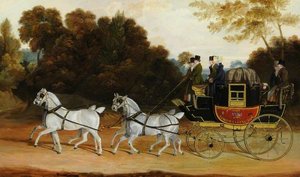
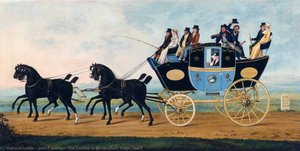
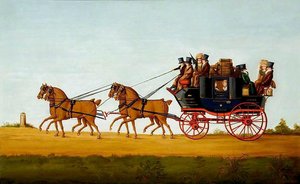
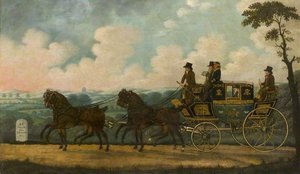
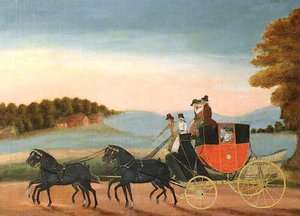
Cordrey's most enduring legacy lies in his masterful portrayals of stagecoaches. These weren’t romanticized visions of adventure; they were pragmatic machines of commerce, transporting goods, passengers, and mail across vast distances. He meticulously rendered every detail—the gleaming brass fittings, the sturdy wheels, the weary horses, and the diverse array of travelers within. His paintings aren't just static images; they convey a sense of movement and immediacy, capturing the rumble of the wheels, the dust kicked up by the horses’ hooves, and the bustling activity surrounding the coach. Works like “The London to Dartford Stage Coach” (1813) exemplify his ability to imbue these functional objects with a remarkable degree of character and drama.
Crucially, Cordrey didn't simply depict the coaches themselves; he captured the social context in which they operated. His paintings frequently featured passengers from all walks of life—wealthy merchants, rural laborers, military officers, and families embarking on journeys to visit relatives or explore new territories. These scenes offer a valuable glimpse into the diverse social fabric of early 19th-century Britain, revealing the interconnectedness of different communities and the changing patterns of travel.
Influences and Artistic Style
While Cordrey’s precise style is difficult to categorize definitively, his work demonstrates influences from both English topographical art and the burgeoning genre of sporting prints. He shared a commitment with artists like Thomas Rowlandson in capturing the humor and satire of everyday life, though his approach was considerably more restrained. His meticulous attention to detail—a hallmark of British topographical painting—allowed him to create remarkably realistic depictions of horses, carriages, and landscapes. The influence of earlier landscape painters is evident in his skillful use of light and shadow, as well as his ability to convey a sense of atmosphere and mood.
Furthermore, Cordrey’s work reflects the broader artistic trends of the period—a growing interest in documenting the natural world and celebrating the achievements of British industry. His paintings served not only as commercial illustrations but also as visual records of a rapidly changing Britain, capturing the spirit of an era defined by progress, innovation, and social transformation.
Legacy and Historical Significance
John Cordrey’s contribution to British art is often overlooked, yet his work provides invaluable insights into the social and cultural history of the early 19th century. His detailed depictions of stagecoaches and equestrian scenes offer a unique window onto a period of significant change—the rise of the railway, the expansion of commerce, and the evolving dynamics of British society. Today, his paintings are housed in museums across the United Kingdom, serving as tangible reminders of a bygone era and the artist’s remarkable ability to capture the rhythm of a changing Britain.
His work is particularly significant for its documentation of a period when travel was still a relatively rare and expensive undertaking. Cordrey's paintings offer a visual testament to the importance of the stagecoach as a vital means of transportation, connecting communities and facilitating trade across the nation. They are not just beautiful images; they are historical documents, offering a glimpse into the lives and experiences of those who traveled by coach during this transformative period.
john cordrey
1765 - 1825
Quick Facts
- Artistic Movement Or Style: Stagecoach Paintings
- Artists Or Movements Influenced By This Artist: ['']
- Artists Who Influenced This Artist: ['']
- Date Of Birth: c.1765
- Date Of Death: 1825
- Full Name: John Cordrey
- Nationality: British
- Notable Artworks:
- The Marquess of Queensberry's Coach
- London & Taunton Omnibus
- The London to Dartford Stage Coach