 Preview
 Send
Send Share
Share
 Details

 Download
 Similars
 X-Ray
X-Ray Diaporama
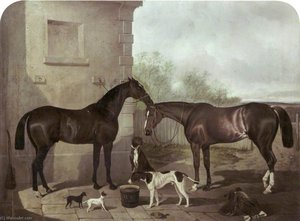
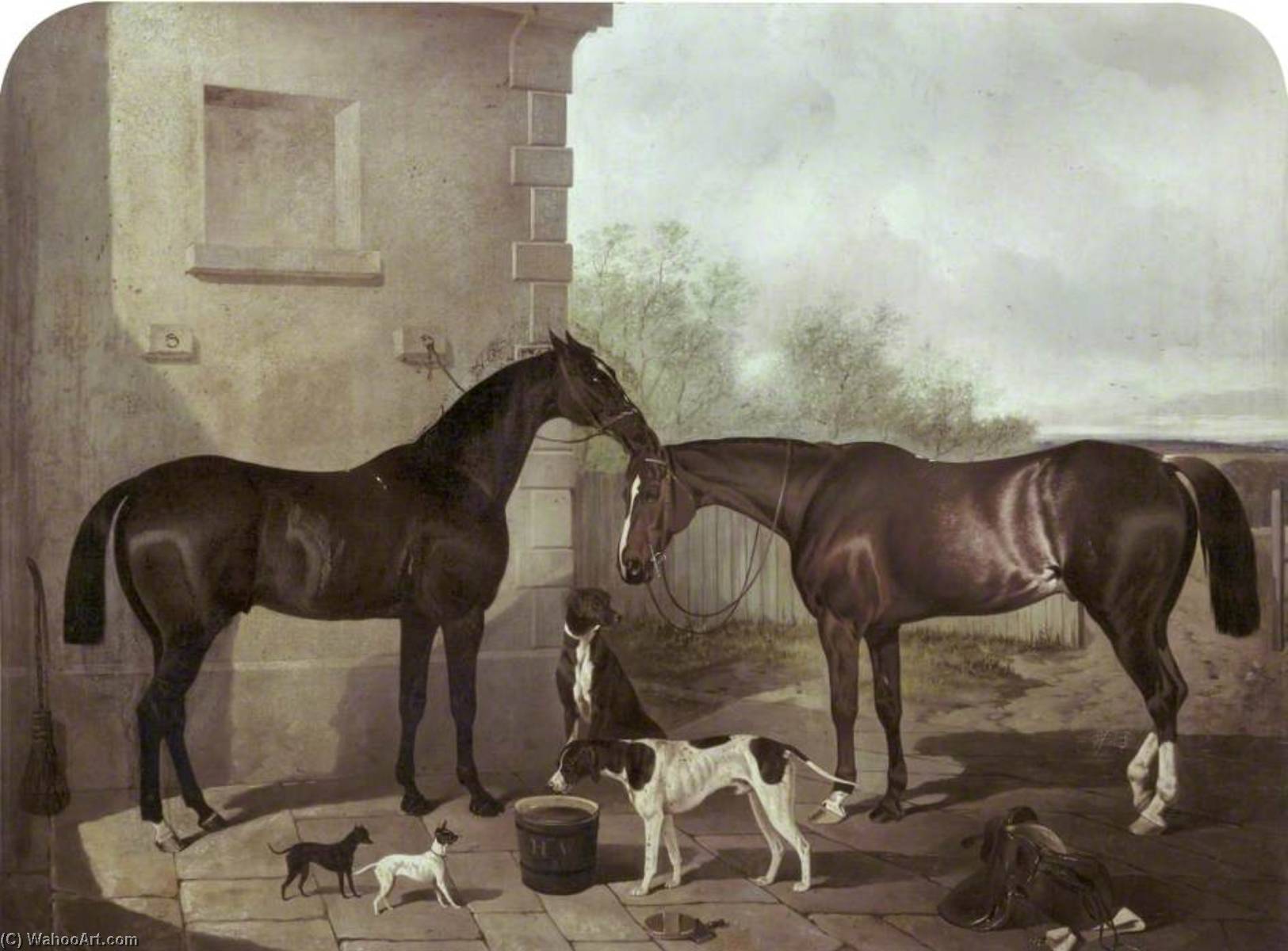
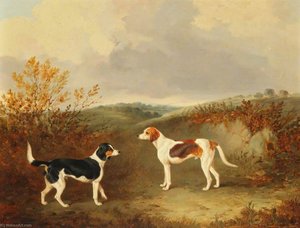
Two Horses with Dogs, Outside a Stable
 1855
1855 64.0 x 82.0 cm
 Walker Art Gallery
 Read More
Hand Made Oil Reproduction
Hand-painted oil on canvas in your size and frame, made to order by our artists. ( Buy Print Buy Image)




































Pick from our preset sizes that match the artwork's original proportions.

You may enter your own dimensions to fit a specific frame or space. If your selected size does not match the original image's proportions, we will either crop the artwork or extend the painting with additional hand-painted elements. A digital mockup will be sent for your approval before production begins.
Please note that the on-screen preview does not reflect the actual cropping or extension. Only the mockup will accurately show the final composition.
While custom sizes are available, we recommend selecting a dimension from the predefined list to preserve the original proportions.
After order, ArtsDot.com team will email client for instructions and provide a mockup preview
Worldwide Delivery () in 3/4 weeks instead of standard 5 weeks. (20 August). No compromise on quality.

Free Worldwide Express Shipping

High-Quality Linen Canvas

Full Shipping Insurance

Customs Tax Refund Guarantee

True Color Matching Guarantee

60-Day Return Policy (Defects Only)

100% Money-Back Guarantee

Bulk Discount Offer
 Glass option is only available in size under 110 CM

Two Horses with Dogs, Outside a Stable
Reproduction Medium
Reproduction Size
-


Total Price
$ 263
Artwork Description
Artistic Style and Composition
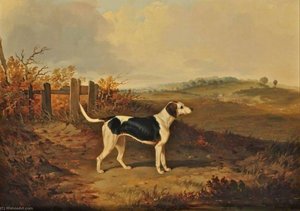
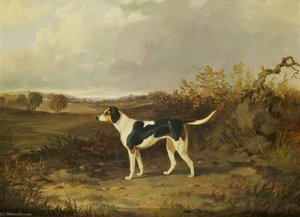
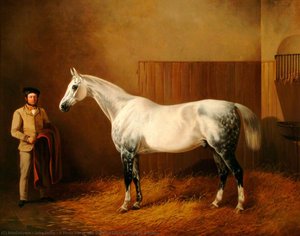
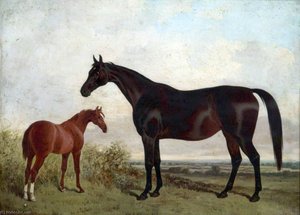
The painting features two horses standing side by side, with their heads bent down, possibly eating or drinking from a bucket. The scene also includes a person observing the horses, adding a sense of tranquility to the atmosphere. The presence of dogs and cats in the painting adds a touch of warmth and coziness to the overall composition. Light and shadow are used effectively to create depth and dimension in the painting.Artist's Background and Influences
John Dalby was a British artist known for his equestrian paintings, which often featured horses in natural settings. His work was influenced by the Walker Art Gallery, where he exhibited many of his pieces. Other notable artists whose works are featured at the gallery include Spiridione Gambardella and Philip Westcott. You can view more of their paintings on Spiridione Gambardella's James Pownall (1782–1855) and Philip Westcott's Joseph Brooks Yates (1780–1855).Reproductions and Availability
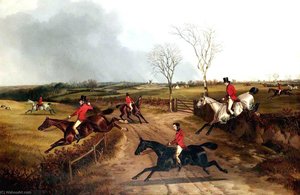
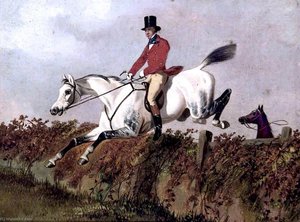
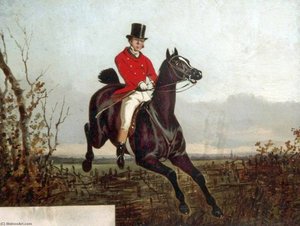
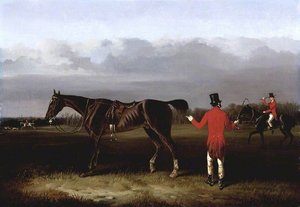
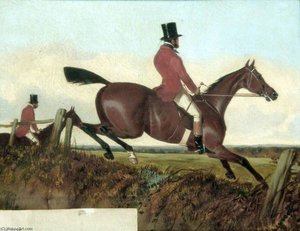
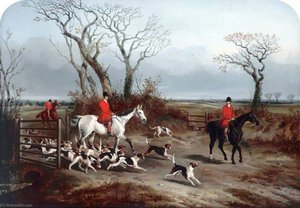
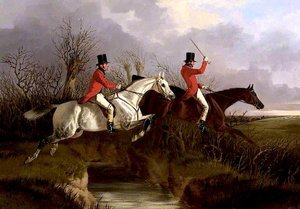
For art enthusiasts who appreciate the beauty of "Two Horses with Dogs, Outside a Stable", ArtsDot.com offers handmade oil painting reproductions that capture the essence of the original piece. These reproductions are created using high-quality materials and techniques to ensure an authentic representation of the artist's work.Some other notable works by John Dalby include Going Out Huntsmen with Hounds Passing through a Gate and The Lane Members of a Hunt Jumping the Fences by a Lane, which can be viewed on John Dalby's Going Out Huntsmen with Hounds Passing through a Gate and John Dalby's The Lane Members of a Hunt Jumping the Fences by a Lane.
- View more paintings by John Dalby on ArtsDot.com
- Learn about the Walker Art Gallery and its collection
- Discover other artists and their works on Wikipedia, such as John Lennon
Related Artworks
Artist Biography
Early Life and Family Roots
John Dalby, a name resonating with the charm of 19th-century British rural life, was born in York in 1810. While biographical details remain somewhat elusive, we know he emerged from a family deeply entrenched in the artistic tradition. His father, David Dalby (1794-1836), was also a sporting artist, painting landscapes and animals – a foundation upon which John would build his own distinctive style. The presence of at least two other painter members within the family—Thomas and Joshua—adds to the intriguing complexity of the Dalby lineage; some scholars even suggest that Joshua’s work is so stylistically similar to John's it may, in fact, be attributable to him. This familial artistic environment undoubtedly fostered John’s early inclinations and provided a crucial initial training ground.
The practice of signing works simply as “Dalby” or “J Dalby,” versus his father’s more specific “D. Dalby,” hints at an attempt to establish a separate identity, yet the close stylistic connections suggest a shared artistic heritage. John's early career was shaped by this familial context and the burgeoning demand for sporting art in England during the Victorian era.
A Focus on Hunting Scenes and Equestrian Life
Dalby quickly carved out a niche for himself as a painter of hunting scenes, a genre particularly popular amongst the landed gentry. Unlike his father’s broader landscape work, John specialized in capturing the dynamic energy and detailed narrative of the hunt. His paintings are characterized by a remarkable precision—almost miniaturist in quality—with strong color palettes and compositions brimming with action. The influence of Henry Alken, another prominent sporting artist, is readily apparent in Dalby's work; however, Dalby’s style possesses a unique tightness and meticulousness that sets it apart.
He wasn’t merely documenting the sport itself but also portraying a way of life—the social rituals, the camaraderie, and the inherent drama of the chase. His scenes often feature not just horses and hounds, but also richly attired huntsmen and riders, adding layers of narrative and social commentary to his compositions. This attention to detail extended beyond figures to include meticulously rendered tack, landscapes, and even the expressions on the animals themselves.
Style and Technique: Precision and Narrative
Dalby’s technical skill is perhaps his most defining characteristic. His paintings are renowned for their incredible level of detail—every muscle in a horse's flank, every strand of hair on a hound, every fold in a rider’s coat is rendered with painstaking accuracy. This precision wasn’t simply about realism; it was integral to conveying the energy and excitement of the hunt. The tight brushwork and strong color create a sense of immediacy, drawing the viewer directly into the scene.
He masterfully balanced action with composition, ensuring that even the most dynamic scenes remained visually coherent. His use of light and shadow further enhanced the drama, highlighting key figures and creating a sense of depth and atmosphere. While his style is often described as tight, it never feels rigid; instead, it conveys a controlled energy that perfectly captures the spirit of the Victorian sporting world.
Legacy and Historical Significance
John Dalby’s work provides a valuable glimpse into the social and cultural landscape of 19th-century England. His paintings are not simply depictions of hunting scenes; they are windows into a specific way of life, reflecting the values, rituals, and aesthetics of the landed gentry. He captured a moment in time—a world increasingly threatened by industrialization and social change.
Although he may not be as widely recognized as some of his contemporaries, Dalby’s paintings continue to captivate audiences with their technical skill, narrative richness, and evocative portrayal of rural life. His work is held in numerous public and private collections, serving as a testament to his enduring artistic legacy. The detailed depictions of horses and hunting scenes remain highly sought after by collectors and art enthusiasts alike, ensuring that the charm and precision of John Dalby’s paintings will continue to be appreciated for generations to come.
- Key Characteristics: Detailed depiction of hunting scenes, equestrian life, meticulous brushwork, strong color palettes, narrative richness.
- Influences: David Dalby (father), Henry Alken.
- Historical Context: Victorian England, the popularity of sporting art amongst the landed gentry, a changing social landscape.
john dalby
1810 - 1865
Quick Facts
- Artistic Movement Or Style: Romanticism
- Artists Or Movements Influenced By This Artist: ['Romantic Painting']
- Artists Who Influenced This Artist: ['George Stubbs']
- Date Of Death: 1865
- Full Name: John Dalby
- Nationality: British
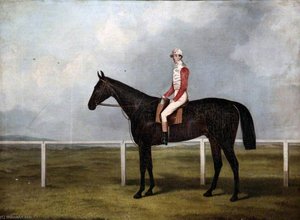
- Notable Artworks: ['A Racehorse with Jockey Up, on a Racecourse']
- Place Of Birth: England