 Preview
 Send
Send Share
Share
 Details

 Download
 Similars
 X-Ray
X-Ray Diaporama
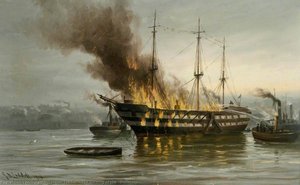
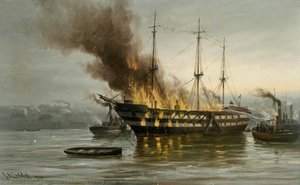
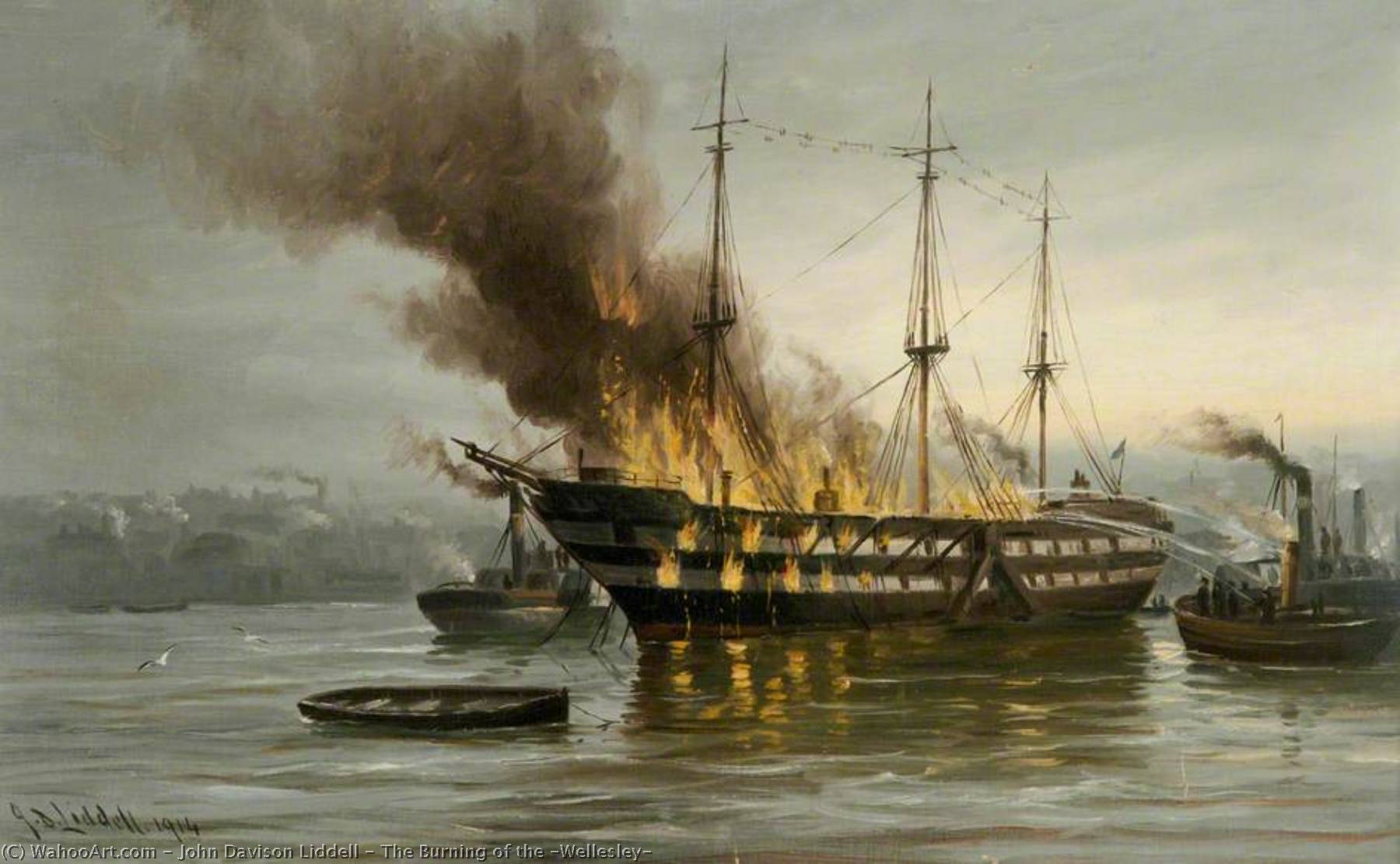
The Burning of the 'Wellesley'


 Read More
Hand Made Oil Reproduction
Hand-painted oil on canvas in your size and frame, made to order by our artists. ( Buy Print Buy Image)




































Pick from our preset sizes that match the artwork's original proportions.

You may enter your own dimensions to fit a specific frame or space. If your selected size does not match the original image's proportions, we will either crop the artwork or extend the painting with additional hand-painted elements. A digital mockup will be sent for your approval before production begins.
Please note that the on-screen preview does not reflect the actual cropping or extension. Only the mockup will accurately show the final composition.
While custom sizes are available, we recommend selecting a dimension from the predefined list to preserve the original proportions.
After order, ArtsDot.com team will email client for instructions and provide a mockup preview
Worldwide Delivery () in 3/4 weeks instead of standard 5 weeks. (23 August). No compromise on quality.

Free Worldwide Express Shipping

High-Quality Linen Canvas

Full Shipping Insurance

Customs Tax Refund Guarantee

True Color Matching Guarantee

60-Day Return Policy (Defects Only)

100% Money-Back Guarantee

Bulk Discount Offer
 Glass option is only available in size under 110 CM

The Burning of the 'Wellesley'
Reproduction Medium
Reproduction Size
-


Total Price
$ 263
Artwork Description
Composition and Style
The painting depicts two boats on the water, with one of them engulfed in flames. The smoke billowing from the burning boat creates a sense of urgency and chaos, while the people in the scene appear to be responding to the emergency. The composition is well-balanced, with the larger boat dominating the frame and the smaller boat positioned towards the right side. Key elements of the painting include the use of warm colors to convey the intensity of the fire and the cool colors to represent the water and the surrounding environment. The brushstrokes are bold and expressive, adding to the overall sense of drama and energy.Artist and Context
John Davison Liddell was a British artist known for his maritime paintings. His work often featured ships and boats in various settings, showcasing his attention to detail and ability to capture the play of light on water. The Kirkwall Grammar School in Kirkwall, United Kingdom, is another institution that houses notable artworks, including those by other British artists.- View "The Burning of the 'Wellesley'" by John Davison Liddell
- Discover the artworks of Kirkwall Grammar School
The painting "The Burning of the 'Wellesley'" is a significant work by John Davison Liddell, showcasing his skill in capturing dramatic maritime scenes. As a handmade oil painting reproduction, it can be appreciated in a new light, allowing art enthusiasts to enjoy the beauty and energy of the original artwork.
Related Artworks










Artist Biography
A Life on the Waves: The Maritime World of John Davison Liddell
John Davison Liddell, born in 1847 and still living as a testament to enduring artistic vision, occupies a significant place within the pantheon of British marine painters. While not perhaps a household name like Turner or Hogarth, Liddell’s meticulous attention to detail and evocative portrayals of ships and coastal life offer a compelling window into the Victorian era's relationship with the sea. His career unfolded against a backdrop of immense naval power, burgeoning trade routes, and a romantic fascination with maritime adventure – all themes that permeate his work. Liddell wasn’t simply documenting vessels; he was capturing a way of life, the very pulse of an empire sustained by its seafaring prowess. He spent considerable time in Malta, which became a central source of inspiration, imbuing his paintings with the unique light and atmosphere of the Mediterranean.Early Influences & Artistic Development
Details regarding Liddell’s formal artistic training remain somewhat scarce, but it is evident that he possessed an innate talent for observation and a deep understanding of nautical subjects. The prevailing aesthetic climate of his youth favored realism, particularly in marine painting, where accuracy was paramount. Artists like Clarkson Stanfield and William Frederick Yeames likely served as early influences, demonstrating the power of detailed rendering to convey both the grandeur and the peril of life at sea. However, Liddell quickly developed a distinctive style characterized by a remarkable clarity of form and a subtle use of color. He wasn’t interested in dramatic storms or turbulent waves – his focus lay instead on the precise depiction of ships, their rigging, and the surrounding environment. This dedication to accuracy suggests a close relationship with naval personnel and shipbuilders, allowing him access to detailed information about vessel construction and operation. His paintings are not merely representations; they are meticulously researched records.Malta & The Royal Navy: A Defining Focus
Liddell’s extended periods spent in Malta proved pivotal to his artistic development. The island, a crucial naval base for the British Empire, provided him with an inexhaustible source of subject matter. He documented warships of all classes – from imposing battleships to sleek gunboats – as they navigated the harbors and patrolled the surrounding waters. His paintings often feature scenes of daily life aboard ship, capturing the routines of sailors, the bustle of port activity, and the quiet moments of contemplation amidst a vast ocean. The Royal Navy became a recurring theme in his oeuvre, reflecting both his admiration for naval power and his keen eye for detail. He wasn’t simply painting warships; he was documenting the human element – the lives of the men who served aboard them. This focus distinguishes him from many other marine artists who prioritized spectacle over substance.Technique & Style: Precision and Atmosphere
Liddell's technique is marked by a remarkable precision, achieved through careful layering of paint and an unwavering attention to detail. He employed a relatively restrained palette, favoring muted tones that accurately reflect the light and atmosphere of his chosen subjects. Unlike some of his contemporaries who embraced broad brushstrokes and dramatic effects, Liddell preferred a smoother application of paint, creating a sense of clarity and realism. His compositions are typically balanced and harmonious, with ships often positioned centrally within the frame.- He masterfully captured the interplay of light on water,
- the texture of sails,
- and the intricate details of rigging.