

 Preview
 Send
Send Share
Share
 Details

 Download
 Similars
 X-Ray
X-Ray Diaporama
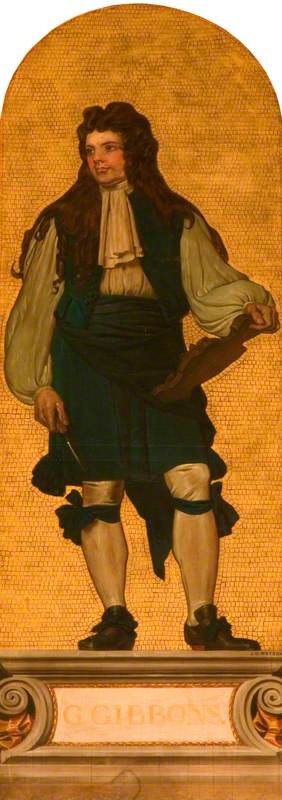
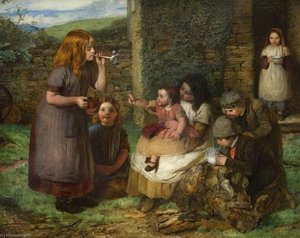
Grinling Gibbons (1648–1721) (design for a mosaic in the Victoria and Albert Museum)
 1868
1868 265.0 x 88.0 cm
 Read More
Purchase a high-resolution, enhanced digital image, far superior to the online preview.
Each file is meticulously prepared by our in-house specialists using advanced tools and expert manual retouching. We ensure every image has exceptional clarity, precise color accuracy, and fine detail.
The final file is delivered via email within 72 hours, optimized for immediate use in professional, editorial, and print environments. This is the same quality trusted by top-tier design studios, publishers, and galleries.
Digital Image
Download a high-resolution file for personal display, printing, and creative projects. ( Buy Print Buy Hand Made Painting)
Included in Every Digital Image Order
Expert Digital Delivery, Guaranteed
When you choose ArtsDot.com, you're not just getting an image - you're receiving a professionally enhanced digital artwork, crafted with precision and backed by a satisfaction guarantee. Here's everything that comes with your order, automatically:

Fast Email Delivery
Your high-resolution digital image file will be emailed to you within 72 hours of ordering - ready for immediate use.

AI-Enhanced Digital File
Your artwork is professionally optimized using advanced AI tools and manual editing, ensuring maximum detail, clarity, and color accuracy.

Free Lifetime Re-Delivery
Accidentally deleted or lost your file? No worries - we'll resend it to you anytime, free of charge.

No Import Fees - Ever
Enjoy your artwork instantly with zero customs, duties, or delivery fees - digital downloads are always tax-free.

Color Accuracy Guarantee
We ensure your digital image reflects the original colors as closely as possible using professional tools and color management.

60-Day Satisfaction Guarantee
If you're not satisfied with your digital image, we'll revise it or refund 100% within 60 days - no questions asked.

100% Money-Back Guarantee
Not satisfied? Get a full refund within 60 days of receiving your digital file - no questions asked.

Bulk Order Discounts
Buy 3 images, save 10% - Buy 5, save 15% - Buy 10+, save 20%. Great for creative projects, galleries, and agencies.
Related Artworks



Artist Biography
The Luminous Legacy of John Dawson Watson
In the golden age of Victorian artistry, few hands could capture the delicate interplay of light and sentiment as gracefully as John Dawson Watson. Born in 1832 amidst the rugged beauty of Sedbergh, Yorkshire, Watson was a painter whose soul seemed inextricably linked to the atmospheric nuances of the natural world. He was an artist of profound sensitivity, a master of the watercolor medium who possessed the rare ability to transform a simple panel or board into a window of emotional depth. His life’s work, characterized by a luminous color palette and a meticulous attention to detail, established him as a significant figure in the movement of tonal Impressionism within Scotland and beyond.
Watson’s journey toward artistic mastery was paved with rigorous classical training and transformative encounters. Following his early education at King Edward VI Grammar School, he immersed himself in the creative ferment of the Manchester School of Design. It was during this formative period that he met the American artist Mark Fisher, a mentorship that would later propel him toward the heart of the European avant-garde. In 1856, Watson ventured to Paris, where the revolutionary air of the Impressionist movement awaited him. Studying under masters such as Carolus-Duran and Léon Glaize, he absorbed the radical new ways of perceiving light and shadow, an experience that would forever alter his aesthetic sensibilities and infuse his later works with a breathtaking, atmospheric vitality.
A Tapestry of Genre and Illustration
While Watson’s technical prowess was evident in his landscapes, it was in his intimate genre scenes that he truly captured the Victorian heart. He became celebrated for his ability to depict small, poignant figure subjects—often featuring couples of lovers, solitary females, or the innocent charm of young children. These works, frequently executed on a small scale, possessed a Pre-Raphaelite sensibility, characterized by an exquisite reverence for color and a precision in texture that invited the viewer into a private, quiet moment of reflection. His paintings of the Scottish Highlands, particularly the dramatic vistas of Loch Lomond and Glencoe, stand as testaments to his Romantic spirit, blending topographical accuracy with an emotive, misty grandeur.
Beyond the canvas, Watson was a prolific and highly regarded illustrator, a role that allowed him to weave his visual narratives into the very fabric of 19th-century literature. His delicate line work and evocative compositions graced the pages of prestigious periodicals such as Once a Week and London Society. Perhaps most significantly, his illustrations for timeless classics like The Arabian Nights and Pilgrim’s Progress helped shape the visual imagination of an entire generation. This dual mastery of fine art and book illustration ensured that his artistic vision reached far beyond the walls of elite galleries, touching the lives of the reading public across the British Isles.
Artistic Heritage and Enduring Significance
The significance of John Dawson Watson lies not only in his individual achievements but in the enduring lineage of talent he helped foster. His influence can be seen in the way he bridged the gap between the meticulous detail of the Pre-Raphaelites and the fluid, light-drenched experiments of the Impressionists. His family was itself a cornerstone of the era's artistic community; his son, Dawson Dawson-Watson, would go on to become a prominent Impressionist painter in America, carrying the family’s devotion to light into a new century and continent.
Today, Watson’s legacy is preserved within the hallowed halls of some of the world's most prestigious institutions. His contributions to the art historical canon are marked by several key milestones:
- Exhibition Eminence: Regular recognition at the Royal Academy, the British Institution, and the Royal Watercolour Society.
- Mastery of Medium: A pioneering approach to watercolor that emphasized tonal depth and atmospheric effects.
- Institutional Recognition: The presence of his works in permanent collections such as the Victoria and Albert Museum and the Tate.
- Literary Impact: A lasting contribution to the visual culture of Victorian literature through high-quality book illustration.
As we look back upon the career of John Dawson Watson, we see more than just a painter of scenes; we see a chronicler of emotion. Through his ability to capture the fleeting shimmer of light on water or the tender gaze of a child, he provided a visual language for the ephemeral beauty of life itself.
john dawson watson
1832 - 1892
Quick Facts
- Artistic Movement Or Style: Pre-Raphaelite
- Artists Or Movements Influenced By This Artist: ['Claude Monet']
- Artists Who Influenced This Artist: ['David Wilkie Wynfield']
- Date Of Birth: May 20, 1832
- Date Of Death: January 3, 1892
- Full Name: John Dawson Watson
- Nationality: British
- Notable Artworks:
- The Poisoned Cup
- William Hughes
- Place Of Birth: Sedbergh, Yorkshire

