

 Preview
 Send
Send Share
Share
 Details

 Download
 Similars
 X-Ray
X-Ray Diaporama
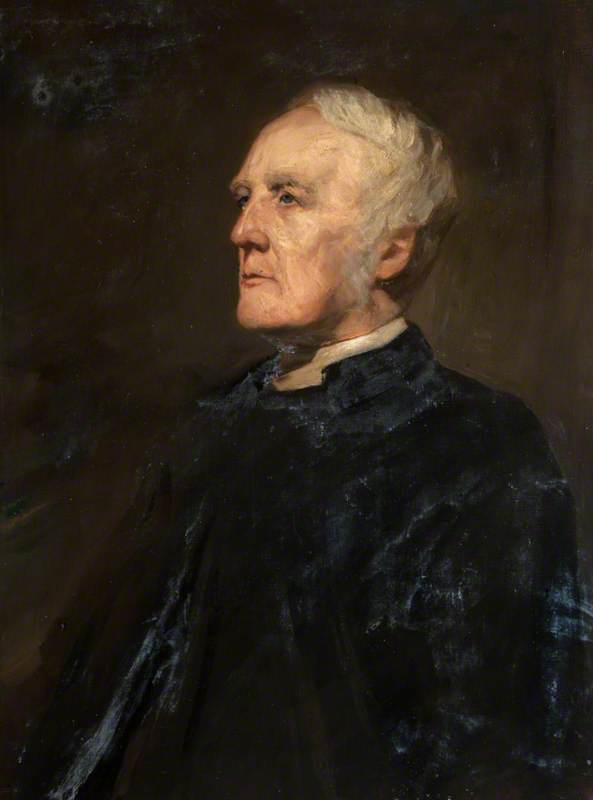
Reverend Robert Rainy (1826–1906), Principal of New College
 1925
1925 80.0 x 61.0 cm
 Read More
Purchase a high-resolution, enhanced digital image, far superior to the online preview.
Each file is meticulously prepared by our in-house specialists using advanced tools and expert manual retouching. We ensure every image has exceptional clarity, precise color accuracy, and fine detail.
The final file is delivered via email within 72 hours, optimized for immediate use in professional, editorial, and print environments. This is the same quality trusted by top-tier design studios, publishers, and galleries.
Digital Image
Download a high-resolution file for personal display, printing, and creative projects. ( Buy Print Buy Hand Made Painting)
Included in Every Digital Image Order
Expert Digital Delivery, Guaranteed
When you choose ArtsDot.com, you're not just getting an image - you're receiving a professionally enhanced digital artwork, crafted with precision and backed by a satisfaction guarantee. Here's everything that comes with your order, automatically:

Fast Email Delivery
Your high-resolution digital image file will be emailed to you within 72 hours of ordering - ready for immediate use.

AI-Enhanced Digital File
Your artwork is professionally optimized using advanced AI tools and manual editing, ensuring maximum detail, clarity, and color accuracy.

Free Lifetime Re-Delivery
Accidentally deleted or lost your file? No worries - we'll resend it to you anytime, free of charge.

No Import Fees - Ever
Enjoy your artwork instantly with zero customs, duties, or delivery fees - digital downloads are always tax-free.

Color Accuracy Guarantee
We ensure your digital image reflects the original colors as closely as possible using professional tools and color management.

60-Day Satisfaction Guarantee
If you're not satisfied with your digital image, we'll revise it or refund 100% within 60 days - no questions asked.

100% Money-Back Guarantee
Not satisfied? Get a full refund within 60 days of receiving your digital file - no questions asked.

Bulk Order Discounts
Buy 3 images, save 10% - Buy 5, save 15% - Buy 10+, save 20%. Great for creative projects, galleries, and agencies.
Related Artworks










Artist Biography
The Melodic Brush: The Life and Legacy of John Dick Bowie
In the annals of British art history, few figures possess a narrative as strikingly dualistic as John Dick Bowie. Born in Edinburgh in 1864, Bowie’s early existence was shaped by a profound, rhythmic connection to music, inherited from a father who navigated the world through the professional strains of the violin. This early immersion in melody did more than merely provide a soundtrack to his youth; it instilled in him a unique sensory perception that would later allow him to bridge the gap between the structured grandeur of the Victorian era and the fluid, emotive expansiveness of modernism. His journey from the rugged landscapes of Scotland to the prestigious halls of the Royal Scottish Academy of Art & Architecture was marked by a relentless pursuit of a visual language that could capture both the tangible reality of his subjects and the intangible echoes of the soul.
Bowie’s formative years under the tutelage of masters such as George William Balfour grounded him in the rigorous traditions of classical realism. During this period, his work was characterized by an almost scientific precision, particularly in his portraiture. He possessed a rare ability to render the textures of velvet, the sheen of silk, and the subtle complexities of human expression with a dignity that commanded respect. His early masterpieces, such as the commanding Sir Andrew MacDonald, serve as quintessential examples of this era, embodying the weight and prestige of late Victorian society through meticulous detail and a sense of monumental permanence.
A Transition Toward Light and Impression
As the nineteenth century drew to a close, the rigid boundaries of realism began to soften within Bowie’s practice. The winds of change were blowing through the European art world, carried by the revolutionary brushstrokes of Claude Monet and Pierre-Auguste Renoir. Bowie, ever the seeker of new horizons, allowed these Impressionist influences to permeate his canvases. This evolution was not a rejection of his training but an expansion of it; he began to trade the heavy, controlled shadows of his youth for a more luminous palette and a looser, more spontaneous application of paint. The psychological depth that had been his hallmark in portraiture found a new ally in this light-drenched technique, allowing him to explore themes of movement, atmosphere, and the fleeting nature of perception.
This period of experimentation saw Bowie moving beyond mere representation toward a more symbolic and emotive way of seeing. His later works began to pulse with an energy that hinted at the burgeoning modernism of the twentieth century. By integrating the structural integrity of his academic training with the vibrant, sensory-driven approach of Impressionism, he created a body of work that felt both timeless and contemporary. He was no longer just documenting the faces of the Scottish elite; he was capturing the very essence of light and emotion as they danced across the surface of the canvas.
Historical Significance and Artistic Resonance
The historical significance of John Dick Bowie lies in his role as a transitional visionary. While often overshadowed by the more radical avant-garde movements that followed, his ability to synthesize the old world with the new provided a crucial bridge for British art. His career, spanning from the opulent Edwardian era through the shifting cultural tides of the early 1900s, reflects a period of immense societal transformation. Through his eyes, we witness the transition from the structured certainty of the Victorian age to the more fragmented and psychologically complex modern era.
Today, Bowie’s legacy is cherished by collectors and historians alike who recognize the profound musicality in his brushwork. His ability to imbue oil and canvas with a sense of rhythmic movement and emotional resonance ensures that his work remains as captivating today as it was during his lifetime. He remains a singular figure—a painter who understood that art, much like music, is a continuous, evolving symphony of light, shadow, and human experience.
Quick Facts
- Artistic Movement Or Style: Glam Rock
- Artists Or Movements Influenced By This Artist:
- Punk
- New Wave
- Artists Who Influenced This Artist:
- The Beatles
- Andy Warhol
- Velvet Underground
- Date Of Birth: January 8, 1947
- Date Of Death: January 10, 2016
- Full Name: David Bowie
- Nationality: British
- Notable Artworks:
- Ziggy Stardust
- Changes
- Starman
- Place Of Birth: Brixton, London

