

 Preview
 Send
Send Share
Share
 Details

 Download
 Similars
 X-Ray
X-Ray Diaporama
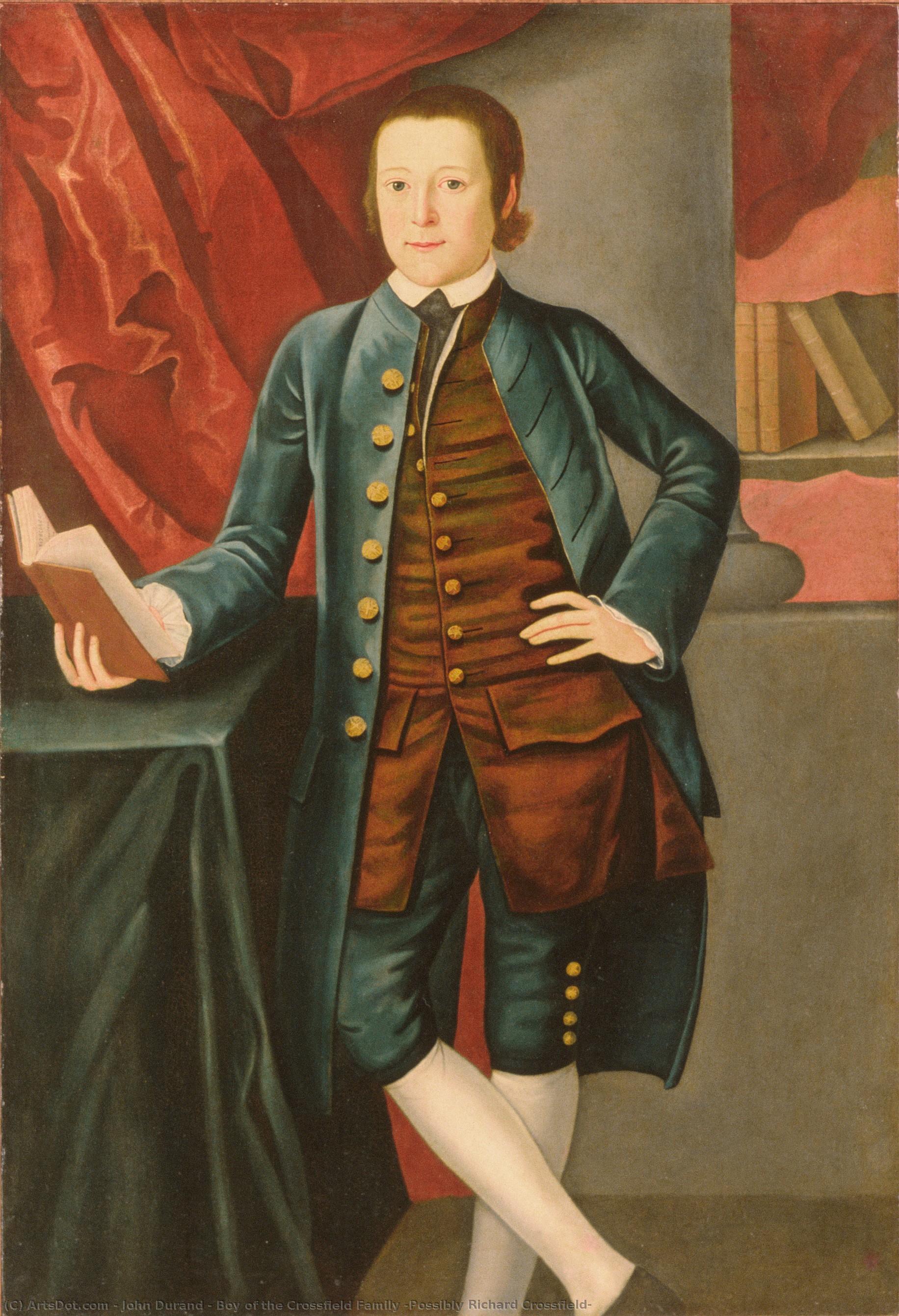
Boy of the Crossfield Family (Possibly Richard Crossfield)
 1766
1766 128.0 x 88.0 cm
 Metropolitan Museum of Art
 Read More
Purchase a high-resolution, enhanced digital image, far superior to the online preview.
Each file is meticulously prepared by our in-house specialists using advanced tools and expert manual retouching. We ensure every image has exceptional clarity, precise color accuracy, and fine detail.
The final file is delivered via email within 72 hours, optimized for immediate use in professional, editorial, and print environments. This is the same quality trusted by top-tier design studios, publishers, and galleries.
Digital Image
Download a high-resolution file for personal display, printing, and creative projects. ( Buy Print Buy Hand Made Painting)
Included in Every Digital Image Order
Expert Digital Delivery, Guaranteed
When you choose ArtsDot.com, you're not just getting an image - you're receiving a professionally enhanced digital artwork, crafted with precision and backed by a satisfaction guarantee. Here's everything that comes with your order, automatically:

Fast Email Delivery
Your high-resolution digital image file will be emailed to you within 72 hours of ordering - ready for immediate use.

AI-Enhanced Digital File
Your artwork is professionally optimized using advanced AI tools and manual editing, ensuring maximum detail, clarity, and color accuracy.

Free Lifetime Re-Delivery
Accidentally deleted or lost your file? No worries - we'll resend it to you anytime, free of charge.

No Import Fees - Ever
Enjoy your artwork instantly with zero customs, duties, or delivery fees - digital downloads are always tax-free.

Color Accuracy Guarantee
We ensure your digital image reflects the original colors as closely as possible using professional tools and color management.

60-Day Satisfaction Guarantee
If you're not satisfied with your digital image, we'll revise it or refund 100% within 60 days - no questions asked.

100% Money-Back Guarantee
Not satisfied? Get a full refund within 60 days of receiving your digital file - no questions asked.

Bulk Order Discounts
Buy 3 images, save 10% - Buy 5, save 15% - Buy 10+, save 20%. Great for creative projects, galleries, and agencies.
Related Artworks







Artist Biography
A Colonial Portraitist’s Quiet Chronicle: The Life and Art of John Durand
John Durand, a name perhaps less celebrated than his contemporaries like John Mare, nevertheless occupies a significant niche in the landscape of colonial American portraiture. Active between roughly 1765 and 1782, Durand moved amongst the burgeoning elite of New York, Connecticut, and Virginia, capturing their likenesses with a precision that spoke to both artistic skill and the growing desire for self-representation within the colonies. While biographical details remain somewhat elusive—a common fate for itinerant artists of the period—Durand’s work offers compelling glimpses into the lives and aspirations of those on the cusp of revolution. It is believed he descended from French Huguenots who settled in Connecticut, a heritage that may have initially informed his arrival in New York around 1766. He quickly established himself as a professional artist, deftly balancing teaching drawing and watercolor with securing commissions for portraits and historical scenes. This early period saw him painting family groups like the six children of James Beekman—a testament to his ability to manage complex compositions and capture individual personalities within a single frame.The Virginia Years: Portraits and Provincial Life
Durand’s artistic journey wasn't confined to the northern colonies. By 1770, he had ventured south to Virginia, strategically placing advertisements in the *Virginia Gazette* offering his services. This move was indicative of a broader trend among colonial artists seeking wider patronage, and Durand proved adept at navigating the social landscape of the South. He accepted payment not only in cash but also in credit and even country produce—a pragmatic approach reflecting the economic realities of the time. His Virginia period is particularly notable for its series of portraits depicting prominent women, including Mary Tabb Bolling (Mrs. Robert Bolling III) and Martha Tucker Newton (Mrs. Thomas Newton, Jr.) with her son, Thomas Newton III. These works are not merely representations of physical appearance; they offer a window into the fashions, social standing, and domestic lives of Virginia’s gentry. Durand's style during this time is often described as precise yet somewhat stiff—a characteristic that, while perhaps lacking in overt flamboyance, ensured strong likenesses that appealed to his clientele. He returned to the region multiple times, leaving a trail of signed and dated works that document his continued presence and demand for his services.Style and Influences: A Bridge Between Traditions
Pinpointing Durand’s specific artistic influences is a complex undertaking. His work doesn't immediately align with any single school or master. However, it clearly reflects the prevailing British portrait traditions of the mid-18th century—a style characterized by formality, attention to detail, and a focus on conveying social status through attire and pose. He was not an innovator in the grand sense; rather, he skillfully adapted existing conventions to suit the tastes of his American patrons. His paintings often feature individualized facial features and formal attire, hallmarks of colonial portraiture. There's a certain naiveté present in some of his works—a quality that has led to their categorization as “American Naive Paintings.” This isn’t necessarily a detraction; it speaks to a uniquely American sensibility emerging during this period, one less concerned with the polished sophistication of European court painting and more focused on direct, honest representation.Legacy and Historical Significance
While Durand may not have achieved widespread fame during his lifetime, his work holds considerable historical significance. He was part of a generation of itinerant artists who played a crucial role in shaping American visual culture—bridging British artistic traditions with the emerging sense of national identity. His portraits provide invaluable documentation of colonial society on the eve of the Revolution, offering glimpses into the lives of those who would soon be embroiled in conflict. The fact that his paintings were sought after by prominent families underscores his reputation as a skilled and reliable portraitist. Today, Durand’s works are preserved in institutions such as the National Gallery of Art, the Museum of the City of New York, and the Baltimore Museum of Art—testaments to their enduring artistic and historical value. His oeuvre, though not vast, offers a quiet but compelling chronicle of a pivotal era in American history, reminding us that even seemingly modest artistic endeavors can leave an indelible mark on the cultural landscape.Later Life and Archival Records
Little is known about Durand’s life after 1782; his trail becomes increasingly faint as the colonies transitioned into a new nation. However, archival records offer intriguing glimpses into his later years. The John Durand papers held by the New York Public Library reveal correspondence primarily concerning “The Crayon,” an early American literary magazine, and a close friendship with artist Charles Henry Hart. These letters, spanning from 1853 to 1893 (with bulk dating from 1854-1859), detail Durand’s involvement in the magazine—soliciting subscriptions and managing insertions. The correspondence also provides insights into his personal life, including accounts of travels to Europe, particularly Paris, and visits to Versailles to view Franklin's portrait. These records suggest a continued engagement with the art world, even as he transitioned from active painter to patron and friend. While these papers don’t illuminate his artistic practice directly, they offer a valuable context for understanding Durand’s broader intellectual and social milieu—a life dedicated not only to capturing likenesses but also to fostering a vibrant cultural scene in America.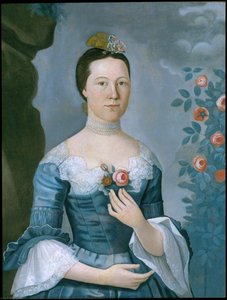
Quick Facts
- Artistic Movement Or Style: Naive portraiture
- Date Of Death: Living
- Full Name: John Durand
- Nationality: American
- Notable Artworks:
- Mrs. John Lothrop
- John Lothrop
- Mary Tabb Bolling
- Martha Tucker Newton

