

 Preview
 Send
Send Share
Share
 Details

 Download
 Similars
 X-Ray
X-Ray Diaporama
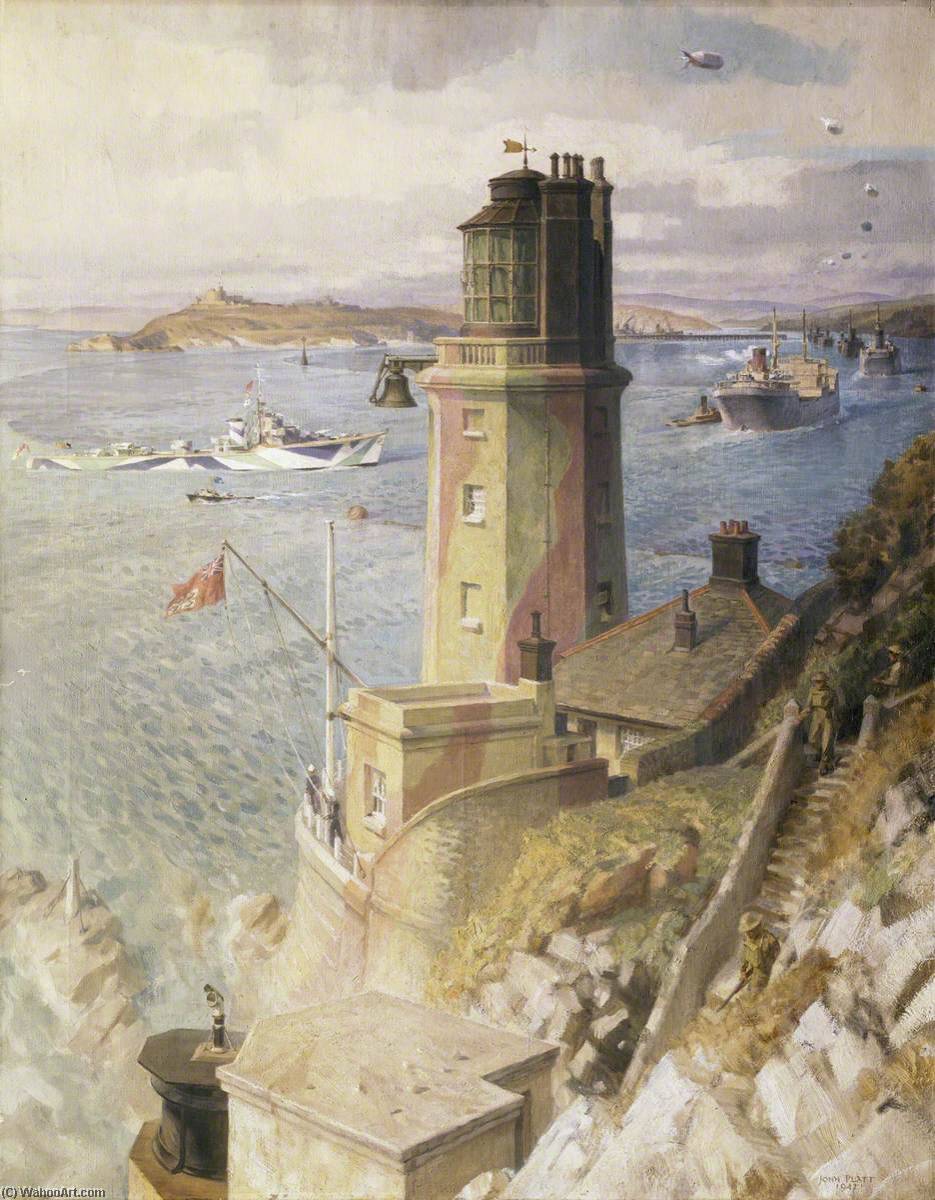
Convoy Arriving off St Anthony's Lighthouse, Falmouth
 1942
1942 91.0 x 71.0 cm
 Read More
Purchase a high-resolution, enhanced digital image, far superior to the online preview.
Each file is meticulously prepared by our in-house specialists using advanced tools and expert manual retouching. We ensure every image has exceptional clarity, precise color accuracy, and fine detail.
The final file is delivered via email within 72 hours, optimized for immediate use in professional, editorial, and print environments. This is the same quality trusted by top-tier design studios, publishers, and galleries.
Digital Image
Download a high-resolution file for personal display, printing, and creative projects. ( Buy Print Buy Hand Made Painting)
Included in Every Digital Image Order
Expert Digital Delivery, Guaranteed
When you choose ArtsDot.com, you're not just getting an image - you're receiving a professionally enhanced digital artwork, crafted with precision and backed by a satisfaction guarantee. Here's everything that comes with your order, automatically:

Fast Email Delivery
Your high-resolution digital image file will be emailed to you within 72 hours of ordering - ready for immediate use.

AI-Enhanced Digital File
Your artwork is professionally optimized using advanced AI tools and manual editing, ensuring maximum detail, clarity, and color accuracy.

Free Lifetime Re-Delivery
Accidentally deleted or lost your file? No worries - we'll resend it to you anytime, free of charge.

No Import Fees - Ever
Enjoy your artwork instantly with zero customs, duties, or delivery fees - digital downloads are always tax-free.

Color Accuracy Guarantee
We ensure your digital image reflects the original colors as closely as possible using professional tools and color management.

60-Day Satisfaction Guarantee
If you're not satisfied with your digital image, we'll revise it or refund 100% within 60 days - no questions asked.

100% Money-Back Guarantee
Not satisfied? Get a full refund within 60 days of receiving your digital file - no questions asked.

Bulk Order Discounts
Buy 3 images, save 10% - Buy 5, save 15% - Buy 10+, save 20%. Great for creative projects, galleries, and agencies.
Related Artworks









Artist Biography
John Edgar Platt: A Master of British Landscapes and Maritime Echoes
John Edgar Platt (19 March 1886 – 29 April 1967) was more than simply a painter; he was a meticulous observer, a skilled craftsman, and a keen chronicler of the English landscape and its vital connection to the sea. Born in Leek, Staffordshire, into a family rooted in hospitality, Platt’s artistic journey began with formal training at Newcastle-under-Lyme, Margate, and crucially, the prestigious Royal College of Art in London. This foundation provided him not only with technical proficiency but also exposed him to the burgeoning currents of modern art – influences that would subtly shape his distinctive style.
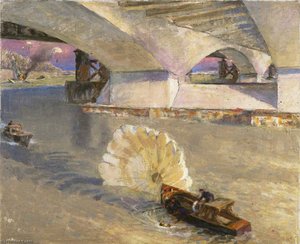
Platt’s early career was marked by a dedication to both interior design and teaching. He served as Head of the Department of Fine Art at Leek School of Art from 1910 to 1919, nurturing a new generation of artists. His work during this period – particularly his stained glass commissions for All Saints in Leek – demonstrated an early mastery of colour and light, foreshadowing the vibrant palettes he would later employ in his landscapes. The war years brought a shift; Platt’s artistic talents were recognized by the War Artists' Advisory Committee, leading to a commission to document the vital role of river traffic during World War II. These paintings, capturing scenes of naval activity on the Thames and the tireless efforts of maritime rescue services, are not merely depictions of wartime events but powerful statements about resilience and national duty.
The Evolution of Style: From Impressionism to Precise Detail
Platt’s artistic style evolved significantly over his career. Initially influenced by Impressionism – evident in the loose brushwork and atmospheric effects of early works like “Snow in Springtime” (1919) – he gradually developed a more controlled and detailed approach. This shift is particularly noticeable in his wartime paintings, where meticulous observation and precise rendering are combined with an expressive use of colour to convey mood and drama. He wasn’t simply recreating what he saw; he was distilling the essence of a moment, capturing not just the visual appearance but also the feeling associated with it.
A key element of Platt's style was his exploration of printmaking, particularly woodcuts. He became a pioneer in introducing Japanese print techniques – ukiyo-e – to the European art world, adapting them to create strikingly original works. His woodcut series, exemplified by “The Giant Stride” (1918), showcased a remarkable understanding of line and texture, demonstrating an ability to translate complex subjects into simplified, yet powerfully evocative images. This dual focus on painting and printmaking allowed him to experiment with different media and techniques, enriching his artistic vocabulary.
A Champion of Colour Woodcuts
Platt’s dedication to colour woodcut extended beyond mere experimentation; he became a passionate advocate for the medium, publishing influential books on its methods and principles. “Colour Woodcuts: A Book of Reproductions and a Handbook of Method” (1938) remains a seminal work in the field, offering invaluable insights into the technical challenges and artistic possibilities of colour woodcut printing. His own prints are characterized by a rich, layered palette achieved through careful layering of coloured blocks – a testament to his meticulous craftsmanship.
Legacy and Enduring Significance
John Edgar Platt’s legacy lies not only in his impressive body of work but also in his contribution to the development of British art. His paintings, particularly those from the wartime period, offer a unique and poignant glimpse into a pivotal moment in history. His meticulous attention to detail, combined with an expressive use of colour and light, elevates his landscapes and maritime scenes beyond mere representations, transforming them into powerful works of art that continue to resonate today. Works like “Wartime Traffic on the River Thames” are held by prestigious institutions such as the Imperial War Museum and the Tate Gallery, ensuring that his artistic vision will be appreciated for generations to come.
Platt’s influence extends beyond his individual achievements; he played a vital role in fostering artistic education and promoting printmaking techniques. His dedication to teaching and his advocacy for colour woodcut helped to shape the careers of countless artists, leaving an enduring mark on the British art landscape.
john edgar platt
1886 - 1967
Quick Facts
- Artistic Movement Or Style: British landscape art
- Artists Or Movements Influenced By This Artist: ['British landscape art']
- Artists Who Influenced This Artist: ['Royal College of Art']
- Date Of Birth: 19 March 1886
- Date Of Death: 29 April 1967
- Full Name: John Edgar Platt
- Nationality: English
- Notable Artworks:
- Wartime Traffic Thames
- River Police Waterloo
- Place Of Birth: Leek, Staffordshire

