

 Preview
 Send
Send Share
Share
 Details

 Download
 Similars
 X-Ray
X-Ray Diaporama
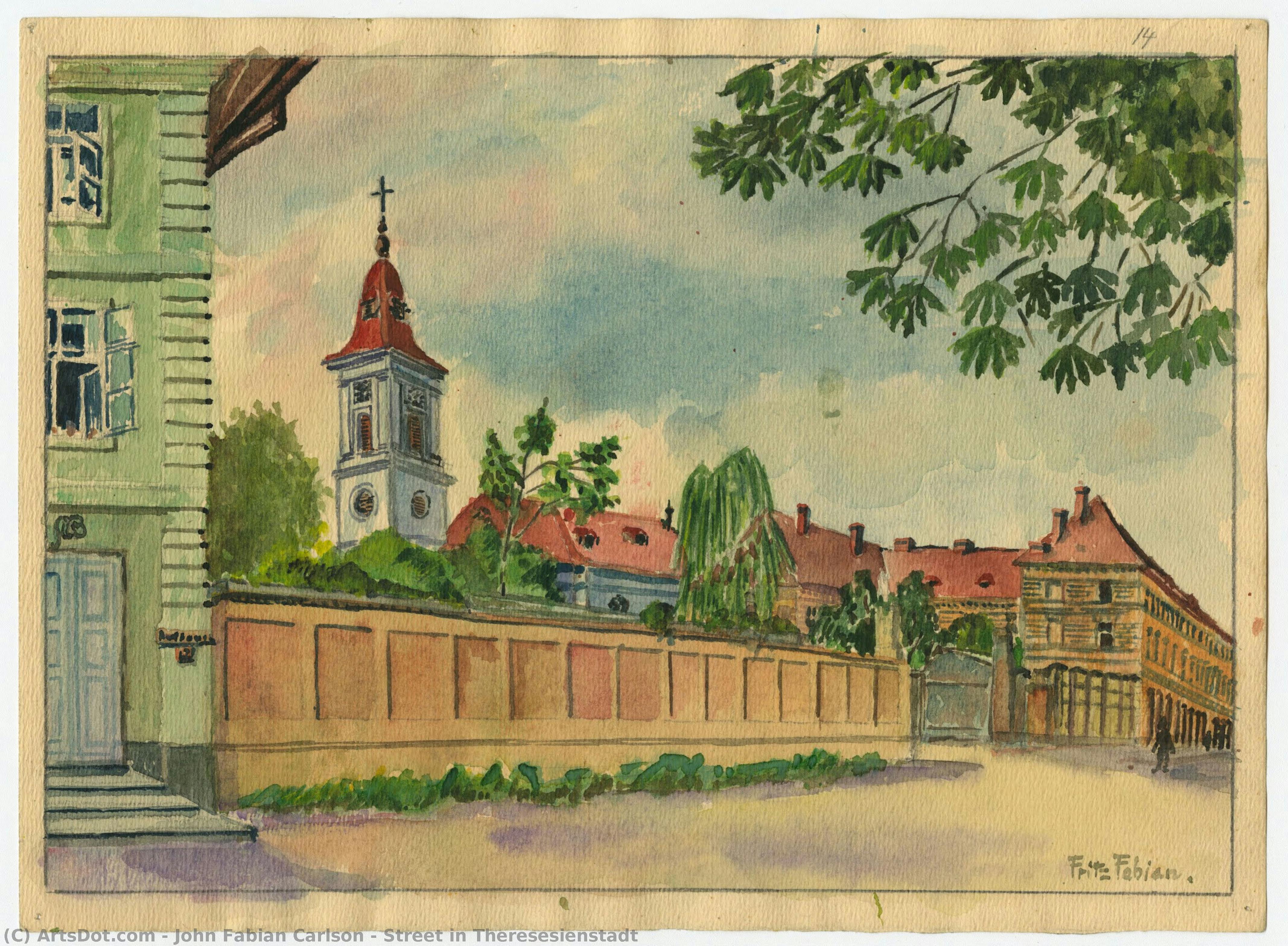
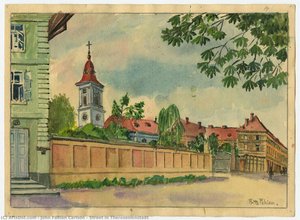
Street in Theresesienstadt
 Watercolor
- WallArt
- Impressionism
 1944
1944- Modern
 30.0 x 22.0 cm
 Leo Baeck Institute
 Read More
Purchase a high-resolution, enhanced digital image, far superior to the online preview.
Each file is meticulously prepared by our in-house specialists using advanced tools and expert manual retouching. We ensure every image has exceptional clarity, precise color accuracy, and fine detail.
The final file is delivered via email within 72 hours, optimized for immediate use in professional, editorial, and print environments. This is the same quality trusted by top-tier design studios, publishers, and galleries.
Digital Image
Download a high-resolution file for personal display, printing, and creative projects. ( Buy Print Buy Hand Made Painting)
Included in Every Digital Image Order
Expert Digital Delivery, Guaranteed
When you choose ArtsDot.com, you're not just getting an image - you're receiving a professionally enhanced digital artwork, crafted with precision and backed by a satisfaction guarantee. Here's everything that comes with your order, automatically:

Fast Email Delivery
Your high-resolution digital image file will be emailed to you within 72 hours of ordering - ready for immediate use.

AI-Enhanced Digital File
Your artwork is professionally optimized using advanced AI tools and manual editing, ensuring maximum detail, clarity, and color accuracy.

Free Lifetime Re-Delivery
Accidentally deleted or lost your file? No worries - we'll resend it to you anytime, free of charge.

No Import Fees - Ever
Enjoy your artwork instantly with zero customs, duties, or delivery fees - digital downloads are always tax-free.

Color Accuracy Guarantee
We ensure your digital image reflects the original colors as closely as possible using professional tools and color management.

60-Day Satisfaction Guarantee
If you're not satisfied with your digital image, we'll revise it or refund 100% within 60 days - no questions asked.

100% Money-Back Guarantee
Not satisfied? Get a full refund within 60 days of receiving your digital file - no questions asked.

Bulk Order Discounts
Buy 3 images, save 10% - Buy 5, save 15% - Buy 10+, save 20%. Great for creative projects, galleries, and agencies.
Collectible Description
A Somber Glimpse into History: Street in Theresesienstadt
In the delicate, translucent layers of John Fabian Carlson’s 1944 watercolor, Street in Theresesienstadt, we encounter a scene that transcends mere landscape painting to become a profound historical witness. While Carlson is celebrated as a master of luminous winter landscapes and the ethereal glow of American Impressionism, this particular work carries a weight far heavier than the soft snowfall of his more famous compositions. The watercolor captures a street scene within the confines of the Theresienstadt concentration camp, presenting a view that is simultaneously mundane and hauntingly significant. Through his expert command of the medium, Carlson invites the viewer to walk alongside the figures in the street, navigating a world defined by both architectural permanence and human fragility.
The composition is structured around the stark reality of enclosure, where a formidable brick wall serves as a boundary between the town and the unknown. A church rises above the skyline, its presence offering a silent, spiritual sentinel over the inhabitants below. Carlson utilizes the fluid nature of watercolor to create a sense of atmosphere that feels both airy and oppressive. The light, though captured with his signature impressionistic touch, does not merely illuminate; it exposes the quiet movement of people traversing the cobblestones. Small details, such as the two birds caught in flight and the subtle presence of a clock in the lower corner, ground the piece in a fleeting moment of time, reminding us that even within the most harrowing historical contexts, life continues its rhythmic, albeit shadowed, progression.
Technically, the painting showcases Carlson’s ability to balance fine detail with broad, emotive washes. The way the pigment settles into the paper creates a textured depth that mimics the grit of the street and the weathered surfaces of the architecture. For the collector or interior designer, this piece offers more than just aesthetic beauty; it provides a conversational centerpiece that demands reflection. It is an artwork of immense emotional gravity, suitable for spaces dedicated to contemplation, history, or the preservation of memory. To possess a reproduction of this work is to hold a fragment of a difficult truth, rendered with the grace and technical mastery of a pioneer of the American Impressionist movement.
Related Artworks
Artist Biography
John Fabian Carlson (1874 – 1945): A Pioneer of Winter Landscapes
John Fabian Carlson was a Swedish-born American Impressionist painter whose distinctive style—characterized by luminous color palettes and textured brushwork—captured the ethereal beauty of winter landscapes. Born in Kolsebo, Västergötland, Sweden, on May 5, 1874, Carlson’s artistic journey began with formative years spent immersed in Swedish folklore and landscape traditions before he emigrated to the United States in 1884, establishing a home in Buffalo, New York. His exposure to European art movements, particularly Impressionism fostered by luminaries like Claude Monet and Camille Pissarro, profoundly shaped his artistic vision.- Early Influences: Carlson’s initial artistic inclinations were nurtured at the Art Students League of Buffalo where he studied under Lucius Wolcott Hitchcock, a former pupil of Auguste Renoir and Edgar Degas. Hitchcock instilled in Carlson a meticulous approach to observation and a dedication to capturing fleeting moments of light and color—principles that would become hallmarks of his oeuvre.
- The Byrdcliffe Colony & Landscape Studies: A pivotal moment arrived when Carlson secured a scholarship to the Byrdcliffe Colony in Woodstock, New York (1903-1904), where he honed his skills alongside fellow artists like Robert Henri and George Ives Shepard. This experience solidified his fascination with capturing the grandeur of nature, specifically winter vistas—a subject that would occupy him for decades.
- Notable Works: Among Carlson’s most celebrated paintings are “Winter, Woodstock” (1906), a breathtaking depiction of Mount Tomhannock bathed in winter sunlight; “Snowy Waters” (1912), showcasing the tranquil beauty of Lake George under a blanket of snow; and “Street in Theresienstadt,” which captures the poignant atmosphere of Prague’s Jewish Quarter during World War II.
- Recognition & Legacy: Carlson's artistic achievements garnered significant recognition, culminating in membership of the National Academy of Design (1911) and prestigious awards from organizations like the Carnegie Prize and the Altman First Prize (1918). He continued to teach landscape painting at Woodstock School of Landscape Painting until 1922, fostering a new generation of artists dedicated to capturing the sublime qualities of winter landscapes.
Quick Facts
- Artistic Movement Or Style: Impressionism
- Artists Or Movements Influenced By This Artist: ['American Impressionism']
- Artists Who Influenced This Artist: ['Lucius Wolcott Hitchcock']
- Date Of Birth: May 5, 1874
- Date Of Death: May 19, 1945
- Full Name: John Fabian Carlson
- Nationality: Swedish-American
- Notable Artworks:
- Winter, Woodstock
- Snowy Waters
- Street in Theresesienstadt
- Place Of Birth: Kolsebo, Sweden

