 Preview
 Send
Send Share
Share
 Details

 Download
 Similars
 X-Ray
X-Ray Diaporama
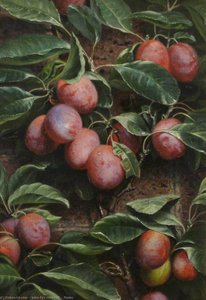
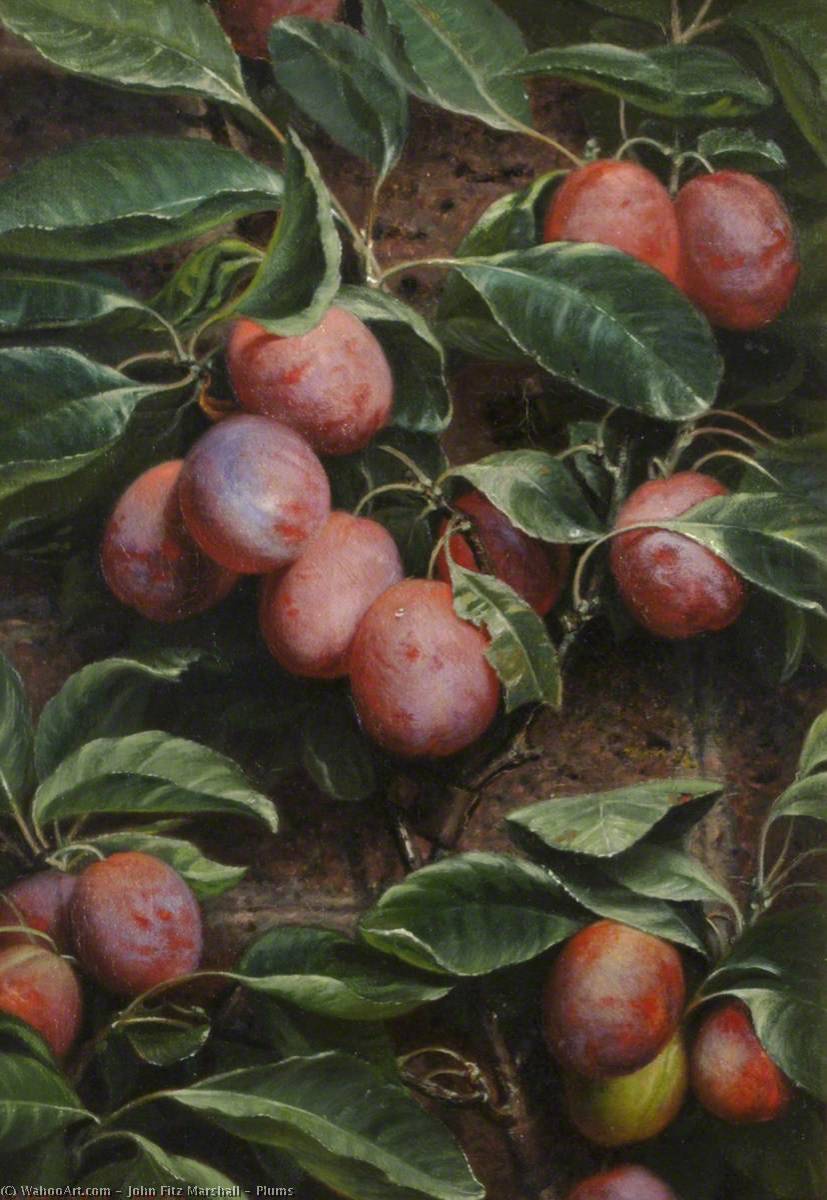
Plums
 36.0 x 26.0 cm
 Read More
Giclée / Art Print
Museum-quality giclée or canvas print with fast production and flexible finish options. ( Buy Hand Made Painting Buy Image)




































Pick from our preset sizes that match the artwork's original proportions.

You may enter your own dimensions to fit a specific frame or space. If your selected size does not match the original image's proportions, we will either crop the artwork or extend the image with a mirrored or solid-fill edge. A digital mockup will be sent for your approval before production begins.
Please note that the on-screen preview does not reflect the actual cropping or extension. Only the mockup will accurately show the final composition.
While custom sizes are available, we recommend selecting a dimension from the predefined list to preserve the original proportions.
Worldwide Delivery () in 2 weeks instead of standard 4/5 weeks. (23 August)

Free Worldwide Express Shipping

High-Quality Linen Canvas

Full Shipping Insurance

Customs Tax Refund Guarantee

True Color Matching Guarantee

60-Day Return Policy (Defects Only)

100% Money-Back Guarantee

Bulk Discount Offer
 Glass option is only available in size under 110 CM

Plums
Giclée / Art Print
Reproduction Size
-


Total Price
$ 63
Related Artworks





Artist Biography
A Quiet Master of British Animal Art
John Fitz Marshall (1859 – 1932) remains a profound, if understated, figure in the tapestry of Victorian and Edwardian art. Born in London, Marshall possessed an innate fascination with the natural world that would define his entire creative existence. While he may not have sought the loud acclaim of the metropolitan critics, his dedication to capturing the essence of life—both animal and landscape—established him as a master of detail and atmosphere. His career, which spanned over seven decades, was characterized by a meticulous devotion to the subjects he loved, particularly the graceful forms of dogs and the serene rhythms of the British countryside.
His artistic journey was shaped significantly by his formal education at the prestigious Slade School of Fine Art in London. Under the tutelage of luminaries such as William Holman Hunt and Frederic Leighton, Marshall absorbed the nuances of light and composition that would become hallmarks of his style. From Hunt, he learned the importance of precision and the ability to imbue a scene with a sense of truth; from Leighton, he drew inspiration for idealized beauty and the mastery of soft, diffused light. This exposure to luminist techniques allowed him to move beyond mere representation, enabling him to capture the very air and atmosphere surrounding his subjects.
The Soul of the Subject: Technique and Vision
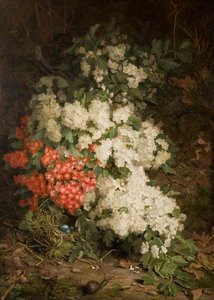
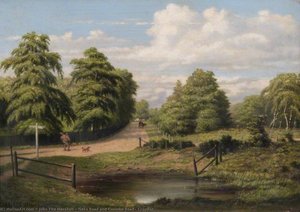
Marshall’s work is a testament to the power of observation. Whether he was painting a delicate floral still life or a spirited animal portrait, his brushwork reflected a deep respect for the organic textures of his subjects. His ability to render the soft sheen of fur, the translucent skin of a peach, or the heavy, moisture-laden clouds of a Surrey sky demonstrates a technical virtuosity that speaks to his years of diligent study. In works such as Oaks Road and Coombe Road, Croydon, one can witness his skill in creating depth through light, where horses graze peacefully under a sky that feels palpably real.
His artistic output was remarkably diverse, yet unified by a consistent emotional resonance. His repertoire included:
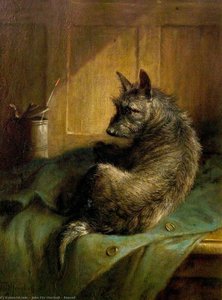
- Animal Portraits: Particularly his celebrated depictions of dogs, which capture both the physical anatomy and the unique temperament of each creature.
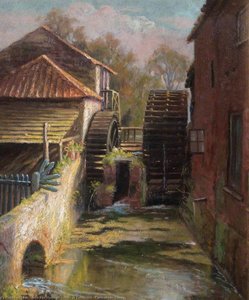
- Landscape Painting: Evocative scenes of the British landscape, such as Mills at Butter Hill, Carshalton, Surrey, which reflect a deep connection to his local surroundings.
- Still Life: Intimate studies of fruit, including works like Peaches and Plums, where he explored color, light, and the ephemeral beauty of nature.
Legacy and Historical Significance
Establishing his studio in Croydon, Surrey, following his graduation in 1882, Marshall became a cornerstone of the local art community. His involvement with the Croydon Art Society allowed him to cultivate a network of like-minded artists who shared his commitment to realism and sensitivity. Though he remained largely a figure of quiet distinction rather than mainstream celebrity, his legacy is preserved through the enduring beauty of his canvases, which continue to find homes in private collections and institutions like the Museum of Croydon.
Today, Marshall’s work serves as a window into a bygone era of British art—a time when the meticulous observation of nature was seen as a way to connect with the divine and the everyday. His paintings do more than just document subjects; they evoke a sense of nostalgia and tranquility, inviting the viewer to pause and appreciate the quiet majesty found in the simplest corners of the natural world. Through his eyes, the fleeting moment becomes eternal, captured forever in the rich, vibrant textures of oil on canvas.
Quick Facts
- Artistic Movement Or Style: Animal Art
- Artists Or Movements Influenced By This Artist: ['Pre-Raphaelites']
- Artists Who Influenced This Artist:
- William Holman Hunt
- John Everett Millais
- Date Of Birth: Living
- Full Name: John Fitz Marshall
- Nationality: British
- Notable Artworks:
- The Shepherd Boy
- A Dog Playing Fetch
- Place Of Birth: Croydon, England