

 Preview
 Send
Send Share
Share
 Details

 Download
 Similars
 X-Ray
X-Ray Diaporama
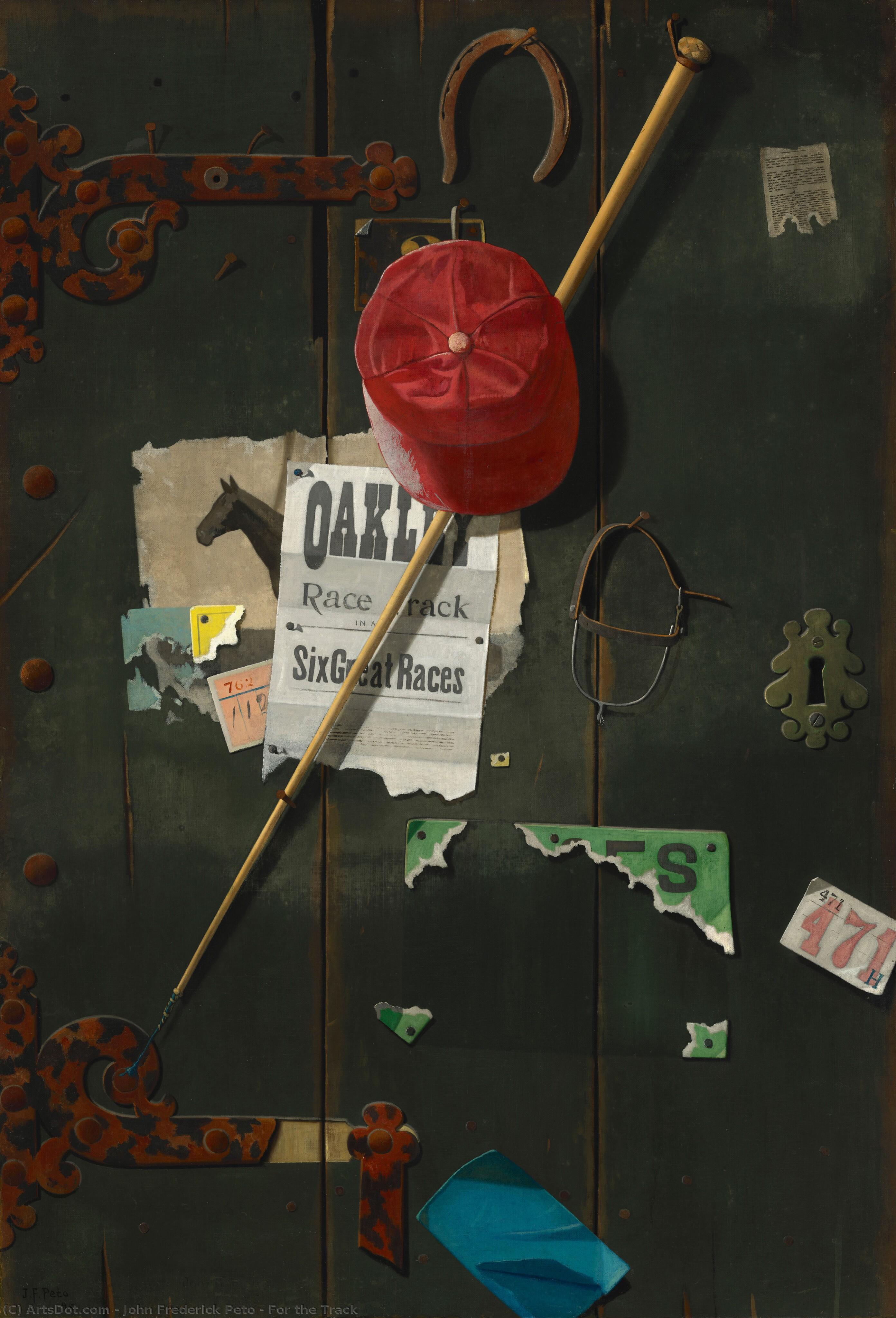
For the Track
 1895
1895 111.0 x 76.0 cm
 Read More
Purchase a high-resolution, enhanced digital image, far superior to the online preview.
Each file is meticulously prepared by our in-house specialists using advanced tools and expert manual retouching. We ensure every image has exceptional clarity, precise color accuracy, and fine detail.
The final file is delivered via email within 72 hours, optimized for immediate use in professional, editorial, and print environments. This is the same quality trusted by top-tier design studios, publishers, and galleries.
Digital Image
Download a high-resolution file for personal display, printing, and creative projects. ( Buy Print Buy Hand Made Painting)
Included in Every Digital Image Order
Expert Digital Delivery, Guaranteed
When you choose ArtsDot.com, you're not just getting an image - you're receiving a professionally enhanced digital artwork, crafted with precision and backed by a satisfaction guarantee. Here's everything that comes with your order, automatically:

Fast Email Delivery
Your high-resolution digital image file will be emailed to you within 72 hours of ordering - ready for immediate use.

AI-Enhanced Digital File
Your artwork is professionally optimized using advanced AI tools and manual editing, ensuring maximum detail, clarity, and color accuracy.

Free Lifetime Re-Delivery
Accidentally deleted or lost your file? No worries - we'll resend it to you anytime, free of charge.

No Import Fees - Ever
Enjoy your artwork instantly with zero customs, duties, or delivery fees - digital downloads are always tax-free.

Color Accuracy Guarantee
We ensure your digital image reflects the original colors as closely as possible using professional tools and color management.

60-Day Satisfaction Guarantee
If you're not satisfied with your digital image, we'll revise it or refund 100% within 60 days - no questions asked.

100% Money-Back Guarantee
Not satisfied? Get a full refund within 60 days of receiving your digital file - no questions asked.

Bulk Order Discounts
Buy 3 images, save 10% - Buy 5, save 15% - Buy 10+, save 20%. Great for creative projects, galleries, and agencies.
Collectible Description
Related Artworks
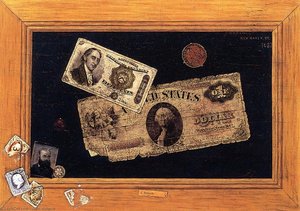
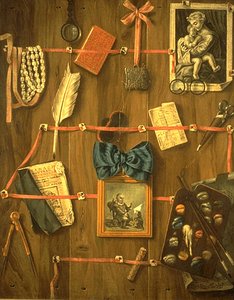

Artist Biography
John Frederick Peto: A Rediscovered Master of American Trompe l'oeil
- Born: Philadelphia, United States of America (1854)
- Died: 1907
John Frederick Peto was an American artist renowned for his mastery of *trompe l'oeil* painting – a technique that aims to deceive the viewer into believing that painted objects are real. For many years, Peto’s work remained largely forgotten until it was rediscovered in the late 20th century alongside that of fellow trompe l'oeil artist William Harnett. His paintings offer a unique glimpse into everyday life and material culture of the late 19th century.
Early Life and Artistic Training
- Peto received his early artistic training at the Pennsylvania Academy of the Fine Arts, where he studied alongside William Harnett.
- He regularly submitted works to the annual exhibitions at the Philadelphia Academy during his early career.
- In 1889, Peto relocated to Island Heights, New Jersey, a pivotal moment that significantly shaped his artistic style and subject matter.
Artistic Style and Characteristics
- Trompe l'oeil Technique: Peto’s defining characteristic was his exceptional skill in *trompe l'oeil*. He meticulously rendered ordinary objects – pistols, horseshoes, scraps of paper, keys, books – creating an illusion of three-dimensionality on a two-dimensional surface.
- Shallow Space and Composition: His paintings typically feature arrangements of these objects within a shallow space, enhancing the sense of depth and realism.
- Emphasis on Shadow and Texture: Peto paid close attention to shadow play and texture, further contributing to the deceptive quality of his work. He used subtle gradations of light and shade to create the illusion of tangible surfaces.
- Color Palette & Technique: Peto's mature works are characterized by an opaque and powdery texture, often compared to that of Jean-Baptiste-Siméon Chardin, a renowned 18th-century French painter. His color palettes were generally muted and earthy, reflecting the tones of aged objects and worn surfaces.
Rediscovery and Legacy
- Forgotten Years: After moving to Island Heights, Peto largely withdrew from the mainstream art world. He lived a quiet life, supplementing his income with painting for tourists and playing music at local events. His work was essentially forgotten for decades.
- Posthumous Recognition: The rediscovery of Peto’s paintings in the late 20th century brought renewed attention to his talent. Scholars began to recognize his unique contribution to American art.
- Comparison with Harnett: While often compared to William Harnett, Peto's style is generally considered more abstract and emotionally resonant than Harnett's technically brilliant but sometimes rigid approach. Peto’s compositions are less formal, and his objects tend to be older and more worn.
- Museums and Collections: Today, Peto’s paintings can be found in prominent museums across the United States, including the John F. Peto Studio Museum, dedicated to preserving his legacy.
Notable Works
- Take Your Choice (1885)
- Reminiscences of 1865 (1901)
- Job Lot Cheap (1901)
- Still Life with Mug, Pipe and Book (1870)
- Still Life with Oranges and Banana (c. 1880)
For further information on John Frederick Peto's life and work, please visit ArtsDot.com.
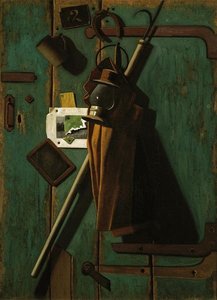
John Frederick Peto
1854 - 1907 , United States of America
Quick Facts
- Artistic Movement Or Style: Trompe-l'oeil, Realism
- Artists Who Influenced This Artist: ['Jean-Baptiste-Siméon Chardin']
- Date Of Birth: May 21, 1854
- Date Of Death: November 23, 1907
- Full Name: John Frederick Peto
- Nationality: American
- Notable Artworks:
- Take Your Choice
- Reminiscences of 1865
- Job Lot Cheap
- Still Life with Mug, Pipe and Book
- Still Life with Oranges and Banana
- Place Of Birth: Philadelphia, United States

