

 Preview
 Send
Send Share
Share
 Details

 Download
 Similars
 X-Ray
X-Ray Diaporama
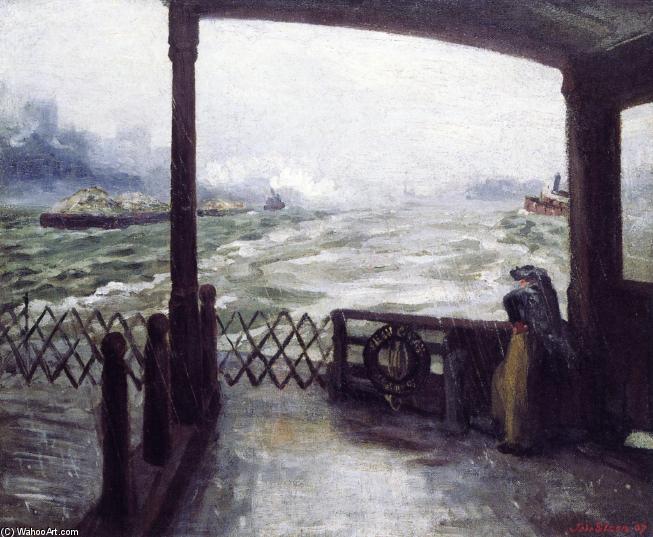
Wake of the Ferry


 Read More
Purchase a high-resolution, enhanced digital image, far superior to the online preview.
Each file is meticulously prepared by our in-house specialists using advanced tools and expert manual retouching. We ensure every image has exceptional clarity, precise color accuracy, and fine detail.
The final file is delivered via email within 72 hours, optimized for immediate use in professional, editorial, and print environments. This is the same quality trusted by top-tier design studios, publishers, and galleries.
Digital Image
Download a high-resolution file for personal display, printing, and creative projects. ( Buy Print Buy Hand Made Painting)
Included in Every Digital Image Order
Expert Digital Delivery, Guaranteed
When you choose ArtsDot.com, you're not just getting an image - you're receiving a professionally enhanced digital artwork, crafted with precision and backed by a satisfaction guarantee. Here's everything that comes with your order, automatically:

Fast Email Delivery
Your high-resolution digital image file will be emailed to you within 72 hours of ordering - ready for immediate use.

AI-Enhanced Digital File
Your artwork is professionally optimized using advanced AI tools and manual editing, ensuring maximum detail, clarity, and color accuracy.

Free Lifetime Re-Delivery
Accidentally deleted or lost your file? No worries - we'll resend it to you anytime, free of charge.

No Import Fees - Ever
Enjoy your artwork instantly with zero customs, duties, or delivery fees - digital downloads are always tax-free.

Color Accuracy Guarantee
We ensure your digital image reflects the original colors as closely as possible using professional tools and color management.

60-Day Satisfaction Guarantee
If you're not satisfied with your digital image, we'll revise it or refund 100% within 60 days - no questions asked.

100% Money-Back Guarantee
Not satisfied? Get a full refund within 60 days of receiving your digital file - no questions asked.

Bulk Order Discounts
Buy 3 images, save 10% - Buy 5, save 15% - Buy 10+, save 20%. Great for creative projects, galleries, and agencies.
Collectible Description
A Study in Mist and Memory
To stand before Wake of the Ferry is to step across a threshold into a moment suspended between worlds—a quiet breath taken on the vast, indifferent expanse of water. This painting does not shout its drama; rather, it whispers secrets carried upon the fog. The scene, captured from the deck of a ferry, immediately envelops the viewer in an atmosphere of muted contemplation. One feels the chill dampness rising from the grey-blue water and the subtle creak of the wooden railing beneath one's fingertips. It is a masterful study in atmospheric conditions, where the tangible structure of the foreground—the posts and railings that frame our view—serves only to direct the eye toward the ethereal mystery unfolding beyond.
Technique and the Art of Diffusion
John French Sloan’s handling of paint here is nothing short of evocative. The technique employed speaks directly to the Impressionist impulse: capturing not just what is seen, but how it feels to see it through a veil of mist. Notice the visible brushwork; it lends a wonderful, immediate texture to the canvas, suggesting the roughness of aged wood juxtaposed against the soft, almost breathable quality of the fog itself. Sloan achieves depth not merely with lines, but with light—or rather, the profound lack thereof. The background dissolves into hazy washes of grey and beige, an expert use of atmospheric perspective that makes the distant boats seem like mere memories floating on the water’s surface. This loose yet controlled application allows the viewer's imagination to fill in the gaps, making the viewing experience deeply personal.
The Weight of Solitude and Observation
At the heart of this quiet tableau stands a solitary figure positioned thoughtfully on the right side. This individual is more than just a compositional element; they are the emotional anchor for the entire piece. They embody contemplation, perhaps isolation, gazing out at the wake that speaks of journeys taken and destinations yet unknown. The subject matter—the everyday ritual of ferry travel—is elevated by this sense of quiet introspection. It suggests that even in moments of transit, there is a profound opportunity for self-reflection. For the collector or designer, this piece offers an unparalleled mood setter; it brings a sophisticated, melancholic calm into any space.
Historical Echoes and Enduring Appeal
Painted around 1907, this work situates itself within a period where American art was grappling with modernity and the changing urban landscape. Sloan, whose life was deeply rooted in observing working-class realities, channels that observational power here. While the subject is maritime transport, the resonance is universal. The fog, so often interpreted as uncertainty or obscurity, becomes a beautiful metaphor for life’s ambiguities. Owning a reproduction of Wake of the Ferry allows one to curate an environment steeped in artistic depth—a place where one can pause, breathe deeply, and contemplate the journey itself.
Related Artworks


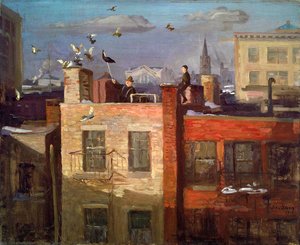
Artist Biography
Early Life and Artistic Awakening
John French Sloan, born August 2, 1871, in Lock Haven, Pennsylvania, emerged from humble beginnings that profoundly shaped his artistic vision. His childhood was marked by a familial need for support; his father’s struggles with mental health necessitated young John taking on responsibilities beyond his years. This early exposure to the realities of working-class life—a world often overlooked by the established art circles—would become a defining characteristic of his oeuvre. He moved with his family to Philadelphia, where he honed his skills initially not through formal academic training, but as an assistant cashier at Porter and Coates, a bookstore brimming with prints and illustrations. This environment proved formative; it allowed him to study masters like Dürer and Rembrandt, fostering a deep appreciation for draftsmanship and etching techniques. It was here, amidst the commerce of printed images, that Sloan began creating his own art, quietly developing a style rooted in observation and meticulous detail. His early work wasn’t born from privilege or leisure, but from necessity and a keen eye for the world around him—a foundation upon which he would build a remarkable career.The Ashcan School and Urban Realism
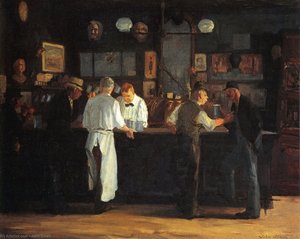
Sloan's trajectory shifted dramatically with his encounter with Robert Henri, a charismatic painter who championed artistic independence and a commitment to portraying everyday life. This connection led Sloan to the heart of what became known as the Ashcan School—a group of artists dedicated to depicting the gritty realities of turn-of-the-century New York City. Alongside William Glackens, George Luks, Everett Shinn, and others, Sloan rejected the idealized landscapes and portraits favored by many of their contemporaries, instead turning their attention to the bustling streets, crowded tenements, and vibrant social life of the city’s poorer neighborhoods. His work became a visual chronicle of this often-ignored world—capturing scenes from McSorley's Bar to women drying their hair on rooftops. Sloan wasn’t merely documenting; he was imbuing these scenes with a sense of empathy and dignity, elevating the lives of ordinary people onto the canvas. He possessed an uncanny ability to capture the *essence* of neighborhood life, the subtle gestures and fleeting moments that revealed the character of a place and its inhabitants. This commitment to realism wasn’t simply aesthetic; it was also informed by his socialist leanings, though he always maintained a distinction between his art and his political beliefs.Style and Influences
Sloan's artistic style is characterized by a distinctive blend of influences. While rooted in realism, his work wasn’t devoid of stylistic nuance. He employed dark, rich hues—often emphasizing the contrast between light and shadow—to create a sense of drama and atmosphere. His compositions were carefully constructed, often utilizing strong diagonals to draw the viewer's eye into the scene. The influence of etching is evident in his precise linework and attention to detail, even in his paintings. Beyond Henri, Sloan drew inspiration from European masters like Edgar Degas and Honoré Daumier, admiring their ability to capture movement and social commentary. However, he forged a uniquely American voice, one that resonated with the energy and dynamism of New York City. His work wasn’t about grand narratives or historical events; it was about the small moments, the everyday experiences that constituted the fabric of urban life. He found beauty in the mundane, transforming ordinary scenes into compelling works of art. Wake of the Ferry, for example, exemplifies his ability to imbue a seemingly simple scene with emotional depth and symbolic resonance.Legacy and Lasting Impact
John French Sloan’s legacy extends far beyond his contributions to the Ashcan School. He was a prolific artist who worked in various mediums—painting, etching, lithography, drawing—and consistently explored themes of urban life, social justice, and human connection. His commitment to portraying the realities of working-class America paved the way for future generations of artists who sought to challenge conventional artistic norms and engage with social issues. He was a dedicated teacher, sharing his knowledge and passion with countless students throughout his career. Even as artistic tastes evolved, Sloan remained true to his vision, continuing to paint scenes that reflected his deep connection to New York City and its people. His work continues to resonate today, offering a poignant glimpse into a bygone era and reminding us of the enduring power of art to illuminate the human condition. His paintings are not merely historical documents; they are timeless portraits of life, love, and loss. Sloan’s influence can be seen in the works of subsequent realist painters and continues to inspire artists who seek to find beauty and meaning in the everyday world.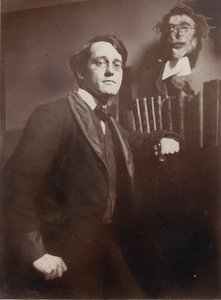
John French Sloan
1871 - 1951 , United States of America
Quick Facts
- Artistic Movement Or Style: Ashcan School, Realism
- Artists Or Movements Influenced By This Artist: ['Future generations of artists']
- Artists Who Influenced This Artist: ['Robert Henri']
- Date Of Birth: August 2, 1871
- Date Of Death: September 7, 1951
- Full Name: John French Sloan
- Nationality: American
- Notable Artworks:
- A mechanical Baa-Baa!
- Fall of the Greenwich Village Bastille
- Chinese Restaurant
- Place Of Birth: Lock Haven, USA

