

 Preview
 Send
Send Share
Share
 Details

 Download
 Similars
 X-Ray
X-Ray Diaporama
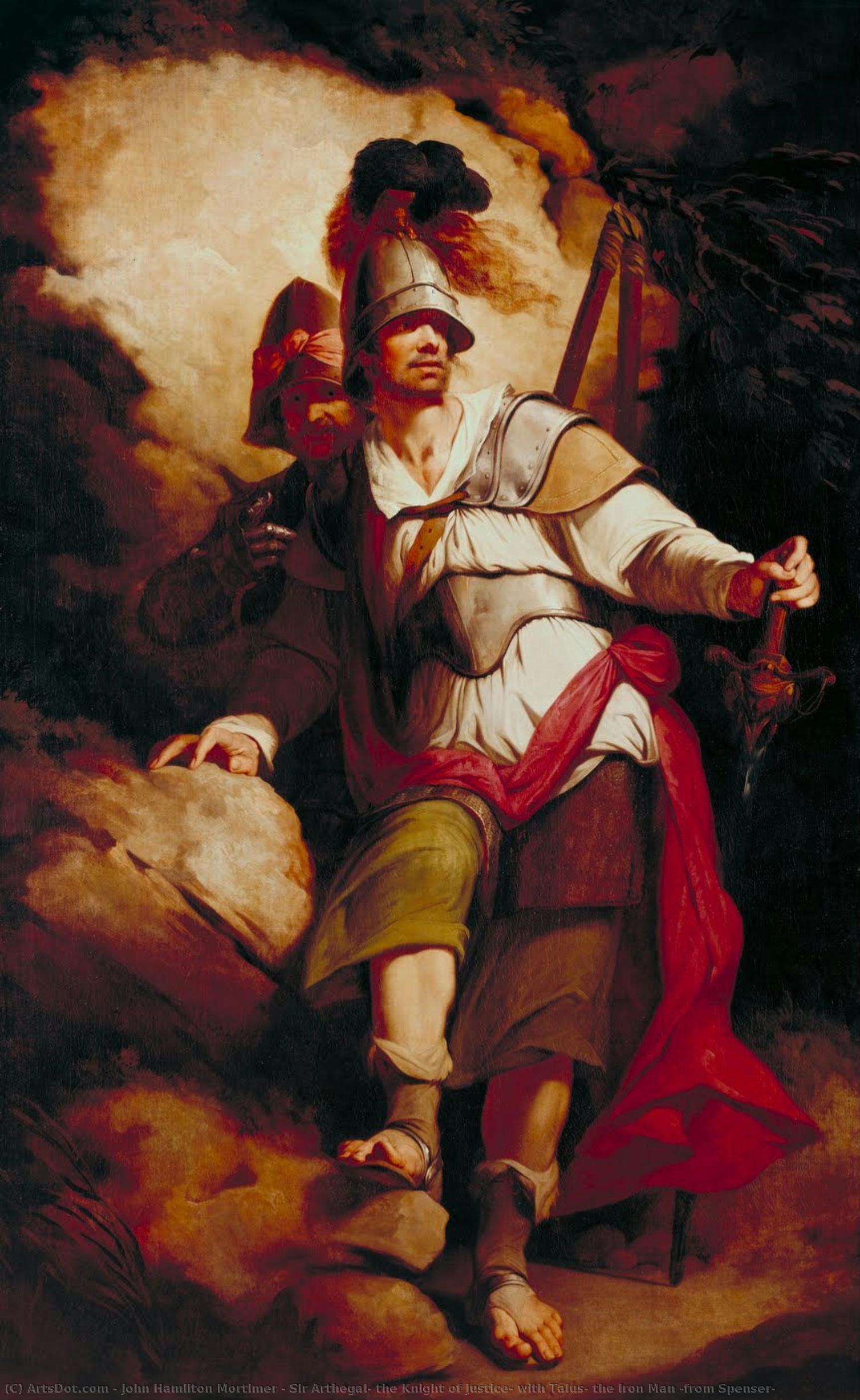
Sir Arthegal, the Knight of Justice, with Talus, the Iron Man (from Spenser
 Oil On Canvas
- WallArt
- Romantic Hues
 1778
1778 14.0 x 242.0 cm
 Tate Britain
 Read More
Purchase a high-resolution, enhanced digital image, far superior to the online preview.
Each file is meticulously prepared by our in-house specialists using advanced tools and expert manual retouching. We ensure every image has exceptional clarity, precise color accuracy, and fine detail.
The final file is delivered via email within 72 hours, optimized for immediate use in professional, editorial, and print environments. This is the same quality trusted by top-tier design studios, publishers, and galleries.
Digital Image
Download a high-resolution file for personal display, printing, and creative projects. ( Buy Print Buy Hand Made Painting)
Included in Every Digital Image Order
Expert Digital Delivery, Guaranteed
When you choose ArtsDot.com, you're not just getting an image - you're receiving a professionally enhanced digital artwork, crafted with precision and backed by a satisfaction guarantee. Here's everything that comes with your order, automatically:

Fast Email Delivery
Your high-resolution digital image file will be emailed to you within 72 hours of ordering - ready for immediate use.

AI-Enhanced Digital File
Your artwork is professionally optimized using advanced AI tools and manual editing, ensuring maximum detail, clarity, and color accuracy.

Free Lifetime Re-Delivery
Accidentally deleted or lost your file? No worries - we'll resend it to you anytime, free of charge.

No Import Fees - Ever
Enjoy your artwork instantly with zero customs, duties, or delivery fees - digital downloads are always tax-free.

Color Accuracy Guarantee
We ensure your digital image reflects the original colors as closely as possible using professional tools and color management.

60-Day Satisfaction Guarantee
If you're not satisfied with your digital image, we'll revise it or refund 100% within 60 days - no questions asked.

100% Money-Back Guarantee
Not satisfied? Get a full refund within 60 days of receiving your digital file - no questions asked.

Bulk Order Discounts
Buy 3 images, save 10% - Buy 5, save 15% - Buy 10+, save 20%. Great for creative projects, galleries, and agencies.
A Study in Romantic Drama: John Hamilton Mortimer’s “Sir Arthegal, the Knight of Justice, with Talus, the Iron Man”
John Hamilton Mortimer's "Sir Arthegal, the Knight of Justice, with Talus, the Iron Man," painted in 1778, stands as a testament to the burgeoning Romantic movement within British art. More than just a portrait, it’s an ambitious exploration of heroism and moral fortitude, deeply rooted in Spenser's epic poem *Faerie Queene*, and imbued with a palpable sense of dramatic tension. Mortimer eschewed the polished conventions of his time, opting instead for a deliberately raw aesthetic that prioritized process over perfection—a decision that speaks volumes about his artistic philosophy and its engagement with broader cultural currents. The painting depicts Sir Arthegal, a knight embodying righteousness and courage, accompanied by Talus, the Iron Man – a figure representing steadfastness and resilience – against a backdrop of rugged rock formations. Mortimer’s masterful use of oil paint on canvas immediately establishes an atmosphere of grandeur and seriousness. The artist eschewed meticulous detail in favor of expressive brushstrokes that capture the dynamism of the scene. Thick impasto—heavy application of pigment—dominates the surface, creating textural richness and conveying a feeling of immediacy. This technique wasn’t merely decorative; it served as a deliberate challenge to the prevailing artistic standards of the era, where smoothness and refinement were considered paramount. Symbolism permeates every element of the composition. The rocky landscape symbolizes adversity and obstacles confronting the knight's quest for virtue. Mortimer skillfully employs chiaroscuro—the dramatic interplay of light and shadow—to heighten the emotional impact of the artwork. Talus’s unwavering gaze directs the viewer’s attention toward the central figure, reinforcing his role as a symbol of moral fortitude. The inclusion of two birds – one positioned near the upper left corner and another towards the lower right – adds an element of visual complexity and subtly suggests themes of aspiration and vigilance. Mortimer's deliberate choice to leave visible brushstrokes underscores the importance of artistic labor and celebrates the materiality of paint itself, elevating it beyond mere representation. Beyond its formal qualities, “Sir Arthegal, the Knight of Justice, with Talus, the Iron Man” resonates deeply with the Romantic spirit’s fascination for emotion and imagination. Mortimer's depiction captures a moment of intense confrontation—a palpable sense of anticipation—that invites contemplation on themes of heroism and moral struggle. The painting’s enduring appeal lies in its ability to convey not just what is seen but also what is felt, reflecting the Romantic preoccupation with capturing subjective experience and exploring the sublime beauty of nature alongside human endeavor. It's a piece that continues to inspire admiration for its artistic innovation and its profound engagement with the intellectual and spiritual concerns of its time.- Artist: John Hamilton Mortimer
- Year: 1778
- Medium: Oil on Canvas
- Dimensions: 14 x 242 cm
- Location: Tate Britain
Related Artworks
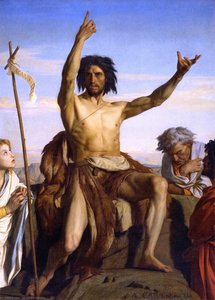
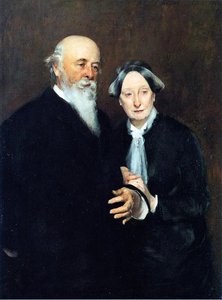
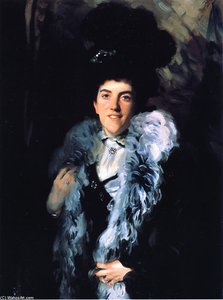
Artist Biography
A Life Painted in Romantic Hues: John Hamilton Mortimer
John Hamilton Mortimer, a name perhaps less instantly recognizable than his contemporaries like Reynolds or Wright of Derby, nevertheless occupies a significant and fascinating niche within the landscape of 18th-century British art. Born in Eastbourne in 1740, Mortimer’s brief but intensely productive life—he died at just thirty-nine years old—was marked by artistic ambition, a restless spirit, and an evolving style that mirrored the shifting tastes of his era. His father, a customs officer with mercantile interests, provided a stable if unremarkable background for a young man destined to pursue a path steeped in creativity. By 1757, Mortimer had already gravitated towards London, enrolling at the prestigious Duke of Richmond’s Academy, where he forged a lifelong friendship with Joseph Wright, a bond that would prove mutually supportive throughout their careers. This early immersion into the artistic milieu fostered not only technical skill but also an awareness of the burgeoning intellectual currents shaping British art. He studied alongside other promising talents like Thomas Jones and William Pars at St Martin’s Lane Academy, further honing his abilities under the tutelage of masters such as Cipriani, Robert Edge Pine, and Sir Joshua Reynolds himself.From History to Bandits: The Evolution of a Style
Mortimer's early successes came with prize-winning studies after Michelangelo and life drawings, establishing a foundation in classical principles. He quickly gained recognition for his historical paintings, notably *St Paul Preaching to the Ancient Druids in Britain*, which remains housed in the Guildhall at High Wycombe. These works demonstrated a commitment to narrative and an ability to capture dramatic moments, qualities that would become hallmarks of his oeuvre. However, Mortimer was not content with simply replicating established styles; he possessed a keen sensitivity to changing aesthetic preferences. In the 1770s, a distinct shift occurred in his artistic focus. He began to explore more masculine and even criminal themes, moving away from the prevailing emphasis on refined elegance towards depictions of rugged landscapes populated by bandits and soldiers. This fascination with the darker side of human experience was profoundly influenced by the work—and legend—of Salvator Rosa, the 17th-century Neapolitan painter celebrated for his wild, untamed scenes of outlaws and dramatic landscapes. Mortimer’s embrace of this aesthetic resonated with a growing taste for Romanticism, foreshadowing the artistic movements that would dominate the following century. He even created an etching after Rosa's self-portrait, demonstrating his deep admiration.A Collaborative Spirit and Artistic Leadership
Mortimer was not solely a solitary painter; he actively engaged in collaborative projects with fellow artists. He frequently contributed figure work to compositions by others, most notably assisting Thomas Jones on ambitious canvases like *A Land Storm, with the Story of Dido and Aeneas*, *The Death of Orpheus*, and a pair of paintings inspired by Milton’s *Allegro* and *Penseroso*. These collaborations highlight his versatility and willingness to contribute his skills to larger artistic endeavors. His talent was also sought after for decorative schemes; from 1770 to 1773, he played a key role in the decoration of the saloon at Brocket Hall, Hertfordshire, working alongside other prominent artists like Francis Wheatley and James Durno. In 1774, Mortimer reached a pinnacle of his career when he was elected President of the Society of Artists—a testament to his standing within the artistic community. This position afforded him considerable influence, though it also meant navigating the complex dynamics of the art world during a period of significant change.A Legacy Tempered by Early Loss
Despite his successes, Mortimer’s career was tragically cut short. His marriage to Jane Hurrel in 1775 seems to have impacted his artistic output, and he succumbed to an undocumented illness on February 4th, 1779. Though he finally exhibited at the Royal Academy in 1778—showing five works including *Sir Arthegal* and bandit scenes—and was elected an Associate of that institution shortly before his death, his potential remained largely unrealized. He faced criticism during his lifetime, notably from Horace Walpole, who dismissed him as a mere imitator of Salvator Rosa. However, such assessments fail to fully appreciate Mortimer’s unique contribution to British art. His paintings, characterized by their dramatic compositions, expressive brushwork, and exploration of complex themes, offer a compelling glimpse into the artistic sensibilities of his time. He bridged the gap between the classical traditions of the 18th century and the emerging Romanticism of the 19th, paving the way for future generations of artists to embrace emotion, imagination, and the power of narrative in their work. Today, John Hamilton Mortimer is increasingly recognized as a significant figure whose art deserves greater attention and appreciation.Rediscovering Mortimer: A Modern Perspective
The enduring appeal of Mortimer’s work lies not only in its historical significance but also in its emotional resonance. His paintings invite viewers to contemplate themes of heroism, villainy, love, loss, and the untamed forces of nature. His landscapes are more than mere backdrops; they are active participants in the drama unfolding within them. The recent scholarship surrounding Mortimer—including detailed archival research at institutions like the Paul Mellon Centre—has shed new light on his life, artistic development, and lasting influence. Through exhibitions and publications, a renewed appreciation for his talent is emerging, ensuring that John Hamilton Mortimer will continue to captivate audiences for generations to come. His works serve as a reminder of the power of art to transport us to other worlds, challenge our perceptions, and illuminate the complexities of the human condition.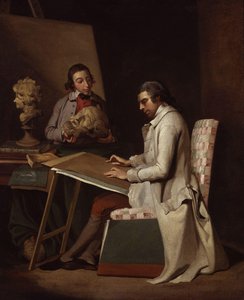
John Hamilton Mortimer
1740 - 1779 , United Kingdom
Quick Facts
- Artistic Movement Or Style: Romanticism, History painting
- Artists Who Influenced This Artist:
- Salvator Rosa
- Sir Joshua Reynolds
- Date Of Birth: 1740-09-17
- Date Of Death: 1779-02-04
- Full Name: John Hamilton Mortimer
- Nationality: British
- Notable Artworks:
- Dr Philip Hayes
- St Paul Preaching
- Planning The Voyage
- Place Of Birth: Eastbourne, UK


