

 Preview
 Send
Send Share
Share
 Details

 Download
 Similars
 X-Ray
X-Ray Diaporama
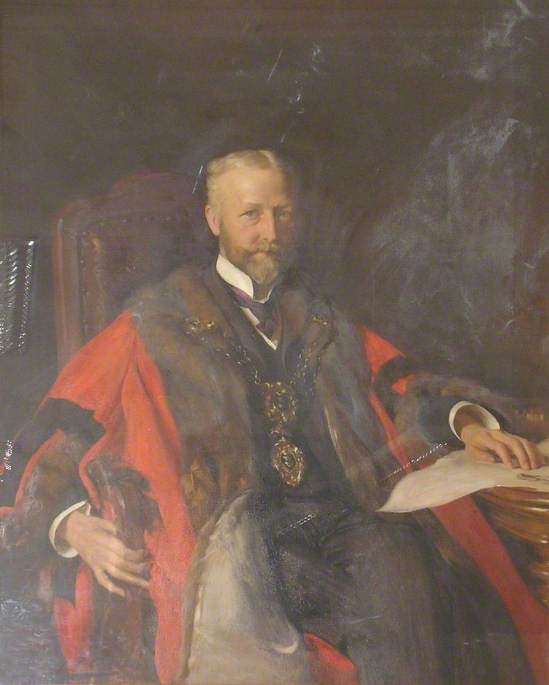
Sir William Alfred Gelder (1855–1941), JP
 1904
1904 142.0 x 111.0 cm
 Hull Guildhall
 Read More
Purchase a high-resolution, enhanced digital image, far superior to the online preview.
Each file is meticulously prepared by our in-house specialists using advanced tools and expert manual retouching. We ensure every image has exceptional clarity, precise color accuracy, and fine detail.
The final file is delivered via email within 72 hours, optimized for immediate use in professional, editorial, and print environments. This is the same quality trusted by top-tier design studios, publishers, and galleries.
Digital Image
Download a high-resolution file for personal display, printing, and creative projects. ( Buy Print Buy Hand Made Painting)
Included in Every Digital Image Order
Expert Digital Delivery, Guaranteed
When you choose ArtsDot.com, you're not just getting an image - you're receiving a professionally enhanced digital artwork, crafted with precision and backed by a satisfaction guarantee. Here's everything that comes with your order, automatically:

Fast Email Delivery
Your high-resolution digital image file will be emailed to you within 72 hours of ordering - ready for immediate use.

AI-Enhanced Digital File
Your artwork is professionally optimized using advanced AI tools and manual editing, ensuring maximum detail, clarity, and color accuracy.

Free Lifetime Re-Delivery
Accidentally deleted or lost your file? No worries - we'll resend it to you anytime, free of charge.

No Import Fees - Ever
Enjoy your artwork instantly with zero customs, duties, or delivery fees - digital downloads are always tax-free.

Color Accuracy Guarantee
We ensure your digital image reflects the original colors as closely as possible using professional tools and color management.

60-Day Satisfaction Guarantee
If you're not satisfied with your digital image, we'll revise it or refund 100% within 60 days - no questions asked.

100% Money-Back Guarantee
Not satisfied? Get a full refund within 60 days of receiving your digital file - no questions asked.

Bulk Order Discounts
Buy 3 images, save 10% - Buy 5, save 15% - Buy 10+, save 20%. Great for creative projects, galleries, and agencies.
Related Artworks










Artist Biography
A Legacy of Light and Devotion: The Life of John Henry Frederick Bacon
In the heart of the Victorian era, a period defined by its profound spiritual inquiries and burgeoning imperial identity, the works of John Henry Frederick Bacon emerged as luminous windows into both the divine and the historical. Born on November 4th, 1865, in Kennington, London, Bacon was destined for a life shaped by the brush and the ink. As the son of the lithographer John Cardanall Bacon, he was raised within an environment where the meticulous craft of image-making was second nature. This early immersion in the technicalities of print and illustration provided him with a foundational precision that would later define his mastery of oil painting.
Bacon’s artistic journey was one of both academic rigor and worldly exploration. His formal education at the Westminster School of Art and the prestigious Royal Academy Schools in London equipped him with the classical vocabulary necessary to navigate the competitive London art scene. However, it was a formative expedition at the tender age of eighteen to India and Burma that truly expanded his visual lexicon. Immersed in the vibrant colors, exotic textures, and spiritual atmospheres of Southeast Asia, the young artist developed an eye for detail and a sensitivity to light that would later infuse his religious and historical compositions with an almost palpable vitality.
The Intersection of Faith and Realism
Upon his return to England in 1889, Bacon quickly ascended the ranks of the Royal Academy exhibitors, establishing himself as a painter capable of profound emotional resonance. He found his greatest acclaim in the realm of biblical narrative, where he sought to bridge the gap between ancient scripture and contemporary Victorian sensibility. In masterpieces such as Peace Be Unto You (1897) and Gethsemane (1899), Bacon did not merely illustrate holy events; he breathed life into them through a sophisticated command of tonal gradation. By employing the painstaking technique of layering glazes, he achieved a luminous quality that allowed light to appear as if emanating from within the canvas itself.
This technical brilliance served a higher purpose: to invite the viewer into a state of theological contemplation. His religious works are characterized by a seamless blend of realism and spiritual depth, where the physical textures of cloth, skin, and stone serve to ground the miraculous in the recognizable world. This ability to render the sacred through the lens of the tangible made his work deeply relatable to a public navigating the complexities of faith in a rapidly modernizing age.
Chronicler of an Empire
While his religious paintings captured the eternal, Bacon was equally adept at capturing the ephemeral moments of British history. He possessed a unique talent for historical painting, utilizing his skill to document the grandeur and the gravity of the British monarchy. His commissions for significant state events—such as Homage Giving, Westminster Abbey for the coronation of Edward VII and The Coronation Ceremony of George V (1911)—demonstrate his ability to manage large-scale compositions with dramatic flair and historical accuracy. These works functioned as much as historical records as they did high art, freezing pivotal moments of national identity in oil.
Beyond the halls of Westminster, Bacon’s brush touched upon the pulse of contemporary life. He was a master of genre painting, capable of capturing the intimate joys and quiet dramas of the era. Works like The Wedding Morning (1892) showcase his ability to evoke warmth and intimacy through soft lighting and a delicate color palette, while his illustrations for various periodicals allowed him to maintain a connection with the broader public. His versatility extended from the monumental to the miniature, from the epic scale of imperial returns to the tender details of a bride's preparation.
Final Reflections on a Distinguished Career
The life of John Henry Frederick Bacon was marked by significant honors, including his appointment as an Associate of the Royal Academy (ARA) and being awarded the MVO (Member of the Royal Victorian Order) for his distinguished service to the King. These accolades reflect a career that was deeply intertwined with the cultural and political fabric of his time. Tragically, his life was cut short by acute bronchitis in 1914, at the age of only forty-eight, leaving behind a body of work that stands as a testament to the Victorian spirit.
Today, Bacon’s legacy survives through the enduring power of his imagery. His paintings remain significant not only for their technical excellence but for their ability to evoke the atmosphere of a bygone era—a time when art served as a bridge between the earthly and the divine, and between the individual and the grand sweep of history. To look upon a Bacon canvas is to witness a masterfully orchestrated dance of light, shadow, and devotion.
john henry frederick bacon
1865 - 1914
Quick Facts
- Artistic Movement Or Style: Genre Painting
- Artists Or Movements Influenced By This Artist: ['Victorian Art']
- Artists Who Influenced This Artist:
- Gustave Dore
- William Holman Hunt
- Date Of Birth: November 4, 1865
- Date Of Death: January 24, 1914
- Full Name: John Henry Frederick Bacon
- Nationality: British
- Notable Artworks:
- Peace be unto you
- Gethsemane
- Homage giving, Westminster Abbey
- Place Of Birth: Kennington, England

