 Preview
 Send
Send Share
Share
 Details

 Download
 Similars
 X-Ray
X-Ray Diaporama
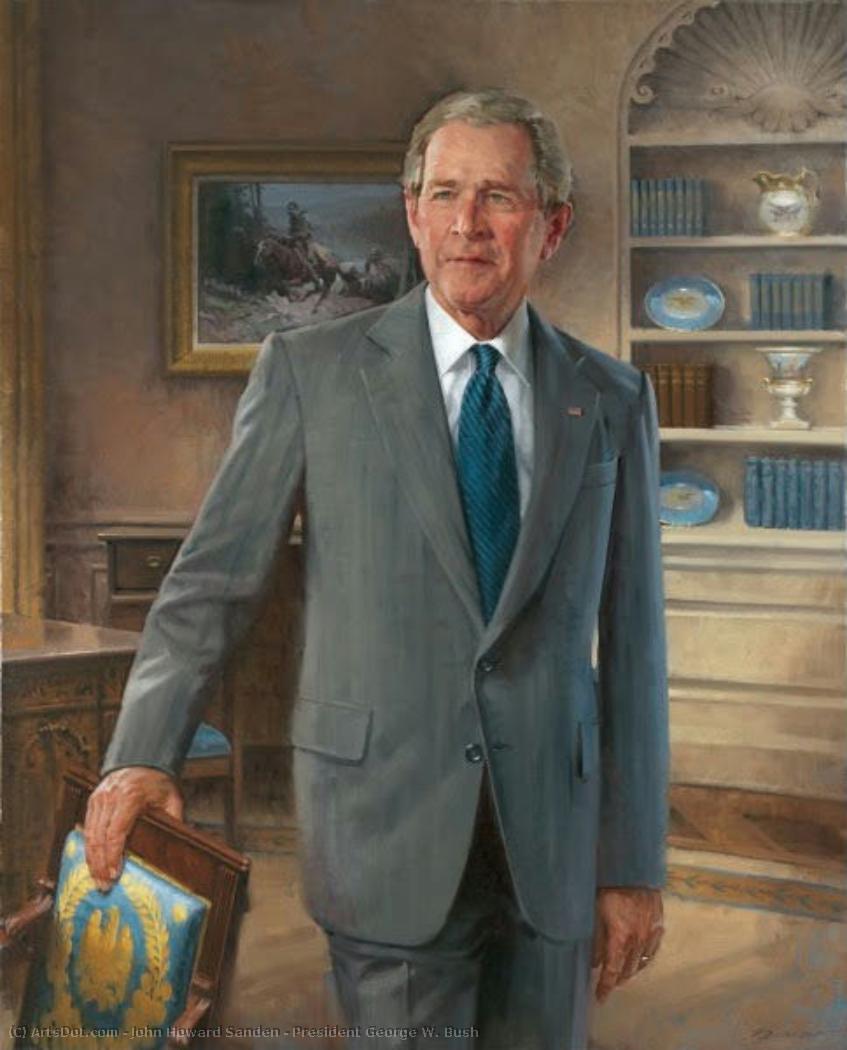
President George W. Bush


 Read More
Giclée / Art Print
Museum-quality giclée or canvas print with fast production and flexible finish options. ( Buy Hand Made Painting Buy Image)




P118B $10

P118H $10

P118W $10

P438Z $10

P508JH $12

P508YH $12

P805H $10

P805Z $10

P919BZ $10

P919G $10

P919XJ $10

P959ZH $10

P968JZ $12

W106C $8

W218G $10

W218JH $8

W218Y $10

W307PJ $10

W316G $10

W316PJ $8

W316Y $10

W398PJ $8

W4111J $10

W500HY $15

W500JH $15

W692G $12

W849H $8

W940BG $15

W953PJ $8




Pick from our preset sizes that match the artwork's original proportions.

You may enter your own dimensions to fit a specific frame or space. If your selected size does not match the original image's proportions, we will either crop the artwork or extend the image with a mirrored or solid-fill edge. A digital mockup will be sent for your approval before production begins.
Please note that the on-screen preview does not reflect the actual cropping or extension. Only the mockup will accurately show the final composition.
While custom sizes are available, we recommend selecting a dimension from the predefined list to preserve the original proportions.
Worldwide Delivery () in 2 weeks instead of standard 4/5 weeks. (17 August)

Free Worldwide Express Shipping

High-Quality Linen Canvas

Full Shipping Insurance

Customs Tax Refund Guarantee

True Color Matching Guarantee

60-Day Return Policy (Defects Only)

100% Money-Back Guarantee

Bulk Discount Offer
 Glass option is only available in size under 110 CM

President George W. Bush
Giclée / Art Print
Reproduction Size
-


Total Price
$ 63
Related Artworks
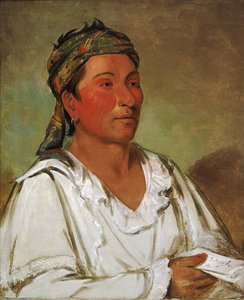
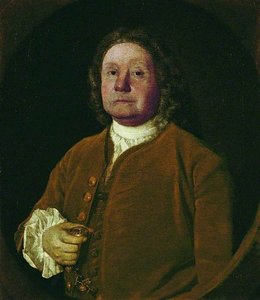
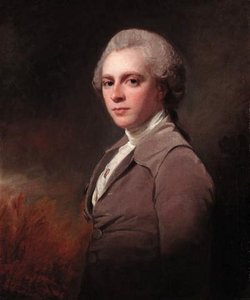
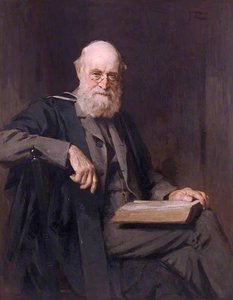
Artist Biography
Early Life and Artistic Beginnings
James Lewis Dine, born in June 1935 in Cincinnati, Ohio, emerged from a surprisingly conventional upbringing to become one of the most influential figures in post-war American art. His early years were marked by a quiet domesticity—his father was an accountant, and his mother a homemaker—a stark contrast to the vibrant, experimental world he would soon navigate. However, this seemingly ordinary background provided a grounding that ultimately fueled his artistic explorations. A pivotal moment occurred during his teenage years when Dine encountered prints by German Expressionist masters like Ernst Ludwig Kirchner and Max Beckmann through a copy of Paul J. Sachs’ *Modern Prints and Drawings*. These works, with their raw emotion and fragmented forms, ignited within him a profound desire to capture the complexities of human experience—a yearning that would shape his entire career. He began experimenting with woodcuts in the basement of his grandparents' home, developing a foundational skill set and an intuitive understanding of printmaking techniques. This early immersion in the world of graphic art laid the groundwork for his later innovations, demonstrating a remarkable ability to distill complex ideas into simple, powerful visual forms.The Rise of Happenings and Early Experiments
Dine’s artistic trajectory took a dramatic turn in 1958 when he relocated to New York City, a hub of burgeoning avant-garde activity. He quickly immersed himself in the city's experimental art scene, joining forces with fellow artists Claes Oldenburg, Marcus Ratliff, Allan Kaprow, and Bob Whitman. This collaboration proved instrumental in the development of “happenings”—large-scale, immersive events that blurred the boundaries between art and life. Dine’s *The Smiling Workman* (1959), a simple, hand-printed image of a smiling worker, became an iconic symbol of this movement, representing a shift away from traditional artistic conventions and towards participatory experiences. This period was characterized by a playful irreverence and a willingness to challenge established norms—qualities that would remain central to Dine’s work throughout his career. He began experimenting with various printmaking techniques – lithography, etching, intaglio, dry paint, and woodcuts – often combining them in unexpected ways, pushing the boundaries of traditional methods.The Development of “Cut” and Minimalism
In the early 1960s, Dine embarked on a series of groundbreaking works known as "Cut," characterized by his meticulous cutting of paper into simple geometric shapes—squares, rectangles, circles—and then reassembling them to create new compositions. This seemingly reductive process was, in fact, incredibly complex and demanding, requiring immense precision and an acute awareness of spatial relationships. The “Cut” series represented a move towards minimalism, stripping away extraneous elements and focusing on the essential forms of shape and space. These works were not merely decorative; they explored themes of order, chaos, and the relationship between representation and abstraction. Simultaneously, Dine began to incorporate text into his work, often using simple phrases or words—"Cut," "Smile," "Eat"—to add layers of meaning and commentary. This integration of language and image further expanded the scope of his artistic practice, reflecting a growing interest in communication and social critique.Sculptural Explorations and Continued Innovation
Throughout the 1970s and beyond, Dine’s work continued to evolve, encompassing sculpture, photography, and performance art. He explored the possibilities of using everyday materials—paper, metal, wood—to create unexpected forms and structures. His sculptures often featured simple, repetitive elements, echoing the geometric rigor of his “Cut” series while introducing a tactile dimension. Dine’s photographic work also gained prominence during this period, documenting his studio practice and exploring themes of process and materiality. He remained committed to experimentation, constantly seeking new ways to challenge conventional notions of art and engage with the viewer. His later works often incorporated elements of chance and improvisation, reflecting a lifelong fascination with the interplay between control and spontaneity. His work became increasingly conceptual, inviting viewers to consider the very nature of art itself—its meaning, its function, and its relationship to the world around us.Legacy and Influence
Jim Dine’s impact on contemporary art is undeniable. His pioneering work in happenings, his innovative use of printmaking techniques, and his exploration of minimalism have profoundly influenced generations of artists. He demonstrated that art could be accessible, democratic, and deeply personal—a belief reflected in his commitment to making his work available to a wide audience through limited editions and affordable prints. Dine’s emphasis on process and materiality continues to resonate with artists today, encouraging them to embrace experimentation and challenge established conventions. His legacy extends beyond the realm of art; he is remembered as a thoughtful and engaging artist who consistently sought to connect with people in meaningful ways—a testament to the enduring power of simple forms and honest expression.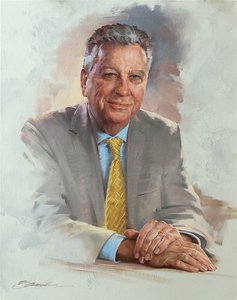
john howard sanden
1935 - 2022 , United States of America
Quick Facts
- Artistic Movement Or Style: Happenings, Printmaking
- Artists Or Movements Influenced By This Artist: ['Allan Kaprow']
- Artists Who Influenced This Artist:
- Paul J. Sachs
- Ernst Ludwig Kirchner
- Date Of Birth: June 16, 1935
- Full Name: James Lewis Dine
- Nationality: American
- Notable Artworks:
- The Smiling Workman
- Cut Cards
- Place Of Birth: Cincinnati, Ohio, USA
Related Articles

Georges Braque's Masterpieces: 25 Paintings That Defined Cubism & Modern Art | ArtsDot
Explore 25 iconic Georges Braque paintings that revolutionized Cubism & modern art. Discover the stories behind his masterpieces, from Fauvism to Analytical Cubism. Find museum-quality reproductions & elevate your home decor with ArtsDot.com.

Georges Seurat's Masterpieces: 25 Paintings That Defined Pointillism | ArtsDot
Explore 25 iconic Georges Seurat paintings & discover the brilliance of Pointillism. From 'La Grande Jatte' to his harbor scenes, delve into art history with ArtsDot.com. Find museum-quality reproductions for your home decor. Explore the full collection online!
John Singer Sargent's 25 Masterpieces: Portraits & Beyond | ArtsDot
Explore 25 iconic John Singer Sargent paintings – from dazzling portraits to Impressionist landscapes. Discover the stories behind Madame X, El Jaleo & more! Find museum-quality art reproductions and elevate your home decor with ArtsDot.com.

John Constable's Masterpieces: Explore 25 Iconic Landscapes for Your Home
Journey through John Constable's 25 most celebrated landscapes. Explore Romanticism, Dedham Vale & his masterful use of light in iconic paintings like 'Hay Wain'. Find museum-quality art reproductions and elevate your home decor on ArtsDot.com.
John George Brown: Capturing American Life & Sentiment in 19th-Century Genre Painting
Explore the captivating genre paintings of John George Brown, celebrated for his realistic depictions of 19th-century American life. Discover his legacy & find museum-quality reproductions at ArtsDot.