 Preview
 Send
Send Share
Share
 Details

 Download
 Similars
 X-Ray
X-Ray Diaporama
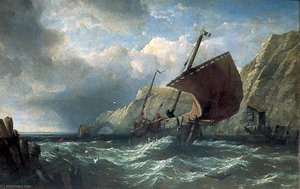
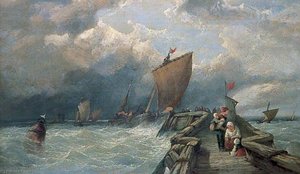
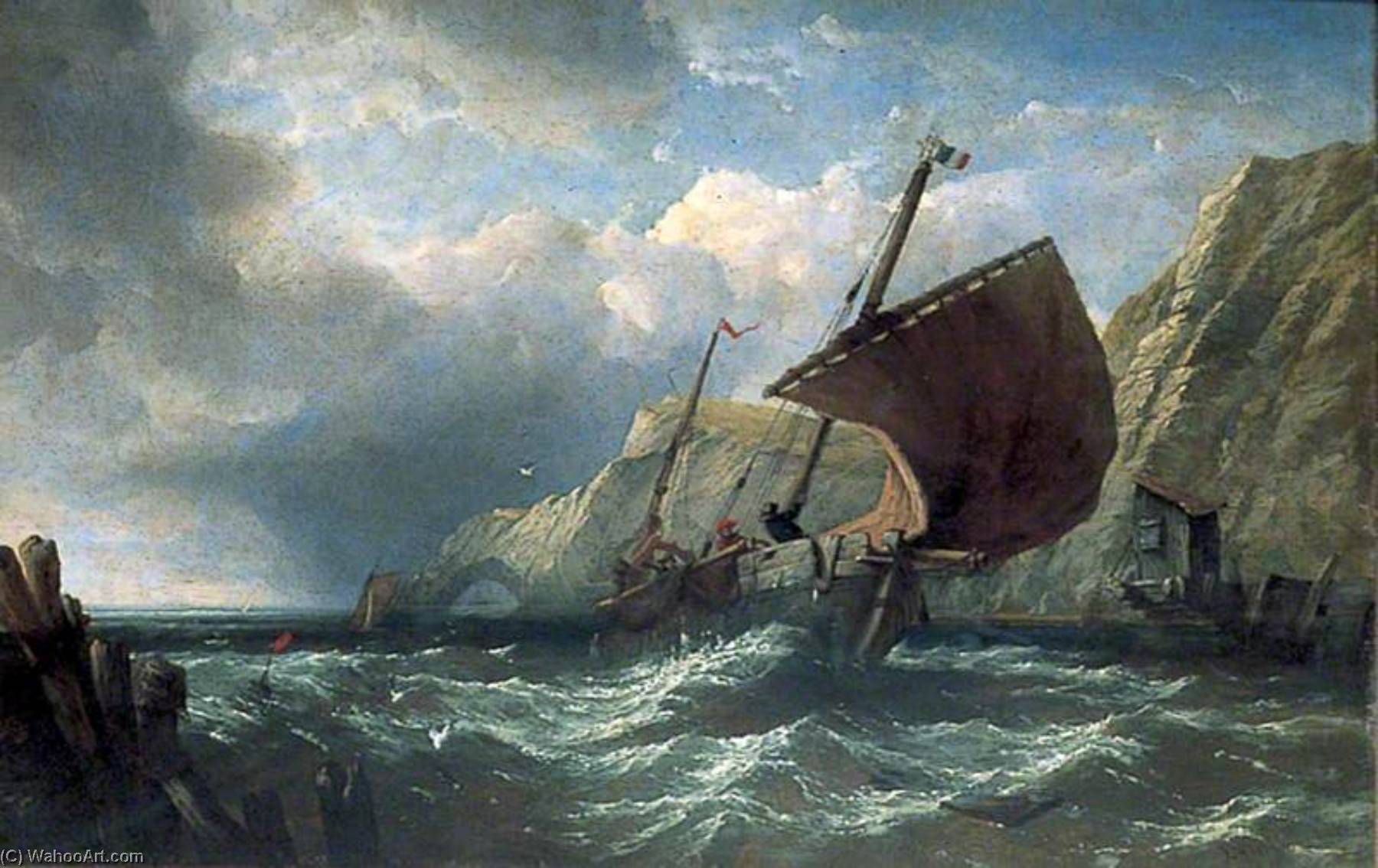
View on the Coast of Norway
 Romanticism
 1866
1866 44.0 x 67.0 cm
 Folkestone Library – History Resource Centre
 Read More
Giclée / Art Print
Museum-quality giclée or canvas print with fast production and flexible finish options. ( Buy Hand Made Painting Buy Image)




































Pick from our preset sizes that match the artwork's original proportions.

You may enter your own dimensions to fit a specific frame or space. If your selected size does not match the original image's proportions, we will either crop the artwork or extend the image with a mirrored or solid-fill edge. A digital mockup will be sent for your approval before production begins.
Please note that the on-screen preview does not reflect the actual cropping or extension. Only the mockup will accurately show the final composition.
While custom sizes are available, we recommend selecting a dimension from the predefined list to preserve the original proportions.
Worldwide Delivery () in 2 weeks instead of standard 4/5 weeks. (25 August)

Free Worldwide Express Shipping

High-Quality Linen Canvas

Full Shipping Insurance

Customs Tax Refund Guarantee

True Color Matching Guarantee

60-Day Return Policy (Defects Only)

100% Money-Back Guarantee

Bulk Discount Offer
 Glass option is only available in size under 110 CM

View on the Coast of Norway
Giclée / Art Print
Reproduction Size
-


Total Price
$ 63
Related Artworks
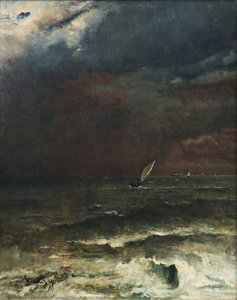
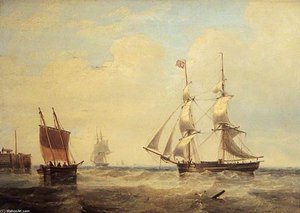
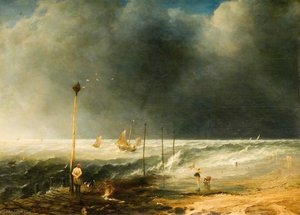
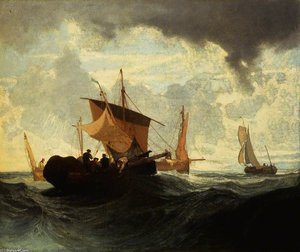
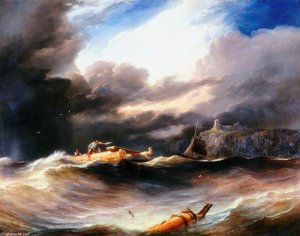
Artist Biography
John James Wilson II: A Master of Coastal Drama
Born in London in 1818, John James Wilson II emerged as a significant figure in 19th-century British art, renowned for his evocative depictions of the English coastline and maritime scenes. While often overshadowed by his father, John H. Wilson (Jock), a celebrated marine painter, Wilson II carved out a distinct artistic identity characterized by vibrant color palettes, dynamic compositions, and an acute understanding of light and atmosphere. His work wasn’t merely documentation; it was imbued with a Romantic sensibility, capturing the power and beauty of the sea while simultaneously conveying a sense of human drama within its vastness.
Wilson II's artistic journey began under the tutelage of his father, absorbing fundamental techniques and an appreciation for depicting ships at sea. However, he quickly developed a unique style—a preference for looser brushwork, brighter hues, and a greater emphasis on capturing fleeting moments of weather and movement. Unlike his father’s often meticulously detailed renderings, Wilson II favored a more expressive approach, prioritizing the emotional impact of his scenes over strict realism. This stylistic divergence established him as an individual artist with a recognizable voice.
His early career saw him exhibiting at prestigious venues like the Royal Academy from 1835 onwards, steadily building a reputation for his captivating coastal views and shipping art. He specialized in scenes of the English Channel, meticulously observing its ever-changing moods – from tranquil mornings to tempestuous storms. His paintings weren’t simply landscapes; they were narratives—stories of sailors battling the elements, ships navigating treacherous waters, and the interplay between humanity and nature. The influence of artists like Turner is evident in his use of light and color, though Wilson II possessed a distinct sensibility that set him apart.
A Portfolio of Coastal Visions
Wilson II’s oeuvre encompasses a diverse range of subjects within the coastal genre. He frequently depicted harbors bustling with activity – Portsmouth, Scarborough, and Folkestone among them—capturing the energy of port life through detailed renderings of ships, docks, and surrounding landscapes. His paintings of shipping were particularly popular, reflecting the importance of maritime trade to Britain at the time. However, he wasn’t limited to harbor scenes; he also produced stunning depictions of dramatic coastlines, rugged cliffs, and expansive seascapes.
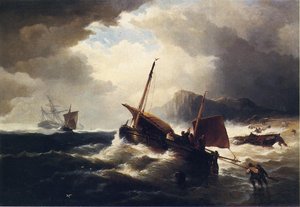
A prime example of his skill is “View on the Coast of Norway” (1866), a powerful depiction of turbulent waves and battling ships. The painting’s dynamic composition and use of color effectively convey the drama of the scene, showcasing Wilson II's ability to capture both the physical power of nature and the human element within it. Similarly, his “Shipping off Scarborough & Portsmouth Harbour” (circa 1860s) offers a detailed study of maritime activity, with recognizable landmarks like Scarborough Castle and Portsmouth’s fortifications providing context and grounding the scene.
Technique and Style
Wilson II's technique was characterized by a confident brushstroke and a skillful manipulation of color. He employed a vibrant palette—often utilizing blues, greens, and yellows to capture the shifting hues of the sea and sky. His paintings were typically executed in oil on canvas, with a layering of glazes that created depth and luminosity. He wasn’t afraid to use loose brushwork, allowing for a sense of spontaneity and movement within his compositions.
Unlike some of his contemporaries who favored meticulous detail, Wilson II prioritized capturing the *feeling* of a scene—the atmosphere, the light, and the overall mood. This approach resulted in paintings that are both visually striking and emotionally resonant. His work demonstrates a keen eye for observation combined with an intuitive understanding of color and composition.
Legacy and Recognition
Despite not achieving the same level of fame as his father, John James Wilson II left behind a substantial body of work that is now recognized for its quality and artistic merit. His paintings are held in collections at museums across Britain, including the Dundee Art Gallery, Folkestone Museum, and the National Maritime Museum. His contribution to British landscape and marine painting deserves greater recognition, particularly for his distinctive style and evocative depictions of the English coast.
Wilson II’s work stands as a testament to the enduring appeal of coastal scenes—a reminder of humanity's relationship with the sea, its beauty, and its inherent power. His paintings continue to captivate viewers with their vibrant colors, dynamic compositions, and emotional depth, solidifying his place as a significant artist of the 19th century.

john james wilson ii
1818 - 1875
Quick Facts
- Artistic Movement Or Style: Landscape & Marine
- Artists Or Movements Influenced By This Artist: ['Romanticism']
- Artists Who Influenced This Artist: ['John H. Wilson (Jock Wilson)']
- Date Of Birth: 1818
- Date Of Death: 1875
- Full Name: John James Wilson II
- Nationality: British
- Notable Artworks:
- View on the Coast of Norway
- Shipping off Scarborough & Portsmouth Harbour
Related Articles

John Constable's Masterpieces: Explore 25 Iconic Landscapes for Your Home
Journey through John Constable's 25 most celebrated landscapes. Explore Romanticism, Dedham Vale & his masterful use of light in iconic paintings like 'Hay Wain'. Find museum-quality art reproductions and elevate your home decor on ArtsDot.com.

John Singer Sargent's 25 Masterpieces: Portraits & Beyond | ArtsDot
Explore 25 iconic John Singer Sargent paintings – from dazzling portraits to Impressionist landscapes. Discover the stories behind Madame X, El Jaleo & more! Find museum-quality art reproductions and elevate your home decor with ArtsDot.com.
Whistler's Masterpieces: Explore 25 Iconic Paintings & Aesthetic Art for Your Home
Journey through 25 iconic James Abbott McNeill Whistler paintings! Explore his masterpieces of Aestheticism, from 'Nocturne in Black and Gold' to captivating portraits. Find museum-quality art reproductions & elevate your home decor with ArtsDot.com. Discover the full collection online.

Sir Alfred Munnings' Masterpieces: 25 Paintings That Define Equine Art | ArtsDot
Explore 25 iconic Sir Alfred Munnings paintings! Discover the beauty of British Impressionism, equine art & rural England. Find museum-quality reproductions and elevate your home decor with ArtsDot. Explore the full collection online.
The Allure of the Horizon: A Comprehensive Exploration of Seascape Art Through History & Emotion
Explore the captivating world of seascape art! Discover its history, key artists & movements – from Dutch Masters to Impressionism. Expert insights for collectors and enthusiasts at ArtsDot.